
Myanmar's Myitsone Dam Revival Signals Deeper Chinese Leverage in Southeast Asia
Myanmar's Myitsone Dam Revival Signals Deeper Chinese Leverage in Southeast Asia The Myitsone Project and Its Historical Suspension The decision by Myanmar's military-backed government to revive the long-suspended Myitsone Dam project underscores the enduring pull of Chinese infrastructure financing in the region. Originally agreed in 2006 under the previous junta, the $3.6 bil
The Myitsone Project and Its Historical Suspension
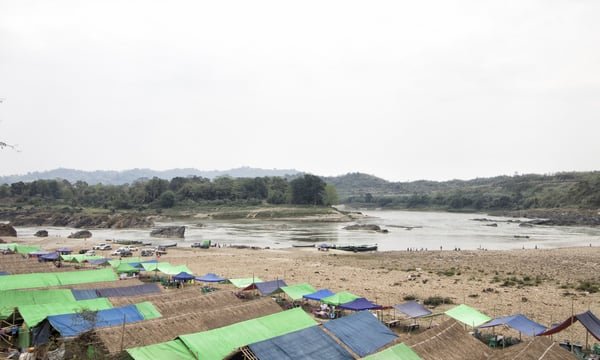
The decision by Myanmar's military-backed government to revive the long-suspended Myitsone Dam project underscores the enduring pull of Chinese infrastructure financing in the region. Originally agreed in 2006 under the previous junta, the $3.6 billion hydropower facility at the confluence of the Mali and N'Mai rivers was halted in 2011 by then-President Thein Sein in response to widespread domestic opposition over environmental damage and the planned export of most generated electricity to China. Recent statements from Kachin State Chief Minister Khet Htein Nan indicate that construction could resume shortly, with completion targeted in just over eight years, building on groundwork already completed before the suspension.
This revival occurs against the backdrop of Myanmar's post-2021 coup realities, where the junta's dependence on Beijing has grown markedly. Discussions during Senior General Min Aung Hlaing's recent visit to China reportedly addressed the project's restart, reflecting a pragmatic calculation that Chinese support remains essential for regime survival amid ongoing civil conflict.
China's Belt and Road Footprint and Regional Power Dynamics
The Myitsone project exemplifies China's Belt and Road Initiative approach to securing energy resources and strategic footholds in neighboring states. Reports indicate that 90 percent of the dam's output was originally slated for export northward, highlighting how such ventures serve Beijing's resource security needs while extending influence along critical river systems like the Irrawaddy. Since the 2021 coup, China's more active diplomatic and security engagement in Myanmar, including mediation efforts along the border, has translated into greater leverage over infrastructure decisions.
From a Northeast Asian geopolitical perspective, this development illustrates the asymmetric dependencies that smaller states face when engaging with major powers. Myanmar's military leadership has formed a new project team in April 2024 to handle technical assessments and public relations in coordination with SPIC Yunnan International Power Investment Company, signaling institutional momentum toward resumption despite lingering public concerns.
Parallels to South Korea's Infrastructure Partnerships in ASEAN
South Korea's own experience with large-scale infrastructure projects offers instructive parallels. Seoul has pursued energy and connectivity initiatives in Southeast Asia through its New Southern Policy framework, emphasizing transparent governance standards and local capacity building in contrast to some Chinese-led efforts. Myanmar's pivot back toward the Myitsone Dam, however, risks crowding out space for Korean firms seeking partnerships in hydropower and grid modernization across ASEAN member states.
Korean policymakers have long drawn lessons from domestic projects such as the Four Rivers Restoration initiative, where environmental and social trade-offs required careful calibration. The Myitsone case, with its history of public opposition and ethnic tensions in Kachin State, demonstrates how infrastructure decisions can become flashpoints that affect broader diplomatic credibility. Seoul's engagement with ASEAN thus faces a strategic test: whether Korean development models can compete when Chinese financing offers quicker, albeit less accountable, alternatives.
Implications for Korean Foreign Policy and Indo-Pacific Strategy
The Myitsone revival carries direct consequences for South Korea's foreign policy calculus in the Indo-Pacific. As Beijing consolidates influence through revived projects in Myanmar, Seoul must reassess how its energy and infrastructure diplomacy can maintain relevance amid intensifying great-power competition. Myanmar's location along the Bay of Bengal positions it as a potential node in regional connectivity networks, where Korean participation in ports, grids, and renewable energy could otherwise diversify options for ASEAN partners wary of over-reliance on any single external actor.
Historical precedents in Korean diplomacy, including its careful balancing during earlier phases of ASEAN engagement, suggest that Seoul will likely respond by deepening technical cooperation and governance-focused assistance rather than direct competition on mega-dam financing. Yet the junta's reported emphasis on securing public consent while advancing the project reveals the limits of external leverage when domestic political survival hinges on Chinese backing.
Ethnic Conflict and Operational Uncertainties
Implementation faces significant hurdles from the Kachin Independence Army's territorial gains since 2021. Although the KIA does not currently control the Myitsone confluence area, renewed fighting could disrupt construction timelines and financing arrangements. The absence of disclosed details on revised contracts, ownership structures, or revenue-sharing frameworks further clouds prospects for smooth execution.
These uncertainties mirror challenges Korea has encountered in its own overseas ventures, where political instability in partner countries has delayed projects despite initial agreements. For Northeast Asian observers, the Myitsone situation highlights how infrastructure initiatives remain entangled with unresolved ethnic and territorial disputes that no external power can fully insulate.
Strategic Competition and Long-Term Regional Repercussions
Ultimately, Myanmar's move to restart the Myitsone Dam reinforces China's structural advantages in shaping Southeast Asian development trajectories. South Korea's foreign policy response will likely involve calibrated engagement that promotes rule-based infrastructure standards while avoiding direct confrontation. This approach aligns with Seoul's broader Indo-Pacific objectives of fostering resilient supply chains and diversified partnerships that reduce vulnerability to any single external influence.
The episode also invites reflection on how Northeast Asian states navigate the enduring legacies of Cold War-era alignments and post-Cold War economic integration. As Myanmar weighs benefits against social and environmental costs, the outcome will influence not only bilateral Sino-Myanmar ties but also the wider distribution of strategic influence across the Indo-Pacific.
By Prof. David Park, Staff WriterThis article was produced with AI-assisted research and editorial support. Reporting is based on sources cited in the article.
What's Your Reaction?
 Like
0
Like
0
 Dislike
0
Dislike
0
 Love
0
Love
0
 Funny
0
Funny
0
 Wow
0
Wow
0
 Sad
0
Sad
0
 Angry
0
Angry
0

East Asia/Technology Correspondent at Global1.News. Seoul-based voice covering Korean politics, technology, business, and culture. Analyzes how technology and geopolitics intersect across East Asia.














Comments (0)