
Millions Mourn as Iran's Six-Day State Funeral for Ayatollah Khamenei Begins — UK Issues Travel Warning
**Keywords:** Khamenei funeral, Mojtaba Khamenei, Iran UK relations, Foreign Office travel advice, Ministry of Defence airspace monitoring, Iran supreme leader, US Israel strikes, Tehran mourning, UK travel warning, Iran succession, Khatam al-Anbiya, nuclear programme, UK nationals Iran, British diplomats Iran The six-day state funeral for Ayatollah Ali Khamenei, Iran's Supreme
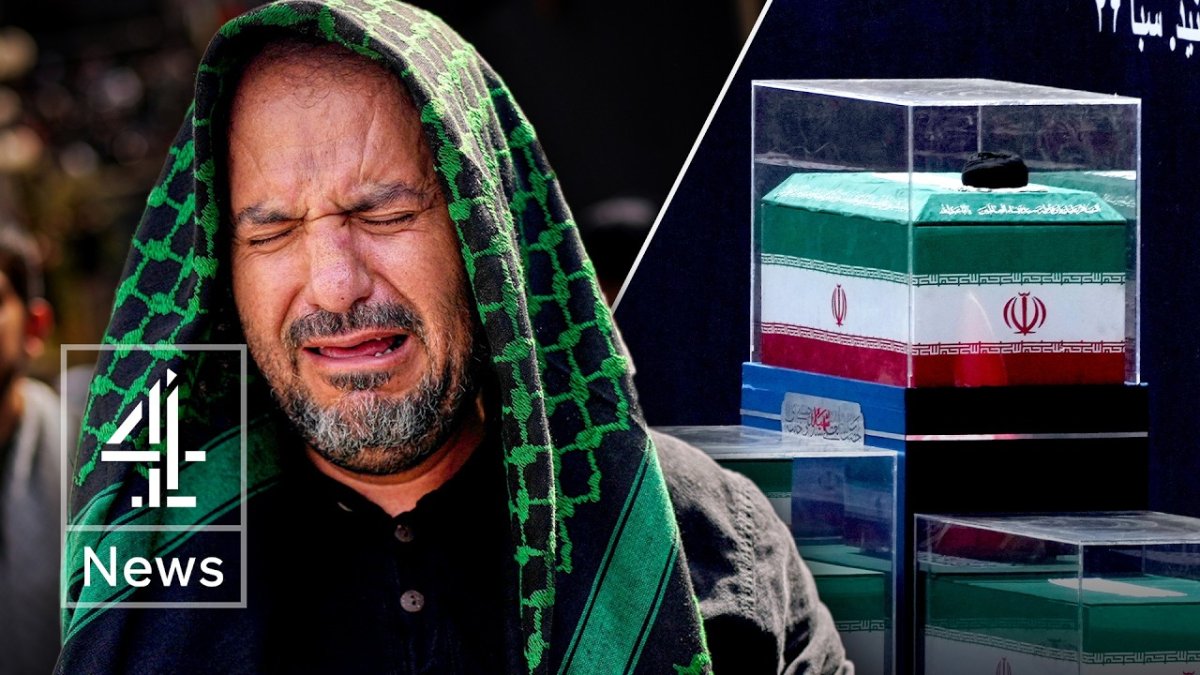
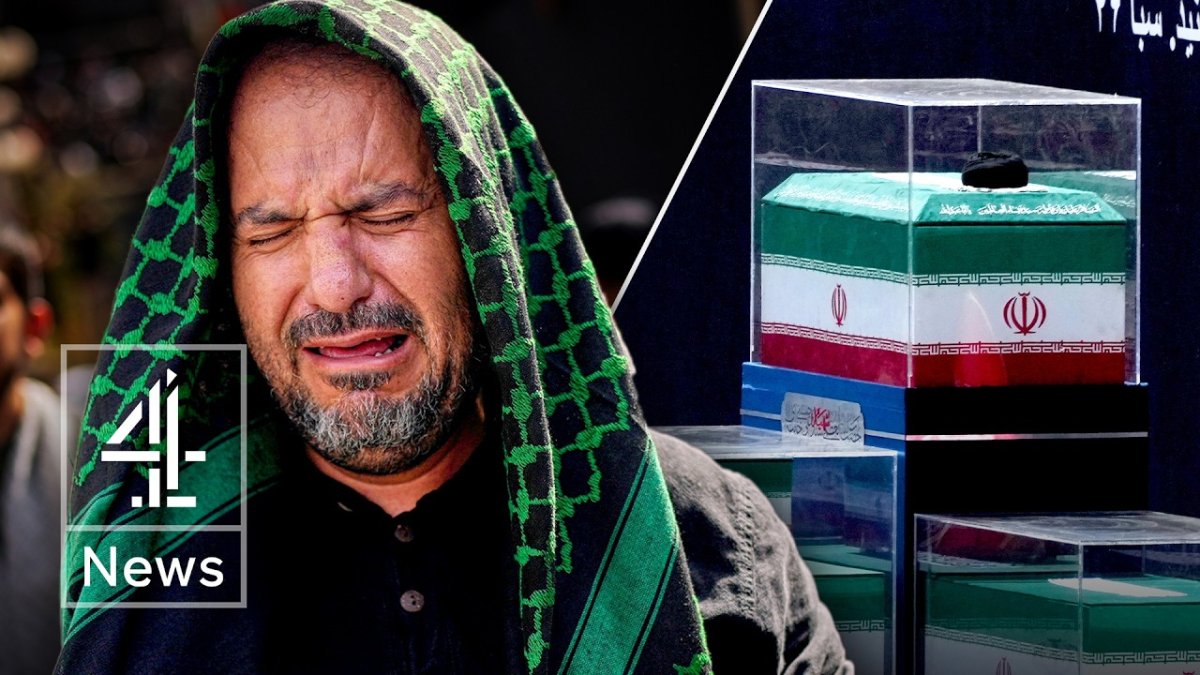
The six-day state funeral for Ayatollah Ali Khamenei, Iran's Supreme Leader for 36 years until his death in US-Israeli airstrikes on 28 February 2026, has become the largest public gathering in the country's modern history. Between 15 and 20 million mourners are expected across Tehran, Qom, Mashhad and two further cities from 4 to 9 July, with flag-draped coffins including that of his 14-month-old granddaughter Zahra displayed in glass cases at the long-unfinished Imam Khomeini Grand Mosalla complex. British officials have responded immediately, with the Foreign Office updating its travel advice and the Ministry of Defence monitoring regional airspace for potential evacuation routes.
Millions Mourn as Iran's Six-Day State Funeral for Ayatollah Khamenei Begins — UK Issues Travel Warning and Monitors Regional Fallout
London, UK – 5 July 2026 — The scale of mourning in Tehran this week has no recent parallel. Tens of thousands of Iranians filed past glass cases displaying the coffins of their slain leader on the first day alone, as Iranian authorities confirmed they expect between 15 and 20 million people to participate in ceremonies across five cities over six days. The remains of Khamenei and several family members were preserved for four months while security arrangements were finalised following the February airstrikes that killed the 86-year-old cleric.
The Unprecedented Scale of Mourning
Day one alone drew tens of thousands to the capital, with Khatam al-Anbiya imposing temporary airspace restrictions over Tehran and Mashhad to manage the influx. The ceremonies span five cities and include multiple processions through Tehran, Qom, and Mashhad. Ali Ghalibaf described the events as "one of the most significant moments" in Iran's history, a statement echoed by state media as a deliberate signal of continuity and regime strength.
Logistical demands are immense. Temporary infrastructure has been erected at the Mosalla site, which remained incomplete for three decades, while additional venues in Qom and Mashhad have been prepared for overflow crowds. The scale exceeds any previous state funeral, including that of Ayatollah Khomeini in 1989. Iran's entire senior leadership is expected to appear at some point across the six days, making the ceremonies both a farewell and a public display of institutional unity.
Family, Succession and the Rise of Mojtaba
Mojtaba Khamenei has been named the new Supreme Leader. His wife was also killed in the same airstrike that claimed his father and the 14-month-old granddaughter Zahra Mohammadi Golpayegani, whose small coffin has drawn particular attention during the processions. The succession marks a generational shift within the theocratic elite, moving from Ali Khamenei's 36-year rule to his son's more confrontational posture.
Early indications suggest a sharp departure from the calculated restraint sometimes exercised by his father. Mojtaba has already criticised neighbouring states and signalled willingness to escalate regional conflict. Unlike his father, who navigated between hardline and pragmatic factions, the new Supreme Leader has chosen direct confrontation, attacking neighbouring countries and pushing tensions with the US and Israel to the edge.
The six-day funeral serves as a public test of his authority. Every senior figure in Iran's political and religious establishment is expected to appear, providing opportunities for both displays of loyalty and subtle challenges to the new order. British diplomats in the region are analysing every public statement for clues about future nuclear policy and regional proxy activity.
Chants, Slogans and the Mood on Tehran's Streets
Mourners have chanted "Death to America" and "Death to Israel" throughout the processions. Some placards have called explicitly for the assassination of US President Donald Trump, reflecting heightened anti-Western sentiment in the wake of the February airstrikes. The fact that four months have passed since Khamenei's death has not diminished the raw emotion on display — if anything, the delay has allowed the regime to organise a show of strength calibrated for maximum impact.
Security forces have maintained a visible presence but have not prevented the display of these messages. The atmosphere combines genuine grief with political mobilisation, a combination that Iranian authorities appear content to channel. Foreign observers note that the scale of participation also reflects organised transport from provinces, raising questions about how much is spontaneous and how much is directed by state institutions.
Western Reaction and the Diplomatic Calculus
US President Donald Trump stated that the United States would observe "a week off" for mourning before negotiations resume on 11 July in Pakistan. The talks, brokered by Pakistani mediators, will focus on Iran's nuclear programme, sanctions relief, and Tehran's billions in frozen assets abroad. UK officials privately fear the interval will be used to consolidate Mojtaba's authority rather than de-escalate tensions.
European capitals have adopted a more cautious stance. British diplomats in the region are analysing every public statement from the new leadership, while the Ministry of Defence continues to track Iranian missile movements and monitor airspace restrictions. The pause in diplomacy is viewed as temporary — both sides have signalled that the core issues of uranium enrichment limits and sanctions relief remain on the table once the funeral period concludes.
What This Means for the UK
The Foreign Office's "against all travel" advisory directly affects British nationals still in Iran, who have been urged to leave via commercial routes where possible. The Ministry of Defence has contingency plans should commercial options close, and evacuation assets remain on standby. British families with relatives working in Tehran or the Iranian oil sector now face prolonged uncertainty over return dates and safety.
The Home Office has stepped up monitoring in cities with significant Iranian populations. In London's Kensington and Chelsea, Manchester's Rusholme district, Birmingham's Sparkbrook area and Glasgow's Southside, community leaders report increased police presence and requests for information on potential spillover demonstrations. The Home Office has contingency plans for managing protests in at least four major cities.
Regional Stability and Energy Concerns
Energy traders in the City of London have already priced in supply disruption risks, with Brent crude futures rising on the first day of the funeral. Traders at firms headquartered in the Square Mile have modelled scenarios in which Iranian exports drop by 500,000 barrels per day — a figure that would push petrol prices above 150 pence per litre at UK forecourts within weeks. Any sustained increase will feed through to household bills across the UK by autumn.
The Treasury has been briefed on fiscal exposure should energy prices remain elevated into the winter. Lower-income households in Scotland and the North East, already facing higher heating costs, would be disproportionately affected. Parliament's next session will consider defence spending decisions partly shaped by Iran's evolving missile and nuclear posture, with MPs representing northern constituencies reliant on manufacturing jobs tied to defence contracts watching developments closely.
Neighbouring states have also expressed concern over Mojtaba Khamenei's early rhetoric. Gulf capitals fear renewed attacks on shipping lanes, while Turkey and Pakistan monitor border areas for possible refugee flows. The instability comes at a time when European energy security is already fragile following the Russia-Ukraine conflict.
The Bottom Line — What Comes Next
Negotiations scheduled for 11 July in Pakistan will test whether Mojtaba Khamenei intends to pursue confrontation or pragmatic engagement. British officials expect the new leader to demand significant sanctions relief before any nuclear concessions, while the US has signalled it will not ease pressure without verifiable limits on enrichment.
Domestic UK preparations continue. The Foreign Office maintains daily contact with diplomatic posts, the Ministry of Defence keeps evacuation assets on standby, and the Home Office has contingency plans for managing protests in at least four major cities. Parliament's summer recess looms, meaning any rapid deterioration would require recalling MPs from constituency breaks.
The funeral period ends on 9 July. By 11 July the world will know whether Iran's new leadership chooses escalation or negotiation, with direct consequences for British energy prices, defence budgets and community relations in London, Birmingham, Manchester and Glasgow. For now, the Foreign Office continues to coordinate with European partners while ordinary Britons with ties to Iran wait for clearer travel corridors to reopen and the City watches oil futures with growing unease.
By Erica Thornton, Staff Writer
This article was produced with AI-assisted research and editorial support. Reporting is based on sources cited in the article.
What's Your Reaction?
 Like
0
Like
0
 Dislike
0
Dislike
0
 Love
0
Love
0
 Funny
0
Funny
0
 Wow
0
Wow
0
 Sad
0
Sad
0
 Angry
0
Angry
0

US Politics and Policy Correspondent at Global1.News. Based in Washington DC, covering American politics, policy, elections, and the courts. Knows how the system works and tells you what it actually means.










Comments (0)