
Japan positioned to link U.S. and Europe in a fragmented world
Keywords: Japan FOIP strategy, G7 Evian 2026, Sanae Takaichi, US-Europe relations, Indo-Pacific, ASEAN partnerships The Transatlantic Drift and Japan's Unique Position Relations between the United States and Europe have shown clear signs of strain during President Trump's second term. Trade disputes, disagreements over security burden-sharing, and differences on regulatory stan
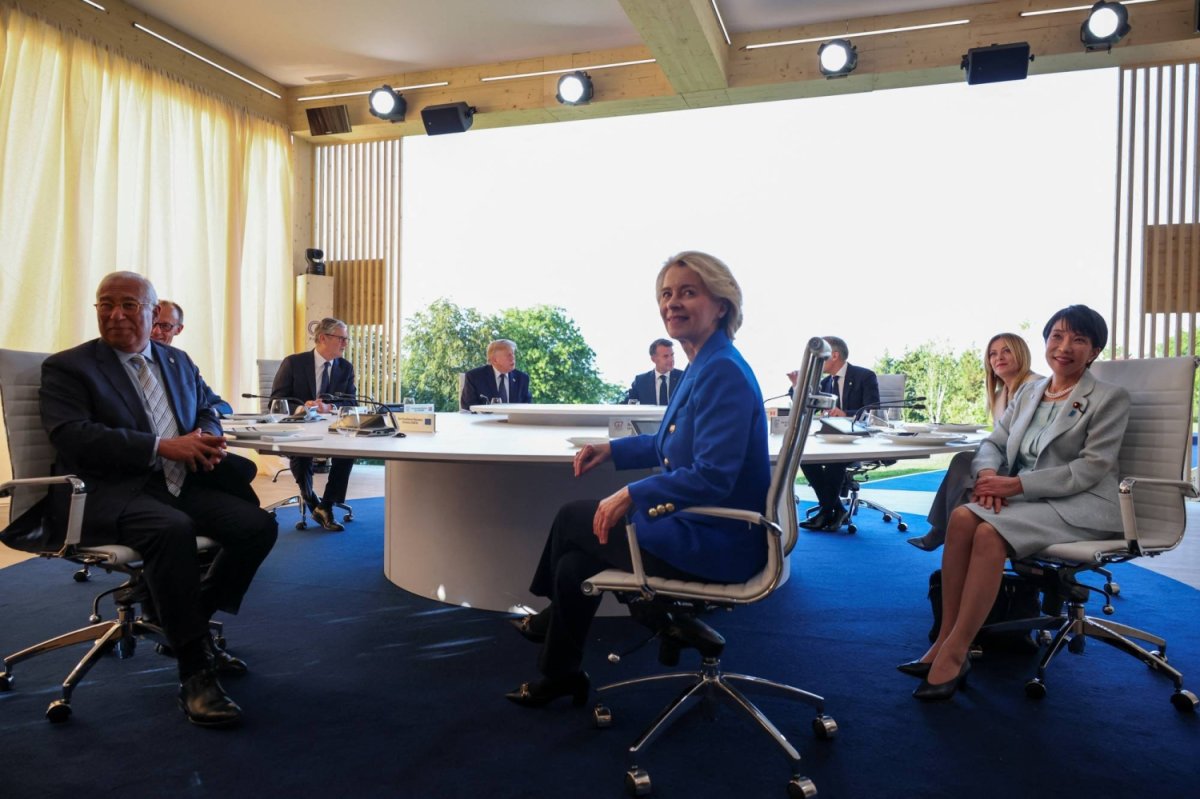
The Transatlantic Drift and Japan's Unique Position
Relations between the United States and Europe have shown clear signs of strain during President Trump's second term. Trade disputes, disagreements over security burden-sharing, and differences on regulatory standards have created friction that was visible in public exchanges. This drift has raised questions about the cohesion of traditional transatlantic institutions.
Japan occupies a distinctive position in this environment. As a long-standing treaty ally of the United States and a close economic partner to the European Union, Tokyo maintains channels with both sides. Its diplomatic approach emphasizes coordination rather than alignment with any single bloc, allowing it to function as a potential connector.
Ministry of Foreign Affairs officials have historically framed Japan's role through the lens of rules-based order and economic interdependence. This positioning gains relevance when Washington and Brussels diverge on issues such as tariffs or defense spending targets. Japan's network of bilateral and multilateral agreements provides practical avenues for maintaining dialogue across the Atlantic divide.
Prime Minister Sanae Takaichi's government has continued this pattern while updating existing frameworks. The approach avoids direct mediation and instead focuses on shared functional priorities that both the United States and European partners can support without requiring full consensus on every bilateral issue.
The Evian G7 Summit as a Window
The 52nd G7 Summit took place in Evian, France, from June 15 to 17, 2026. Prime Minister Sanae Takaichi, President Trump, and European Commission President Ursula von der Leyen participated in the meetings. Discussions covered trade, security, and technology standards, areas where prior coordination had been uneven.
Japan used the summit to highlight its updated Free and Open Indo-Pacific strategy. Rather than proposing new institutional mechanisms, Tokyo emphasized existing cooperation formats that could accommodate differing transatlantic priorities. This included references to supply chain resilience and technology governance that align with both U.S. and European interests.
Ministry of Economy, Trade and Industry representatives accompanying the delegation focused on practical outcomes in critical materials and digital infrastructure. These topics allowed Japan to present concrete projects without requiring immediate resolution of broader trade disagreements between Washington and Brussels.
Observers noted that Japan's interventions remained measured. The delegation avoided framing the summit as a venue for resolving transatlantic differences and instead positioned FOIP as a complementary platform that could proceed regardless of the pace of U.S.-EU alignment.
Updated FOIP: Three Priorities in Detail
Prime Minister Sanae Takaichi presented the revised FOIP strategy on May 2, 2026, at Vietnam National University in Hanoi. The update retained the original emphasis on openness and inclusivity while specifying three operational priorities. These priorities reflect both economic and security dimensions that Japan has pursued through successive administrations since Shinzo Abe first articulated the concept.
The first priority centers on artificial intelligence and data infrastructure alongside supply chain resilience for energy and critical materials. This area involves coordination with both U.S. technology firms and European regulatory frameworks. Japanese agencies, including METI, have supported pilot projects that test standards for data flows and resource security without mandating uniform adoption.
The second priority addresses public-private growth co-creation and rule sharing. This includes mechanisms for joint investment and standard-setting that allow participating countries to adapt guidelines to their domestic contexts. Japan has drawn on its experience with quality infrastructure initiatives to illustrate how such cooperation can function across diverse regulatory environments.
The third priority focuses on security cooperation aimed at regional peace and stability. This component builds on existing bilateral and trilateral exercises while remaining open to additional partners. The strategy document stresses that participation remains voluntary and does not require alignment with any single security architecture.
Japan-ASEAN: Partnerships in Practice
ASEAN occupies a central place in Japan's FOIP implementation. The strategy treats ASEAN as an equal partner whose ASEAN Outlook on the Indo-Pacific shares principles of inclusivity and non-confrontation. This alignment allows Japan to advance cooperation through established ASEAN-led forums rather than creating parallel structures.
Vietnam serves as a concrete example of this approach. The Japan-Vietnam Comprehensive Strategic Partnership has produced multiple JICA-supported port and infrastructure projects with a planned total value of approximately 209 billion dollars. These initiatives focus on connectivity and logistics capacity that benefit both Vietnamese development goals and broader regional supply chain stability.
Implementation has proceeded through established channels involving the Ministry of Foreign Affairs and JICA. Projects emphasize local capacity building and technology transfer, consistent with Japan's long-standing development cooperation model. Progress reports indicate steady advancement on port modernization and related transport links as of mid-2026.
This ASEAN-centered model provides Japan with practical experience in managing diverse partner expectations. It also offers a template that could be referenced when engaging U.S. and European counterparts on overlapping Indo-Pacific objectives without requiring identical policy positions.
The China Factor
China's response to Japan's FOIP activities has included concrete measures. Beijing blacklisted twenty Japanese entities and issued statements accusing Japan of reckless militarism. These actions occurred against the backdrop of ongoing territorial and maritime tensions in the East China Sea and South China Sea.
Japan has characterized its approach as pragmatic risk-hedging. A Japan Institute of International Affairs report by Professor Mie Oba of Kanagawa University describes this stance as one that maintains economic engagement while strengthening resilience in critical sectors. The report notes that Tokyo has avoided framing FOIP as an explicit containment mechanism.
Prime Minister Takaichi has repeatedly stated that FOIP does not impose requirements on any country and has grown flexibly by accepting a diversity of voices. This language appears designed to signal openness to dialogue even as security cooperation components advance with like-minded partners.
Japanese officials have continued to separate economic and security tracks in public statements. This separation allows continued participation in certain multilateral economic forums while expanding defense-related exchanges with the United States, Australia, and European partners on a bilateral basis.
Implications for Japan's Global Role
Japan's current positioning suggests a gradual expansion of its diplomatic toolkit. Rather than seeking leadership through new institutions, Tokyo is leveraging existing partnerships and updated strategies to maintain relevance across multiple alignments. This approach aligns with the country's postwar emphasis on economic diplomacy supplemented by selective security cooperation.
The FOIP update demonstrates continuity with earlier iterations while adapting to contemporary technology and supply chain concerns. By anchoring the strategy in ASEAN-centered cooperation, Japan reduces the risk that its initiatives become viewed solely through the lens of great-power competition.
At the same time, sustained engagement with both Washington and Brussels requires careful calibration. Japan's ability to advance FOIP priorities will depend on whether U.S. and European partners continue to see value in the functional areas Tokyo has identified, even as bilateral frictions persist.
Ministry statements indicate that Japan intends to monitor implementation progress through established reporting mechanisms rather than setting rigid deadlines. This measured pace reflects awareness of the variable pace of international coordination.
What to Watch For
Implementation of the three FOIP priorities will provide the clearest indicators of momentum. Specific milestones in AI governance pilots, critical materials supply agreements, and port project disbursements in Vietnam and elsewhere will offer measurable benchmarks through 2027.
U.S. domestic political developments remain relevant. Any shifts in trade or security policy following the next U.S. election cycle could alter the context in which Japan coordinates with Washington. European regulatory timelines on digital and technology standards will similarly influence the scope for joint rule-sharing initiatives.
Chinese reactions will continue to shape the operating environment. Further entity listings or diplomatic statements from Beijing could prompt adjustments in Japan's public messaging, though the core elements of FOIP appear designed to withstand such pressure without fundamental revision.
Finally, ASEAN member states' responses to individual projects and the broader strategy will test the claim of equal partnership. Concrete outcomes from JICA-supported initiatives and parallel private-sector investments will indicate whether the inclusive framing translates into sustained regional buy-in.
By Kenji Tanaka, Staff Writer
This article was produced with AI-assisted research and editorial support. Reporting is based on sources cited in the article.
What's Your Reaction?
 Like
0
Like
0
 Dislike
0
Dislike
0
 Love
0
Love
0
 Funny
0
Funny
0
 Wow
0
Wow
0
 Sad
0
Sad
0
 Angry
0
Angry
0

Japan Correspondent at Global1.News. Tokyo-based voice covering Japanese politics, technology, economy, and culture. Tracks the intersection of tradition and innovation in one of the world's most dynamic societies.












Comments (0)