
Mexico Deploys 100,000 Troops for World Cup Security Amid Protests and Cartel Violence
**Meta Title:** Mexico Bolsters Security for 2026 World Cup Amid Protests and Cartel Violence **Meta Description:** President Claudia Sheinbaum guarantees safe 2026 World Cup opening at Estadio Azteca despite CNTE teacher protests occupying Zócalo fan zone and cartel violence after El Mencho killing. 100,000 troops deployed. **Keywords:** Mexico World Cup 2026 security, Claudia
As Mexico gears up to co-host the 2026 FIFA World Cup alongside the United States and Canada, the nation confronts a multifaceted security crisis that could test its organizational capacity and international reputation. With the tournament set to draw millions of visitors, underlying tensions from domestic protests, organized crime, and logistical strains have raised alarms among fans, officials, and global observers. A recent DW News report titled "Is Mexico safe for the World Cup?" highlights these concerns while featuring President Claudia Sheinbaum's firm stance that fans face no significant risks.
Mexico Confronts Security Crisis Ahead of 2026 World Cup
The Stage is Set for the World Cup Opener
The 2026 World Cup will kick off on June 11 with Mexico facing South Africa at the iconic Estadio Azteca in Mexico City. This match marks the beginning of a massive event involving 48 teams competing across 16 cities in three countries. Organizers anticipate up to 5 million tourists flooding into the region from June 11 through July 19, creating unprecedented demands on transportation, lodging, and public safety infrastructure. The scale of the tournament represents a historic expansion, with matches spread over an extended period to accommodate the larger field of participants.
Estadio Azteca, a venue steeped in soccer history, will host several high-profile games, underscoring Mexico's central role in the co-hosting arrangement. However, the influx of visitors brings heightened scrutiny to security protocols in urban centers and tourist destinations alike. Local businesses are preparing for economic boosts, yet concerns linger about crowd management during peak periods when multiple matches occur simultaneously across borders. FIFA officials have emphasized coordination between the three host nations to ensure seamless operations.
Preparations have included extensive upgrades to stadiums and fan zones, but the human element remains critical. Volunteers and local authorities are undergoing training to handle diverse international crowds, focusing on cultural sensitivity and emergency response. The opening match symbolizes national pride for Mexico, yet it also serves as a litmus test for the country's ability to deliver a safe and memorable experience amid ongoing challenges.
President Sheinbaum's Bold Guarantees
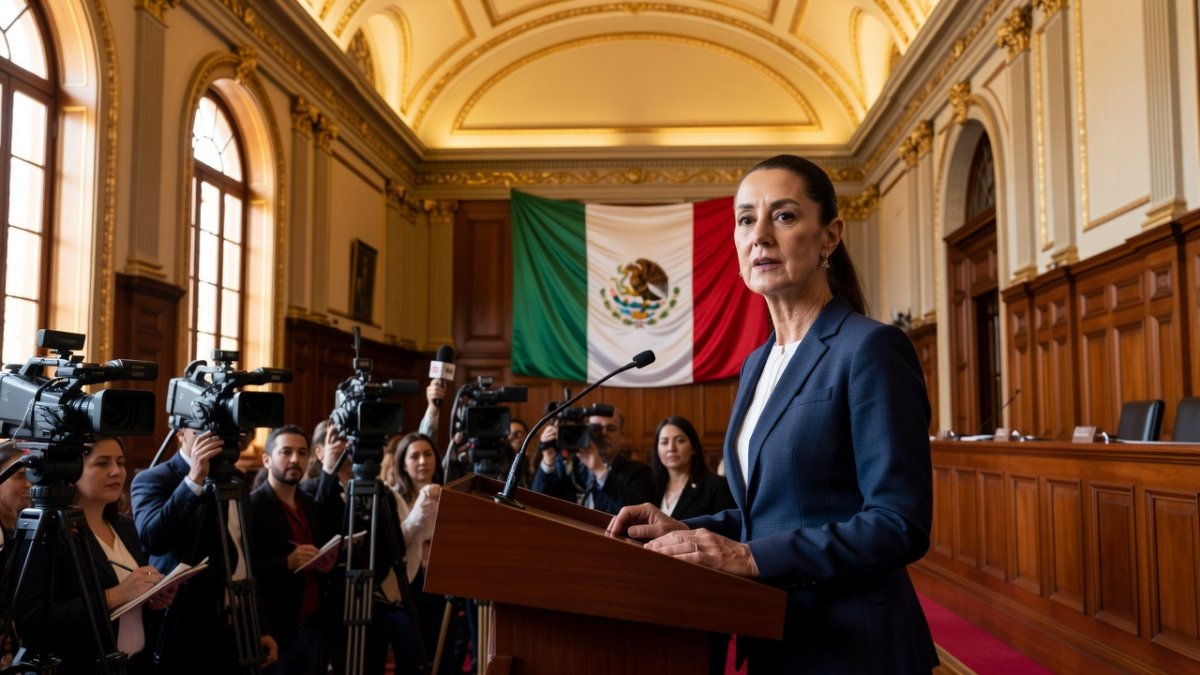
Claudia Sheinbaum, Mexico's first female president elected in 2024 under the Morena party banner, addressed security worries directly on June 8. She guaranteed a peaceful opening ceremony and assured the world that fans would encounter no risks during their stay. Her comments came in response to the DW News report questioning Mexico's readiness, where she stressed that federal strategies have been calibrated to neutralize potential threats without disrupting the festivities.
Sheinbaum's administration has prioritized international diplomacy to project stability. In public addresses, she highlighted collaborative efforts with FIFA and neighboring hosts to monitor developments in real time. This approach reflects her background in environmental science and governance, applying data-driven methods to anticipate issues before they escalate. Critics, however, argue that such assurances overlook persistent domestic grievances that could spill over into event venues.
Supporters of the president point to her decisive leadership style as a stabilizing force. She has convened regular briefings with security chiefs to refine contingency plans, ensuring rapid response capabilities. As the tournament approaches, Sheinbaum continues to balance these hosting duties with pressing national reforms, positioning Mexico as a capable partner on the global stage.
Teacher Protests Disrupt Fan Zones
The CNTE teachers' union has occupied the Zócalo fan zone in Mexico City, transforming a key World Cup gathering spot into a site of contention. Rejecting a 9 percent salary increase offer, the educators demand a 13 percent raise along with improved pension benefits. Their sit-in, which began weeks before the tournament, has already led to clashes, including police deployment of tear gas on June 1 to clear pathways.
Protesters escalated actions by tearing down FIFA promotional statues along Paseo de la Reforma, drawing widespread media attention. These symbolic acts underscore frustrations with government priorities, as teachers argue that education funding should take precedence over international spectacles. The occupation has forced organizers to reroute fan activities, impacting local commerce and visitor access to central attractions.
Negotiations between the union and federal representatives remain stalled, with both sides entrenched in their positions. The protests highlight broader labor unrest in Mexico, where public sector workers seek better conditions amid inflation pressures. Event planners now face the delicate task of maintaining festive atmospheres while respecting rights to assembly, potentially requiring additional security buffers around sensitive sites.

Cartel Violence Escalates in Tourist Areas
Cartel-related violence has surged following the February 2026 killing of notorious leader El Mencho in Jalisco state. Rival factions have intensified turf battles, affecting popular destinations such as Cancún and Puerto Vallarta where World Cup tourists are expected to converge. These incidents have prompted travel advisories from several nations, complicating efforts to promote Mexico as a secure host.
Authorities report increased incidents of extortion and targeted attacks near resort areas, raising fears that spillover could reach event attendees. Tourism operators are implementing private security measures, yet the underlying power struggles within criminal organizations show no signs of abating quickly. The timing coincides with peak visitor seasons, amplifying economic vulnerabilities for coastal communities reliant on international visitors.
Federal responses include targeted operations to dismantle networks, but critics note that such measures often yield temporary lulls rather than lasting peace. The violence underscores systemic challenges in regions where governance gaps allow cartels to thrive. For the World Cup, this reality necessitates vigilant monitoring to prevent any direct impact on fan safety or event scheduling.
Deployment of Security Forces
In response to these threats, Mexico has mobilized approximately 100,000 personnel from SEDENA, SEMAR, and the Guardia Nacional. This substantial deployment aims to secure stadiums, fan zones, and transportation hubs throughout the tournament window. Opposition parties PAN and PRI have voiced sharp criticisms, labeling the strategy as overly militarized and insufficiently focused on root causes of unrest.
Training exercises have emphasized coordination between military and civilian police units to handle large crowds effectively. Resources include advanced surveillance technology and rapid intervention teams stationed at key locations. While the scale demonstrates commitment, questions persist about sustainability and potential overreach in urban settings where protests are active.
Opposition lawmakers advocate for community-based approaches that address social inequalities fueling discontent. They argue that visible military presence might intimidate rather than reassure international visitors. Sheinbaum's government counters that the forces are essential for deterrence, drawing on past successes in major events to justify the investment.
Iran's Team Arrival Amid Visa Tensions
The Iranian national team has arrived in Mexico despite ongoing disputes over U.S. visa processing for support staff. FIFA continues close monitoring of the situation to ensure compliance with tournament regulations. This development adds a layer of diplomatic complexity, as geopolitical frictions between the U.S. and Iran could influence team logistics and fan interactions.
Coordinators have worked to facilitate smooth entry for players while navigating bureaucratic hurdles. The episode illustrates the interconnected nature of the co-hosted event, where policies in one country affect operations in others. FIFA representatives have urged all parties to prioritize the spirit of the competition over external conflicts.
Team preparations proceed under heightened security, with Iranian officials expressing confidence in Mexican hospitality. This arrival serves as an early indicator of how the tournament will manage diverse national delegations amid varying international relations. Ongoing FIFA oversight seeks to prevent any disruptions that could mar the event's inclusive ethos.
Renovation Woes at Estadio Azteca
Extensive renovations at Estadio Azteca have inadvertently caused water shortages in nearby neighborhoods like Santa Úrsula and Xoco. Construction activities diverted resources, leaving residents without reliable supply during critical preparation phases. These disruptions have sparked local complaints and highlighted trade-offs between event infrastructure and community needs.
Engineers have since implemented mitigation measures, including temporary pipelines and scheduled restorations. However, the episode reveals planning oversights that could erode public support for the World Cup if not resolved promptly. Affected communities have organized petitions calling for compensation and better future coordination.
Stadium upgrades were intended to meet FIFA standards for capacity and amenities, yet the collateral effects underscore the challenges of large-scale projects in densely populated areas. Officials promise full remediation before the opening match, aiming to restore normalcy and rebuild trust among locals impacted by the preparations.
Balancing Act for the Host Nation
President Sheinbaum must navigate the delicate balance between fulfilling international hosting obligations and addressing domestic unrest through July 19. The World Cup offers opportunities for economic growth and global visibility, yet persistent protests and security issues threaten to overshadow these benefits. Strategic communications emphasize unity and resilience as core themes.
Long-term implications include potential reforms in labor relations and security policies spurred by the event's pressures. Success hinges on adaptive management that incorporates feedback from stakeholders across sectors. As the tournament unfolds, Mexico's performance will shape perceptions of its stability for years to come.
Ultimately, the 2026 World Cup represents both a challenge and an opportunity for national progress. With careful execution, Mexico can emerge stronger, demonstrating its capacity to host world-class events while fostering internal harmony.
By Rosa Martinez, Staff Writer
This article was produced with AI-assisted research and editorial support. Reporting is based on sources cited in the article.
What's Your Reaction?
 Like
0
Like
0
 Dislike
0
Dislike
0
 Love
0
Love
0
 Funny
0
Funny
0
 Wow
0
Wow
0
 Sad
0
Sad
0
 Angry
0
Angry
0
Latin America/Andes Correspondent at Global1.News. Based in Bogota, covering politics, environment, energy, and social movements across the Andean region. Passionate about environmental journalism and communities protecting their land.









Comments (0)