
Morena Double Filter Screening for 2027 Candidates
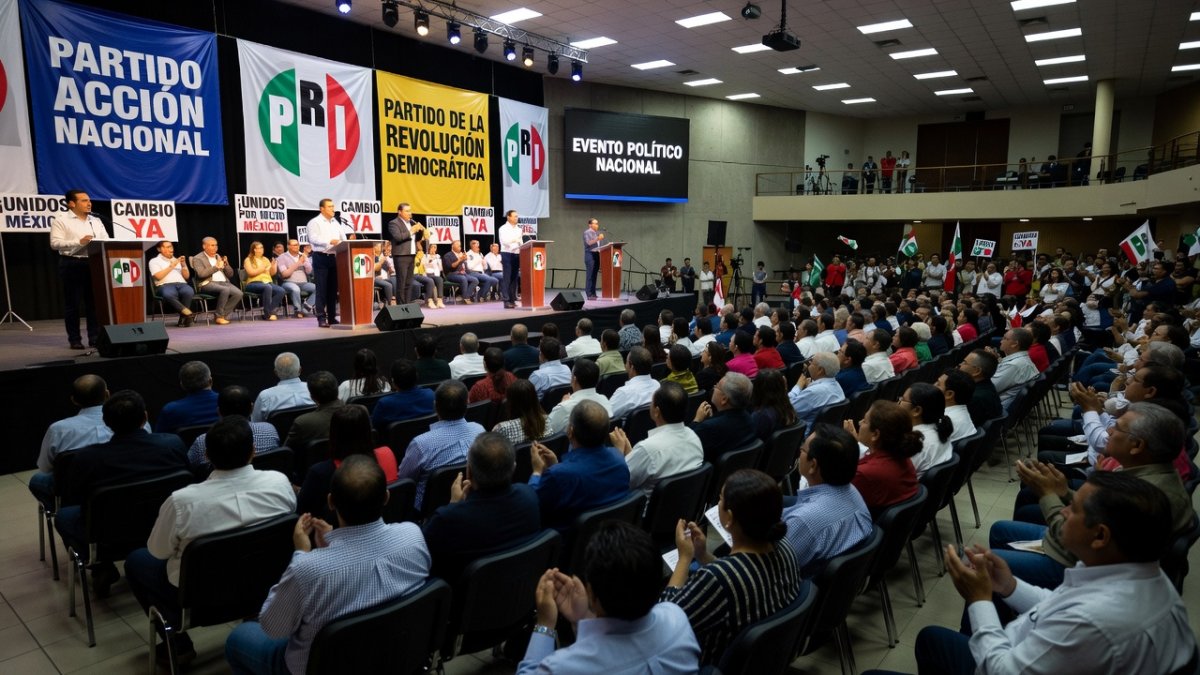
Morena Leadership Unveils New Candidate Screening Morena, Mexico's ruling party, has taken a significant step to reinforce its commitment to clean politics ahead of the 2027 elections. Party President Ariadna Montiel, who assumed the role recently, announced the measure during a press conference this week. The initiative introduces a "double filter" designed to verify that candidates for the 500 seats in the Chamber of Deputies and the 17 state governorships have no crimin...
Morena Leadership Unveils New Candidate Screening
Morena, Mexico's ruling party, has taken a significant step to reinforce its commitment to clean politics ahead of the 2027 elections. Party President Ariadna Montiel, who assumed the role recently, announced the measure during a press conference this week. The initiative introduces a "double filter" designed to verify that candidates for the 500 seats in the Chamber of Deputies and the 17 state governorships have no criminal links or unresolved legal issues.
Ariadna Montiel brings a deep understanding of social programs and community needs to her role as party president, having served as Secretary of Welfare under both the previous administration and the current one. Her experience in overseeing initiatives that reach families in every corner of the country gives her a grounded perspective on what honest leadership looks like at the local level. This background helps shape a screening process that values not only the absence of scandals but also a proven record of serving the people with care.
How the Double Filter Process Will Work
Under the plan, one layer of review will be handled internally by Morena itself. A second check may involve the federal government's Security Cabinet, provided it agrees to participate. The party's National Council has already approved this screening mechanism. Officials emphasize that the goal is to exclude anyone with ties to organized crime, prior corruption convictions, or other legal complications from running under the Morena banner. This approach builds on the anti-corruption emphasis that has defined the party under previous leadership and continues under the Sheinbaum administration.
The party-level review will examine detailed background checks, full financial disclosures, and complete records from any prior public service roles to catch potential issues early. Teams within Morena will cross-reference these materials against available legal and administrative databases, ensuring candidates meet clear standards before moving forward. This internal step aims to catch problems that could later affect entire communities relying on fair representation.
Other major parties in Mexico have long used their own vetting methods, though often with less public detail about the exact steps involved. PAN, PRI, and Movimiento Ciudadano each maintain internal committees that review candidate histories, yet Morena's double filter stands out for its potential link to federal security resources when needed. This layered model draws interest because it combines party responsibility with possible government support, creating a more thorough net than single-party reviews alone.
Similar candidate integrity systems appear in several other countries, where parties or independent bodies conduct background and financial reviews before elections. These approaches help reduce the risk of later scandals and give voters more confidence in the names on their ballots. Morena's version adapts this idea to Mexico's context, focusing on organized crime ties and unresolved legal matters that matter most to everyday citizens.
Connecting to Mexico's Broader Political Traditions
Morena has held a dominant position in Mexican politics since 2018, securing the presidency and strong majorities in Congress. The new screening reflects ongoing efforts to align candidate selection with the values promoted from Palacio Nacional. By focusing on transparency at the party level, leaders aim to maintain public trust in institutions such as the Congreso de la Unión and the SCJN. The measure also responds to recent controversies, including narco-accusations involving figures like Sinaloa Governor Rubén Rocha Moya, which surfaced around the time Montiel took office.
Effects on Everyday Mexican Communities
For families in states preparing to elect new governors and for residents in districts choosing federal deputies, this screening could influence the quality of representation they receive. Communities across Mexico often feel the direct impact of governance decisions on local economies, public safety, and access to services. By prioritizing candidates without questionable backgrounds, the process seeks to support leaders who can focus on issues like regional development and social programs that matter most to working people in both urban centers and rural areas.
Many Mexican households view political integrity as essential to daily life, from ensuring fair distribution of resources to strengthening local institutions. The double filter may help reduce the influence of external pressures on elected officials, allowing them to better serve neighborhoods that have long advocated for accountable leadership rooted in the country's cultural emphasis on community and fairness.
In colonias and ejidos across the country, families often see the results of political choices in the quality of local roads, schools, and health services. When candidates face real screening, residents gain hope that their elected officials will focus on these practical needs rather than personal gain. This matters especially in rural areas where people depend on steady support for agriculture and basic infrastructure that keeps communities connected.
Corruption scandals over the years have left many Mexican households wary of politicians, eroding the trust that once helped social programs reach those who need them most. Indigenous communities and campesinos, in particular, have voiced concerns that outside influences can divert resources meant for their regions. A stronger screening process offers a chance to rebuild that confidence by selecting leaders less likely to be swayed by hidden interests.
Cleaner candidate pools could directly improve how programs like IMSS-Bienestar, Sembrando Vida, and Jóvenes Construyendo el Futuro reach working families. When officials enter office without lingering questions about their backgrounds, they can dedicate more attention to expanding these supports in both urban centers and distant villages. This focus on integrity ultimately strengthens the sense of fairness that Mexican communities hold dear.
Continuing the Anti-Corruption Focus Under Sheinbaum
President Claudia Sheinbaum has carried forward the anti-corruption agenda established during the previous administration. Morena's decision to implement these checks aligns with that direction, reinforcing the party's identity as one dedicated to ethical governance. While the Security Cabinet's involvement remains conditional, the party's own internal review provides an immediate layer of oversight for the 2027 contests.
Political Reactions and Opposition Response
Leaders from PAN, PRI, and Movimiento Ciudadano have voiced a mix of skepticism and cautious interest in the new screening plan. Some opposition figures question whether the process will apply evenly or if it serves mainly as a public relations effort, pointing to past cases involving Morena members that raised eyebrows. At the same time, others acknowledge that any step toward greater transparency deserves consideration if it truly protects the electoral system.
Political analysts note that the announcement comes at a moment when voters are watching all parties closely for signs of genuine reform. While some critics accuse Morena of overlooking its own earlier controversies, supporters argue the double filter represents progress that could set a higher bar for everyone. The debate shows how deeply Mexicans care about honest leadership and how opposition voices keep pressure on the ruling party to deliver results.
Preparing for the 2027 Electoral Cycle
The 2027 elections will select hundreds of federal legislators and nearly two dozen state executives, shaping policy directions for years to come. Morena's screening comes at a time when voters across Mexico are paying close attention to how parties select their representatives. By addressing potential risks early, the party hopes to present candidates who reflect the priorities of ordinary citizens rather than special interests.
The 2027 contests will decide leadership in 17 states and fill all 500 seats in the Chamber of Deputies, making candidate quality a central issue for voters. Morena's current strength in many governorships means the screening could shape which names advance and how the party maintains its broad support. By applying these checks early, the party hopes to avoid surprises that might weaken its position in key regions.
Voters will likely judge the effort by how consistently and fairly the process unfolds in the months ahead. If the double filter produces candidates seen as trustworthy, it could strengthen Morena's appeal among families who prioritize integrity alongside practical policies. Observers expect the coming cycle to test whether this approach helps the party stay connected to the communities it serves while facing competition from other groups.
As the process unfolds, observers will watch how the double filter operates in practice and what it means for candidate pools in key regions. The emphasis remains on protecting the integrity of the electoral process while staying connected to the needs of Mexican families who rely on effective, trustworthy leadership.
Overall, the screening adds a new layer to how Mexicans think about the 2027 elections and the future direction of their states and federal representation. It invites everyone to pay closer attention to who runs and why, reinforcing the idea that clean politics benefits ordinary people in tangible ways.
Tags: Morena, anti-corruption, 2027 elections, Ariadna Montiel, Claudia Sheinbaum, Mexican politics
By Rosa Martinez, Staff WriterThis article was produced with AI-assisted research and editorial support. Reporting is based on sources cited in the article.
What's Your Reaction?
 Like
0
Like
0
 Dislike
0
Dislike
0
 Love
0
Love
0
 Funny
0
Funny
0
 Wow
0
Wow
0
 Sad
0
Sad
0
 Angry
0
Angry
0
Latin America/Andes Correspondent at Global1.News. Based in Bogota, covering politics, environment, energy, and social movements across the Andean region. Passionate about environmental journalism and communities protecting their land.










Comments (0)