
Iran and Israel Pause Strikes After First Direct Exchange Since April Ceasefire — Russia Watches From the Sidelines
In a recent BBC News report, the world learned that Iran and Israel have once again brought the Middle East to the brink of all-out war — only to pull back at the last moment. Over the course of 24 hours this weekend, the two countries exchanged direct fire for the first time since the fragile US-brokered ceasefire in April, raising fears that the 101-day conflict could spiral
In a recent BBC News report, the world learned that Iran and Israel have once again brought the Middle East to the brink of all-out war — only to pull back at the last moment. Over the course of 24 hours this weekend, the two countries exchanged direct fire for the first time since the fragile US-brokered ceasefire in April, raising fears that the 101-day conflict could spiral entirely out of control. Now, both sides say they are pausing — but neither is backing down.
Iran and Israel Pause Strikes After First Direct Exchange Since April Ceasefire — Russia Watches From the Sidelines
Moscow – This week — Iran and Israel have agreed to a temporary halt in military hostilities after trading direct strikes for the first time since the US-brokered ceasefire in April, but both sides have warned that any further breach will be met with a more severe response. The exchange, which unfolded over Sunday and Monday, marks the most dangerous escalation in the Iran war since the truce was signed two months ago, and it has drawn an immediate response from Washington — and a calculated silence from Moscow.

A Weekend of Fire: How the Ceasefire Unraveled
The latest escalation began on Sunday, when Iran launched a barrage of missiles toward Israel in retaliation for what Tehran described as an Israeli strike on Beirut's southern suburbs — a densely populated area where Hezbollah maintains a significant presence. Israeli authorities confirmed that Iranian missiles were directed at Jerusalem and central and southern Israel, triggering air raid sirens and sending civilians into shelters across the country. In response, the Israel Defence Forces (IDF) launched strikes deep inside Iranian territory in the early hours of Monday, targeting what military officials described as a petrochemical complex in the southwestern city of Mahshahr. According to an Israeli military official, the facility produced chemicals used in the manufacturing of ballistic missiles. Iran's Emergency Organisation chief, Jafar Miadfar, told the Tasnim news agency that the strikes injured 14 people in Mahshahr and one in Tehran. The exchange of fire marked the first time Israel and Iran had directly targeted each other's territory since the US-brokered ceasefire took effect in April, and it immediately raised questions about whether the truce — already under severe strain — could survive. Iranian officials in Tehran emphasized that the missile launches were a measured reply to prior Israeli actions in Lebanon, while Israeli sources in Jerusalem maintained that the Mahshahr strike was essential to disrupt Iran's ballistic missile supply chain.
Trump's Phone Call and the Fragile Pause
As the situation escalated, US President Donald Trump intervened directly. In a call with Netanyahu, Trump urged restraint, later telling the BBC: "All I did is say, 'We have to use sense.'" The White House confirmed that Trump had called the Israeli prime minister to discuss the crisis, and an Israeli official said Israel had halted its strikes at Trump's request. Trump also told the US news outlet Axios that he had warned Netanyahu he might find himself fighting alone if he continued the escalation. "I said, 'Bibi, you better be careful, or you will be on your own very soon,'" Axios quoted him as saying. In a televised statement on Monday, Netanyahu acknowledged the pause but struck a defiant tone. "Israel has a full right to self-defence, and we are exercising it as required," he said. He confirmed that the country was holding fire "at the moment," but stressed that the struggle against Iran and Hezbollah was "not finished." Meanwhile, Iran's armed forces announced they had stopped operations after delivering what they called a "painful response" to Israel, but they promised "more severe and crushing measures" if Israel carried out further strikes — including in Lebanon, where Israeli forces remain engaged in ground operations against Hezbollah in the country's south. Sarah Smith, BBC North America editor, noted that Trump's intervention highlighted Washington's desire to prevent wider regional involvement.
The Regional Toll: Lebanon Caught in the Crossfire
The violence was not confined to Israel and Iran. Lebanon's health ministry reported that five people had been killed and eight wounded in an Israeli strike on the southern city of Tyre on Monday. The Red Cross confirmed that four of its rescuers were among the injured. Hezbollah, the Iran-backed militia that controls much of southern Lebanon, responded by firing a rocket barrage at a group of Israeli army vehicles and soldiers in southern Lebanon on Monday morning. The exchange underscores how the Iran war has repeatedly drawn Lebanon into the conflict since Hezbollah launched rockets into Israel on 2 March in retaliation for the assassination of Khamenei. A US-brokered ceasefire deal between Israel and the Lebanese government has failed to halt the fighting, as Hezbollah has rejected the agreement, demanding a full Israeli withdrawal from Lebanese territory. The war has now killed at least 3,613 people in Lebanon, according to the country's health ministry, whose figures do not differentiate between combatants and civilians. Lebanese officials in Beirut have repeatedly called for international pressure to enforce the ceasefire and protect civilian areas in Tyre and surrounding regions.
Russia's Strategic Calculus: Profiting From the Shadows
The latest escalation in the Iran war places Moscow in a delicate position. Russia has maintained a longstanding partnership with Iran, driven by shared interests in countering US sanctions and expanding economic cooperation. During the conflict, Moscow has provided Tehran with intelligence support — including real-time data on US military positions in the Middle East, according to reports from CNN and The Washington Post. Russia has also abstained from United Nations Security Council resolutions critical of Iran, framing its position as opposition to what the Kremlin describes as US aggression. But Russia's support has been constrained by its own war in Ukraine. Analysts say Moscow has deliberately avoided direct military involvement in the Iran conflict to prevent straining its resources further. Despite these constraints, the war has proven financially beneficial for Russia. According to the Kyiv School of Economics Institute, the Iran conflict has driven Russian oil profits to approximately $760 million per day. Reuters calculations estimate that Russia's mineral extraction tax on oil output will increase from 327 billion roubles in March to around 700 billion roubles ($9 billion) in April. The blockade of the Strait of Hormuz — imposed by Iran early in the conflict — caused a surge in global oil prices that has disproportionately benefited Russian energy exports, which faced fewer buyers due to Western sanctions before the crisis began. Kremlin statements from Moscow have stressed Russia's interest in regional stability to safeguard its energy revenues while managing its commitments in Ukraine.
Diplomatic Maneuvering and a Fragile Path Forward
Iran's top negotiator, Mohammad Baqer Qalibaf, signaled in a Telegram post on Monday evening that the underlying conditions for the ceasefire violations remain unresolved. "Ceasefire violations and naval blockades have been the cause of recent tensions," he wrote, in what analysts interpreted as a reference to the US naval blockade of Iranian ports. "We are not going to fight or negotiate, but we are going to fight on our own time and negotiate on our own time." The statement reflects the paradoxical dynamic of the current moment: both sides have stepped back from the brink, but neither has committed to a durable ceasefire. Trump, for his part, has expressed optimism about a broader deal. "We're very close to signing a very powerful deal, a very good deal. No nuclear weapons, no nothing," he told the BBC. But the Israeli ambassador to the US, Yechiel Leiter, struck a different tone on X, writing: "No self-respecting country in the world would tolerate such an attack, and neither will Israel." Qatar and Turkey, working alongside Russia and Egypt, had previously helped delay earlier US moves against Iran, according to the Carnegie Endowment, illustrating how multiple regional actors continue to shape diplomatic outcomes.
Global Oil Markets and Broader Economic Ripple Effects
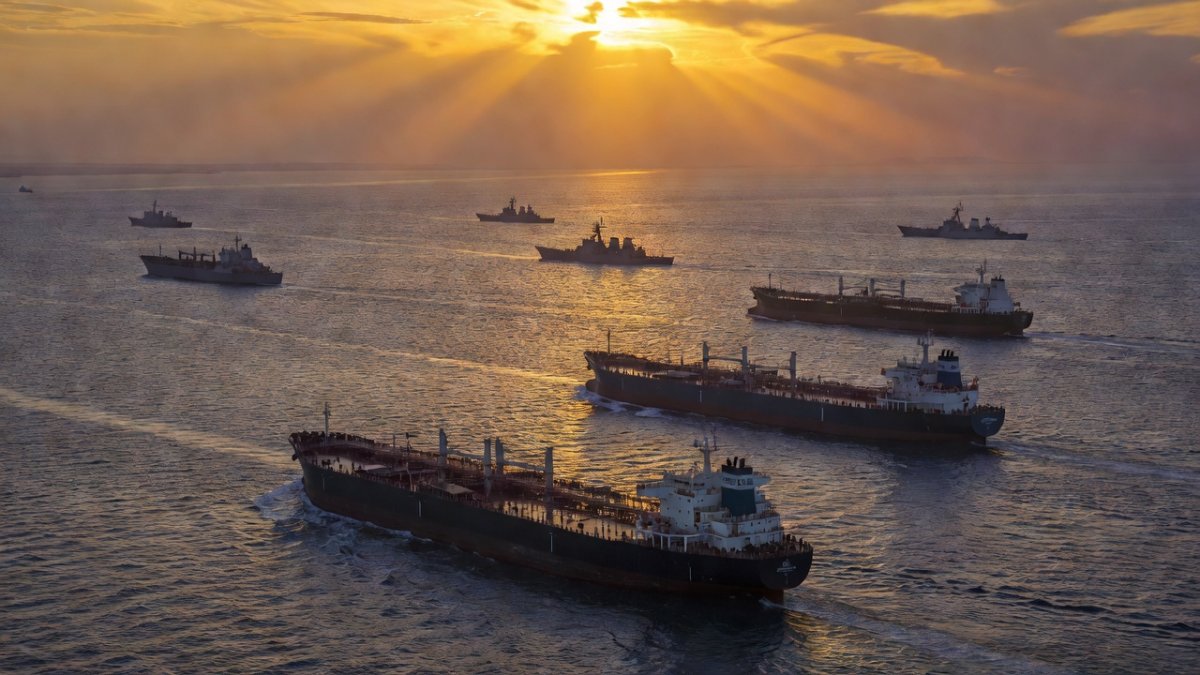
The temporary pause has done little to ease pressure on global energy supplies. Iran's decision to block the Strait of Hormuz at the outset of the war triggered immediate price spikes that continue to influence markets worldwide. Russian energy firms have capitalized on the resulting premium, with daily profits reaching $760 million as reported by the Kyiv School of Economics. European and Asian importers have faced higher costs, while Gulf states such as Saudi Arabia and the United Arab Emirates have adjusted production strategies to maintain influence. US officials in Washington have monitored these shifts closely, aware that sustained high prices could affect domestic inflation and political support for continued involvement in the region. Iranian negotiator Mohammad Baqer Qalibaf has linked any lasting resolution to the lifting of naval restrictions that Tehran views as provocative.
Perspectives from Key Regional and International Players
From the Iranian side, officials in Tehran have framed their missile response as proportionate and defensive, citing the need to deter further Israeli incursions into Lebanese territory. Israeli leaders in Jerusalem have reiterated the right to preemptive action against perceived threats to national security. US President Donald Trump has positioned himself as a mediator urging restraint, while Russian diplomats in Moscow have maintained a low profile, focusing on economic gains rather than direct mediation. Lebanese authorities in Beirut continue to appeal for humanitarian corridors and enforcement of existing truces. These overlapping positions highlight the complexity of achieving a stable outcome that satisfies all parties involved in the 101-day conflict.
Analysis and Implications: A War Without End?
The events of the past 48 hours demonstrate just how fragile the April ceasefire truly is. Both Iran and Israel have interests in avoiding a full-scale return to hostilities — but both have also shown they are willing to test the limits of the truce to achieve tactical objectives. For Russia, the situation presents both opportunity and risk. The sustained oil price premium generated by the Strait of Hormuz blockade provides Moscow with a financial windfall that helps offset the economic impact of Western sanctions over Ukraine. At the same time, the ongoing conflict in the Middle East risks drawing in regional powers in ways that could complicate Russia's already strained diplomatic and military resources. As the war enters its 102nd day, the fundamental drivers of the conflict — the US-Israeli campaign to dismantle Iran's nuclear and military capabilities, Iran's determination to project power across the region through its network of proxies, and the unresolved humanitarian catastrophe in Gaza and Lebanon — remain unchanged. The pause may hold for now. But as this weekend has demonstrated, it can shatter in a matter of hours. Continued intelligence cooperation between Russia and Iran, alongside Russia's abstention from critical UN votes, suggests Moscow will continue to navigate these tensions with an eye toward its broader strategic interests.
By Irina Volkov, Staff Writer
This article was produced with AI-assisted research and editorial support. Reporting is based on sources cited in the article.
What's Your Reaction?
 Like
0
Like
0
 Dislike
0
Dislike
0
 Love
0
Love
0
 Funny
0
Funny
0
 Wow
0
Wow
0
 Sad
0
Sad
0
 Angry
0
Angry
0
Russia/Eastern Europe Correspondent at Global1.News. Covering Russian politics, energy, security, and the shifting dynamics of the post-Soviet space. Provides clear-eyed analysis on one of the world's most opaque regions.










Comments (0)