
Korea Agri-Food Exports Hit Record $7.05B in H1 2026
Korea's Agri-Food Export Strategy as Economic Statecraft The Ministry of Agriculture, Food and Rural Affairs (MAFRA) has positioned agri-food export promotion as a deliberate instrument of economic statecraft. Under Minister Song Mi-ryeong, the ministry integrates sanitary and phytosanitary negotiations, marketing campaigns, and government-to-government dialogues into Korea’s b
Korea's Agri-Food Export Strategy as Economic Statecraft
The Ministry of Agriculture, Food and Rural Affairs (MAFRA) has positioned agri-food export promotion as a deliberate instrument of economic statecraft. Under Minister Song Mi-ryeong, the ministry integrates sanitary and phytosanitary negotiations, marketing campaigns, and government-to-government dialogues into Korea’s broader foreign policy architecture. These efforts convert commercial flows into diplomatic leverage, allowing Seoul to secure regulatory approvals and market access that reinforce bilateral ties with key partners. Export targets are therefore calibrated not only for revenue but also for strategic alignment with national security and soft-power objectives.
Minister Song Mi-ryeong has repeatedly framed agri-food diplomacy as an extension of Korea’s middle-power toolkit. By linking export promotion to high-level summits and trade missions, MAFRA creates reciprocal obligations that facilitate cooperation on unrelated dossiers such as supply-chain security and technology standards. This approach mirrors the country’s successful use of K-content and development assistance to cultivate influence, demonstrating that agricultural commodities can serve the same geopolitical function when coordinated centrally.
The strategy also embeds contingency planning within diplomatic channels. MAFRA maintains standing working groups with counterpart ministries abroad, enabling rapid rerouting of shipments or mutual recognition of inspection certificates during crises. Such institutionalised mechanisms reduce vulnerability to sudden market closures and simultaneously deepen Korea’s reputation as a reliable supplier, thereby converting routine trade administration into durable political capital.
United States and China: Managing the Two Largest Markets
The United States remains Korea’s premier agri-food destination, recording $1.04 billion in exports with an 11.3 percent year-on-year increase. Leading categories include ramen, snacks, kimchi, and fresh pears, all of which benefit from the Korea-US Free Trade Agreement’s tariff phase-outs and streamlined customs procedures. MAFRA’s dedicated liaison office in Washington coordinates with the US Department of Agriculture on annual work plans that accelerate new product registrations and resolve emerging technical barriers before they disrupt shipments.
China, by contrast, generated $810 million, up 9.4 percent, with ramen alone contributing $217.6 million. Regulatory approaches differ markedly: while US authorities emphasise transparent risk assessment and public comment periods, Chinese approvals often hinge on bilateral protocol negotiations and facility-specific listings. MAFRA therefore maintains parallel teams that tailor documentation and audit readiness to each regime, ensuring that sanitary and phytosanitary clearances keep pace with commercial demand.
These divergent frameworks require constant vigilance. Korean exporters must satisfy US residue monitoring programmes and China’s evolving traceability mandates simultaneously. MAFRA mitigates compliance costs by subsidising third-party certification and by embedding technical experts within diplomatic missions. The result is a managed dual-market strategy that maximises revenue while preserving regulatory goodwill in both capitals.
Comparative data reveal that Korea’s export growth in both markets outpaces the global average for similar product categories, underscoring the effectiveness of sustained government-to-government engagement. Continued investment in pre-clearance inspection capacity is expected to sustain momentum despite periodic political frictions.
[Place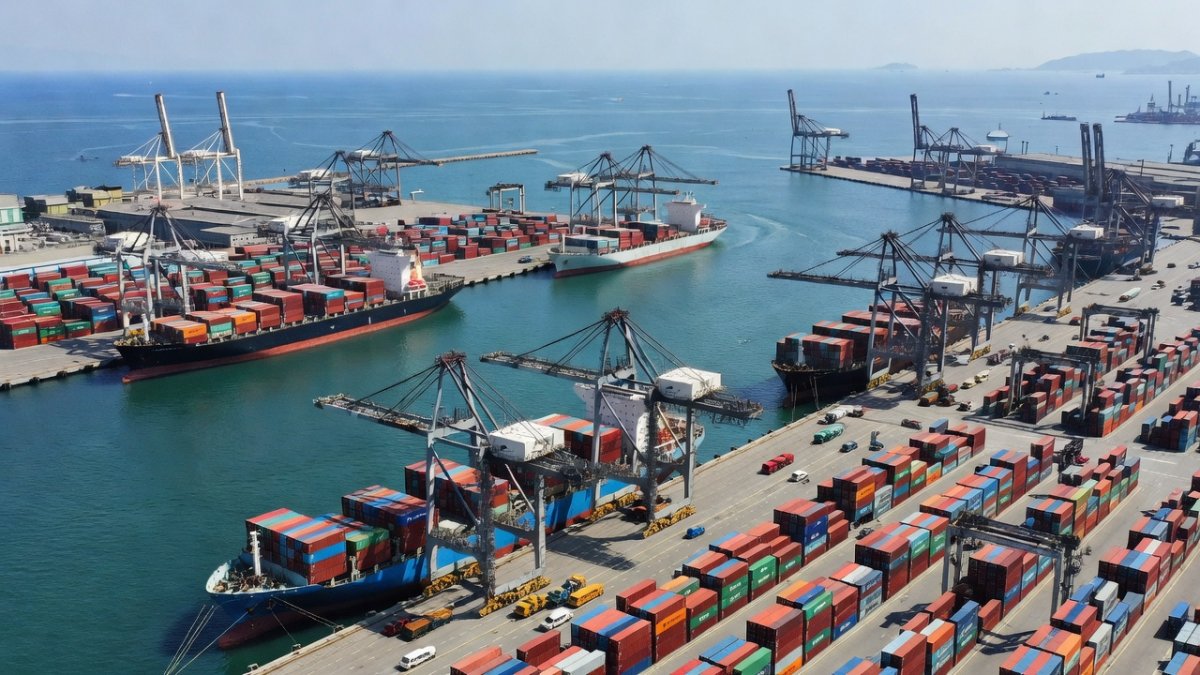 after section 2]
Middle East Resilience: Adapting to War-Related Disruptions
The Gulf Cooperation Council (GCC) market expanded to $228.6 million, registering a robust 25.2 percent increase despite regional volatility. Shipments fell more than 50 percent in March following the outbreak of conflict, yet volumes recovered sharply in April through rerouted logistics and accelerated use of alternative ports in Oman and the United Arab Emirates. MAFRA’s rapid activation of contingency protocols, including temporary cold-chain partnerships with regional carriers, prevented permanent loss of shelf space.
Product composition shifted toward high-value, shelf-stable items such as seaweed snacks, functional health foods, and ginseng extracts. These categories require fewer veterinary or phytosanitary interventions and travel well under extended transit times. MAFRA worked with GCC food-safety authorities to pre-approve additional manufacturing facilities, shortening the interval between order placement and delivery during the disruption.
Existing free-trade arrangements with individual GCC members provided tariff certainty that cushioned price volatility. Korean negotiators are now advancing a broader GCC-wide agreement that would lock in these preferences and introduce mutual recognition of halal certification. Such institutional upgrades would further insulate future trade flows from geopolitical shocks while deepening Korea’s economic footprint in a strategically vital region.
Latin America and Europe: Expanding into Higher-Growth Corridors
Latin American exports rose 19.5 percent, driven by more than doubled shipments of ramen, health foods, citron tea, kimchi, and strawberries. MAFRA has prioritised veterinary agreements with Brazil, Chile, and Mexico that permit direct air and sea links, reducing transit times for perishable items. Trade fairs organised in São Paulo and Bogotá have translated cultural interest in Korean cuisine into sustained retail listings and distributor contracts.
European markets recorded a 17.9 percent increase, with the United Kingdom and Germany emerging as primary growth engines. Chicken meat exports to the region surged eightfold after MAFRA secured expanded listing approvals under the Korea-EU FTA. Regulatory harmonisation on slaughterhouse standards and residue limits enabled Korean processors to meet stringent European import requirements without costly retrofits.
Both regions benefit from MAFRA’s targeted marketing that pairs product promotion with tourism and K-content events. These integrated campaigns generate consumer pull that outlasts individual trade missions. Continued expansion will depend on additional mutual recognition agreements for organic certification and on the negotiation of digital trade provisions that facilitate e-commerce platforms popular among younger demographics.
Ramen as a Leading Indicator of Korea's Soft Power Reach
Ramen exports reached $935.4 million, marking a 27.9 percent increase and placing the category on track to surpass $1 billion by mid-July. The product’s long shelf life, cultural cachet, and adaptability to local tastes have made it a reliable leading indicator of Korea’s broader soft-power penetration. Retail data from multiple markets show that initial trial purchases driven by media exposure frequently convert into repeat buying, amplifying the return on MAFRA’s promotional investment.
MAFRA’s marketing architecture deliberately pairs ramen with tourism and K-content initiatives. Pop-up stores at major airports and co-branded content with streaming platforms create associative links between the convenience food and aspirational lifestyles. These campaigns are evaluated not only by sales figures but also by subsequent increases in Korean tourist arrivals and streaming subscriptions, illustrating the ministry’s whole-of-government approach to export promotion.
The category’s resilience during supply-chain stress further validates its strategic value. Because ramen production relies on domestically sourced wheat and seasoning, export surges do not strain imported raw-material dependencies. Policymakers therefore view sustained ramen growth as both an economic and a diplomatic asset that reinforces Korea’s image as an innovative, culturally influential trading partner.
[Place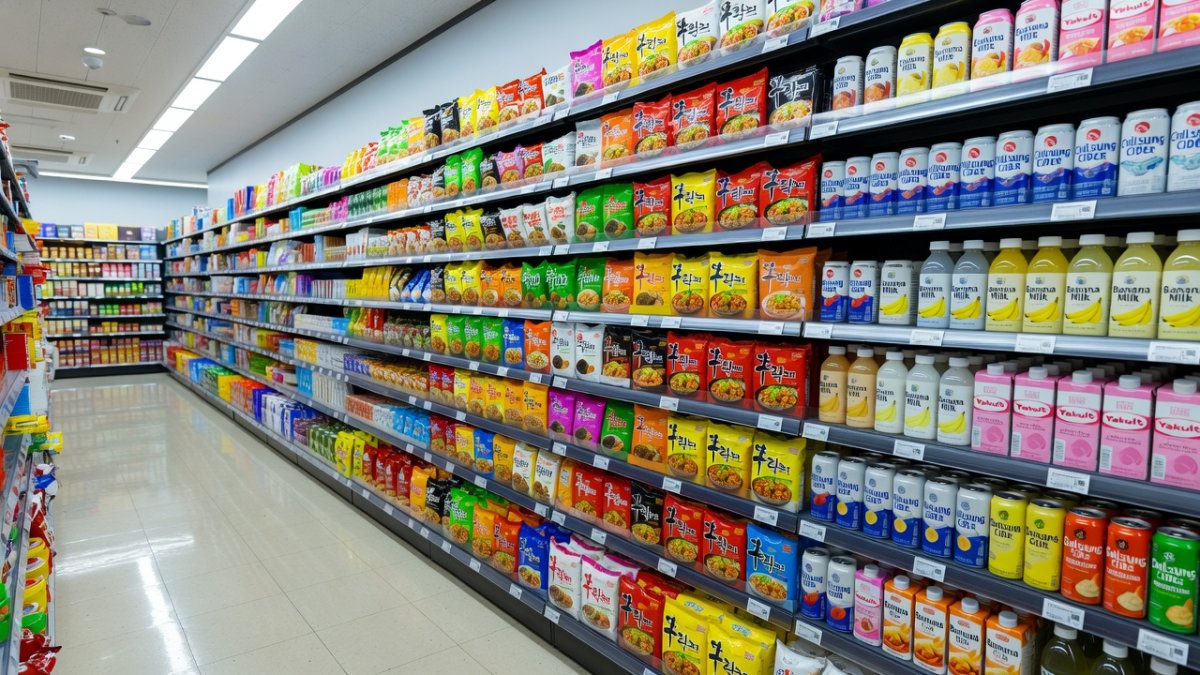 after section 5]
The FTA Architecture Underpinning Export Diversification
Korea’s network of free-trade agreements with the United States, the European Union, the United Kingdom, and several Latin American countries supplies the legal foundation for agri-food export diversification. These pacts reduce tariff barriers, establish predictable dispute-settlement mechanisms, and promote regulatory harmonisation that lowers compliance costs for exporters. MAFRA’s Director Kim Jeong-uk has emphasised that the agreements function as force multipliers, allowing limited promotional budgets to achieve wider geographic coverage.
Each FTA contains dedicated chapters on sanitary and phytosanitary measures that institutionalise science-based decision-making. Korean negotiators have leveraged these provisions to accelerate approvals for new product lines and to resolve non-tariff barriers that previously constrained market entry. The resulting predictability encourages private-sector investment in processing capacity and cold-chain infrastructure.
Looking ahead, MAFRA is preparing negotiating mandates for a GCC-wide agreement and exploratory talks with African partners. These initiatives aim to replicate the tariff and regulatory advantages already secured in existing FTAs while tailoring provisions to the distinct market-access challenges of emerging regions. Successful conclusion would further insulate Korea’s agri-food sector from concentration risk in any single market.
Policy Outlook: Maintaining Momentum Amid Geopolitical Uncertainty
MAFRA’s second-half agenda centres on expediting licensing procedures, scaling digital marketing platforms, and deepening government-to-government cooperation with priority markets. The ministry plans to increase the number of pre-approved manufacturing facilities eligible for direct export and to launch a unified traceability portal that satisfies multiple regulatory jurisdictions simultaneously. These measures are designed to compress the time between product development and commercial availability.
Beyond primary commodities, MAFRA is fostering expansion of the wider agri-industry ecosystem, including veterinary medicines, fertilisers, and agricultural machinery. Export promotion for these capital goods leverages the same diplomatic channels used for food products, creating bundled offerings that strengthen long-term commercial relationships. Pilot projects in Southeast Asia and Eastern Europe are already demonstrating the viability of this integrated approach.
Contingency planning remains integral to the outlook. MAFRA maintains scenario-based simulations that model the impact of renewed conflict, port closures, or sudden regulatory shifts. The lessons from the GCC disruption have been codified into standing operating procedures that can be activated within 72 hours. This institutional readiness, combined with continued FTA expansion, positions Korea to sustain agri-food export momentum even under heightened geopolitical uncertainty.
By Prof. David Park, Staff Writer
This article was produced with AI-assisted research and editorial support. Reporting is based on sources cited in the article.
What's Your Reaction?
 Like
0
Like
0
 Dislike
0
Dislike
0
 Love
0
Love
0
 Funny
0
Funny
0
 Wow
0
Wow
0
 Sad
0
Sad
0
 Angry
0
Angry
0

East Asia/Technology Correspondent at Global1.News. Seoul-based voice covering Korean politics, technology, business, and culture. Analyzes how technology and geopolitics intersect across East Asia.














Comments (0)