
Houthis Weaponize Red Sea Trade Routes in US-Iran Conflict
The Houthi Entry into the Broader Conflict The 2026 Iran war began on 28 February 2026 after US-Israeli airstrikes killed several Iranian officials, including Supreme Leader Ali Khamenei. Regional actors have adjusted positions as the conflict between the United States and Iran continues. The...
The Houthi Entry into the Broader Conflict
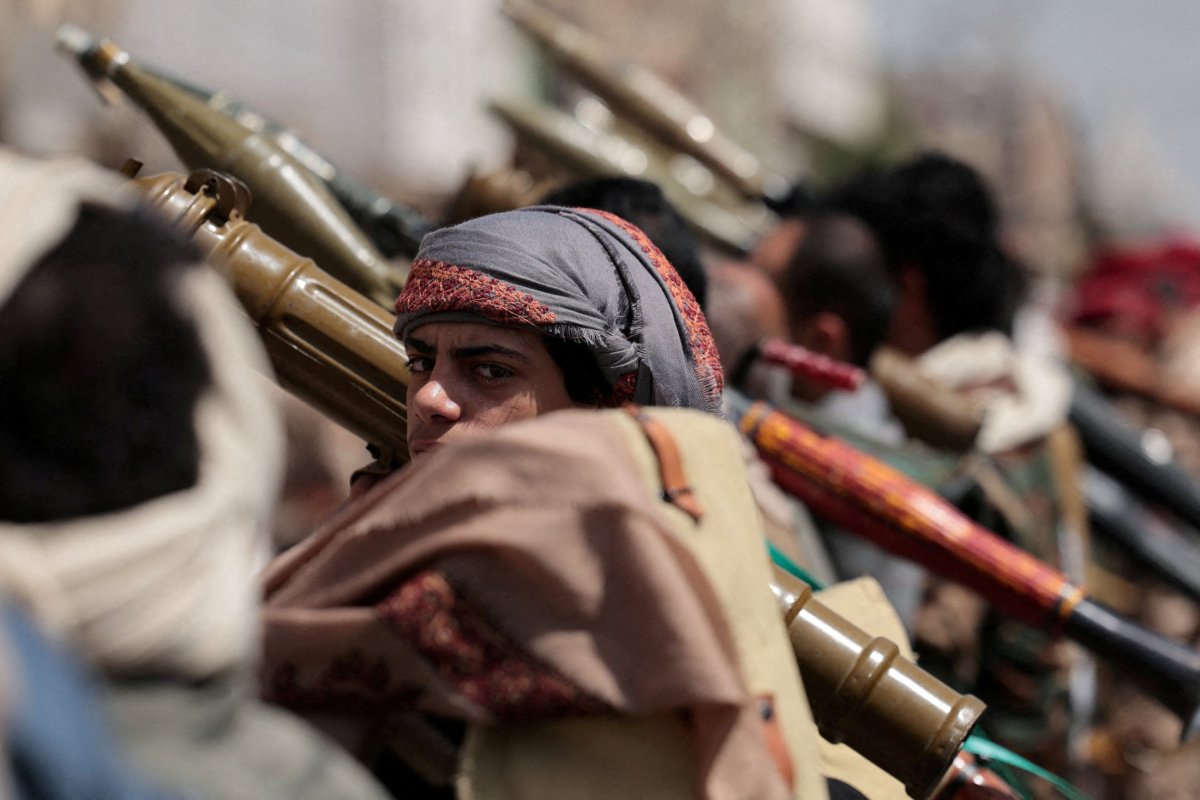
The 2026 Iran war began on 28 February 2026 after US-Israeli airstrikes killed several Iranian officials, including Supreme Leader Ali Khamenei. Regional actors have adjusted positions as the conflict between the United States and Iran continues. The Houthis represent one such actor. The question of whether the Houthis entered the conflict voluntarily or were drawn in by Iran remains unanswered. What is certain is that the Houthis are using Red Sea trade routes as a bargaining chip to maximize their gains, according to the Daily Sabah Op-Ed.
Previous Houthi campaigns offer context for the current posture. Between 2016 and 2022, the group repeatedly targeted commercial vessels and Saudi infrastructure, including the 2019 Aramco attacks on Abqaiq and Khurais that temporarily removed 5.7 million barrels per day from global markets. Those operations, documented by the International Institute for Strategic Studies, established the Houthis’ capacity to project power far beyond Yemeni territory using Iranian-supplied drones and missiles.
Second-order effects are already visible in alliance dynamics. Egypt has quietly reinforced naval patrols near the Suez Canal entrance, fearing spillover that could reduce transit fees by up to 30 percent if Red Sea traffic diverts around the Cape of Good Hope. Jordan, dependent on Aqaba port for imports, has activated contingency stockpiling arrangements with Gulf states to mitigate potential shortages.
Analysts at the Washington Institute for Near East Policy note two plausible scenarios: limited Houthi harassment that raises insurance premiums without halting flows, or sustained blockade attempts that trigger direct Saudi or U.S. counterstrikes on Houthi coastal assets, further entangling the Red Sea in the wider war.
Red Sea Chokepoints and Strategic Leverage
The Houthis have threatened to blockade Saudi ports on the Red Sea, a key route for oil shipments. This threat comes as the five-month war has already led to the effective closure of the vital Strait of Hormuz. Yanbu has become a key outlet for Saudi Arabia's oil exports since the Strait of Hormuz was effectively shut at the start of the US-Israel war on Iran in February 2026. By targeting these alternative pathways, the Houthis aim to disrupt energy flows and increase pressure on multiple fronts simultaneously.
Historical precedent shows the Houthis have exploited these same chokepoints before. In late 2023 and early 2024, attacks on commercial shipping forced dozens of vessels to reroute, increasing transit times by 10–14 days and raising global freight costs. The current campaign builds directly on that template, now amplified by the Hormuz closure.
Energy market impacts extend beyond Saudi Arabia. The UAE has accelerated use of its Fujairah terminal on the Gulf of Oman, yet analysts at the Oxford Institute for Energy Studies warn that any prolonged Red Sea disruption could add $8–12 per barrel to Brent crude through cumulative logistics premiums alone.
GCC states have coordinated emergency ministerial meetings in Riyadh, with Bahrain and Kuwait expressing particular concern over secondary sanctions exposure if vessels are forced into contested waters. Egypt’s foreign ministry has issued measured statements urging de-escalation to protect Suez revenues, while Jordan has requested additional U.S. security guarantees for Aqaba shipments.
Strikes on Saudi Aramco Facilities
The Houthis claimed they struck two Saudi Arabian oil facilities, announcing they launched dozens of ballistic missiles, cruise missiles and drones at Saudi state-owned energy giant Aramco's facilities in the Red Sea cities of Yanbu and Jizan. Jizan is the site of an Aramco oil refinery in addition to the port. A Saudi-led coalition responded to the attacks. Yemen's Houthis say they have targeted oil facilities in Saudi Arabia owned by Aramco. These actions mark a new front in the US-Iran war that escalates tensions further.
Earlier Houthi strikes on Saudi energy targets, notably the 2019 Abqaiq incident, demonstrated both reach and temporary market shock. Those attacks were later attributed in part to Iranian components, according to a joint U.S.-Saudi assessment. The 2026 Yanbu and Jizan strikes follow the same operational pattern but occur against the backdrop of an active U.S.-Iran war.
Alliance dynamics are shifting as a result. Saudi Arabia has reportedly requested expedited U.S. munitions resupply, while the UAE has increased intelligence sharing on Houthi maritime movements. Energy market volatility has prompted China to draw down strategic reserves at an accelerated rate to stabilize domestic prices.
The Carnegie Endowment for International Peace models three escalation ladders: symbolic Saudi retaliation, sustained coalition airstrikes on Houthi ports, or a broader maritime coalition involving European navies. Egypt has expressed private concern over any scenario that closes the Bab el-Mandeb strait, while Jordan monitors refugee and supply-line risks along its southern border.
Iran's Role and Proxy Dynamics
Yemen's Iran-backed Houthi rebels said they had targeted two Saudi oil tankers in the Red Sea. Political scientist Robert Pape said the Houthis' renewed threats to disrupt shipping in the Red Sea reflect a predictable escalation strategy by Iran rather than an isolated development. Trump vowed to punish Iran for Houthi attacks in Red Sea. The US paused an almost two-week run of strikes against Iran for a second night while the Islamic Republic signaled it was refraining from any retaliatory attacks and held talks with Oman over the Strait of Hormuz. This pattern suggests Iran is coordinating proxy pressure without direct confrontation.
Iran’s use of Houthi proxies to pressure Red Sea lanes echoes tactics employed during the 2019 tanker incidents in the Gulf of Oman. Those earlier episodes, investigated by the Joint Maritime Information Center, allowed Tehran to impose costs on adversaries while maintaining plausible deniability.
Second-order effects include strained U.S. force posture. With Hormuz already contested, additional naval assets diverted to the Red Sea reduce availability for other contingencies. European allies have signaled willingness to contribute minesweepers but remain reluctant to engage in direct strikes.
Regional reactions vary. GCC capitals have coordinated messaging through the Gulf Cooperation Council secretariat, emphasizing collective defense of energy infrastructure. Egypt has called for an emergency Arab League session, while Jordan has activated bilateral channels with Oman to explore de-confliction mechanisms around shipping lanes.
Oil Market Disruptions and Price Surges
Oil surges over $100 amid these developments. Bahrain sounds sirens as US-Iran strikes put Gulf shipping at risk. The combination of Houthi threats to Red Sea ports and the closure of the Strait of Hormuz has tightened global energy supplies. Saudi Arabia faces dual pressure on its export routes, forcing reliance on facilities like Yanbu that now face direct attack. These disruptions highlight how control over maritime chokepoints translates into economic leverage during wartime.
Past Red Sea incidents, including the 2023–2024 Houthi campaign against commercial shipping, produced sustained spikes in war-risk premiums. Those premiums remained elevated for months even after attacks subsided, according to data compiled by the Baltic Exchange.
Energy market second-order effects are global. India and Japan, both heavily reliant on Gulf crude, have activated diplomatic outreach to Tehran and Riyadh simultaneously in an attempt to secure alternative supply assurances. China has increased purchases from Russia and Angola to offset potential shortfalls.
The GCC has established a joint energy-security working group, while Egypt has expedited domestic refinery upgrades to reduce import dependence. Jordan has requested additional IMF financing facilities to cushion fiscal pressure from higher fuel subsidies. Brookings Institution scholars outline two price trajectories: a contained $110–120 range if flows are only partially disrupted, or a rapid move above $140 if Bab el-Mandeb is effectively closed for more than four weeks.
Regional Implications and Broader Dynamics
The Houthi actions connect directly to wider Middle East dynamics involving Saudi Arabia, Iran, and the United States. The attacks on Aramco facilities in Yanbu and Jizan demonstrate how non-state actors can amplify state-level rivalries. Saudi-led coalition responses indicate efforts to secure critical infrastructure while the Houthis continue to position Red Sea routes as a central bargaining tool. This strategy allows the Houthis to extract concessions by threatening prolonged disruption to global trade flows that pass through these narrow waterways.
Further escalation risks additional shipping incidents as seen with sirens in Bahrain. The effective closure of the Strait of Hormuz has already shifted oil export patterns toward Red Sea outlets, making those ports higher-value targets. Iran's apparent restraint in direct retaliation while supporting proxy actions through the Houthis reflects a calculated approach to maintain pressure without triggering full-scale response.
Historical patterns in the region show that control over energy transit points often determines negotiation outcomes. The current Houthi focus on Red Sea leverage follows this logic, aiming to tie Saudi and American interests together through shared vulnerabilities in oil infrastructure and maritime security.
Earlier Houthi operations against Saudi shipping in 2018–2019, tracked by the U.S. Naval War College, established the group’s ability to sustain low-intensity maritime pressure over extended periods. Those campaigns forced Riyadh to divert resources from other fronts and accelerated Saudi interest in overland export pipelines.
Second-order effects now include recalibrated alliance commitments. The GCC has activated its joint defense mechanism for the first time since 2015, while Egypt has increased naval presence near the Strait of Bab el-Mandeb to protect Suez revenues. Jordan has quietly expanded storage capacity at Aqaba in anticipation of prolonged supply uncertainty.
Think tanks such as the International Crisis Group project three medium-term scenarios: negotiated Houthi stand-down in exchange for sanctions relief, sustained low-level harassment that raises global energy costs, or direct coalition strikes on Houthi coastal infrastructure that risk drawing Iran into overt naval confrontation.
By Malik Hassan, Staff Writer
This article was produced with AI-assisted research and editorial support. Reporting is based on sources cited in the article.
What's Your Reaction?
 Like
0
Like
0
 Dislike
0
Dislike
0
 Love
0
Love
0
 Funny
0
Funny
0
 Wow
0
Wow
0
 Sad
0
Sad
0
 Angry
0
Angry
0

Middle East Correspondent at Global1.News. Based in Beirut, covering politics, conflict, energy, and society across the Middle East. Brings context and depth to a region often reduced to headlines.












Comments (0)