
Springboks Defeat Scotland 42-28 at Loftus Versfeld
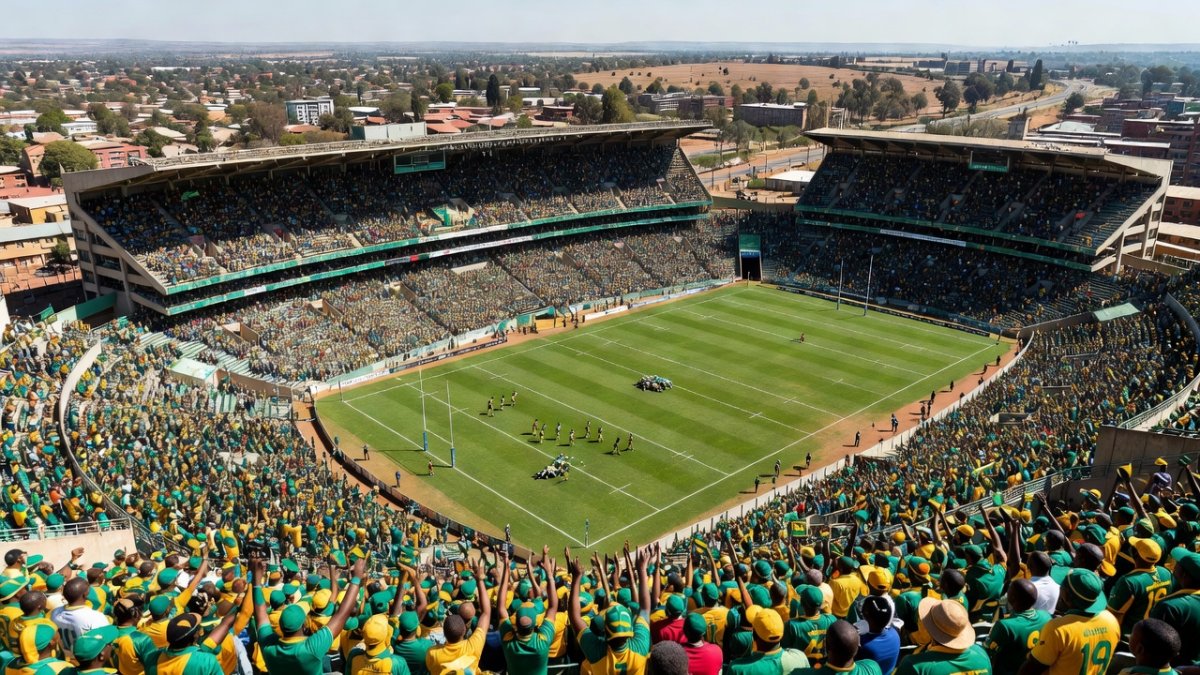
Keywords: Springboks vs Scotland, Loftus Versfeld, SA rugby 2026, Embrose Papier try, Evan Roos, Rassie Erasmus, Loftus atmosphere The Loftus Versfeld Atmosphere The energy at Loftus Versfeld on 11 July 2026 crackled like a Highveld thunderstorm rolling in from the east. Pretoria’s rugby cathedral stood tall under a crisp winter sky, packed with thousands of green-and-gold faithful who had travelled from every corner of Mzansi to witness the Springboks take on Scotland.
The Loftus Versfeld Atmosphere
The energy at Loftus Versfeld on 11 July 2026 crackled like a Highveld thunderstorm rolling in from the east. Pretoria’s rugby cathedral stood tall under a crisp winter sky, packed with thousands of green-and-gold faithful who had travelled from every corner of Mzansi to witness the Springboks take on Scotland. The air smelled of boerewors and braai smoke drifting from the parking lots, mixed with the unmistakable roar that only a full Loftus can produce. Fans waved flags, sang “Shosholoza” in full voice, and banged on the stands in that rhythmic way that turns the old venue into a living, breathing beast. This is the heart of South African rugby culture, where every tackle feels personal and every try belongs to the entire nation.
Local flavour filled every corner. Families from Atteridgeville and Sunnyside mingled with supporters from Johannesburg and Durban who had made the trek north. The stadium’s history as a Bok fortress weighed heavy, reminding everyone that Loftus has seen legends rise and opponents crumble. Street vendors sold vetkoek and cold drinks while the crowd chanted player names long before kick-off. The connection to broader South African sporting pride was impossible to miss. Rugby here is more than a game; it is a thread that ties communities together across provinces and generations. As the teams ran out, the noise swelled into a wall of sound that Scotland would have to fight through for eighty minutes. This atmosphere set the tone for a match that would deliver drama both on and off the field, proving once again why Loftus remains the ultimate test for any touring side.
First Half Battle — Level at 14-14
The opening forty minutes unfolded as a classic arm-wrestle under the Pretoria lights. The Springboks and Scotland traded blows with neither side willing to yield ground easily. At half-time the scoreboard read 14-14, a reflection of two teams that had come to fight rather than simply survive. South Africa’s early try came through Embrose Papier, whose sharp break and finish got the home crowd on its feet and singing louder than ever. Scotland responded with a try from Matt Fagerson, showing they were not here to make up the numbers. The physical exchanges at the breakdown and in the tight exchanges told the story of two packs that respected each other’s power.
Every South African supporter at Loftus knew this level scoreline meant the second half would be decisive. The green-and-gold faithful clapped their players off with encouragement rather than frustration, understanding that the first half had been about laying foundations. The referee Pierre Brousset kept a tight leash on proceedings, while TMO Richard Kelly stood ready to assist on any contentious calls. This balanced half mirrored the broader South African sporting spirit: never panic, trust the process, and back the boys to respond when it matters most. The crowd’s energy never dipped despite the deadlock, proving that Loftus supporters understand the long game in rugby. The 14-14 scoreline left everyone hungry for what would come after the break, setting up a second half that would showcase the Springboks’ depth and attacking intent.
Second Half Surge — Six Tries and a Bonus Point
After the interval the Springboks exploded into life, crossing for five more tries to finish with six in total and claim the bonus point. Evan Roos powered over for one, Elrigh Louw added another through sheer forward momentum, and Damian Willemse showed his class with a clinical finish. Zach Porthen and Jesse Kriel completed the set, each try greeted by deafening cheers that shook the old stands. Handré Pollard converted five of the six, while Quan Horn added the sixth from the bench. Scotland managed three more tries through Kyle Rowe, Josh Bayliss and Ben White, but the momentum had shifted decisively toward the home side.
This second-half surge embodied everything South Africans love about their rugby team: resilience followed by ruthless execution. The crowd at Loftus rose as one with every score, turning the venue into a sea of jumping supporters. The bonus point secured early in the second period allowed the Springboks to play with freedom while still maintaining structure. Scotland fought until the final whistle, but the green-and-gold machine had found its rhythm. The 42-28 final scoreline reflected a match that had started tight and finished with South African flair on full display. Fans left the stands buzzing, already discussing how this performance would carry into the next challenge. The surge proved that when the Springboks click, few teams can live with them at Loftus Versfeld.
Individual Performances Under the Microscope
Every player in the Springboks matchday squad contributed to the 42-28 victory, and the crowd at Loftus made sure each effort received its due recognition. Embrose Papier’s try and distribution set the platform, while Evan Roos and Elrigh Louw brought physicality that wore Scotland down. Damian Willemse’s finishing and Zach Porthen’s impact from the bench showed the depth available. Jesse Kriel’s leadership on the field and Handré Pollard’s boot kept the scoreboard ticking. The replacements, including Wessels, Mchunu, Dixon, Tshituka, E Louw, G Williams and Horn, all played their part in maintaining the momentum.
Scotland’s efforts were led by their try scorers and captain Tuipulotu, but the Springboks’ collective display proved too strong. The starting XV of Fassi, van der Merwe, Kriel, Willemse, Hooker, Pollard, Papier, Roos, PS du Toit, de Villiers, Nortje, Wiese, W Louw, Grobbelaar and Venter laid the foundation that the bench built upon. In South African rugby culture, individual brilliance is celebrated only when it serves the team, and this match delivered exactly that balance. Supporters analysed every carry and tackle long after the final whistle, connecting the performance to the proud tradition of Springbok excellence at Loftus. The result reinforced why this group continues to inspire a nation that lives and breathes its rugby.
Townsend's Head-Butt Accusation — Controversy Erupts
Post-match tension spilled over when Scotland coach Townsend accused Dixon of head-butting Cummings. Only a yellow card was awarded, prompting Townsend to state he was “disappointed a head-butt was viewed as a glancing blow”. The incident became the main talking point among fans leaving Loftus, with opinions divided on whether the sanction matched the action. Scotland’s subsequent drop below England in the rankings added further frustration to their camp after the 42-28 defeat.
In the passionate world of South African rugby, such controversies are dissected endlessly around braais and in taxi ranks the next day. The referee Pierre Brousset and TMO Richard Kelly had made their call on the field, and the Springboks focused on their victory rather than the debate. Yet the accusation highlighted how fine margins and interpretations can shape narratives beyond the scoreboard. Local supporters defended the Bok player while acknowledging the need for clarity in high-stakes collisions. The episode served as a reminder that rugby’s physical nature demands constant vigilance, especially when emotions run high at a venue like Loftus. The controversy did not overshadow the result but added another layer to the post-match conversation that would continue into the build-up for Durban.
Tragedy After the Final Whistle — Fan Death Investigation
Tragedy struck after the final whistle when a man died after falling into an excavation at the corner of Lynnwood and Roper Street in Brooklyn. Off-duty doctors and nurses performed CPR at the scene, but the man could not be saved. Three more people fell into the same excavation during the chaos following the match. The Old East Safety Forum pointed to collapsed netting, inadequate barriers and poor lighting as contributing factors, noting that the roadworks had not been included in event plans. The Bok convoy was diverted as a result.
Emergency services including Tshwane EMS, Netcare 911, SAPS and TMPD responded swiftly, yet the incident cast a shadow over what had been a memorable day of rugby. In South African sporting culture, the safety of fans is paramount, and this tragedy prompted immediate calls for better coordination between event organisers and municipal works. Supporters who had celebrated wildly inside Loftus now faced the sobering reality that leaving the stadium can carry risks when infrastructure fails. The incident will be investigated thoroughly, with the hope that lessons will prevent any repeat. The Springboks’ victory will always be remembered, but so too will the need to protect the very people who make these occasions special.
Junior Boks, Bafana Bafana and the SA Sporting Landscape
While the senior Springboks celebrated at Loftus, the Junior Boks added to national pride by beating England and advancing to face France in the U20 World Cup final. Hugo Broos paid tribute to Jayden Adams, who passed away at just 25, reminding everyone of the human stories behind the sport. Kaizer Chiefs continued their rebuild with five exits and three arrivals, showing that transformation never stops in South African football. Rassie questioned referee protocols in the wake of the Scotland match, while Wiseman Mncube made a heartfelt plea for greater mental health support across all codes.
These stories illustrate the rich and sometimes painful tapestry of South African sport. Rugby, football and other disciplines share the same passionate fan base that demands excellence while caring deeply for its athletes and supporters. The connection between the Springboks’ win and the Junior Boks’ success creates a through-line of hope that runs from schoolboy fields to professional stadiums. Mental health awareness and safety concerns raised after the Loftus match sit alongside on-field achievements, proving that the nation’s sporting conversation is about more than results. This broader landscape keeps Mzansi united even when individual events bring both joy and sorrow.
What to Watch For — Durban Awaits
Attention now turns to Kings Park in Durban where the Springboks will face Wales at 17:40. The 42-28 win over Scotland provides momentum, but every touring side knows that back-to-back Tests demand fresh focus and physical recovery. Scotland, meanwhile, prepare to meet Fiji at Murrayfield, still smarting from their Loftus defeat and the rankings drop. The Durban crowd will bring its own unique energy, different from Pretoria yet equally passionate about seeing the green and gold succeed.
South African rugby fans will watch for continued growth from the bench players who impressed at Loftus and for any adjustments Rassie may make after questioning referee protocols. The lessons from the fan safety incident in Brooklyn will hopefully influence planning for the Durban fixture. As the nation looks ahead, the spirit that filled Loftus on 11 July 2026 will travel down the coast, carrying the same pride and expectation that defines Springbok rugby. The next chapter promises more drama, more tries, and another chance for the boys to make the country proud under the Durban lights.
Tags: Springboks, Scotland, Loftus Versfeld, rugby, 42-28, tries, Papier, Roos, Louw, Willemse
By Dante Williams, Staff Writer
This article was produced with AI-assisted research and editorial support. Reporting is based on sources cited in the article.
What's Your Reaction?
 Like
0
Like
0
 Dislike
0
Dislike
0
 Love
0
Love
0
 Funny
0
Funny
0
 Wow
0
Wow
0
 Sad
0
Sad
0
 Angry
0
Angry
0

Breaking News and Investigations Correspondent at Global1.News. Based in London, covering global breaking news, security, and investigative stories. Known for digging deeper and connecting the dots across continents.













Comments (0)