
Seoul Police Arrest 40 in Dongdaemun Gang Crackdown Tracing to 1950s Political Violence
Seoul Police Arrest 40 in Dongdaemun Gang Crackdown Tracing to 1950s Political Violence Historical Continuity from Authoritarian-Era Thuggery The arrests conducted by the Seoul Metropolitan Police Agency Metropolitan Investigation Unit on July 23, 2026, underscore the persistence of organized crime structures that originated during South Korea's authoritarian period.
Historical Continuity from Authoritarian-Era Thuggery
The arrests conducted by the Seoul Metropolitan Police Agency Metropolitan Investigation Unit on July 23, 2026, underscore the persistence of organized crime structures that originated during South Korea's authoritarian period. The Dongdaemun gang, known as Dongdaemunpa, explicitly claims lineage from Lee Jung-jae, a political enforcer active in the 1950s who was executed in 1961 amid Park Chung-hee's consolidation of military rule.
Lee Jung-jae's operations in the Dongdaemun district involved intimidation and political muscle for ruling elites under the First Republic. His execution marked an early effort by the new regime to centralize control over extralegal violence. Yet the gang's revival in 1996 by street-level actors demonstrates how such networks adapted rather than disappeared following democratization.
Lee Jung-jae operated as a key enforcer for Syngman Rhee's Liberal Party during the 1950s, deploying squads of political thugs to intimidate opposition figures, disrupt rallies, and secure electoral victories through targeted violence in Seoul's markets and universities. These networks blurred the line between state power and criminal enterprise, allowing Rhee's regime to maintain control amid widespread protests against authoritarian rule and economic hardship. Such tactics mirrored the use of extralegal muscle by ruling elites across East Asia in the early Cold War period.
Park Chung-hee's 1961 execution of Lee formed part of a deliberate purge that dismantled Rhee-era gangs to centralize military authority and project an image of disciplined governance. This move did not eradicate the underlying structures but forced them underground, where they later resurfaced after democratization. Similar patterns appear in the post-authoritarian evolution of Japan's yakuza and Italy's mafia families, where political protection networks adapted to democratic transitions by shifting toward economic crimes while retaining hierarchical loyalty systems.
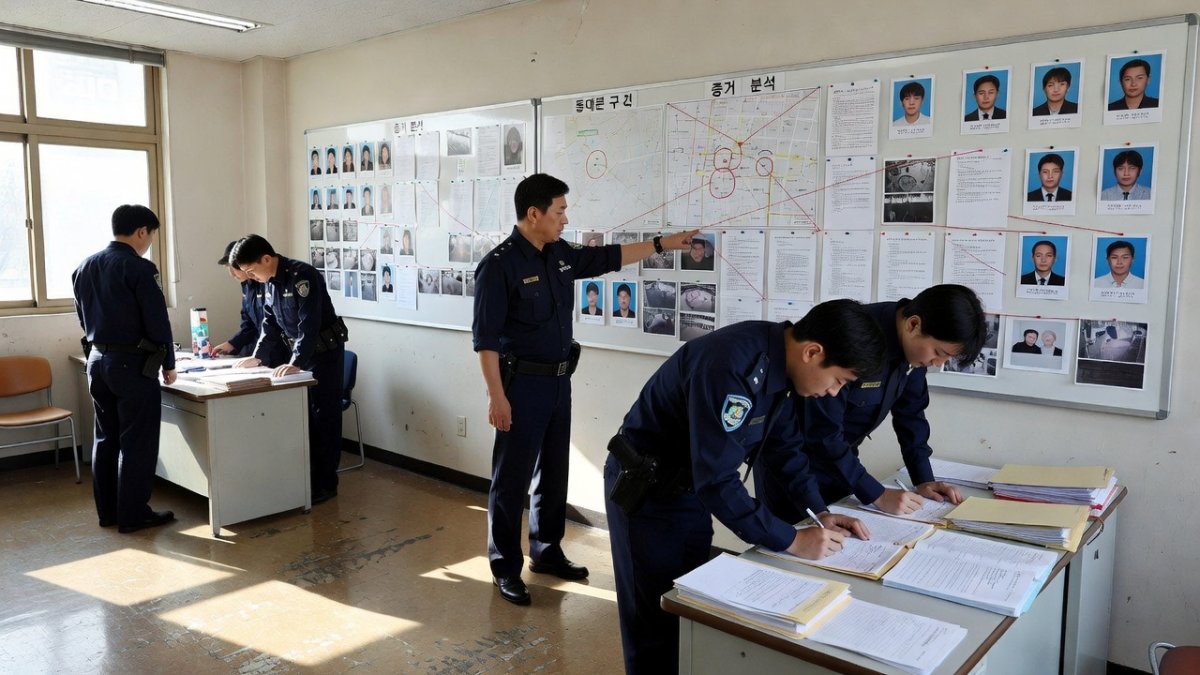
Formation and Operational Structure of the Revived Network
Formed in 1996, the contemporary Dongdaemunpa recruited from middle and high schools in the Dongdaemun area, targeting students identified as "jjang," or the toughest fighters in their peer groups. Recruits were housed in safe houses across Seoul and Incheon, where they underwent training in obedience, loyalty, and techniques for evading detection.
Members served as "byeongpung," or human folding screens, providing visible displays of strength at gang gatherings. This structure supported a range of criminal activities, including extortion, interference in construction projects, group assaults, and financial schemes such as voice phishing and investment fraud.
Enforcement Actions Under the Punishment of Violent Acts Act
The July 23 operation resulted in the detention of 21 core members and 19 individuals from affiliated groups. Charges center on violations of the Punishment of Violent Acts Act, specifically provisions governing the formation and participation in violent crime organizations. Article 4 of the statute prescribes sentences of seven or more years for leaders and two or more years for ordinary members.
Seoul police cited multiple documented incidents, including a December 2020 clash in Suwon, a September 2023 pursuit and assault in Nonhyeon-dong, and a February 2026 brawl involving approximately 50 participants in Gangnam's Nonhyeon-dong area. Two members remain overseas, prompting ongoing coordination with foreign authorities.
Youth Recruitment Patterns in Contemporary Korea
The gang's systematic targeting of adolescents reveals socioeconomic pressures that continue to feed organized crime despite South Korea's advanced economy. Promises of status and belonging were used to draw in vulnerable students, framing gang membership as a path to becoming a "real gangster."
Police statements emphasize the need to disrupt romanticized perceptions of gang life among young people. This recruitment dynamic intersects with broader issues in Korean education and youth employment, where competitive pressures and limited social mobility create openings for criminal networks.
South Korea's intense academic competition and youth unemployment rates exceeding 9 percent in recent years create fertile ground for gang recruitment, as marginalized adolescents seek alternative paths to status and income outside conventional career ladders. The "jjang" subculture, which elevates the toughest fighters within school hierarchies, has long served as an entry point, with Dongdaemunpa scouts identifying prospects through informal fights and social media displays of bravado. National Police Agency data indicate that juvenile violent crime incidents rose 12 percent between 2020 and 2024, concentrated in urban districts with high school dropout rates.
Unlike youth gangs in the United States or Western Europe, Korean networks emphasize disciplined obedience over territorial drug markets, reflecting Confucian-influenced group dynamics. Social media platforms accelerate this process by allowing recruiters to glamorize gang life through encrypted channels and short-form videos, bypassing traditional neighborhood surveillance. This digital dimension distinguishes contemporary Korean organized crime from earlier street-based models and complicates early intervention by educators and parents.
Transnational Dimensions and Cross-Border Operations
Investigations have linked the group to voice phishing schemes routed through Qingdao, China, illustrating the transnational reach of Korean criminal enterprises. Such operations exploit digital infrastructure while relying on traditional hierarchical discipline.
International law enforcement cooperation is now active to locate the two fugitives. This case highlights how South Korea's globalized economy and technological connectivity facilitate both legitimate commerce and illicit financial flows across borders.
Voice phishing operations linked to Korean groups generate an estimated 300 billion won annually, exploiting elderly victims through sophisticated call centers that impersonate government officials. Qingdao emerged as a primary hub because of its large Korean expatriate population, lax local enforcement on foreign-language scams, and proximity to high-speed internet infrastructure that facilitates real-time coordination with Seoul-based organizers. These operations combine traditional gang discipline with digital tools, allowing leaders to direct activities remotely while minimizing physical exposure.
China-South Korea law enforcement cooperation remains uneven, hampered by jurisdictional disputes and differing priorities on financial crime. While Interpol notices have aided some arrests, Chinese authorities often treat such cases as domestic matters when perpetrators operate within their borders. This pattern reflects broader digitalization trends in organized crime, where Korean networks increasingly mirror transnational syndicates in Southeast Asia by leveraging cryptocurrency and encrypted apps to launder proceeds across multiple jurisdictions.
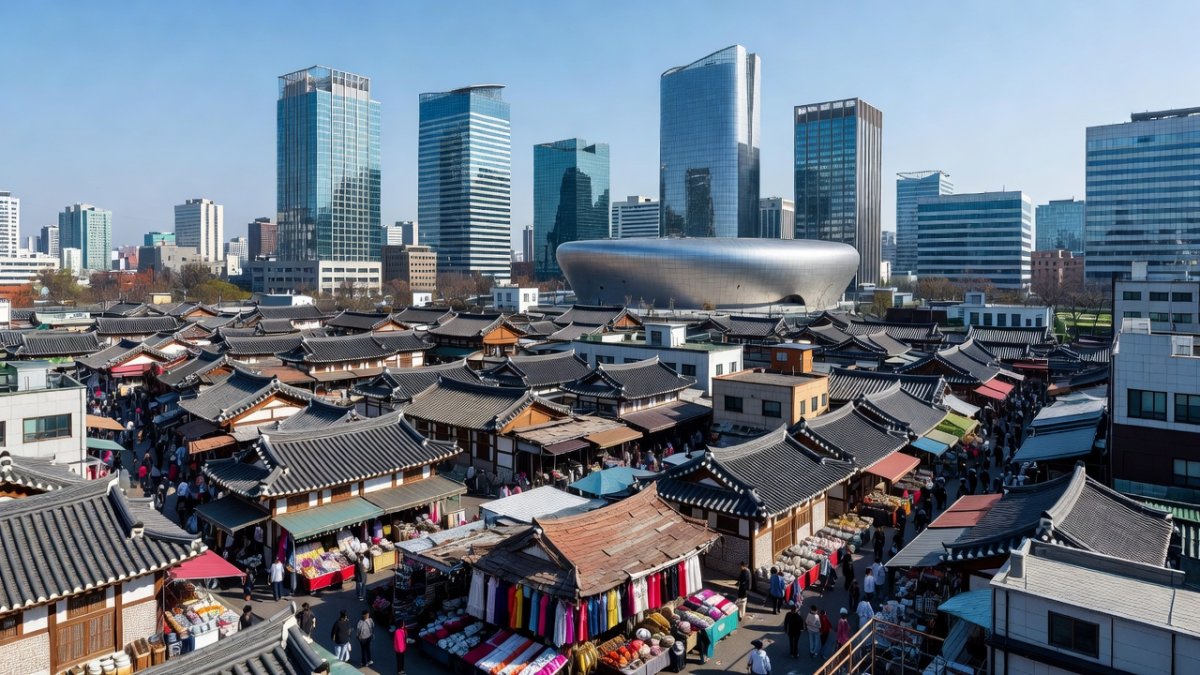
Rule of Law Development and Persistent Governance Challenges
South Korea's post-authoritarian trajectory has strengthened formal legal institutions, yet entrenched criminal organizations demonstrate the limits of institutional reach. The Punishment of Violent Acts Act provides a specialized tool for prosecuting group-based violence, but sustained intelligence efforts remain essential.
The Metropolitan Investigation Unit's actions reflect ongoing adaptation by Korean police to hybrid threats that blend historical gang structures with modern financial crimes. This enforcement approach carries implications for inter-Korean relations indirectly, as stable domestic governance underpins Seoul's foreign policy posture.
Ultimately, the arrests illuminate the paradox of rapid modernization: a nation that leads in technology and global trade continues to confront organized crime networks rooted in its mid-twentieth-century political upheavals. Effective responses will require integrated strategies addressing both historical legacies and contemporary recruitment pathways.
By Prof. David Park, Staff Writer
Korea's organized crime prosecutions evolved from the authoritarian-era focus on political suppression to specialized statutes like the 1990 Punishment of Violent Acts Act, which targets group formation rather than isolated offenses. This legislation provides sentencing enhancements modeled partly on the U.S. RICO framework, enabling prosecutors to dismantle leadership structures through conspiracy charges. Democratization after 1987 reduced overt political protection for gangs but allowed economic crimes to flourish as enforcement resources shifted toward white-collar and protest-related cases.
The Seoul Metropolitan Police Agency's Metropolitan Investigation Unit represents an institutional adaptation, combining traditional intelligence gathering with cyber forensics to address hybrid threats. Persistent challenges include witness intimidation and the rapid regeneration of networks following arrests. Effective governance therefore requires sustained investment in specialized units alongside social programs that address the root socioeconomic drivers of recruitment, ensuring that legal reforms keep pace with both historical legacies and technological change.
This article was produced with AI-assisted research and editorial support. Reporting is based on sources cited in the article.
What's Your Reaction?
 Like
0
Like
0
 Dislike
0
Dislike
0
 Love
0
Love
0
 Funny
0
Funny
0
 Wow
0
Wow
0
 Sad
0
Sad
0
 Angry
0
Angry
0

East Asia/Technology Correspondent at Global1.News. Seoul-based voice covering Korean politics, technology, business, and culture. Analyzes how technology and geopolitics intersect across East Asia.













Comments (0)