
China's '50,000 in 5 Years' Initiative Signals a Calculated Soft-Power Offensive
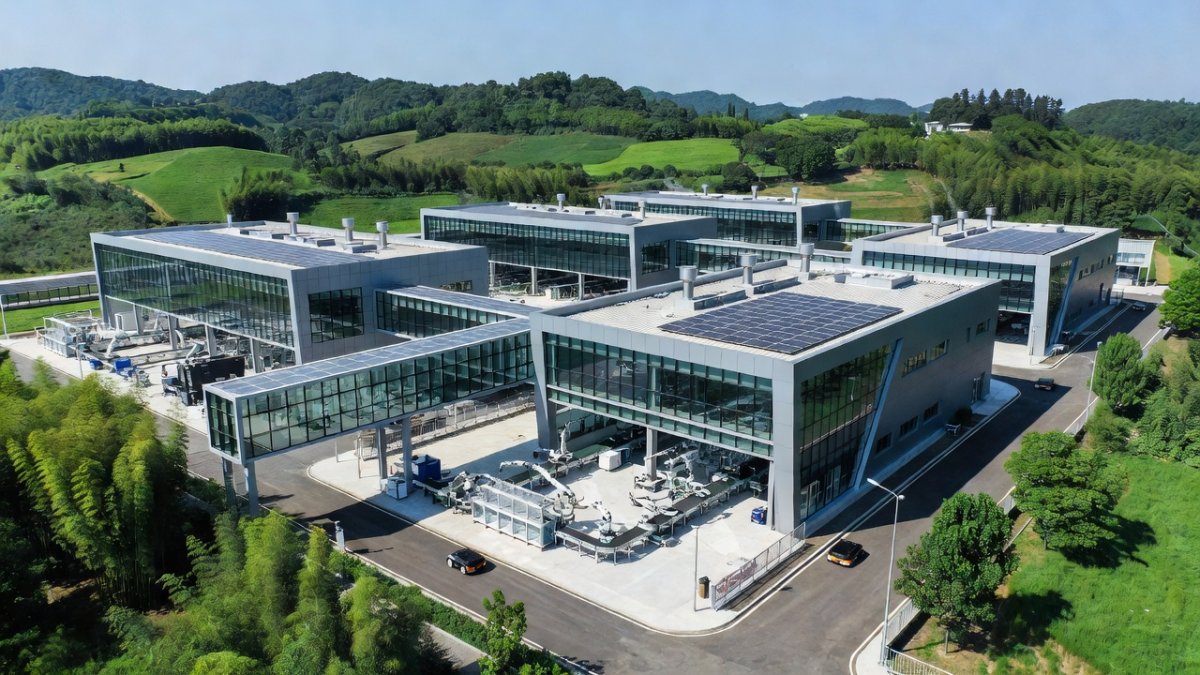
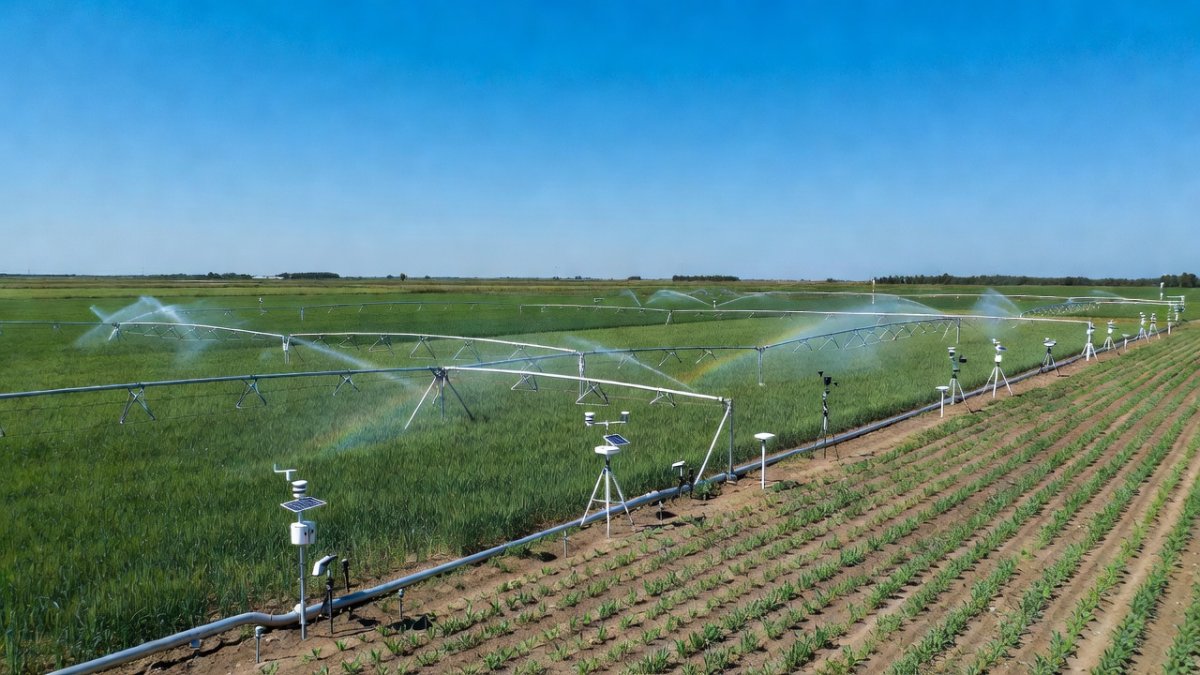
In a recent CGTN report, the "50,000 in 5 Years" initiative is presented as a direct response to entrenched pessimism in China-US relations, sending cohorts of young Americans to industrial sites in Ganzhou and advanced agricultural operations in Zouping. This program marks a deliberate turn towa...
Public Diplomacy as a Pillar of China's Strategic Toolkit
Beijing has long viewed people-to-people exchanges as instruments of statecraft rather than mere cultural gestures. The new initiative aligns with the Dual Circulation strategy by projecting an image of technological competence and social stability to future American decision-makers. Unlike broad propaganda campaigns, the program selects participants for targeted exposure to manufacturing clusters and smart farming systems, aiming to reshape perceptions through direct observation rather than official statements from the Ministry of Foreign Affairs.
Factory Visits and Smart Farms as Narrative Counterweights
Western media coverage frequently emphasizes supply-chain vulnerabilities and rural underdevelopment in China. By routing visitors through Ganzhou's electronics and rare-earth processing facilities alongside Zouping's data-driven agricultural platforms, the initiative offers concrete counter-examples. Participants witness automated production lines and precision irrigation systems that contradict portrayals of technological lag. This approach seeks to neutralize framing that portrays China solely as a source of economic disruption or environmental concern, substituting firsthand evidence of modernization for headline-driven skepticism.
Historical Precedents and Lessons from Past Breakthroughs
China's current effort draws explicit parallels to earlier diplomatic experiments. Ping-Pong diplomacy in 1971 opened channels when formal relations remained frozen. The 100,000 Strong initiative launched under the Obama administration sought to increase American students in China but achieved only partial results due to funding shortfalls and shifting political priorities. The "50,000 in 5 Years" program learns from these models by emphasizing shorter, high-impact visits rather than long-term study, reducing logistical barriers while maintaining focus on strategic sectors such as advanced manufacturing and sustainable agriculture.
The Committee on Scholarly Communication with the PRC, active from 1966 to 1979, established early channels for academic contact between American and Chinese institutions at a time when formal diplomatic ties remained absent. Operating under the National Academy of Sciences, the committee facilitated limited delegations and research exchanges that built personal networks later activated after normalization. These efforts created precedents for structured people-to-people contact that later programs would scale, though they remained confined to elite scholarly circles rather than broader vocational exposure.
The 1979 US-China Science and Technology Cooperation Agreement formalized bilateral research collaboration and created legal mechanisms for educational exchanges that endured through subsequent decades. It provided the administrative framework for joint projects in agriculture, energy, and manufacturing, allowing both governments to channel resources into sustained contact. This agreement differed from later initiatives by emphasizing technical cooperation over cultural immersion, yet it set the institutional template that current vocational programs in places such as Ganzhou and Zouping now adapt for younger participants.
The 100,000 Strong initiative launched in 2009 struggled with inconsistent congressional appropriations and shifting political priorities after 2016, resulting in far fewer American students reaching China than projected. Funding disputes and campus concerns over academic freedom limited its reach. In contrast, the present “50,000 in 5 Years” effort prioritizes factory and farm visits over university study, aiming to expose participants directly to Chinese industrial processes rather than traditional academic settings, a distinction that may reduce some political friction while addressing different skill gaps.
Correcting Structural Asymmetries in Student Flows
Current exchange patterns remain heavily skewed. Tens of thousands of Chinese students enroll annually in US universities, while American participation in Chinese academic programs has stagnated below 15,000 per year. The new initiative attempts to address this imbalance through structured, government-supported exposure rather than relying on market-driven university partnerships. By concentrating on vocational and technical sites instead of elite campuses, it broadens the demographic reach beyond traditional study-abroad cohorts and targets individuals who may later enter policy, business, or media roles with direct impressions of China's industrial base.
Chinese students contribute an estimated $35-40 billion annually to the US economy through tuition and living expenses, according to Department of Commerce data, creating a significant economic incentive for American universities to maintain enrollment pipelines. This revenue stream has shaped institutional behavior even as political tensions rise. The imbalance in numbers—roughly 15,000 US students in China versus 500,000 Chinese students in the United States—reflects these financial realities more than mutual curiosity about each other’s societies.
Proclamation 10043 issued in 2020 tightened visa scrutiny for Chinese graduate students in sensitive fields, producing an approximately 20 percent drop in STEM enrollments at US universities. The policy reduced the flow of advanced technical knowledge in both directions and accelerated China’s efforts to retain talent domestically. American policymakers have consequently faced a shrinking pool of mid-career professionals with firsthand knowledge of Chinese institutions, widening the information gap during trade and technology negotiations.
China has countered this asymmetry through coordinated instruments including Confucius Institutes, China Scholarship Council awards, and province-level sister-city arrangements that systematically direct resources toward language training and short-term visits. These programs operate with central guidance from the Ministry of Education and local governments, producing a steady supply of China-literate American participants. The current initiative’s focus on industrial sites in Ganzhou and Zouping extends this approach by emphasizing practical exposure over classroom study, potentially creating interlocutors familiar with supply-chain realities.
Implications for Great-Power Competition and Regional Influence
Soft-power initiatives of this scale carry second-order effects across the Indo-Pacific and beyond. ASEAN capitals monitor whether similar programs will be extended to regional youth, potentially diluting US-led narratives on supply-chain diversification. European policymakers, already navigating technology-transfer restrictions, may interpret the program as evidence that Beijing intends to compete on narrative terrain as well as economic and military fronts. For the Global South, the emphasis on practical technology demonstrations in Ganzhou and Zouping could reinforce China's positioning as a partner in development rather than a revisionist power.
Strategic Calculus and Long-Term Leverage
Each side calculates differently. Washington retains advantages in elite university networks and English-language media reach, yet faces domestic constraints on funding reciprocal programs. Beijing possesses centralized coordination capacity and can scale site visits rapidly through provincial governments. The initiative's success will hinge on whether sustained contact produces measurable shifts in participant attitudes and whether those shifts translate into policy influence over a decade. Early cohorts will likely generate case studies that either validate or constrain further expansion of the model.
ASEAN governments in Malaysia, Vietnam, and Indonesia monitor China’s youth-exchange models as they expand similar programs across the Global South, viewing them as instruments of long-term influence rather than simple cultural outreach. Regional analysts note that these initiatives often pair factory visits with discussions of infrastructure financing, creating networks that later support Belt and Road projects. The US response will likely be measured against whether Washington develops comparable vocational programs or continues to rely primarily on traditional academic exchanges.
Under the EU-China 2020 Strategic Agenda for Cooperation, European and Chinese institutions have maintained structured youth exchanges that emphasize joint training in green technology and urban planning. These arrangements have proven more resilient to political shocks than US-China programs because they rest on multilateral rather than bilateral funding. American policymakers examining the “50,000 in 5 Years” initiative must therefore consider whether new mechanisms such as the RIVALS Act or an International Education Council can generate comparable scale without the same vulnerability to bilateral tensions.
Chinese strategists appear to calculate that early exposure to domestic manufacturing capacity will produce a cohort of American professionals who understand supply-chain interdependencies when future trade disputes arise. By hosting participants in specialized zones such as Ganzhou and Zouping, Beijing aims to shape perceptions of Chinese industrial competence before participants enter policy or business roles. This long-term approach complements shorter-term diplomatic messaging from the Ministry of Foreign Affairs and may prove more durable than episodic high-level summits.
By Prof. Marcus Chen, Staff WriterThis article was produced with AI-assisted research and editorial support. Reporting is based on sources cited in the article.
What's Your Reaction?
 Like
0
Like
0
 Dislike
0
Dislike
0
 Love
0
Love
0
 Funny
0
Funny
0
 Wow
0
Wow
0
 Sad
0
Sad
0
 Angry
0
Angry
0

World Politics Analyst at Global1.News. Based in Beijing, covering US-China relations, global trade, and geopolitical strategy. Brings deep analytical perspective to the power dynamics shaping international affairs.










Comments (0)