
Sandiganbayan Orders Arrest of Rep. James "Jojo" Ang Jr. Over DPWH Contracts
= The Sandiganbayan has ordered the arrest of sitting Uswag Ilonggo party-list Representative James "Jojo" Ang Jr. over alleged graft tied to DPWH contracts worth hundreds of millions.
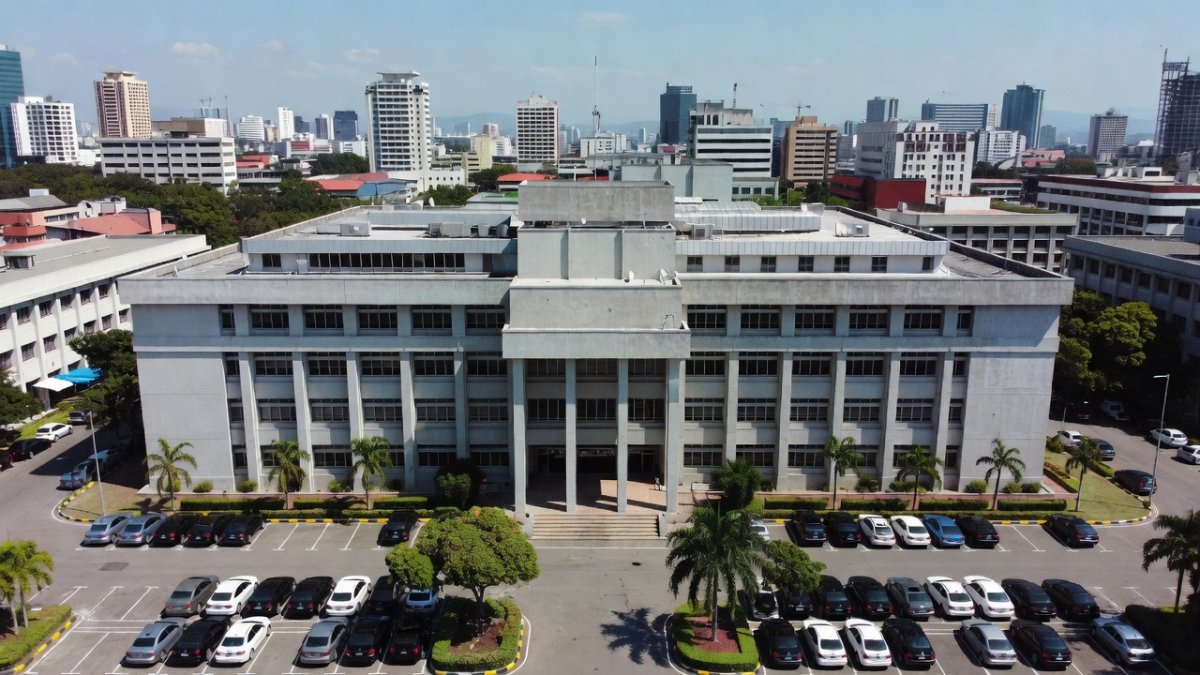
The Sandiganbayan has ordered the arrest of sitting Uswag Ilonggo party-list Representative James "Jojo" Ang Jr. over alleged graft tied to DPWH contracts worth hundreds of millions. This ruling marks a direct challenge to lawmakers who maintain business interests while in office. The case underscores how such conflicts erode public trust in infrastructure spending across the Visayas and beyond.
Sandiganbayan Arrests Rep. Jojo Ang in DPWH Graft Case
The Arrest and the 'Cong-tractor' Tag
The Sandiganbayan's Third Division issued a resolution on July 27, 2026, ordering the arrest of Uswag Ilonggo party-list Representative James "Jojo" Ang Jr. The court found probable cause to try him for violating Section 3(h) of the Anti-Graft and Corrupt Practices Act, Republic Act 3019. This stems from an indictment by the Office of the Ombudsman dated July 23, 2026. The anti-graft court also directed a hold-departure order against the lawmaker from Iloilo.
Critics have long used the term "cong-tractor" for lawmakers who keep interests in firms that secure government contracts while serving in Congress. Ang's case fits this pattern exactly. His construction firm reportedly won P214 million in contracts with the Department of Public Works and Highways and collected P199 million in payments during his term. Ordinary Filipinos in the Visayas see this as another reminder that public office can become a gateway to private gain.
The 14 Counts and What the Law Says
The Sandiganbayan charged Ang on 14 counts of graft for retaining an interest in the construction firm. Assistant Ombudsman Mico Clavano stated clearly: "Conflict of interest is not a gray area. It does not require proof that a deal was rigged or that cash changed hands — only that a public official profited, or stood to profit, from a government contract while in office." Clavano added that the constitutional prohibition forms a "clear and thick" line that has been "constantly and blatantly being crossed."
Section 3(h) of Republic Act 3019 prohibits public officials from having direct or indirect financial interest in any contract with the government. The law does not demand evidence of bribery or rigged bidding. It simply bars the conflict itself. This standard protects taxpayers who fund DPWH projects across provinces like Iloilo and beyond. When lawmakers cross this line, communities lose trust that road and bridge funds reach the right places.
Republic Act 3019 Section 3(h) explicitly bars any public official from having a direct or indirect financial stake in government contracts, a prohibition rooted in the 1960s push against elite capture of state resources during the early years of the Republic. Historical prosecutions show this clause has ensnared dozens of lawmakers since the 1990s, from the 2004 conviction of a Cebu congressman over a P50 million road project to the 2018 case against a Mindanao governor who funneled P180 million through family firms. The pattern reveals that courts rarely require proof of kickbacks; the mere existence of the interest suffices for conviction, underscoring how the law aims to prevent even the appearance of self-dealing that erodes public faith in institutions.
The Office of the Ombudsman has intensified its focus on conflict-of-interest cases in recent years, filing over 120 graft complaints involving legislators between 2022 and 2025 alone, with a conviction rate hovering near 35 percent according to its annual reports. This surge reflects improved forensic accounting teams and greater access to procurement databases, allowing investigators to trace payments like the P199 million collected by Ang's firm without needing whistleblowers. Yet delays persist, as cases often languish for three to five years before reaching the Sandiganbayan, leaving communities in provinces such as Iloilo waiting for accountability while roads remain unfinished.
The 14 separate counts against Ang signal a sustained pattern rather than isolated lapses, with each count tied to distinct DPWH contracts awarded during his term, suggesting repeated decisions that placed personal profit above public duty. The party-list system, established under the 1987 Constitution to amplify marginalized voices like farmers and laborers, was never meant to serve as a backdoor for business interests; instead, it has increasingly been occupied by figures with construction ties, diluting its original intent and leaving ordinary Visayans feeling their legislative seats now prioritize profit over genuine representation.
Beyond Ang: The Go Case and a Widening Probe
In a separate resolution, the same Third Division ordered the arrest of former Sultan Kudarat Representative Arnulfo Go along with three former local officials from Lebak municipality. These officials include former mayor Dionesio Begas Besana, municipal accountant Allan Gayosa Bayani, and municipal treasurer Mario Abasolo Labrador. They face graft charges for malversation of public funds under Article 217 of the Revised Penal Code, with hold-departure orders also issued.
The Third Division continues to handle high-profile matters involving former Senator Ramon "Bong" Revilla and Senator Rodante Marcoleta. These parallel cases show the Sandiganbayan's steady focus on accountability across both national and local levels. Party-list representatives and district lawmakers alike must answer when public resources appear misused.
Former Representative Arnulfo Go, who represented Sultan Kudarat's second district from 2007 to 2016, built a political career centered on local infrastructure promises before facing these new charges alongside three municipal officials from Lebak. Malversation of public funds in practical terms means that money earmarked for barangay health stations or irrigation canals instead vanishes into private accounts, forcing residents in remote Mindanao towns to travel hours for basic medical care or watch crops rot due to impassable farm roads during the rainy season. The alleged involvement of the former mayor, accountant, and treasurer points to a coordinated scheme where local budgets were diverted, directly hitting households already struggling with poverty rates above 30 percent in the province.
Lebak municipality's connection stems from projects funded through the national budget that were supposed to upgrade flood control and access roads, yet investigators claim the funds were misappropriated over multiple fiscal years, leaving communities vulnerable to annual typhoon damage. This case illustrates how graft at the local level compounds national scandals, as every peso siphoned away delays critical works that could have protected lives and livelihoods in areas prone to flooding from the Mindanao River basin.
The Sandiganbayan's Third Division handling multiple high-profile matters, including those involving former Senator Bong Revilla and Senator Rodante Marcoleta, demonstrates the court's expanding docket on accountability across branches of government. This concentration of cases signals a deliberate judicial push to address systemic issues in public spending, yet it also strains resources, meaning families in both Iloilo and Sultan Kudarat must endure prolonged uncertainty while awaiting resolutions that could restore faith in how their taxes are spent.
Taguig, Lacson, and the Politics of Infrastructure
Senator Panfilo Lacson's office has documented additional cases of alleged double billing and collection in Taguig City infrastructure projects. His team found projects that used identical photographs for billing despite different appropriations, locations, and contractors. Senate Minority Leader Alan Peter Cayetano dismissed the claims and challenged Lacson to present complete details.
Such disputes highlight ongoing concerns over how Congress oversees DPWH spending. Taxpayers in Metro Manila and the provinces pay for these projects through national budgets approved by both chambers. When questions arise about duplicate claims, the Senate's oversight role becomes vital to restoring confidence in public works.
Impact on Ordinary Filipinos
Every peso lost to questionable contracts means fewer classrooms repaired in Iloilo barangays or delayed farm-to-market roads in Sultan Kudarat. Families in these areas rely on DPWH projects for safer travel during typhoon season and better access to markets. When lawmakers face graft charges tied to construction firms, ordinary citizens wonder whether their hard-earned taxes truly build lasting infrastructure.
The party-list system was meant to give voice to marginalized sectors, yet cases like Ang's raise questions about how those seats are used. Communities in the Visayas and Mindanao feel the effects most when projects stall or funds disappear. Cultural values of bayanihan suffer when public service appears turned into personal enterprise. Honest local government units struggle to deliver services while national attention focuses on scandals instead of delivery.
The P214 million in contracts linked to Ang's firm could have funded roughly 85 standard public school classrooms across a typical Philippine province like Iloilo, or paved approximately 42 kilometers of farm-to-market roads that connect rural barangays to markets, based on current DPWH unit cost estimates of P2.5 million per classroom and P5 million per kilometer. Instead, these resources appear tied to private interests, leaving students in flood-prone areas without adequate learning spaces and farmers facing higher transport costs that eat into already thin margins during harvest seasons. Past DPWH scandals, such as the 2013 pork barrel scam that diverted P10 billion nationwide, have shown how such losses compound into billions in foregone development, with taxpayers in the Visayas and Mindanao bearing the brunt through poorer infrastructure and slower economic growth.
Corruption in the department has historically cost the public an estimated P200 billion annually according to various watchdog estimates, translating into delayed bridge repairs that isolate communities during typhoons and health centers left half-built in provinces like Sultan Kudarat. These figures hit hardest at the household level, where families must spend more on private transport or medical emergencies because public projects stall, deepening cycles of poverty that affect generations.
The cultural value of bayanihan, the communal spirit of collective effort that has long defined Filipino responses to crises, erodes when scandals like these surface, as residents in Iloilo and Lebak begin to question whether neighbors in government truly serve the common good or merely their own pockets. Families there view the arrests not as abstract legal events but as reminders that their daily struggles with muddy roads and overcrowded schools stem from decisions made far from their realities, prompting quiet conversations about reclaiming public service for genuine community uplift rather than personal enterprise.
What Happens Next
The Sandiganbayan will proceed to trial once Ang and the other accused surrender or are arrested. The hold-departure orders prevent any attempt to leave the country while cases move forward. The Office of the Ombudsman will continue its work presenting evidence before the Third Division.
Filipino taxpayers watch these developments closely because accountability in Congress directly shapes the quality of roads, bridges, and public buildings they use daily. As the cases advance, the hope remains that stronger enforcement of Republic Act 3019 will discourage future conflicts of interest and keep public funds focused on genuine community needs.
By Bella Reyes, Staff Writer
This article was produced with AI-assisted research and editorial support. Reporting is based on sources cited in the article.
What's Your Reaction?
 Like
0
Like
0
 Dislike
0
Dislike
0
 Love
0
Love
0
 Funny
0
Funny
0
 Wow
0
Wow
0
 Sad
0
Sad
0
 Angry
0
Angry
0

Philippines/Southeast Asia Correspondent at Global1.News. Manila-based journalist covering Philippine politics, environment, maritime security, and social issues. Passionate about marine conservation and the communities protecting the Philippines' natural heritage.














Comments (0)