
Milei's São Paulo Outburst Triggers Brazil-Argentina Crisis
A foreign leader's decision to hurl personal attacks during a domestic event has transformed a routine political gathering into a symbol of eroding regional trust.
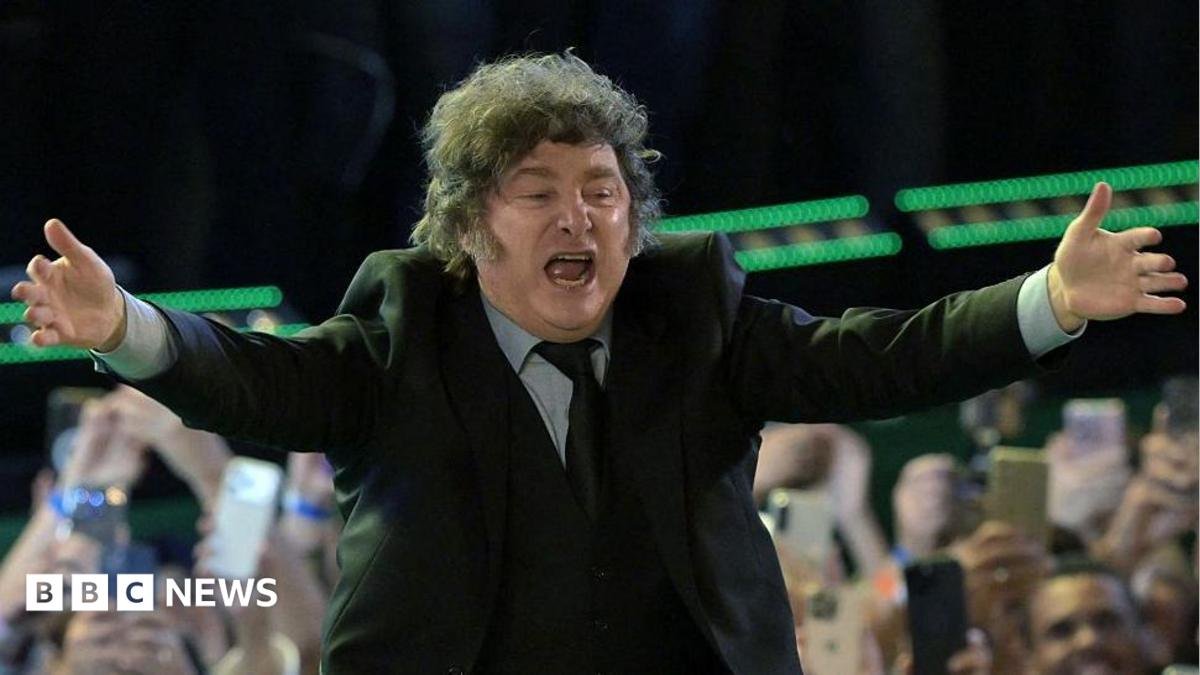
São Paulo, Brazil — As reported by multiple international news outlets, the fallout from last Friday's events continues to reverberate through government offices and foreign ministries across South America, highlighting the fragility of ties between the continent's two economic powerhouses.
The Spark at the Liberal Party Convention
Argentine President Javier Milei arrived in São Paulo this week to participate in the Liberal Party national convention, an event that formally positioned Senator Flávio Bolsonaro as the party's candidate for Brazil's upcoming presidential election. The gathering drew crowds eager to see the continuation of the Bolsonaro political legacy, with Flávio stepping forward as Jair Bolsonaro remains barred from running. Milei's presence signaled explicit international backing for this right-wing effort, joining endorsements already voiced by figures such as Benjamin Netanyahu.
Yet the visit quickly shifted from celebration to confrontation. Milei's participation at the convention, hosted in the heart of Brazil's largest city, exposed the cross-border alliances forming among conservative movements. These connections reflect a broader pattern where external leaders inject themselves into local campaigns, often at the expense of stable relations with sitting governments.
The convention unfolded inside the expansive Expocentro hall in São Paulo’s Barra Funda district, where thousands of red-and-black Liberal Party flags draped the rafters and chants of “Bolsonaro” echoed off the concrete walls. Milei flew in on a private Argentine government jet that morning, landing at Congonhas Airport before being whisked through a motorcade that deliberately avoided the federal capital. The optics of an incumbent foreign president sharing a stage with a domestic opposition candidate underscored a deliberate strategy to internationalize Brazil’s right-wing movement, lending it the sheen of a continental conservative wave.
Such cross-border endorsements are not unprecedented in Latin America. Venezuelan President Hugo Chávez openly backed Bolivia’s Evo Morales in 2005, while Colombia’s Álvaro Uribe hosted Ecuadorian candidate Guillermo Lasso during the 2021 campaign. Yet Milei’s appearance carried extra weight because it occurred inside Brazil’s largest city and economic engine, amplifying the perception that external actors are shaping the upcoming contest. The Bolsonaro family’s political machine, built over three decades through evangelical networks, social-media reach, and disciplined messaging, provided the infrastructure for the event.
Flávio Bolsonaro’s keynote speech emphasized “family, faith, and freedom,” repeatedly invoking his father’s legacy while promising to restore “economic sovereignty.” He avoided direct criticism of Lula but framed the gathering as the start of a broader regional realignment, explicitly thanking Milei for standing “shoulder to shoulder” with Brazilian conservatives.
Personal Attacks on Brazilian Institutions
From the stage, Milei directed sharp insults at President Lula da Silva, labeling him "the convict" and "the thief." He further targeted Supreme Court Justice Alexandre de Moraes with the phrase "a bald piece of trash." Such language, delivered before a domestic Brazilian audience, bypassed standard diplomatic channels and landed directly in the public sphere. These remarks tapped into ongoing political divisions, where Lula's past legal challenges and return to the presidency remain flashpoints for opponents.
The choice of venue amplified the impact. São Paulo serves as a political and economic hub, and the convention's focus on Flávio Bolsonaro's candidacy made the insults feel like a direct challenge to Brazil's current leadership. Observers noted how this approach mirrors Milei's confrontational style, which prioritizes bold statements over measured engagement with neighboring administrations.
Brazil's Immediate Diplomatic Countermeasures
Brazil's government responded without delay by recalling its ambassador from Buenos Aires and summoning Argentina's envoy in Brasília for a formal protest. The Foreign Ministry, operating from Itamaraty Palace, also called in the Argentine ambassador to demand explanations for the remarks. These steps represent standard procedures for addressing perceived affronts to sovereignty, yet their swift execution signals the depth of the current strain.
Officials emphasized that such actions protect the integrity of bilateral dialogue. The recall of the ambassador disrupts routine cooperation on trade and border issues, while the summons underscores expectations that foreign visitors respect host country institutions. This sequence of moves has already complicated ongoing discussions within Mercosur, the regional trade bloc that relies on coordination between Argentina and Brazil.
Flávio Bolsonaro's Position in the Upcoming Contest
Flávio Bolsonaro trails President Lula in current polling for the upcoming race, even as he carries forward his father's political movement. The convention served as a launchpad for his candidacy, drawing support from international right-wing networks that include Milei. This external validation aims to bolster visibility, yet it coincides with the diplomatic tensions now surrounding the campaign.
Jair Bolsonaro's absence from the ballot due to legal restrictions has placed greater weight on Flávio to sustain the family's influence. The incident in São Paulo illustrates how campaign events can intersect with foreign policy, potentially affecting voter perceptions in a contest already marked by polarization. Lula's earlier decision to block certain US envoys from assessing election processes further contextualizes the sensitivity around external involvement in Brazilian affairs.
Recent Datafolha polling shows Flávio Bolsonaro at 22 percent support against Lula’s 38 percent for a first-round matchup, with the remainder split among centrist and left-leaning alternatives. His platform stresses deregulation, pension reform, and closer ties with the United States and Israel, positions that diverge sharply from Lula’s emphasis on state-led industrial policy and expanded social spending. These differences have become flashpoints in an already polarized electorate.
Jair Bolsonaro’s ongoing legal cases, including an eight-year ban from office and multiple criminal proceedings, have forced Flávio to carry the family banner alone. The younger Bolsonaro’s Senate record includes sponsorship of anti-corruption measures and pro-agribusiness legislation, yet critics note his limited legislative achievements and reliance on his father’s brand. International support from Milei, Netanyahu, and U.S. conservative donors has provided fundraising and media visibility, but it has also invited accusations of foreign interference.
Flávio’s campaign team has sought to portray him as a steady institutionalist capable of governing within democratic norms, a contrast to his father’s more confrontational style. Whether this rebranding can close the polling gap remains uncertain as the diplomatic fallout from Milei’s visit continues to dominate headlines.
Pressures on Mercosur and South American Cooperation
The crisis has placed additional stress on Mercosur, where Argentina and Brazil anchor the bloc's largest economies. Trade negotiations and joint infrastructure projects now face uncertainty as diplomatic channels cool. Milei's visit and subsequent remarks have raised questions about how personal interventions by heads of state influence collective regional mechanisms.
Daily life in border regions, from truck drivers moving goods between the two countries to families with cross-border ties, stands to feel the effects if tensions persist. The episode reveals how quickly political theater can translate into practical disruptions for citizens who depend on stable relations.
Bilateral trade between Argentina and Brazil reached $28 billion last year, dominated by Argentine soy and wheat exports and Brazilian manufactured goods and vehicles. Several joint infrastructure projects, including the bi-national bridge at Paso de los Libres and coordinated energy-grid upgrades, now face funding delays as diplomatic staff are recalled. Mercosur has already struggled with stalled EU trade talks and internal disputes over tariff policy; the current rupture risks further paralysis.
Smaller members Uruguay and Paraguay, which rely on open borders for agricultural exports and remittances, are particularly exposed. Truckers at the Uruguaiana-Paso de los Libres crossing report longer inspection times and canceled orders, while cross-border families face uncertainty over health and education services that depend on reciprocal agreements. Any prolonged freeze in cooperation could shrink regional GDP growth by an estimated 0.4 percent, according to regional economists.
The episode highlights how personal rhetoric from heads of state can quickly translate into tangible costs for citizens who depend on predictable commercial flows across the continent’s most important economic corridor.
Fragmentation Across Latin American Politics
This diplomatic rupture fits into a wider pattern of ideological divides shaping the continent. Milei's firebrand approach contrasts with Lula's emphasis on institutional norms, creating friction that extends beyond bilateral issues. The involvement of figures like Netanyahu in Brazilian campaigns adds layers to these dynamics, showing how global networks intersect with local contests.
As a journalist based in Brazil, the personal dimension emerges clearly: attacks on the Supreme Court and the presidency touch institutions that have navigated complex transitions, including Lula's own journey from imprisonment to leadership. The current situation demands careful navigation to prevent further erosion of trust among South American nations.
Paths Forward for Regional Stability
Restoring dialogue will require both sides to prioritize institutional channels over public exchanges. The recalled ambassador's return and resumed ambassadorial meetings could serve as initial steps, though underlying differences in political vision remain. For Mercosur to regain momentum, leaders must address how external endorsements in domestic races affect collective goals.
The upcoming election cycle will test whether such incidents become recurring features or prompt a return to more contained diplomacy. Brazil's response has affirmed its commitment to defending its political space, while Argentina's actions will determine if the crisis deepens or finds resolution through standard statecraft.
Diplomatic protocol suggests the recalled Brazilian ambassador could return within four to six weeks if Argentina issues a formal statement of regret, though neither side has signaled willingness yet. Past crises offer precedent: the 2008 Colombia-Ecuador rupture was resolved through OAS mediation within months, while Brazil-Bolivia gas disputes in the mid-2000s required quiet presidential phone diplomacy to restore supply contracts.
Both leaders face domestic constraints. Milei needs continued conservative momentum ahead of Argentina’s midterms, while Lula must demonstrate he will not tolerate foreign meddling. International mediators such as the OAS or UNASUR could facilitate back-channel talks, but success will hinge on whether each president can claim a face-saving outcome to their respective bases.
The Brazilian election calendar, with primaries expected in mid-2025, leaves limited time for tensions to cool before campaigning intensifies. How the two governments manage the next several months will determine whether this episode becomes a recurring pattern or a cautionary lesson in regional diplomacy.
By Elena Vasquez, Staff WriterThis article was produced with AI-assisted research and editorial support. Reporting is based on sources cited in the article.
What's Your Reaction?
 Like
0
Like
0
 Dislike
0
Dislike
0
 Love
0
Love
0
 Funny
0
Funny
0
 Wow
0
Wow
0
 Sad
0
Sad
0
 Angry
0
Angry
0

Latin America Correspondent at Global1.News. Based in Mexico City, covering politics, economics, energy, and culture across the region. Brings an on-the-ground perspective to stories spanning from the Rio Grande to Patagonia.











Comments (0)