
Salgado Family Restored 676 Hectares of Atlantic Forest
world-renowned Brazilian photojournalist Sebastião Salgado returned to his family's cattle ranch in Aimorés, Minas Gerais, to find a barren wasteland. Decades of deforestation and erosion had stripped the land bare. His wife Lélia looked at the dust and saw possibility. Today, that same land — now Instituto Terra — stands as one of Latin America's most inspiring reforestation success stories, with 2.7 million native trees covering 676 hectares of restored Atlantic Forest. Sal
In the 1990s, world-renowned Brazilian photojournalist Sebastião Salgado returned to his family's cattle ranch in Aimorés, Minas Gerais, to find a barren wasteland. Decades of deforestation and erosion had stripped the land bare. His wife Lélia looked at the dust and saw possibility. Today, that same land — now Instituto Terra — stands as one of Latin America's most inspiring reforestation success stories, with 2.7 million native trees covering 676 hectares of restored Atlantic Forest.
Salgado's Forest: How One Family Restored 676 Hectares of Brazil's Atlantic Forest
Aimorés, Minas Gerais – Brazil — > — The Al Jazeera English documentary "Reviving the rainforest: One family's mission to restore Brazil's Atlantic Forest" captures the extraordinary journey of one couple who turned barren land into a living testament of ecological revival.
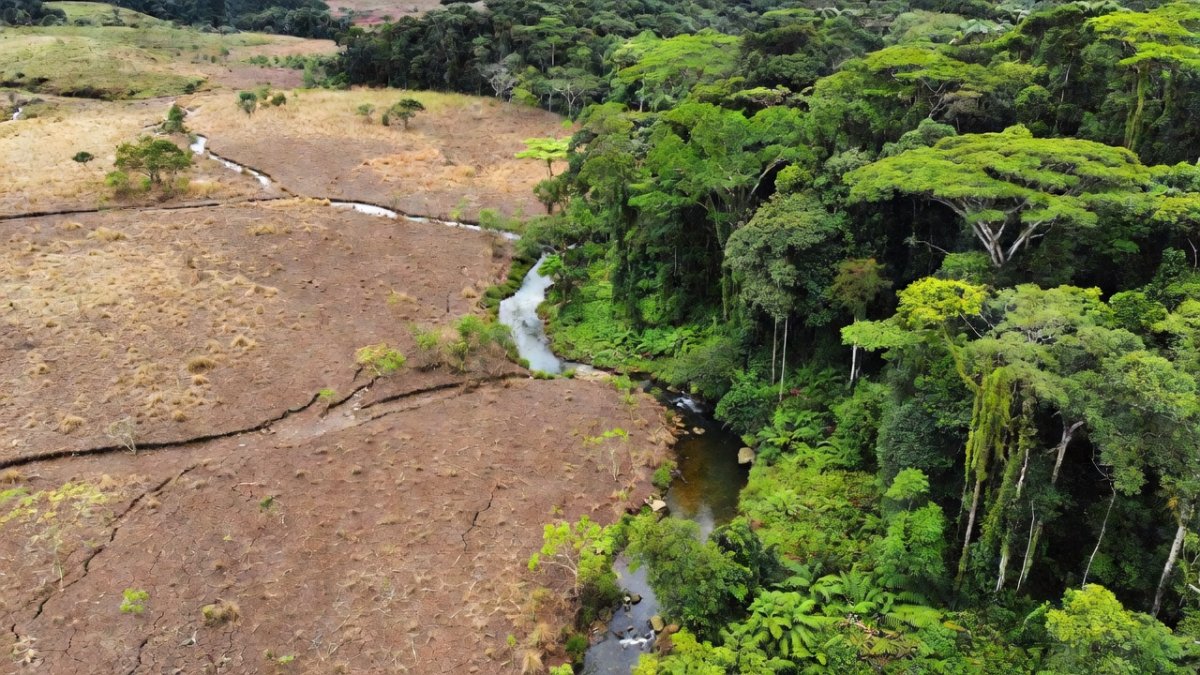
From Cattle Ranch to Rainforest — The Salgado Family's Restoration
In the 1990s renowned Brazilian photojournalist Sebastião Salgado and his wife Lélia Deluiz Wanick Salgado returned to his family's former cattle ranch in Aimorés, Minas Gerais. They discovered a landscape stripped bare by decades of deforestation and severe erosion that had left the soil lifeless and the hillsides crumbling. The once-vibrant Atlantic Forest had vanished, replaced by dust and silence. Lélia proposed restoring the land to its original state, igniting a shared vision that would redefine conservation in Brazil. In 1998 they founded Instituto Terra as a Private Natural Heritage Reserve, committing to plant millions of native trees across roughly 676 hectares. Over the following years the couple oversaw the planting of 2.5 to 2.7 million native Atlantic Forest saplings. This monumental effort transformed eroded pastures into a dense, self-sustaining forest. The project demonstrated how individual determination could reverse environmental damage on a meaningful scale while inspiring similar initiatives across Latin America. Their work proved that targeted reforestation could heal landscapes once considered beyond recovery.
Instituto Terra: A Private Reserve Model for Brazil
Instituto Terra stands as a pioneering Private Natural Heritage Reserve that showcases how private land can serve public ecological goals. Established in 1998 on the Salgado family property, the reserve operates under Brazilian law to protect and restore native ecosystems permanently. The initiative focused on replanting species native to the Mata Atlântica, ensuring genetic diversity and long-term resilience. By converting a degraded cattle ranch into protected forest, the Salgados created a replicable template for other landowners facing similar challenges. The reserve now functions as both a living laboratory and an educational center, demonstrating measurable gains in soil recovery and habitat connectivity. Over two decades the project expanded to cover approximately 1,500 acres, proving that sustained private commitment can achieve results comparable to large government programs. Instituto Terra also contributes to regional water security by protecting headwaters that feed the Rio Doce basin. This model highlights the power of combining scientific planning with passionate stewardship to reverse decades of environmental neglect in one of the world's most threatened biomes.
Biodiversity Returned — What 2.7 Million Trees Did for the Forest
The planting of 2.5 to 2.7 million native trees across 676 hectares triggered a dramatic resurgence of life at Instituto Terra. Within two decades researchers documented 293 plant species, 172 bird species, 33 mammal species, and numerous reptiles and amphibians returning to the restored landscape. Species once locally extinct reappeared as canopy cover thickened and food sources multiplied. The forest floor now supports complex undergrowth that shelters small mammals and amphibians, while the upper layers host diverse bird populations that aid seed dispersal. This biodiversity explosion illustrates how large-scale native reforestation can rebuild entire ecosystems rather than simply adding trees. The return of pollinators and seed dispersers accelerated natural regeneration beyond the original planting zones. Instituto Terra now serves as a critical refuge in a region where most remaining Atlantic Forest fragments measure under 50 hectares. The project's success underscores the importance of scale and species diversity in restoration efforts. These ecological gains provide a living blueprint for reversing biodiversity loss across Latin America's threatened forests.
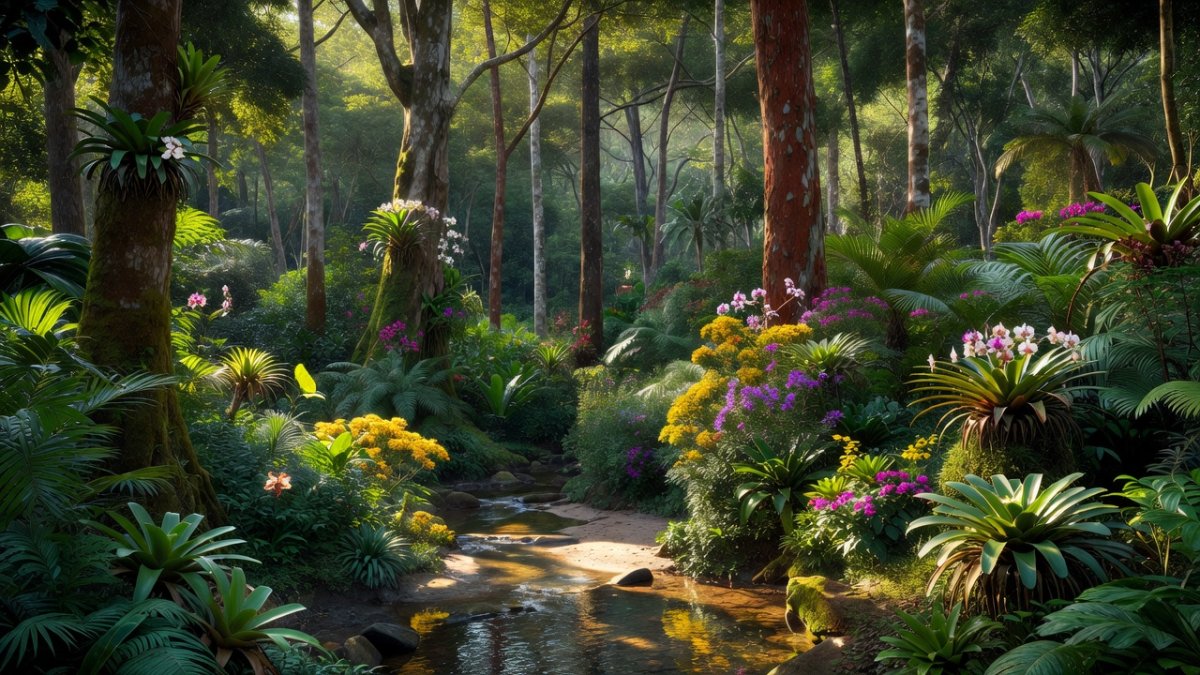
Water Security and the Atlantic Forest's Climate Role
Restored springs and water sources that had dried up decades earlier reappeared at Instituto Terra, demonstrating the Atlantic Forest's vital role in regional hydrology. The 676 hectares of new forest now contribute to water security for the Rio Doce basin, which supplies millions of Brazilians. The original Atlantic Forest once covered 1.3 to 1.5 million square kilometers along Brazil's coast, yet only about 16 percent remains, mostly in small fragments. This biome still provides water to 70 to 75 percent of the national population and supports 70 percent of Brazil's GDP. Carbon sequestration from the new trees helps mitigate climate impacts while improving local rainfall patterns. In 2025 deforestation reached a historic low of 8,660 hectares, a 40 percent drop from 2024 and the lowest level in 40 years, thanks to IBAMA enforcement and the 2006 Lei da Mata Atlântica. SOS Mata Atlântica has planted 44 million native trees and recovered roughly 24,000 hectares by 2026. The Atlantic Forest Restoration Pact aims to restore millions more hectares by 2050, showing how one family's project fits into a national strategy for water and climate resilience.
Sebastião Salgado's Legacy — Lélia Carries the Work Forward
Sebastião Salgado passed away on May 23, 2025 at age 81, leaving behind a profound environmental legacy. His ashes were placed at the roots of a peroba tree sapling at Instituto Terra in August 2025, symbolically returning him to the forest he helped revive. Lélia Deluiz Wanick Salgado continues leading the institute's mission with unwavering dedication. In April 2026 Carolina Sampaio, Head of Institutional Development, represented Instituto Terra at key events, ensuring the project's visibility and partnerships remain strong. The couple's work has inspired countless conservationists by proving that artistic vision and ecological action can merge effectively. Lélia's ongoing leadership emphasizes education, scientific monitoring, and community engagement to sustain the gains achieved. The restored forest now stands as a living memorial that continues to sequester carbon and support biodiversity. Salgado's photographs of human suffering and natural beauty found their ultimate expression in this tangible act of planetary healing. Lélia's stewardship ensures the institute remains a beacon for reforestation efforts across Brazil and beyond, carrying forward a vision that transformed personal grief over environmental loss into collective hope.
Latin America's Reforestation Revolution — Costa Rica, Mexico, Colombia
Latin America offers powerful examples of large-scale forest recovery that complement Instituto Terra's achievements. Costa Rica reversed deforestation from 21 percent to 60 percent forest cover through its Payments for Ecosystem Services program launched in 1997, protecting and restoring nearly one million hectares while shifting the economy toward ecotourism. Mexico's Sembrando Vida program has planted 1.3 billion trees, employs over 400,000 rural workers, and covers more than one million hectares in agroforestry systems that combine conservation with livelihoods. Colombia's Conservar Paga initiative pays communities to protect forests, cutting deforestation by 36 to 40 percent, restoring 643,730 hectares, and planting over 750,000 trees with indigenous and campesino groups serving as guardians of the jungle. These national programs demonstrate how policy incentives, community involvement, and sustained funding can achieve results at scales far beyond single reserves. Instituto Terra's private model provides a complementary approach that proves individuals can catalyze change even without massive state resources. Together these efforts illustrate a continental movement toward healing degraded landscapes while addressing poverty and climate goals simultaneously.
The Bottom Line — What One Family's Mission Teaches the World
The Salgado family's transformation of 676 hectares offers a clear lesson: determined private action can restore ecosystems once written off as lost. By planting 2.5 to 2.7 million trees they revived biodiversity, reactivated water sources, and created a carbon sink that benefits the Rio Doce basin. Their story aligns with broader Atlantic Forest recovery, where 2025 deforestation hit record lows and SOS Mata Atlântica has already restored 24,000 hectares. The project teaches that restoration succeeds when it combines scientific species selection, long-term protection, and community inspiration. Latin American neighbors show similar success through payments for services, massive employment programs, and community guardianship. Instituto Terra proves that one family's grief over a barren landscape can spark a movement that reverberates across continents. Lélia continues this work, ensuring the forest grows for future generations. The world now watches as the peroba tree marking Sebastião's resting place rises alongside thousands of others, symbolizing hope that even the most degraded lands can return to life when passion meets persistence.
By Elena Vasquez, Staff WriterThis article was produced with AI-assisted research and editorial support. Reporting is based on sources cited in the article.
What's Your Reaction?
 Like
0
Like
0
 Dislike
0
Dislike
0
 Love
0
Love
0
 Funny
0
Funny
0
 Wow
0
Wow
0
 Sad
0
Sad
0
 Angry
0
Angry
0

Latin America Correspondent at Global1.News. Based in Mexico City, covering politics, economics, energy, and culture across the region. Brings an on-the-ground perspective to stories spanning from the Rio Grande to Patagonia.












Comments (0)