
Nvidia's $250 Billion Guarantee Is the Most Circular Thing I've Ever Seen in This Industry
Nvidia is in talks to guarantee $250 billion in financing for OpenAI's planned 10-gigawatt Ohio data center lease. The circular vendor financing structure proves debt markets said no to the AI buildout, exposing structural fragility in the hyperscaler infrastructure thesis.
Nvidia's $250 Billion Guarantee Is the Most Circular Thing I've Ever Seen in This Industry
Let me tell you something that landed in my feed over the weekend and I'm still trying to wrap my head around it. Nvidia — the company that's been selling shovels in this AI gold rush — is now considering guaranteeing $250 billion of financing so OpenAI can lease a data center. Not design chips. Not build infrastructure. Guarantee a lease. For a facility that costs more than half a trillion dollars. The Wall Street Journal broke this on July 26, and I've been chewing on it ever since because it tells you more about where this industry is headed than any earnings report or product launch could.
Nvidia's $250 Billion Guarantee Exposes the Circular Nature of AI Infrastructure Financing
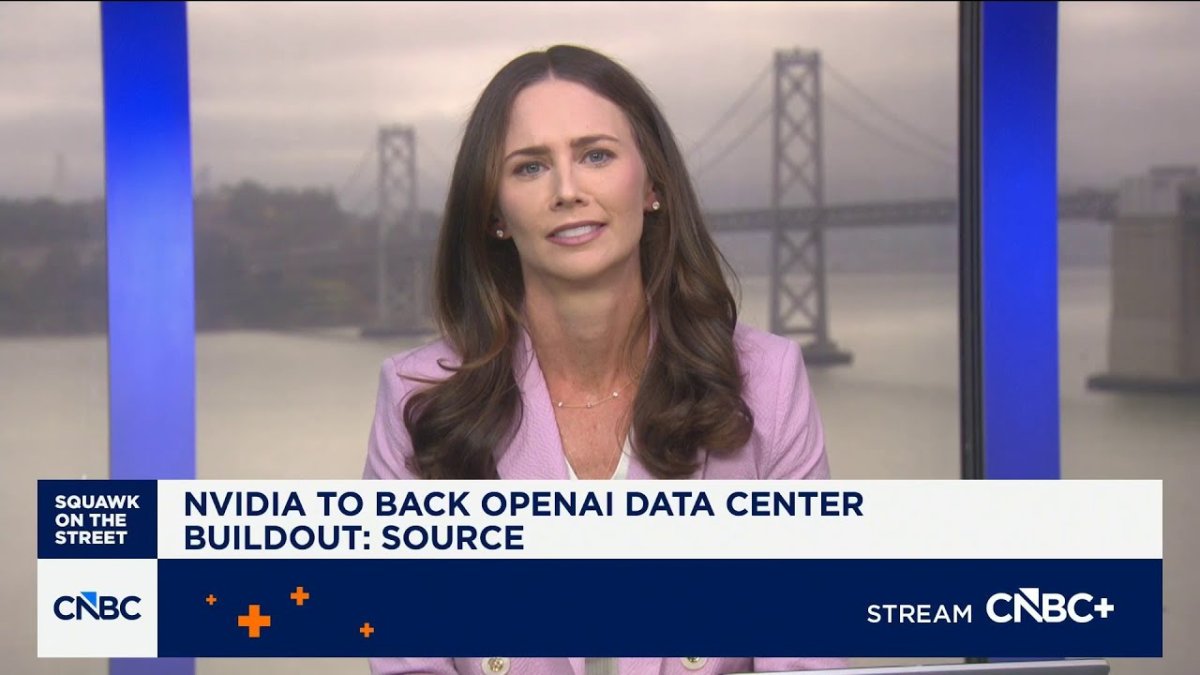
Piketon, Ohio — July 27, 2026 — Here's what we know. The WSJ reported that Nvidia is in talks to provide roughly $250 billion in financial guarantees for OpenAI's planned lease of SB Energy's 10-gigawatt data center campus in Piketon, Ohio. Total project cost: over $500 billion. First phase expected in 2028 at roughly 800 megawatts. And separately, Nvidia is also discussing financing OpenAI's chip purchases worth up to $350 billion on top of the guarantee.
The Circular Financing Problem — Nvidia Is Underwriting Its Own Demand
This is where it gets wild. The $250 billion guarantee covers the lease and construction debt — NOT the Nvidia chips inside the facility. But if Nvidia is also discussing $350 billion in chip purchase financing, then Nvidia is effectively underwriting the demand that drives its own revenue. It's guaranteeing the building where its chips will go, then financing the chips themselves. That's not a partnership. That's a closed loop.
Let me put that $250 billion in perspective. It's roughly 71 times Nvidia's entire disclosed guarantee book as of their last quarterly filing. It's more than Nvidia's total annual revenue — which was about $130 billion in fiscal 2026. It's about four times Nvidia's cash and cash equivalents. And remember, this is just a guarantee — if OpenAI defaults on the lease, Nvidia is on the hook for a quarter trillion dollars. That's the kind of contingent liability that keeps CFOs up at night, and it's not even on Nvidia's balance sheet yet.
What the Debt Markets Are Really Telling Us
The most telling part of this entire story isn't the dollar amount. It's the fact that Nvidia has to step in at all. OpenAI doesn't have an investment-grade credit rating. SoftBank — the company overseeing this buildout — is already carrying more than $130 billion in debt while funding data center projects in Ohio, France, and elsewhere. SB Energy invested $33.3 billion in Japanese funding for 9.2 gigawatts of new natural gas generation at this site alone.
The debt markets looked at this deal and said no. Not maybe. Not we'll think about it. No. SB Energy can only raise this money against Nvidia's balance sheet because nobody is willing to lend against OpenAI's cash flows. When a chip company has to guarantee your data center lease because no bank in the world will touch it, that is not a vote of confidence in your business model. The TechTimes headline got it right: Nvidia's $250 billion guarantee proves debt markets said no.
Wall Street's Reaction — Five Percent Drop and Counting
The market is not stupid. Nvidia stock fell 5% on Monday to around $197. AMD dropped 8% in sympathy. The broader AI hardware complex sold off because investors understand exactly what this means: Nvidia is so structurally dependent on the AI buildout continuing that it's willing to put its own balance sheet on the line to keep it going. The same day, news broke that Nvidia committed $5 billion to Ilya Sutskever's Safe Superintelligence startup. The SSI investment barely moved the needle — the market was too busy processing the $250 billion landmine.
Benzinga's analysis called it a "credit risk sharing" play. I call it something else: Nvidia has painted itself into a corner where its revenue growth depends on customers who can't get their own financing. When your customer's ability to pay depends on your willingness to guarantee their lease, you don't have a customer — you have a dependent. And dependents eventually default.
The Secondary Bottleneck — Debt Capacity Has a Ceiling
This story sits on top of everything I've been writing about for two weeks straight. The Oracle credit crisis — BBB- downgrade, negative $23.7 billion free cash flow on $55.7 billion in capex, Project Jupiter's $165 billion pipeline rejected twice. The debt market convergence I covered last week — $334.5 billion in YTD data center debt issuance, $1.65 trillion in hidden off-balance-sheet obligations, Goldman Sachs issuing leverage warnings. And now this: the most valuable chip company in the world stepping in because even SoftBank's balance sheet isn't enough.
Each of these stories independently said debt markets are tightening. Together, they paint a picture of an industry that has hit the debt capacity wall. The AI infrastructure buildout isn't slowing because of a lack of demand. It's slowing because the financing channels are clogged and the only answer left is vendor financing at unprecedented scale.
What This Means for Independent Hosting Providers
First — watch the guarantee structure. If this deal goes through with Nvidia as the backstop, it sets a precedent. Every hyperscaler with strained credit will start asking their hardware vendors for the same treatment. If Nvidia guarantees OpenAI, AMD and Broadcom will start getting calls from every second-tier AI lab that can't get a conventional loan. That means chip vendors will have less cash for R&D and more tied up in contingent liabilities. It's bad for the hardware ecosystem long-term.
Second — plan for the collateral damage. When the music stops on these vendor financing arrangements — and it will, because it always does — the first thing to freeze is equipment availability. If Nvidia's balance sheet is tied up in OpenAI guarantees, they have less capacity to finance their own inventory and less willingness to extend net terms to smaller customers. Lock your hardware orders now while the window is still open.
Third — the Piketon timeline is your signal. First phase isn't expected until 2028 at 800 megawatts. That's 18+ months away. If Nvidia's guarantee falls through — or if the regulatory backlash over Ohio's data center buildout gets worse — that timeline stretches or the project dies. Every delay in hyperscale capacity is a window for independent hosting to capture demand that can't find a home in the mega-facilities. Start positioning for that now, because when the window opens, it won't stay open long.
The Structural Reality — Vendor Financing Is the Last Resort
I've been running hosting infrastructure for over a decade, and I've seen vendor financing before. Cisco did it during the dot-com boom. Sun Microsystems did it before the 2008 crash. Every time, it meant the same thing: the conventional capital markets had already said no, and the vendor was so dependent on the customer's continued spending that they had to step in. And every time, it ended badly for the vendor. Cisco took $2.25 billion in bad debt write-offs. Sun's vendor financing contributed to its collapse.
Nvidia's $250 billion guarantee is orders of magnitude larger than any of those precedents. Cisco's entire financing arm was $6 billion at its peak. Nvidia is talking about 40 times that amount for a single project. The difference in scale is so large it's not just a different number — it's a different category of risk. If this goes wrong, it doesn't hurt Nvidia's quarterly results. It threatens the company.
The Bottom Line
This is not a sign of strength. This is what happens when an industry's investment thesis outruns its ability to finance itself organically. Nvidia's $250 billion guarantee isn't a vote of confidence in OpenAI — it's a signal that the AI infrastructure buildout has hit the debt capacity wall and the only way forward is for the chip vendors to start lending against their own success. That has never ended well, and I don't expect this time to be different.
The next six months will tell us whether Nvidia shareholders are willing to carry a quarter trillion dollars of contingent liability on their favorite stock. If they are, the buildout continues on life support. If they're not, Piketon becomes a cornfield again. Either way, the independent hosting providers who plan for that uncertainty will be the ones still standing when the music stops.
— Allan Ali, Founder
This article was produced with AI-assisted research and editorial support. Reporting is based on sources cited in the article.
What's Your Reaction?
 Like
0
Like
0
 Dislike
0
Dislike
0
 Love
0
Love
0
 Funny
0
Funny
0
 Wow
0
Wow
0
 Sad
0
Sad
0
 Angry
0
Angry
0

Publisher of Global1.News. Automation architect, systems builder, and the guy making sure the truth gets published.














Comments (0)