
The Memory Security Dilemma in Sino-Japanese Relations
In the shadowed corridors of Northeast Asian diplomacy, history refuses to stay buried, turning routine policy statements into flashpoints of existential dread. As tensions simmer between Tokyo and Beijing over Taiwan contingencies, the ghosts of imperial Japan and wartime atrocities continue to dictate the rhythm of modern security calculations, threatening to unravel fragile regional balances that have held since the postwar order took shape. Defining the Memory Security...
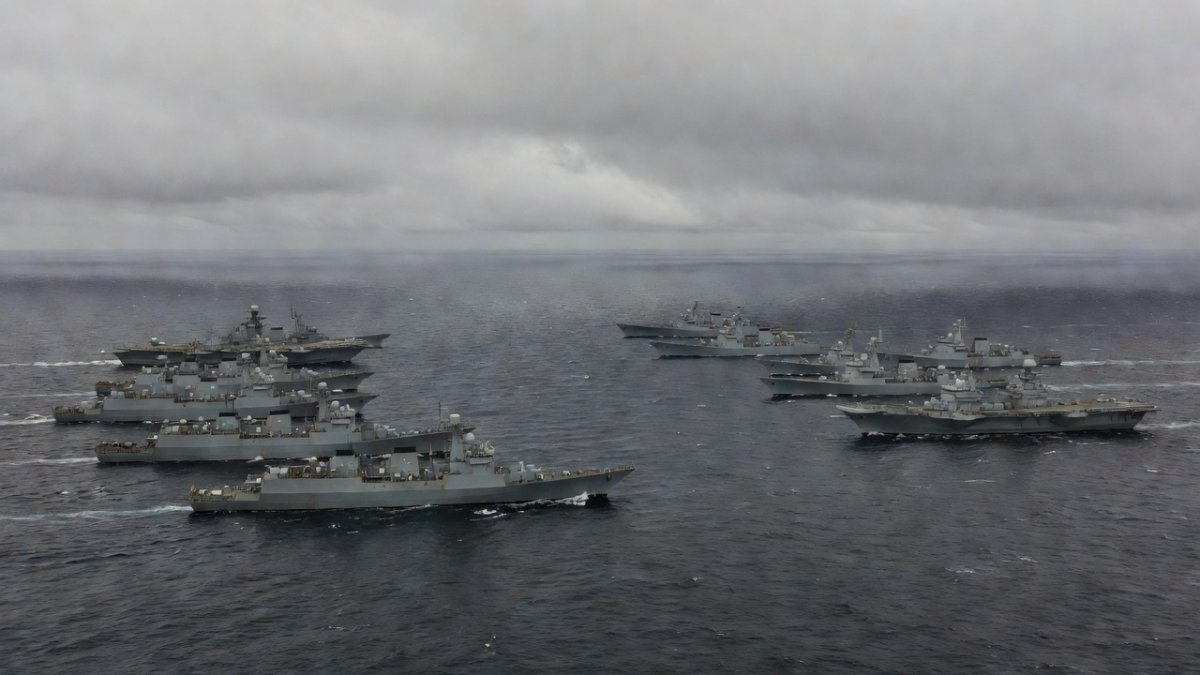
Defining the Memory Security Dilemma
The concept of a memory security dilemma, as analyzed in recent commentary from The Diplomat, describes a distinct form of strategic mistrust between states. Unlike the classic security dilemma rooted in uncertainty over military capabilities and intentions, this variant stems from divergent interpretations of historical meaning. Actions that one side regards as defensive or routine appear to the other as deliberate echoes of past aggression. In Sino-Japanese relations, this dynamic has intensified because each government filters contemporary events through incompatible narratives of the 1937-1945 war and its aftermath.
Ontological security theory illuminates how states in Northeast Asia derive continuity from consistent historical self-narratives, rendering challenges to those narratives existentially threatening. Korean scholars at the Asan Institute for Policy Studies have examined how Japanese security legislation activates Chinese fears of renewed militarism while simultaneously threatening Japanese self-perceptions of postwar pacifism. This dynamic differs from conventional arms races because the core uncertainty concerns the meaning of actions rather than their material scale.
The Korea Institute for National Unification has documented parallel patterns in inter-Korean relations, where historical memory shapes threat assessments independently of current capabilities. In East Asia, the memory security dilemma therefore operates through competing claims to victimhood and legitimacy that predate contemporary power distributions. Policy responses must therefore address interpretive frameworks rather than capabilities alone if escalation is to be avoided.
The roots of this interpretive friction trace back to the 1980s, when Japanese textbook controversies and prime ministerial visits to Yasukuni Shrine first collided with China's own post-Mao emphasis on patriotic education campaigns that foregrounded Japanese aggression. These parallel memory projects hardened over subsequent decades, transforming what might have remained bilateral historical disputes into structural impediments to crisis communication, as each capital's domestic audience now expects leaders to treat any perceived slight as a test of national resolve rather than a negotiable policy difference.
The November 2025 Trigger and Immediate Fallout
The current crisis began in November 2025 when Japanese Prime Minister Sanae Takaichi addressed the Diet on the Legislation for Peace and Security. She stated that a Chinese attack on Taiwan could constitute an existential crisis for Japan, potentially justifying a Japanese military response. Beijing condemned the remarks as a dangerous departure from postwar restraint. Chinese officials linked the statement directly to pre-1945 Japanese expansionism, viewing it as evidence that Tokyo still harbors revisionist ambitions. Japanese diplomats countered that the legislation remains strictly defensive and consistent with the postwar constitution. The exchange produced immediate diplomatic freezes and heightened military signaling around the East China Sea.
Historical Memory as Interpretive Filter
Chinese strategic thinking continues to frame Japanese policy through the lens of the Second Sino-Japanese War, the Nanjing Massacre, and imperial expansion. Any Japanese reference to collective self-defense or regional contingencies is read against that record. Japanese policymakers, by contrast, emphasize the postwar democratic transformation and the long record of pacifist constitutional practice. These mismatched reference points mean that routine alliance coordination or legislative clarification is rarely received at face value. Each side therefore attributes malign intent where none may exist, locking both into a cycle of misread signals.
South Korea's Distinct Position in the Triangle
South Korea occupies a singular vantage point because its own historical grievances with Japan remain unresolved. The 1910-1945 colonial period, the comfort women system, forced labor, and repeated controversies over Yasukuni Shrine visits and history textbooks continue to shape Seoul's threat perceptions. At the same time, Korea maintains complex economic interdependence with China and has experienced its own memory disputes, including Goguryeo historiography and the 2016-2017 THAAD deployment crisis. These overlapping grievances mean that any Sino-Japanese escalation reverberates directly in Seoul. Korean analysts must weigh whether Japanese security measures strengthen regional deterrence or simply revive old patterns of militarization that once targeted the Korean peninsula.
South Korea’s Ministry of Foreign Affairs has pursued calibrated statements that acknowledge Japanese security concerns while reiterating demands for historical accountability. Following the November 2025 remarks, MOFA emphasized the need for Japan to respect both regional stability and unresolved colonial legacies. The Korea-Japan Joint History Research Committee, though dormant since 2019, remains a potential venue for separating factual disputes from current policy debates.
Public opinion surveys indicate that Korean citizens view the China-Japan memory conflict as distinct from their own grievances, often expressing skepticism toward both Tokyo’s defensive framing and Beijing’s historical instrumentalization. Ongoing disputes over comfort women statues, the collapsed 2015 Comfort Women Agreement, Dokdo maritime patrols, and forced labor litigation in Korean courts reinforce Seoul’s reluctance to align fully with either neighbor. These layered tensions limit Korea’s room for maneuver in any Sino-Japanese crisis.
Viewed through a triangular lens, Seoul's position reveals how the memory security dilemma intersects with alliance politics: U.S. efforts to knit Japan and South Korea into tighter trilateral frameworks inadvertently amplify Korean sensitivities, since any perceived Japanese security normalization echoes colonial-era hierarchies even as Chinese economic leverage reminds Seoul of its own vulnerabilities to historical instrumentalization by Beijing.
Self-Reinforcing Mechanisms of Escalation
The memory security dilemma sustains itself through reciprocal interpretation. When Japan clarifies legal thresholds for responding to a Taiwan contingency, Chinese commentary immediately situates the move within a century-long pattern of Japanese encroachment. Beijing's sharp response then appears in Tokyo as confirmation of Chinese assertiveness, prompting further legislative or alliance adjustments. South Korea's reactions add another layer: Seoul's protests over historical issues can be read in Japan as alignment with Chinese narratives, while Chinese economic pressure on Korea over security matters reinforces Japanese concerns about regional coercion. Each iteration deepens the conviction that the other side's actions carry hidden historical meaning rather than immediate strategic purpose.
Regional Implications and Policy Pathways
The persistence of this dilemma carries direct consequences for Northeast Asian stability. It complicates crisis management between the United States, Japan, and China, and it limits the scope for trilateral cooperation involving South Korea. Historical memory cannot be erased, yet its distorting effects on signaling can be mitigated through deliberate institutional practices. These include sustained Track 1.5 dialogues that explicitly separate contemporary legal questions from wartime legacies, joint historical research commissions with clear mandates, and confidence-building measures focused on transparency in defense planning rather than symbolic gestures. Without such mechanisms, the memory security dilemma will continue to convert routine policy adjustments into perceived existential threats, narrowing the space for de-escalation across the region.
The memory security dilemma directly constrains implementation of the 2023 Camp David Accords by injecting historical mistrust into U.S.-ROK-Japan intelligence sharing and contingency planning. Korea’s Indo-Pacific Strategy, which seeks balanced engagement with both Washington and Beijing, faces additional friction when Japanese legislative moves are interpreted through colonial memory rather than alliance coordination.
ASEAN and other middle powers could facilitate depoliticized historical dialogue, yet their leverage remains limited without sustained Northeast Asian participation. Korean institutions such as the Korea National Diplomatic Academy are well positioned to host Track 1.5 mechanisms that isolate legal questions of collective self-defense from wartime legacies. Structured, recurring formats focused on defense transparency offer the most realistic path to reducing misread signals across the region.
By Prof. David Park, Staff WriterThis article was produced with AI-assisted research and editorial support. Reporting is based on sources cited in the article.
What's Your Reaction?
 Like
0
Like
0
 Dislike
0
Dislike
0
 Love
0
Love
0
 Funny
0
Funny
0
 Wow
0
Wow
0
 Sad
0
Sad
0
 Angry
0
Angry
0

East Asia/Technology Correspondent at Global1.News. Seoul-based voice covering Korean politics, technology, business, and culture. Analyzes how technology and geopolitics intersect across East Asia.













Comments (0)