
Nigeria Super Falcons Carry Heavy Expectations Into Morocco Defence of Wafcon Title
Nigeria's Super Falcons arrive in Morocco carrying the weight of a decade-long dominance that every rival now seeks to challenge. The team enters the 2026 Women's Africa Cup of Nations as ten-time champions, yet the expanded field and growing depth across the continent make retention of the title far from certain. Fans across West Africa watch with a mix of pride and anticipation as the side prepares to defend its crown.
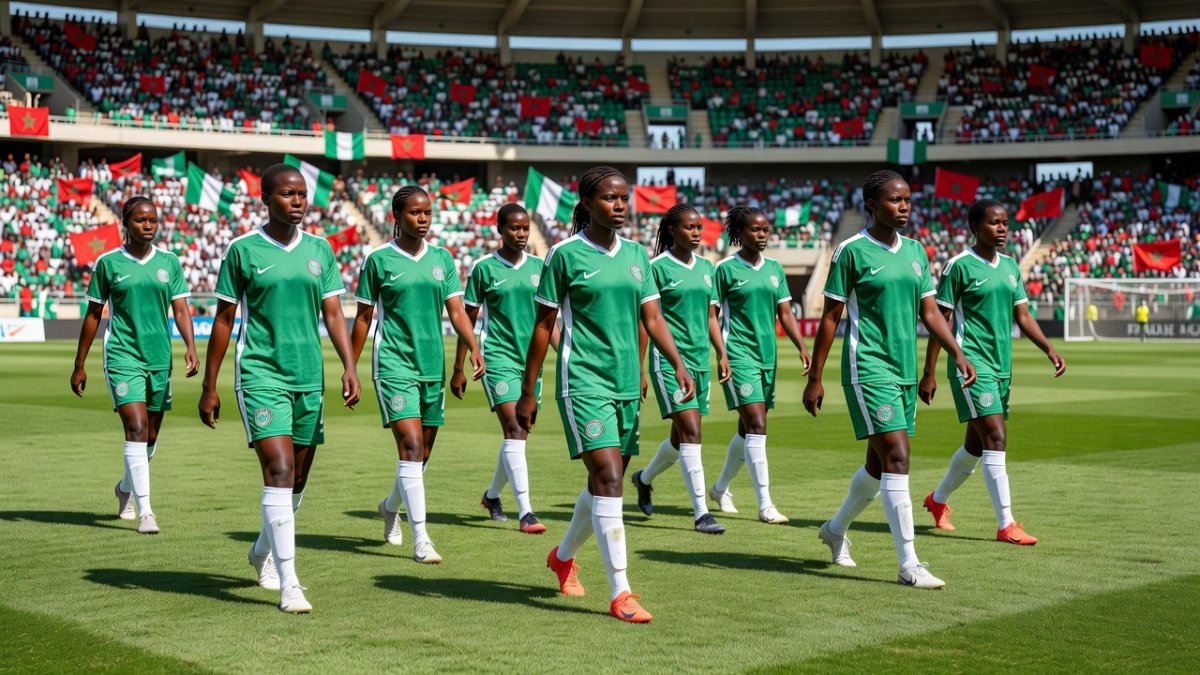
Super Falcons Face Heightened Pressure to Retain Wafcon Crown and Secure World Cup Spots
Dakar, Senegal — Article continues...
Defending Champions Arrive With Record in Sight
Nigeria's Super Falcons touch down in Morocco this week as the team every other nation wants to topple. The side has lifted the Women's Africa Cup of Nations trophy ten times since the competition began in 1998, a run that includes the record-extending tenth title claimed in the same North African kingdom two years ago in July 2024. That victory, sealed 3-2 against the hosts, earned the campaign the name Mission X. Now the task is to keep the crown, something the Falcons last achieved across three straight tournaments ending in 2018.
Head Coach Madugu Prepares for Every Challenge
Head coach Justin Madugu knows the target on Nigeria's back has grown larger. "Now that we are champions, every other team will want to draw you down," he told BBC Sport Africa. "It's not going to be easy. We are quite aware of that and we are going to be fully ready." Assistant coach Ann Chiejine, a four-time winner as a player, echoed the same message. "Every country wants to beat Nigeria. That is why we must up our game by making sure we train harder."
The expanded 16-team field opens with a Tuesday clash against debutants Malawi in Group C. Zambia and Egypt follow. The stakes stretch beyond the continental crown because the four semi-finalists earn places at the 2027 FIFA Women's World Cup in Brazil.
Star Names and Fresh Talent Shape the Squad
Captain Rasheedat Ajibade, named best player at last year's tournament, leads a group that includes goalkeeper Chiamaka Nnadozie, the African goalkeeper of the year, and six-time African player of the year Asisat Oshoala. Young striker Joy Omewa brings her Swedish club experience. Winger Francisca Ordega made the team's first target clear. "Our first target is to qualify for the World Cup," she said.
Goalkeeper Comfort Erhabor, 21, born in the Netherlands and raised in England, earned her first cap during warm-up matches against Cameroon. She praised the faith shown in younger players. The squad also features the experienced depth that has kept Nigeria among the continent's strongest sides for decades.
Ajibade's performances at Atlético Madrid have drawn European attention season after season. Oshoala's six African Player of the Year awards and her Champions League goals for Barcelona show the quality Nigeria consistently exports to top European leagues. Nnadozie's work at Paris FC has earned her recognition beyond the continent. The diaspora element strengthens the Super Falcons significantly — players like Erhabor, born abroad yet choosing Nigeria, bring training from European academies into the national setup. The number of African women playing in Europe's top divisions has grown markedly in recent years, with Nigerian players forming the largest contingent.
Senegal Friendlies Offer Glimpse of Rising Competition
Here in Senegal we watched closely when Nigeria arrived for two warm-up friendlies in June. Those matches against the Lionesses of Senegal formed part of a broader preparation that also included games with Cameroon and Tanzania. For Senegalese fans the encounters carried extra meaning. They showed how quickly women's football is growing in our own backyard, with local players testing themselves against the benchmark side of the continent.
The June friendlies reminded us that Senegal's own programme is building steadily. Young talents from Dakar clubs and the national youth teams are gaining minutes against top opposition. The experience helps close the gap that once existed between West Africa's giants and emerging sides. Every touch and every goal in those games added to the shared story of African women's football moving forward together.
Senegal's women's national team, known as the Lionesses, first qualified for Wafcon in 2012 and has since built momentum through players such as Mbayang Thiam, who captains the side with experience at French clubs, and Ndeye Awa Diakhaté, a prolific midfielder whose goals in CAF qualifiers have drawn European scouts. The Senegalese Football Federation has invested steadily in youth academies in Dakar and Thiès, with registered female players growing across the country. The success of Senegal's men's Teranga Lions at the 2022 World Cup served as a catalyst, inspiring parallel investments in the women's program through shared infrastructure and coaching exchanges.
Strong Opponents and Expanded Field Raise the Stakes
Malawi, ranked 153rd in the world, brings the Chawinga sisters Tabitha and Temwa. Zambia fields Barbra Banda and Racheal Kundananji. Egypt completes the group. The tournament's growth from twelve to sixteen teams means more nations now share the stage, spreading opportunity and raising the overall standard.
Only three countries have ever lifted the Wafcon trophy. Equatorial Guinea won in 2008 and 2012, while South Africa claimed the title in 2022. Nigeria's consistent presence at every Women's World Cup since 1991 shows the depth that still sets the Falcons apart, yet the recent breakthroughs by other nations prove the field is tightening.
Tabitha Chawinga's performances at Olympique Lyonnais have made her one of Africa's most talked-about attackers, while her sister Temwa has shone at Kansas City Current in the NWSL. Barbra Banda's move to Orlando Pride marked a milestone for Zambian football. The expansion to 16 teams fundamentally alters African football development by granting more nations competitive exposure and raising the overall standard of play. Interest in women's football programming across the continent has grown significantly since the expansion was announced.
Continent-Wide Growth Brings Pride and Promise
Across Africa the story of women's football is one of steady progress. Continental bodies and national federations have directed growing resources toward youth development, coaching structures, and tournament infrastructure. In Senegal we see girls training on the same pitches once reserved for boys. In Morocco the hosts have built modern facilities ahead of this tournament. In Nigeria the Super Falcons remain the measuring stick that pushes everyone else higher, while programs across the continent work to train a new generation of coaches and administrators.
The 2026 Wafcon therefore represents more than one team's attempt to retain a title. It celebrates the growing strength of the women's game from Dakar to Lilongwe, from Lusaka to Cairo. When the final whistle sounds in Morocco, the continent will have four teams heading to Brazil in 2027 and a new generation of players ready to carry the story forward. Nigeria carries the weight of expectation, yet every match also lifts the profile of African women's football for all of us who follow it with pride.
By Amara Diop, Staff WriterThis article was produced with AI-assisted research and editorial support. Reporting is based on sources cited in the article.
What's Your Reaction?
 Like
0
Like
0
 Dislike
0
Dislike
0
 Love
0
Love
0
 Funny
0
Funny
0
 Wow
0
Wow
0
 Sad
0
Sad
0
 Angry
0
Angry
0

West Africa/Sahel Correspondent at Global1.News. Dakar-based journalist covering politics, security, climate, and development across Francophone and Anglophone West Africa. Tells the stories of a region undergoing profound transformation.










Comments (0)