
Gulf of Paria widens as Trinidad pours oil on troubled Venezuelan waters
The May spill at Main Soldado field The incident began on 1 May 2026 when roughly ten barrels of oil escaped from the Main Soldado field in Trinidad waters. Local authorities reported that the leak was quickly contained and the source repaired by the following day. Fishermen on both sides of the Gulf of Paria, however, remain uneasy about how even a modest release can affect the shared marine environment that sustains their livelihoods.
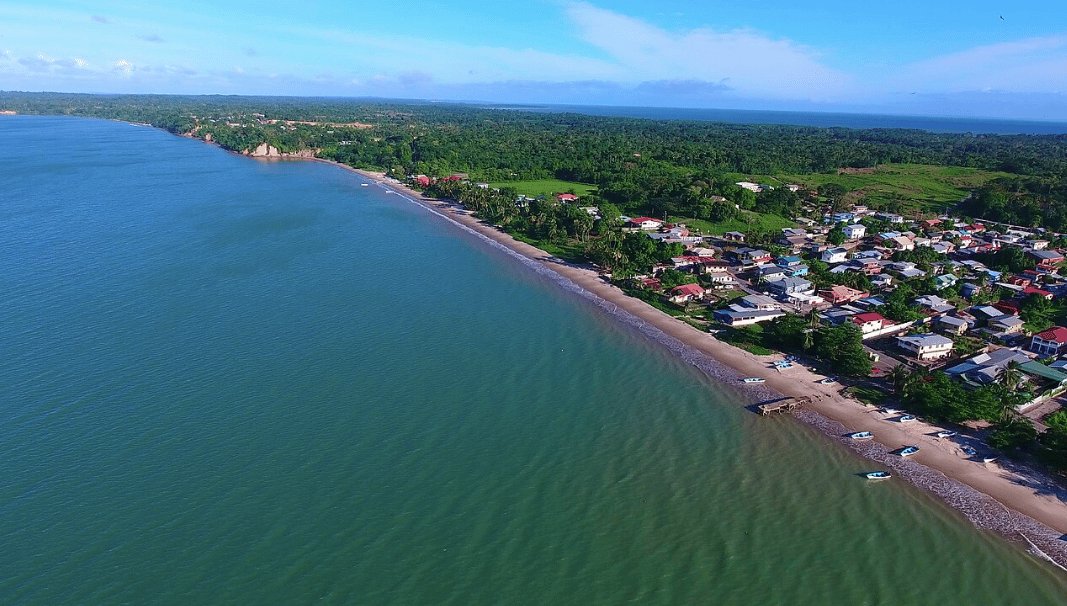
The May spill at Main Soldado field
The incident began on 1 May 2026 when roughly ten barrels of oil escaped from the Main Soldado field in Trinidad waters. Local authorities reported that the leak was quickly contained and the source repaired by the following day. Fishermen on both sides of the Gulf of Paria, however, remain uneasy about how even a modest release can affect the shared marine environment that sustains their livelihoods.
The Main Soldado field has been a fixture of Trinidad's offshore energy landscape for decades, operated by consortia that include Heritage Petroleum and international partners. While ten barrels is a small volume by industry standards — especially when compared to major spills that have made global headlines — the location matters. The Gulf of Paria is shallow, ecologically sensitive, and subject to currents that can carry residual hydrocarbons across maritime boundaries within hours.
Trinidad's Ministry of Energy confirmed that the leak was detected early and that remedial action was taken within 24 hours. The source was repaired and the well returned to service on 2 May. Nevertheless, environmental watchdogs have questioned whether monitoring was sufficient in the days that followed, particularly given the proximity to Venezuelan waters.
Venezuela calls for compensation
Venezuela's Foreign Minister Yvan Gil formally demanded information and compensation from the Trinidad government, arguing that the spill had caused serious environmental damage to mangroves, wetlands and coastlines in Venezuela's eastern states. Caracas claims that several official communications were sent to Port of Spain but received inadequate responses.
Trinidad officials have pushed back, characterising the incident as minor and contained. The government's position is that ten barrels does not constitute a major spill and that cleanup and monitoring were handled promptly. The disagreement highlights a widening gap between how each side views the same event. For Venezuela, any transboundary pollution is grounds for formal protest; for Trinidad, the numbers simply do not support the alarm.
Gil presented satellite imagery and preliminary environmental reports at a press conference in Caracas, calling on international bodies to take note of what he described as Trinidad's failure to cooperate. The Venezuelan foreign ministry has since issued at least three diplomatic notes to Port of Spain, according to statements from Caracas. Trinidad has not publicly acknowledged receiving or responding to those notes.
A second spill allegation surfaces
On 12 June, Venezuela raised the alarm over a second alleged oil spill originating from Trinidad waters. Foreign Minister Gil again demanded action, warning that fragile ecosystems and fishing communities were at risk. Trinidad's government dismissed the claim as unsubstantiated, pointing to the lack of independent evidence.
Gary Aboud, president of Fishermen and Friends of the Sea, told local media that the initial spill had reached Patos Island, off the coast of Venezuela. His observations have given ammunition to those who argue the spill was more significant than officially acknowledged. Aboud has been a persistent voice on marine environmental issues in Trinidad, often clashing with energy companies and government agencies over transparency and enforcement.
The second allegation has been characterised by Trinidad's government as politically motivated, coming at a time when Caracas is seeking leverage in broader energy negotiations. Critics of the government's position, however, note that the absence of independent monitoring in the Gulf of Paria makes it difficult to either confirm or refute Venezuela's claims with certainty.
A shared sea, a widening dispute
The Gulf of Paria is a narrow body of water that binds Trinidad and Venezuela geographically, ecologically and economically. It sits above significant hydrocarbon reserves that both nations depend on, and its waters are nurseries for fish stocks that feed thousands of families on each side.
When an environmental incident occurs in those waters, the question of responsibility quickly becomes political as well as scientific. What Trinidad calls a contained operational leak, Venezuela describes as a transboundary ecological threat. Without a joint assessment mechanism, the two sides talk past each other.
The wider context matters. Trinidad and Venezuela have a long history of energy cooperation punctuated by diplomatic friction. Disputes over maritime boundaries, fishing rights, and cross-border energy development have flared periodically. The Dragon gas field — a cross-border reservoir that Trinidad has been trying to develop for years — hangs in the balance of this relationship. Every public disagreement makes the political environment for such projects more difficult.
What This Means for Trinidad's Energy Sector
The dispute comes at a delicate moment for Trinidad and Tobago's energy industry. The country has been working to secure cross-border gas arrangements with Venezuela, particularly the Dragon gas field development, which is critical to keeping Atlantic LNG plants running at capacity. A prolonged diplomatic row over a small spill could complicate those negotiations.
Stuart Young, who succeeded Dr Keith Rowley as Prime Minister, spent years as Energy Minister navigating these very relationships. His deep familiarity with the energy portfolio means he understands the stakes — but also that Venezuela's government under President Nicolás Maduro has used environmental complaints as a diplomatic tool before. Young's challenge is to manage the diplomatic fallout without derailing the energy partnerships that Trinidad's economy depends on.
For ordinary Trinbagonians, the oil spill dispute has a tangible dimension. The energy sector contributes a significant share of government revenue, and any disruption to cross-border gas arrangements could affect fuel prices, foreign exchange earnings, and the cost of living more broadly. Atlantic LNG, in particular, needs reliable gas supply to maintain its export contracts. A protracted standoff with Venezuela does not help that calculus.
Fishermen Caught in the Middle
For the fishing communities scattered along the coastlines of both countries, the diplomatic back-and-forth carries real consequences. Gary Aboud and Fishermen and Friends of the Sea have been monitoring the Gulf of Paria closely, warning that even small spills can harm mangrove ecosystems that serve as breeding grounds for commercially important species.
The fishermen who work these waters do not have the luxury of choosing sides. Their nets fill on both sides of the maritime boundary, and a degraded marine environment hurts everyone equally. Past oil spills in the region have shown that recovery can take years, and compensation rarely reaches the people who depend most directly on healthy seas.
In Trinidad's south-western coastal communities — from Icacos to La Brea — fishing families have watched this dispute unfold with a mixture of concern and resignation. Many remember previous oil spills that were officially described as minor but left lasting damage to fishing grounds. The pattern, they say, repeats itself: an incident occurs, a diplomatic exchange follows, and fishermen are left to adapt to whatever has changed in the water.
The Diplomatic Tightrope Ahead
Prime Minister Stuart Young's background as Energy Minister gives him a unique vantage point in managing this crisis. He knows the technical details of offshore operations and understands the Venezuelan energy bureaucracy from years of Dragon gas negotiations. Whether that expertise translates into a diplomatic resolution remains to be seen.
CARICOM has not yet been asked to mediate, but the regional body could offer a neutral forum if bilateral talks stall. For now, both sides appear dug in — Venezuela demanding compensation and accountability, Trinidad insisting the incident was minor and properly handled. The Gulf of Paria, as always, sits between them.
What happens next will depend on whether the two governments can separate environmental concerns from political posturing. Independent monitoring, shared data, and a commitment to transparent communication would go a long way toward de-escalating the dispute. Without those elements, the Gulf of Paria may become not just a geographical boundary but a symbol of how difficult cooperation has become in a region of competing interests and limited trust.
The fishermen, the mangroves, and the shared waters of the Gulf cannot afford a prolonged stalemate. The hope — perhaps the expectation — is that cooler heads will prevail, and that the narrow stretch of sea that connects Trinidad and Venezuela will once again become a space for collaboration rather than confrontation.
By Sharon Sahatoo, Staff WriterThis article was produced with AI-assisted research and editorial support. Reporting is based on sources cited in the article.
What's Your Reaction?
 Like
0
Like
0
 Dislike
0
Dislike
0
 Love
0
Love
0
 Funny
0
Funny
0
 Wow
0
Wow
0
 Sad
0
Sad
0
 Angry
0
Angry
0

Caribbean Correspondent at Global1.News. Based in Port of Spain, Trinidad, covering Caribbean politics, economy, energy, climate, and culture. Amplifying the voices and stories of the Caribbean region.











Comments (0)