
Israeli Settlers Storm Hebron's Old City Under Military Protection
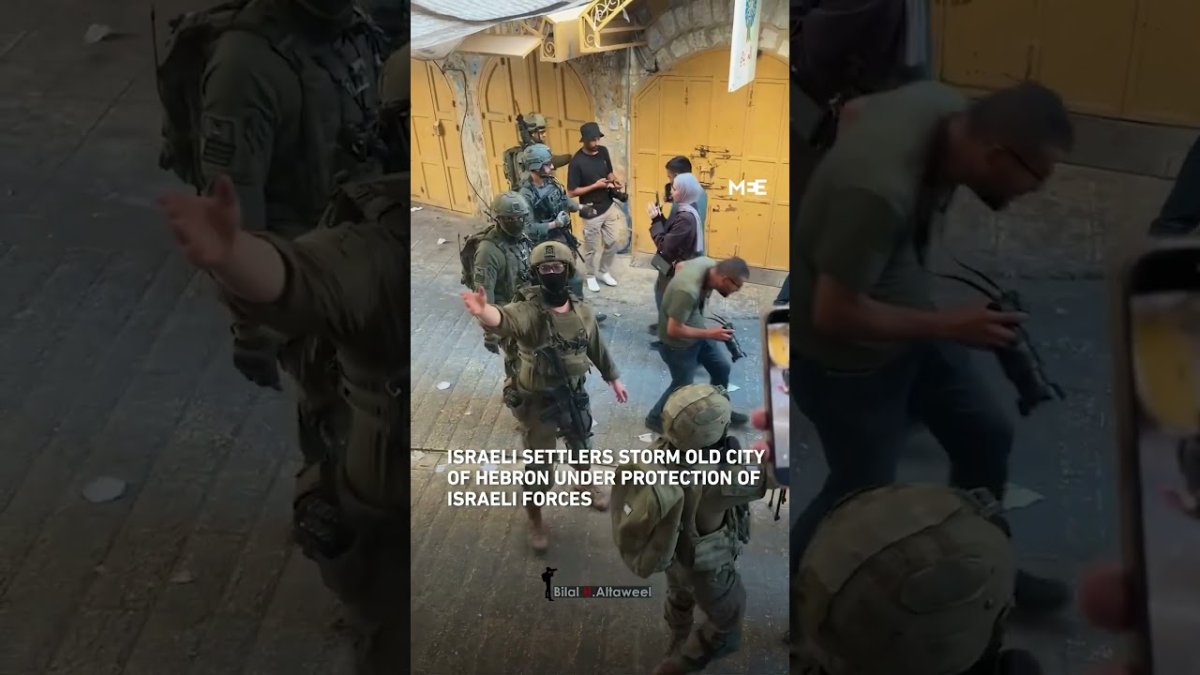
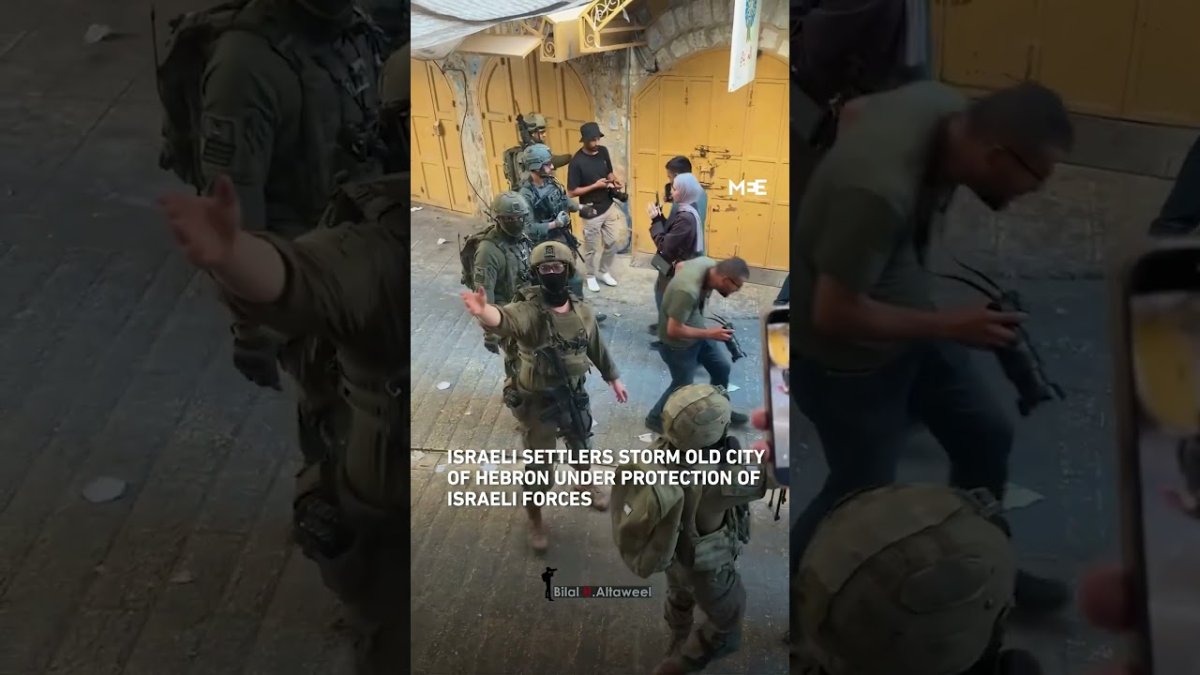
In a recent Middle East Eye report, footage captured Israeli settlers entering Hebron's Old City on July 4 and 5, 2026, under the direct protection of Israeli forces. Heavily armed soldiers cleared Palestinian residents from streets and public areas, enabling the settlers to move freely through the historic centre while movement restrictions were imposed on local Palestinian fa
In a recent Middle East Eye report, footage captured Israeli settlers entering Hebron's Old City on July 4 and 5, 2026, under the direct protection of Israeli forces. Heavily armed soldiers cleared Palestinian residents from streets and public areas, enabling the settlers to move freely through the historic centre while movement restrictions were imposed on local Palestinian families. The incident has drawn renewed attention to Hebron's status as one of the most contested urban spaces in the occupied West Bank, where a small settler minority exercises disproportionate control over Palestinian daily life under military supervision.
Israeli Settlers Storm Hebron's Old City Under Military Protection as Settlement Expansion Reshapes the Occupied West Bank
Hebron, Occupied West Bank – July 5, 2026 —
The Incursion
On the evening of July 4, 2026, Israeli soldiers began clearing Palestinian residents from key streets in Hebron's Old City. Military vehicles blocked access points near the Ibrahimi Mosque while foot patrols moved through narrow alleys, ordering shopkeepers to close early and families to remain indoors. By midnight, the area had been transformed into a secured corridor for settler movement.
At dawn on July 5, groups of Israeli settlers entered the Old City under direct military escort. They walked through the market lanes of Al-Shuhada Street and the Casbah, pausing at several Palestinian-owned properties. Residents reported being unable to leave their homes as soldiers stood guard at doorways and intersections.
Footage from the Middle East Eye video captures soldiers directing settlers past shuttered storefronts while Palestinian families watched from upper windows. One sequence shows a group of settlers stopping outside a closed grocery store on Al-Shuhada Street, with troops preventing any merchant from approaching.
Local witnesses described the operation as a coordinated clearance. Merchants attempting to reach their businesses were turned back at checkpoints established overnight. Children who had left for early errands were escorted home by soldiers rather than allowed to continue.
The incursion lasted until late afternoon on July 5, when settlers exited the Old City under the same military protection. Palestinian residents remained confined until the final troops withdrew after sunset.
Life in a Divided City
Hebron’s division into H1 and H2 zones stems from the 1997 Hebron Protocol, creating a patchwork of control where H1 remains under Palestinian Authority administration while H2 falls under Israeli military oversight. Landmarks such as the Ibrahimi Mosque/Cave of the Patriarchs sit squarely in H2, surrounded by settler enclaves like Beit Hadassah and Tel Rumeida. Palestinian residents navigate a maze of barriers that separate daily life from these sites, with movement restricted along Al-Shuhada Street, once the city’s main commercial artery.
Checkpoint 56 at the entrance to Al-Shuhada Street operates as a primary chokepoint, where Israeli soldiers conduct ID checks and bag searches for Palestinians while settlers pass with minimal scrutiny. Further along, the Casbah’s narrow alleys feature additional turnstiles and metal gates that close without notice. These measures intensified after the 1994 Ibrahimi Mosque massacre, when Baruch Goldstein, an American-Israeli settler, killed 29 Palestinian worshippers and wounded over 100 during Ramadan prayers, prompting the street’s permanent closure to Palestinian vehicles and most foot traffic.
The demographic imbalance underscores the city’s tensions: roughly 200,000 Palestinians reside in Hebron overall, yet only about 800 Israeli settlers live in H2 enclaves. This minority presence dictates security protocols affecting the majority, including the deployment of the Temporary International Presence in Hebron (TIPH) observer mission from 1997 until its expulsion in 2019. TIPH personnel documented daily frictions at checkpoints and recorded incidents of harassment, though their reports carried no enforcement power.
Al-Shuhada Street and sections of the Casbah now feature shuttered storefronts where Palestinian shops once thrived. Metal shutters bear faded Arabic signage, and tourism has evaporated as visitors avoid the militarized zone. Palestinian vendors report losing access to traditional markets, forcing reliance on distant H1 areas with higher transport costs and reduced footfall.
Economic stagnation radiates outward from these closed streets. Former goldsmiths and spice traders in the Old City describe empty souks where settler security patrols outnumber customers. The closures severed Hebron’s historic role as a West Bank commercial hub, redirecting trade to Nablus or Ramallah and deepening local unemployment.
Palestinian families adapt by memorizing alternative routes through H1 neighborhoods, timing movements around known patrol schedules, and coordinating with neighbors who hold rare entry permits. Children learn early to avoid certain alleys near settler homes in Tel Rumeida, where stone-throwing incidents occur regularly.
(Middle East Eye)
The Sterilization Policy in Practice
Movement restrictions in Hebron operate through a network of fixed checkpoints, temporary roadblocks, and electronic gates. On ordinary days, Palestinian residents must present identification cards at multiple points to reach schools, hospitals, or workplaces located even a few hundred meters away.
Children attending schools in H2 areas often face delays of 30 to 60 minutes at checkpoints. Soldiers frequently require students to open their bags and remove jackets for inspection. Families visiting relatives in restricted zones must obtain special permits that can take weeks to process.
Merchants receiving deliveries encounter additional obstacles. Trucks carrying produce or construction materials are sometimes denied entry to the Old City, forcing traders to unload goods at distant points and transport them by cart. The July 4-5 operation intensified these measures, closing entire streets for settler passage.
Electronic gates installed at the entrances to settler neighborhoods remain locked for most of the day. Palestinian residents living behind these gates must coordinate with soldiers to pass through, sometimes waiting hours for approval.
The policy creates a layered system of control where movement is permitted only when it does not intersect with settler routes. July 4-5 demonstrated how quickly normal restrictions can be expanded into full street clearances.
Settlement Growth in Hebron, 2026
In June 2026, Israeli authorities approved the expansion of a settler school in the Tel Rumeida neighborhood of Hebron. The decision added several classrooms and a new playground area, increasing the facility’s capacity by roughly 30 percent. Palestinian residents in adjacent buildings were notified that construction would require temporary street closures.
Settler infrastructure continues to expand through a combination of new housing units, security barriers, and access roads. These developments are linked directly to protected movement corridors that allow settlers to travel between enclaves without entering Palestinian-controlled zones.
The approval process involves coordination between the Israeli Civil Administration and settler councils. Palestinian landowners affected by the projects are rarely consulted and often learn of decisions only after construction begins.
Local Palestinian organizations have documented a steady increase in settler housing starts since 2023. Each new structure is accompanied by additional military posts and surveillance cameras that further restrict Palestinian movement in surrounding streets.
Community leaders argue that infrastructure growth serves to consolidate settler presence rather than meet security needs. The July 4-5 incursion illustrated how these expanded facilities enable larger settler movements under military protection.
International Law and the ICC
United Nations Security Council Resolution 2334, adopted in 2016, reaffirmed that Israeli settlements in the occupied Palestinian territories constitute a violation of international law. The resolution called for states to distinguish between Israel and the settlements in their dealings, yet enforcement has remained limited.
The International Criminal Court continues its investigation into settlement activity as a potential war crime. Hebron has been cited in submissions because of the visible presence of settlers inside Palestinian urban areas and the accompanying movement restrictions imposed on residents.
The Temporary International Presence in Hebron (TIPH), an observer mission established after the 1994 Ibrahimi Mosque massacre, was dissolved in 2019 following an Israeli decision not to renew its mandate. The mission had provided independent monitoring of settler-Palestinian interactions.
Without TIPH or similar international observers, Palestinian residents seeking accountability must rely on Israeli military investigations or file complaints through Palestinian Authority channels. Both avenues have produced few prosecutions in cases involving settler violence.
The absence of independent monitoring has made it more difficult for Hebron families to document incidents and pursue legal remedies. Residents argue that the lack of external oversight allows restrictions and incursions to continue without external scrutiny.
(Global 1 News)
The Human Toll
Settler violence in Hebron escalated sharply in 2026, with multiple reports of olive groves torched near the village of Beit Ummar and livestock stolen from Palestinian herders in the South Hebron Hills. In one documented case, masked individuals set fire to trees belonging to the Jaber family outside the Old City, destroying decades-old groves during the harvest season. Such attacks compound existing restrictions, leaving families without traditional income sources.
UNICEF reports highlight severe psychological trauma among Palestinian children in H2, with elevated rates of anxiety, nightmares, and developmental delays linked to frequent checkpoint delays and exposure to military raids. Young residents describe constant vigilance, with schools in the Casbah area often disrupted by sudden closures or settler incursions near checkpoints.
Medical access deteriorates during prolonged closures, as ambulances face extended waits at Checkpoint 56 or are rerouted through distant gates. Residents with chronic conditions, such as diabetes or heart disease, report missed appointments at Hebron’s Al-Ahli Hospital because travel from Tel Rumeida requires permits that take weeks to obtain.
The Old City’s economic strangulation traces directly to post-1994 measures that transformed its historic markets into restricted zones. Once bustling with traders from across the West Bank, the area now sees only sporadic activity, pushing merchants toward informal economies or relocation to villages like Halhul.
Families have developed coping mechanisms including shared carpools using vehicles with special permits, staggered departure times to avoid peak patrol hours, and reliance on smartphone apps to track checkpoint status. These adaptations consume hours daily that were previously spent on work or education.
Youth emigration from the Old City has accelerated, with many young adults moving to nearby villages such as Yatta or Dura in search of stable housing and employment. This outflow leaves aging populations in H2 neighborhoods, further eroding community structures and local businesses.
Long-term health impacts include higher incidences of stress-related illnesses documented by local clinics, where doctors note increased hypertension and respiratory issues tied to tear gas exposure during demonstrations near Al-Shuhada Street.
Analysis and What Comes Next
Hebron’s one-state reality, with its layered checkpoints and settler enclaves embedded among Palestinian neighborhoods, functions as a microcosm of potential West Bank-wide arrangements under continued Israeli control. The H2 model demonstrates how small settler populations can shape infrastructure and movement for far larger Palestinian communities, setting precedents for areas like East Jerusalem or the Jordan Valley.
Recent spikes in settler violence correlate with political shifts in the Israeli government, including coalition influence from far-right parties advocating expanded settlement blocs. Figures aligned with these factions have publicly endorsed “price tag” tactics, linking local attacks to broader policy signals that weaken enforcement against perpetrators.
International responses remain limited despite repeated calls for action. Proposals for targeted sanctions on settlement-related entities or an arms embargo have surfaced in European parliaments, yet diplomatic pressure has yielded few concrete measures beyond statements from the UN and EU. Effective intervention would require coordinated monitoring mechanisms replacing the defunct TIPH framework.
Palestinian civil society organizations in Hebron focus on systematic documentation through groups like the Hebron Rehabilitation Committee and legal challenges filed with Israeli courts over property seizures. Popular resistance includes weekly demonstrations at closed streets and community-led tours highlighting restricted areas to international visitors.
Demographic trajectories point toward further Palestinian displacement if current patterns persist, with settler expansion in Tel Rumeida and Kiryat Arba projected to encroach on additional H1-adjacent land. Without policy reversals, the Old City’s Palestinian population could decline by another 20 percent within a decade, accelerating the shift toward fragmented enclaves.
Long-term stability hinges on whether external actors prioritize enforcement of existing agreements or accept the status quo as irreversible. Hebron’s experience suggests that incremental restrictions compound into permanent divisions absent sustained international engagement.
By Fatima Al-Rashid, Staff Writer
This article was produced with AI-assisted research and editorial support. Reporting is based on sources cited in the article.
What's Your Reaction?
 Like
0
Like
0
 Dislike
0
Dislike
0
 Love
0
Love
0
 Funny
0
Funny
0
 Wow
0
Wow
0
 Sad
0
Sad
0
 Angry
0
Angry
0
Gulf/MENA Correspondent at Global1.News. Based in Doha, covering Gulf politics, energy markets, diplomacy, and development across the Middle East and North Africa. Tracks the economic transformation of the Gulf states.












Comments (0)