
Israel Framework Problem: A Lebanese Deputy PM on Why Promises Mean Nothing
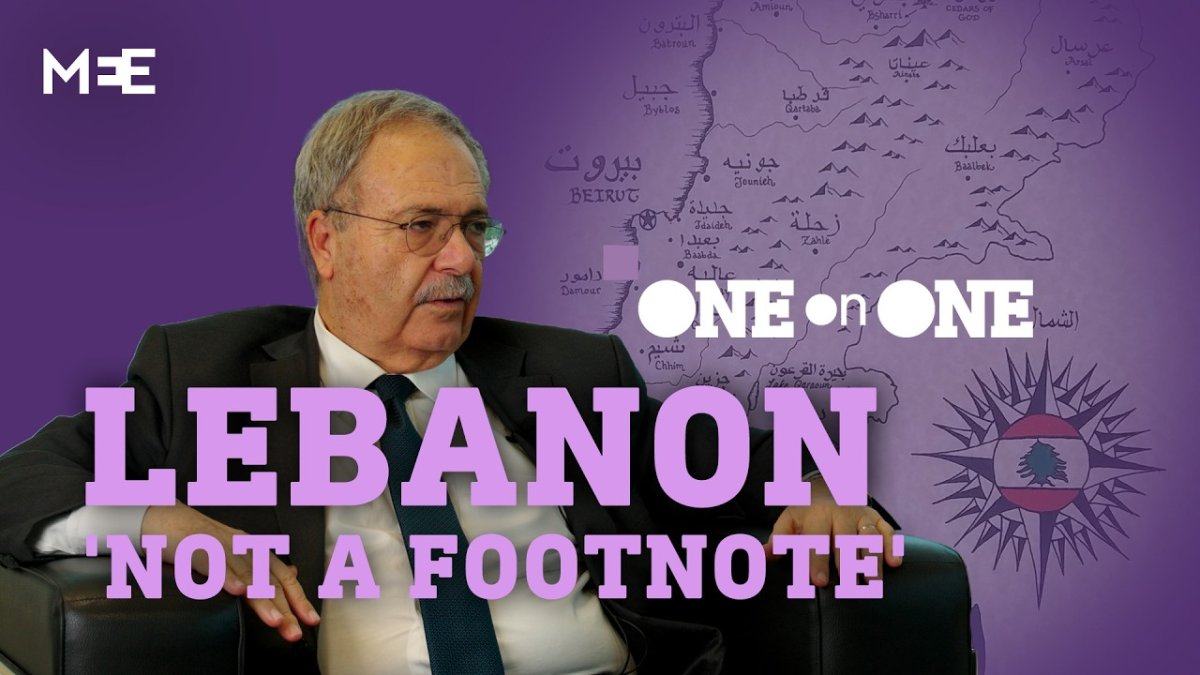
In a Middle East Eye interview, Lebanese Deputy Prime Minister Tarek Mitri explains that Israel does not view the current framework agreement as binding without Lebanese government approval. The agreement lacks a withdrawal timeline, allowing continued strikes in southern Lebanon.
In the Middle East Eye interview, Lebanon's Deputy Prime Minister Tarek Mitri states that Israelis do not consider themselves bound by the framework agreement reached with Lebanon, describing it as unworkable in its current form without formal Lebanese government approval.
Headline: Israel's Framework Problem — A Lebanese Deputy PM on Why Promises Mean Nothing
Beirut, Lebanon - July 18, 2026 — Article body continues...
A Framework Without Teeth
Tarek Mitri, who has served as Lebanon's Deputy Prime Minister since February 2025, outlined in the interview how the Israel-Lebanon framework agreement fails to impose binding obligations. He noted that the agreement cannot take effect without explicit approval from the Lebanese government. The absence of a clear timeline for Israeli withdrawal from southern Lebanon leaves communities exposed to ongoing military actions.
Israel has continued strikes on areas it identifies as Hezbollah targets in southern Lebanon. These operations persist even as the framework was presented as a path toward de-escalation. Mitri emphasized that without enforcement mechanisms, such agreements remain declarations rather than operational commitments.
Lebanon's Stance
The Lebanese position, as articulated by Mitri, requires that any framework receive formal governmental endorsement before it can be considered binding. Officials in Beirut have stressed that partial or unilateral interpretations undermine the agreement's purpose. Southern Lebanese villages remain displaced, with residents unable to return while strikes continue.
Mitri, a former government minister and university professor, connected the current impasse to Lebanon's broader experience with external agreements that lack reciprocal accountability. Local authorities have documented repeated violations along the border, reinforcing the view that the framework requires structural revisions.
The Wider Pattern of Disregard
Mitri linked Israel's approach to the Lebanon framework with its record on other international instruments, including International Court of Justice rulings, United Nations resolutions, and the Geneva Conventions. He argued that this pattern reflects a consistent stance that such frameworks do not constrain Israeli actions.
Regional observers note that similar dynamics have appeared in multiple contexts where international bodies have issued findings on compliance. The lack of enforcement has allowed operations to proceed without reference to agreed parameters, affecting stability across borders.
Mitri explicitly referenced the International Court of Justice’s 2004 advisory opinion on the separation wall, which declared the barrier and its associated regime illegal under international law. Israel has continued construction and expansion of the wall, fragmenting Palestinian land and restricting movement despite the ruling. In the 2024 Gaza genocide case brought by South Africa, the ICJ issued provisional measures ordering Israel to prevent genocidal acts and ensure humanitarian access; Mitri noted that these orders have produced no observable change in military operations, mirroring the non-binding character of the Lebanon framework.
The pattern extends to UN Security Council Resolution 2334, which reaffirmed that settlements in the occupied Palestinian territories have no legal validity and constitute a flagrant violation of international law. Successive Israeli governments have accelerated settlement construction in direct contravention of the resolution. Mitri drew a direct parallel to the Lebanon agreement, observing that both instruments lack any mechanism compelling Israeli compliance once the initial diplomatic language is issued.
Regional analysts have documented how this consistent approach to international obligations—whether ICJ rulings, Security Council resolutions, or bilateral frameworks—undermines the credibility of any future diplomatic process. Without enforcement provisions or consequences for non-compliance, Mitri argued, such texts function primarily as public relations tools rather than genuine constraints on state behavior.
Impact on Palestinian Rights
The same disregard for international frameworks extends to the occupied Palestinian territories, where Mitri observed parallel outcomes. UN resolutions on settlements and access to resources have faced repeated non-implementation, leaving communities under prolonged restrictions.
Palestinian civil society organizations have recorded how the absence of binding timelines mirrors the Lebanon case. Families in the West Bank and Gaza face daily constraints on movement and resources that international agreements were intended to address but have not altered in practice.
Under the current Israeli government, settlement expansion has reached record levels, with more than 12,000 new housing units advanced in the West Bank in 2025 alone according to UN Office for the Coordination of Humanitarian Affairs data. Land confiscation through military orders and declarations of “state land” has accelerated, particularly in Area C, displacing Palestinian families and severing access to agricultural plots that have sustained communities for generations.
Restrictions on water resources remain severe. UN reports indicate that Palestinians in the West Bank receive on average one-third the water allocation of Israeli settlers in the same aquifers, while farmland in the Jordan Valley faces repeated destruction of irrigation systems and olive groves. These measures compound the effects of the framework’s missing enforcement clauses, leaving communities without recourse when agreements fail to translate into protection on the ground.
Administrative detention without charge or trial continues to affect thousands of Palestinians. As of mid-2026, the UN documented over 3,400 individuals held under these provisions, many for extended periods. Mitri connected this practice to the broader disregard for international legal standards, noting that the same absence of accountability evident in southern Lebanon enables prolonged restrictions on Palestinian civil and political rights.
Human Cost on Both Sides of the Border
Displacement in southern Lebanon has left thousands without access to homes, schools, and agricultural land. Mitri described the human consequences as direct results of the framework's missing enforcement provisions. Cross-border exchanges have further strained local economies already weakened by prior conflict.
In Gaza, bombardment continues amid the same broader pattern. Residents report interrupted access to medical care and basic supplies, with no clear mechanism to translate framework language into protection on the ground. Both Lebanese and Palestinian communities experience the gap between stated agreements and lived conditions.
Lebanese authorities estimate that more than 85,000 residents remain displaced from southern villages as of July 2026, with extensive damage to homes, schools, and agricultural infrastructure documented by local municipalities. Cross-border strikes have destroyed irrigation networks and olive groves that formed the economic backbone of border communities, leaving families dependent on irregular aid deliveries.
In Gaza, the UN reports over 48,000 fatalities and widespread destruction of residential buildings, hospitals, and water facilities since October 2023. Food insecurity has reached crisis levels, with more than 90 percent of the population facing acute hunger according to integrated food security assessments. Residents describe daily searches for clean water and medical supplies amid repeated interruptions of humanitarian corridors.
Personal accounts from both sides underscore the human dimension Mitri highlighted. A displaced Lebanese farmer from Khiam told interviewers that “we were promised safety under the framework, yet every week brings new strikes and no return date.” In Gaza, a mother in Jabalia camp described interrupted access to dialysis for her child, stating that international statements have produced no tangible change in the conditions families endure. These testimonies illustrate the recurring gap between diplomatic language and lived reality.
Analysis and Implications
The interview with Mitri highlights how frameworks without timelines or enforcement mechanisms produce recurring instability rather than resolution. Lebanese officials maintain that revisions must include verifiable withdrawal schedules and mutual obligations before any new arrangement can proceed.
Regional analysts point to the need for external actors to address the enforcement deficit if future agreements are to hold. Without such steps, the cycle of displacement and military operations risks continuation across Lebanon and the occupied Palestinian territories. Mitri's assessment underscores that Palestinian and Lebanese experiences share structural features rooted in the same approach to international commitments.
Effective enforcement mechanisms would require binding timelines for Israeli withdrawal, independent monitoring bodies with on-ground access, and automatic sanctions for violations. Mitri suggested that any revised Lebanon framework must incorporate these elements, with third-party verification rather than reliance on Israeli self-reporting.
The United States, as the primary guarantor in previous negotiations, holds significant leverage through military aid and diplomatic cover. The European Union and Arab League could strengthen accountability by conditioning future economic or political engagement on demonstrated compliance with ICJ orders and Security Council resolutions. Without coordinated pressure, analysts warn that the current pattern will simply repeat in subsequent agreements.
If the disregard for international frameworks persists, the cycle of displacement, infrastructure destruction, and humanitarian crisis is likely to intensify across both Lebanon and the occupied Palestinian territories. Mitri’s assessment indicates that sustainable stability requires structural changes to enforcement rather than additional declarations lacking operational force.
By Fatima Al-Rashid, Staff WriterThis article was produced with AI-assisted research and editorial support. Reporting is based on sources cited in the article.
What's Your Reaction?
 Like
0
Like
0
 Dislike
0
Dislike
0
 Love
0
Love
0
 Funny
0
Funny
0
 Wow
0
Wow
0
 Sad
0
Sad
0
 Angry
0
Angry
0
Gulf/MENA Correspondent at Global1.News. Based in Doha, covering Gulf politics, energy markets, diplomacy, and development across the Middle East and North Africa. Tracks the economic transformation of the Gulf states.













Comments (0)