
Gulf of Paria Widens as Trinidad Pours Oil on Troubled Venezuelan Waters
A single oil platform off Trinidad's south-west coast has become the centre of a diplomatic exchange between Port of Spain and Caracas, as Venezuela formally demands answers and compensation over a May 1 spill in the Gulf of Paria. While Trinidadian authorities maintain the incident was minor and contained within hours, the Venezuelan Foreign Ministry warns of serious environmental damage to shared ecosystems and coastal communities.
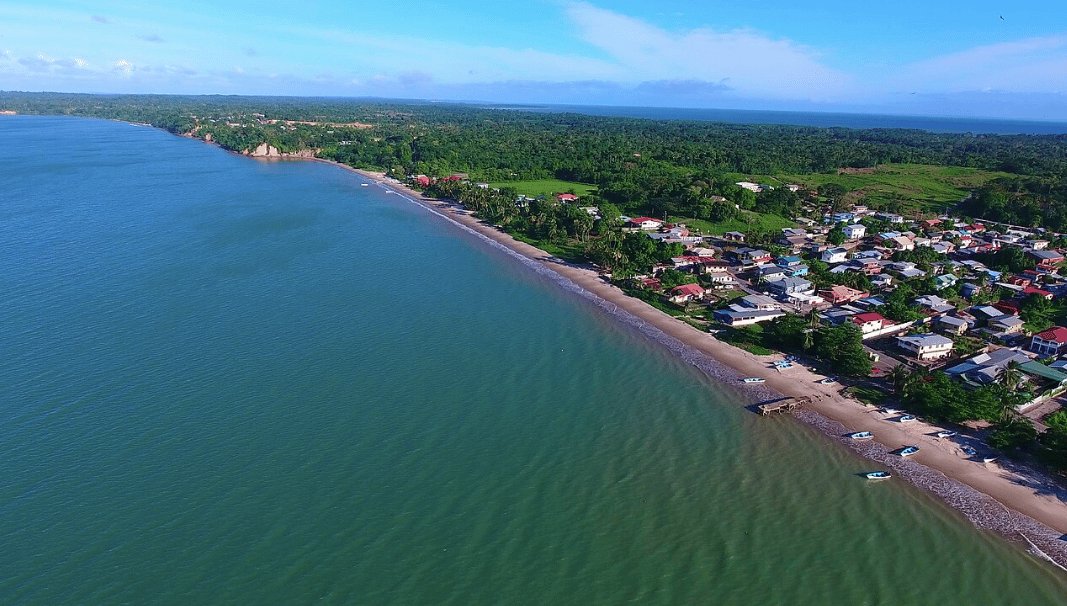
A single oil platform off Trinidad's south-west coast has become the centre of a diplomatic exchange between Port of Spain and Caracas, as Venezuela formally demands answers and compensation over a May 1 spill in the Gulf of Paria. While Trinidadian authorities maintain the incident was minor and contained within hours, the Venezuelan Foreign Ministry warns of serious environmental damage to shared ecosystems and coastal communities. The dispute lays bare the delicate balance between energy development and environmental stewardship in waters that both nations call home.
Gulf of Paria Widens as Trinidad Pours Oil on Troubled Venezuelan Waters
Port of Spain, Trinidad — News of a small oil spill in the Gulf of Paria reached communities across Trinidad and Tobago this week, reminding us how closely our lives are tied to the sea that separates us from our Venezuelan neighbours. On May 1, state-owned Heritage Petroleum Company Ltd detected the incident, which involved an estimated 10 barrels of oil. Trinidad and Tobago authorities moved quickly to contain it, yet the matter has now drawn formal attention from Caracas, highlighting the delicate balance between energy production and the protection of our shared marine environment.
The Gulf of Paria has long symbolised the intertwined destinies of Trinidad and Tobago and Venezuela, with relations shaped by the 1942 treaty that first delineated submarine areas for resource exploration and the 1990 delimitation agreement that refined maritime boundaries amid growing energy interests. Oil exploration in these waters dates back decades, transforming the gulf into a vital artery for both nations’ economies while supporting both cooperation and occasional diplomatic friction between the two nations. Trinidadian communities along the south-western coast have historically viewed Venezuelan neighbours as kin, bound by shared fishing grounds and migratory patterns that predate modern statehood.
This latest incident unfolds against Venezuela’s protracted crisis, marked by economic collapse and political upheaval. The US intervention in January 2026 and subsequent capture of Maduro have raised questions about Caracas’s capacity to monitor its own offshore assets. For Trinidad and Tobago, these developments underscore the need for robust bilateral mechanisms to manage shared waters, lest environmental mishaps escalate into diplomatic flashpoints that affect everything from energy exports to family remittances across the narrow strait.
Heritage Petroleum’s operations at the Soldado field represent a cornerstone of Trinidad and Tobago’s energy landscape, with platforms that have sustained production for generations despite fluctuating global prices. The 10-barrel spill, though modest in scale compared with the Deepwater Horizon disaster in the Gulf of Mexico or the cumulative leaks that have scarred the Gulf of Paria over decades, still demands scrutiny given the area’s ecological fragility. Such volumes pale against historical benchmarks yet highlight how even contained incidents can test response protocols in a region where currents swiftly carry pollutants across borders.
Technical measures included the prompt application of chemical dispersants roughly six to eight nautical miles from the maritime boundary, followed by drone surveillance that confirmed rapid dispersion. Trajectory modelling proved instrumental in demonstrating that untreated hydrocarbons might have reached Venezuelan waters, illustrating the precision now possible through modern monitoring. These steps reflect Trinidad and Tobago’s emphasis on swift containment, though they also reveal the inherent risks of operating in a gulf where small leaks can quickly assume regional significance.
Coastal ecosystems in Sucre and Delta Amacuro face acute threats from any hydrocarbon intrusion, with extensive mangrove forests and wetlands serving as nurseries for fish stocks that sustain thousands of artisanal fishers. These habitats, already stressed by upstream pollution and seasonal flooding, provide critical breeding grounds for species central to local diets and export markets. Fishing communities in these states, many of whom trace their livelihoods to generations of gulf harvesting, stand to bear the brunt of any long-term contamination that disrupts spawning cycles or taints catches.
Environmental justice considerations loom large here, as marginalised households depend almost entirely on the gulf’s bounty for income and sustenance amid Venezuela’s broader hardships. Calls for reparations under international environmental law echo longstanding Caribbean concerns about transboundary pollution, where weaker economies often absorb disproportionate impacts. The Venezuelan statement thus resonates beyond immediate coastlines, spotlighting how oil incidents compound vulnerabilities in communities already navigating food insecurity and limited access to alternative livelihoods.
Oil and gas extraction in the Gulf of Paria underpins significant revenue for both Trinidad and Tobago and Venezuela, with platforms dotting the waters alongside vibrant fishing fleets that supply markets from Port of Spain to Caracas. Biodiversity thrives in these shallows, supporting coral patches, seagrass beds and migratory species that link the two nations ecologically. The cross-border nature of the ecosystem means that pollution knows no boundary, demanding coordinated stewardship if the gulf is to remain a source of prosperity rather than contention.
Tourism potential adds another layer, as pristine beaches and marine attractions on Trinidad’s south coast and Venezuela’s Paria Peninsula could draw visitors seeking authentic Caribbean experiences. Yet any perception of environmental risk deters investment and erodes confidence in the region’s sustainability credentials. For Caribbean nations, the gulf exemplifies both opportunity and obligation, where energy wealth must be balanced against the preservation of natural assets that define cultural identity and future economic diversification.
As small island developing states, Trinidad and Tobago and its neighbours confront intensifying climate pressures, from rising sea levels to more frequent storms that already erode coastlines and salinate freshwater sources. Oil spills compound these stressors by introducing toxins that linger in sediments and bioaccumulate in food chains, threatening the very resilience CARICOM protocols seek to build through regional environmental cooperation. Such frameworks emphasise joint monitoring and response, yet enforcement remains uneven across member states with varying capacities.
Comparisons with past Caribbean incidents, including spills near Jamaica and Barbados, reveal recurring patterns where limited resources hinder full remediation. These events underscore how energy dependence in the region collides with the imperative for climate adaptation, leaving communities to navigate a narrow path between economic necessity and ecological survival. Strengthened cross-border dialogue offers one avenue to mitigate future risks while advancing the sustainable development goals that define Caribbean aspirations.
The Spill That Stirred Shared Waters
Trinidad and Tobago's Account of Events
The Ministry of Energy and Energy Industries confirmed that the spill was detected offshore and contained the same day. Visual observations showed that dispersant effectively broke up the hydrocarbon. Follow-up inspections using both drones and vessels confirmed no visible hydrocarbons remained on the water’s surface. Trajectory modelling indicated that, if left untreated, the hydrocarbons could have crossed the maritime border. Chemical dispersants were deployed about 6 to 8 nautical miles from the border shortly after approval. The leak source was repaired and returned to service on May 2. Officials stressed that the incident was minor and quickly addressed, reflecting the country’s commitment to responsible operations in the energy sector that underpins so many households.
Venezuela Raises Alarm Over Coastal Impacts
Caracas responded late on Saturday with a statement from the Venezuelan Foreign Ministry expressing concern that the spill had affected coastal areas in the states of Sucre and Delta Amacuro as well as the Gulf of Paria. Preliminary technical reports noted potential impacts on marine areas, coastlines, sensitive ecosystems and fishing communities. The statement highlighted risks to mangroves, wetlands, marine fauna and strategic hydrobiological resources important for food security. Venezuela called for compliance with international environmental law and urgent reparations for any damage caused, underscoring how pollution in these waters touches the daily realities of families who depend on the sea for their livelihood.
The Gulf of Paria: A Shared Lifeline
The Gulf of Paria forms part of the maritime boundary between Trinidad and Tobago and Venezuela, serving as both an important oil and gas producing zone and an ecologically sensitive fishing area. For generations, fishing communities on both sides have drawn sustenance from these waters. In Trinidad, the energy sector, including companies such as Heritage Petroleum, supports jobs and contributes to national revenue at a time when many households feel the pinch of rising living costs. Any incident here therefore resonates beyond technical reports, touching the cost of groceries, fuel prices and the quiet anxiety of parents planning for their children’s futures in a region where small island developing states already face climate pressures.
Regional Ties and Future Cooperation
The Ministry of Energy and Energy Industries expressed commitment to working with Venezuelan counterparts to develop a structured framework for managing future incidents along the shared border. Such dialogue aligns with the spirit of CARICOM cooperation that has long helped Caribbean nations navigate common challenges, from energy security to environmental protection. Neighbourly relations matter deeply in our part of the world, where tourism in Tobago and trade links across the region depend on stable, respectful engagement. A cooperative approach could strengthen confidence in the energy sector while reassuring communities that both nations value the mangroves and wetlands that buffer our coasts against storms and support marine life.
Environmental Realities Facing Caribbean Communities
Across the Caribbean, fishing families and coastal villages already contend with shifting weather patterns and the broader effects of climate change on small island developing states. The Gulf of Paria incident brings these concerns closer to home, reminding us that protecting wetlands and marine ecosystems is not an abstract goal but a practical necessity for food security and cultural continuity. In Trinidad and Tobago, where the energy industry remains central to the economy, incidents like this prompt reflection on how best to balance production with the health of the waters that connect us to Venezuela and the wider region.
Looking Ahead With Community in Mind
As discussions between the two nations continue, residents in Trinidad and Tobago will be watching for outcomes that safeguard both livelihoods and the natural heritage we share. The quick containment reported by local authorities offers some reassurance, yet the concerns raised by Venezuela remind us that environmental stewardship requires ongoing attention and open communication. In the end, the Gulf of Paria belongs to all who live along its shores, and finding common ground will serve the fishing communities, energy workers and families who call this corner of the Caribbean home.
By Sharon Sahatoo, Staff WriterThis article was produced with AI-assisted research and editorial support. Reporting is based on sources cited in the article.
What's Your Reaction?
 Like
0
Like
0
 Dislike
0
Dislike
0
 Love
0
Love
0
 Funny
0
Funny
0
 Wow
0
Wow
0
 Sad
0
Sad
0
 Angry
0
Angry
0

Caribbean Correspondent at Global1.News. Based in Port of Spain, Trinidad, covering Caribbean politics, economy, energy, climate, and culture. Amplifying the voices and stories of the Caribbean region.










Comments (0)