
Sheinbaum Accepts Trump's World Cup Final Invitation — A Historic Meeting
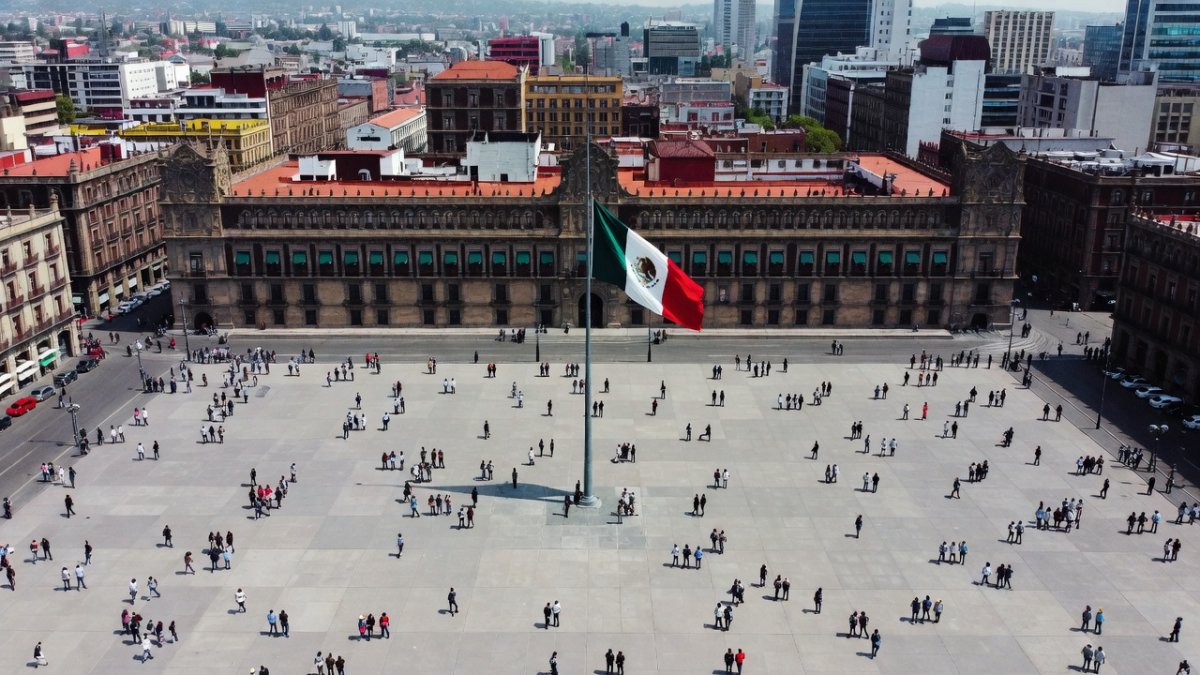
Sheinbaum Accepts Trump's World Cup Final Invitation — A Historic Meeting President Claudia Sheinbaum has accepted a personal invitation from United States President Donald Trump to attend Sunday's FIFA World Cup final between Spain and Argentina at MetLife Stadium in East Rutherford, New Jersey — marking their first face-to-face meeting since December 2025 after months of escalating tensions between the two North American neighbors.
Sheinbaum Accepts Trump's World Cup Final Invitation — A Historic Meeting
President Claudia Sheinbaum has accepted a personal invitation from United States President Donald Trump to attend Sunday's FIFA World Cup final between Spain and Argentina at MetLife Stadium in East Rutherford, New Jersey — marking their first face-to-face meeting since December 2025 after months of escalating tensions between the two North American neighbors. The invitation, extended directly from the White House, also includes Canadian Prime Minister Mark Carney, turning what could have been a routine sporting event into an unexpected platform for high-stakes diplomacy among the three USMCA partners.
Tags: Claudia Sheinbaum, Donald Trump, World Cup final 2026, Spain vs Argentina, US-Mexico relations, Mark Carney, North American leaders, MetLife Stadium, Trump invitation, Mexico foreign policy
A Personal Invitation from the White House
Sheinbaum confirmed the decision late Friday, telling Mexican media that she accepted what she described as a direct and personal invitation from the US president. "I decided to go because it is a direct invitation from the president of the United States," Sheinbaum said. "Canadian Prime Minister Mark Carney will also be there, and tomorrow I will record a message with more details." The announcement came as a surprise to many in Mexican political circles, given the rocky state of bilateral relations. Sheinbaum had notably skipped the World Cup's opening match in Mexico City in June, when Mexico's national team secured a 2-0 victory — instead, she gave her ticket to a young Indigenous woman from Chiapas, a gesture that resonated deeply across Mexican communities.
The Spanish royal household has also confirmed that King Felipe VI is expected to attend the final, adding a layer of international protocol to an already significant gathering. Spain's presence in the championship match against defending champions Argentina gives the event particular resonance for the Spanish-speaking world, with three of the four principal figures — Sheinbaum, King Felipe VI, and Argentina's representatives — sharing linguistic and cultural ties that transcend the sporting arena.
Months of Rising Tensions and a Potential Reset
The World Cup final meeting comes at a critical juncture for US-Mexico relations, which have deteriorated significantly since the beginning of the year. The Trump administration has imposed sweeping tariffs on Mexican goods, citing concerns over fentanyl trafficking and undocumented migration across the southern border. Washington has also escalated its rhetoric in recent weeks, with administration officials making unprecedented claims about alleged cartel-government collusion — accusations that the Sheinbaum government has firmly and repeatedly rejected as baseless.
On the Mexican side, the Sheinbaum administration has been equally forceful. The president has kept the issue of ICE-related deaths abroad in sharp focus following several high-profile incidents involving Mexican nationals in US immigration custody. Her government has demanded accountability and transparency from US authorities, using diplomatic channels and public statements to pressure Washington on human rights standards. The rhetorical back-and-forth has created an atmosphere of distrust that analysts say has not been seen since the early months of Trump's previous term.
This is the context that makes Sunday's meeting so significant. According to Bloomberg, the three leaders' attendance at the final creates "the opportunity for a reset after a month filled with regional tensions." Whether a single afternoon at a football match can meaningfully shift the trajectory of US-Mexico relations remains an open question, but the symbolism of shared attendance at a North American-hosted event is not lost on either side. The 2026 World Cup is, after all, the first in history to be co-hosted by all three USMCA nations — the United States, Mexico, and Canada — making the tournament itself a testament to regional cooperation.
What Sheinbaum Brings to the Table
Claudia Sheinbaum arrives at this meeting from a position of domestic strength. Despite a slight dip in favorability — Pew Research reported earlier this week that her approval rating has settled at 64%, down from higher marks in 2025 — she remains one of the most popular presidents in Mexico's modern history. Her administration's flagship economic program, Plan México, continues to attract significant international investment; just this week, Apollo Global Management announced a $20 billion commitment to finance Mexican infrastructure projects through private credit, the largest single private investment pledge in the country's history.
On the economic front, Mexico achieved a historic milestone this month when its inflation rate fell below that of the United States for the first time — a development that has strengthened the peso and given Sheinbaum's economic team greater leverage in trade discussions. The president has also maintained strong diplomatic ties across Latin America, defending the Panama Canal's neutrality and positioning Mexico as a mediating voice in regional disputes. These achievements give Sheinbaum a solid foundation from which to engage with Trump, even as the underlying tensions between the two countries remain unresolved.
The meeting also carries personal significance. Sheinbaum, a climate scientist and former head of government of Mexico City, has built her political identity around principles of human rights, environmental justice, and community-based governance — values that have placed her at odds with the Trump administration's approach to immigration enforcement and environmental deregulation. How she navigates this personal and political convergence will be watched closely by Mexican families across the republic, from the colonias of Ciudad Juárez to the ejidos of Oaxaca.
Impact on Mexican Communities at Home and Abroad
For ordinary Mexican families, the outcome of Sunday's meeting carries concrete implications. The tariffs imposed by the Trump administration have raised prices on everything from auto parts to agricultural products, directly affecting Mexican workers in the maquiladora sector and campesinos in rural communities who depend on export markets. A meaningful thaw in relations could ease these pressures, while continued tension risks further economic pain for households already navigating global inflationary pressures.
Mexican migrants and their families in the United States have also been profoundly affected by the deterioration in bilateral relations. The increased ICE enforcement actions and detention incidents have created an atmosphere of fear and uncertainty in Mexican-American communities from California to Texas. Community organizations, consular networks, and migrant advocacy groups have all pressed the Sheinbaum government to prioritize the protection of Mexican nationals abroad — a demand that the president has amplified in her public statements. For the millions of Mexican families with relatives living and working north of the border, the Trump-Sheinbaum dynamic is not an abstract diplomatic question but a daily reality that affects their safety, their livelihoods, and their dignity.
In Mexico itself, the political class is divided on the wisdom of the meeting. Supporters within the Morena party see it as an opportunity for pragmatic engagement — a chance to de-escalate tensions and protect Mexican economic interests through direct dialogue. Critics, particularly on the left, have questioned whether attending a high-profile sporting event alongside Trump signals acceptance of his administration's policies, especially on migration and human rights. Meanwhile, opposition parties including the PAN and PRI have offered cautious support for the diplomatic gesture while reserving judgment on any concrete outcomes.
Reactions and Expectations Across the Region
Reactions to the announced meeting have been swift across Latin America. Argentina, as a finalist, has welcomed the attention the match brings to the region. President Javier Milei's government has expressed hope that the gathering could foster broader dialogue on regional economic integration. In Colombia, President Gustavo Petro's administration has framed the event as an opportunity to discuss hemispheric cooperation on climate and migration — issues that affect every country from the Río Bravo to the Tierra del Fuego.
Within Mexico, civil society organizations have responded with a mix of hope and caution. Human rights groups have called on Sheinbaum to use the meeting to press Trump on the ICE detention conditions that have resulted in multiple deaths of Mexican nationals. Business leaders, including the Consejo Coordinador Empresarial, have urged the president to prioritize tariff relief and trade certainty. Indigenous community organizations have asked that any dialogue include commitments to protect the rights of Indigenous migrants, who face compounded vulnerabilities at the border.
Internationally, the meeting has been framed as a test of whether sport can serve as a diplomatic bridge in an era of deep geopolitical division. The World Cup has historically provided moments of cross-border connection — from the football diplomacy of the Iran-US match in 1998 to the Olympic truces of the ancient world — but whether a single evening in New Jersey can meaningfully reset a relationship as complex and fraught as the US-Mexico dynamic remains to be seen.
What to Watch For
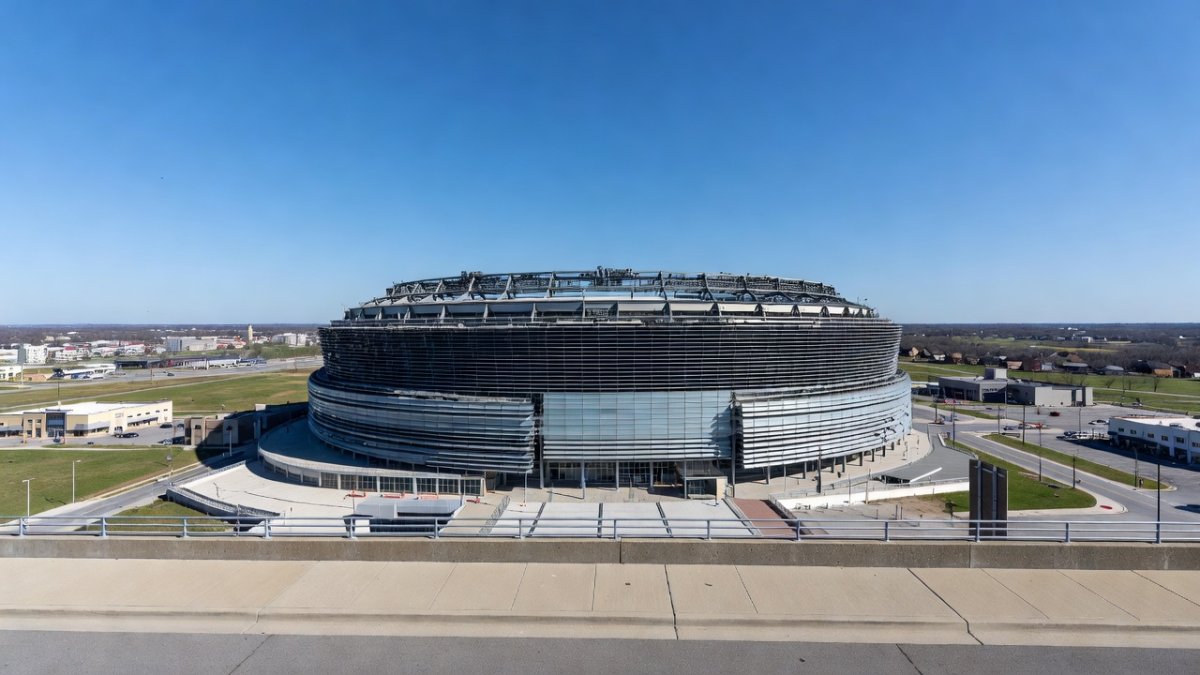
As Sunday approaches, several key questions remain unanswered. Will Sheinbaum and Trump hold a private bilateral meeting alongside the match, or will their interaction be limited to ceremonial appearances? Will any joint statements or agreements be announced? And most importantly, will the meeting produce tangible movement on the core issues — tariffs, migration, human rights, and security cooperation — that have strained the bilateral relationship?
The venue itself is symbolic. MetLife Stadium sits in New Jersey, a state with one of the largest Mexican-American populations in the United States, just across the Hudson River from Manhattan. For the millions of Mexican families who have built lives in the New York metropolitan area, Sheinbaum's presence in their backyard carries an emotional resonance that transcends the diplomatic calculus. For communities in New Jersey, New York, and Connecticut, the president's visit is a reminder that Mexico has not forgotten its people beyond the border.
For Mexican families watching from home in Guerrero, Jalisco, Michoacán, or Veracruz, Sunday's match offers a moment of respite — a chance to cheer for a thrilling final between two Spanish-speaking nations. But beneath the excitement of the game lies the weight of a relationship that affects the daily lives of millions. Whether Sheinbaum and Trump find common ground or merely share a photo op, the world will be watching. And for Mexico, the hope is that this meeting — born of a football invitation — can open a door that has been firmly closed for months.
By Rosa Martinez, Staff Writer
This article was produced with AI-assisted research and editorial support. Reporting is based on sources cited in the article.
What's Your Reaction?
 Like
0
Like
0
 Dislike
0
Dislike
0
 Love
0
Love
0
 Funny
0
Funny
0
 Wow
0
Wow
0
 Sad
0
Sad
0
 Angry
0
Angry
0
Latin America/Andes Correspondent at Global1.News. Based in Bogota, covering politics, environment, energy, and social movements across the Andean region. Passionate about environmental journalism and communities protecting their land.










Comments (0)