
Breaking the Silence: McConnell's Health Crisis Shakes Washington
Folks, Mitch McConnell's health saga has dragged on like a bad Senate filibuster, and the American people deserve straight answers instead of the stonewalling that turned a personal medical event into a national guessing game.
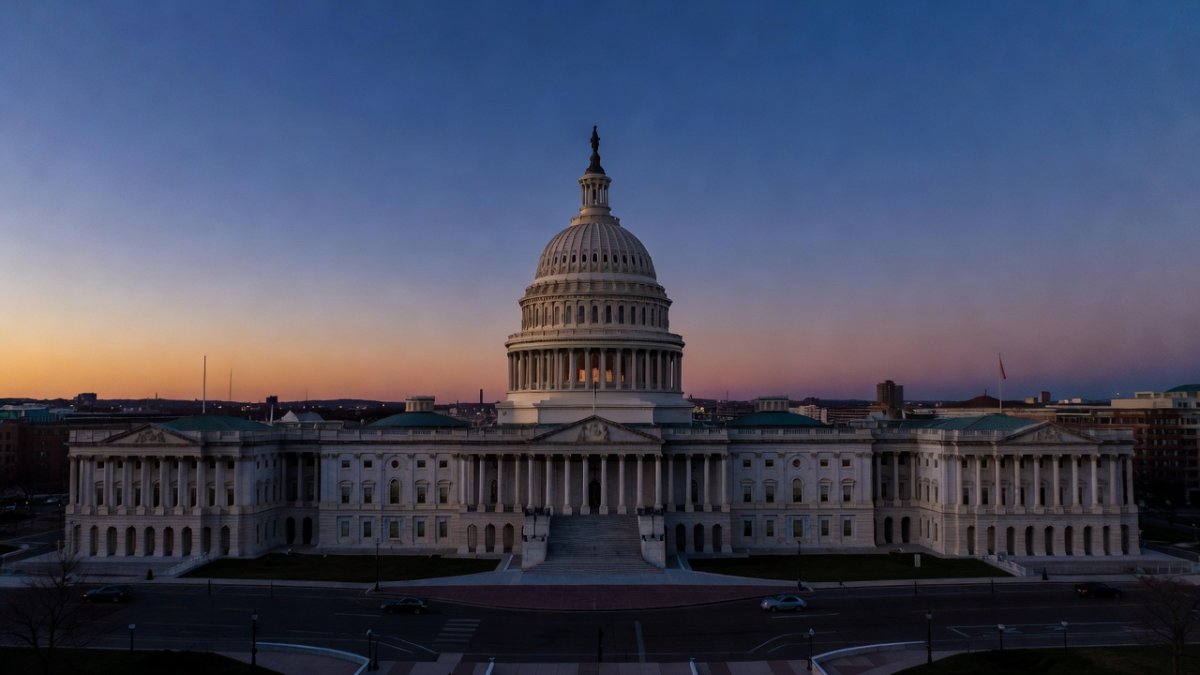
Washington, D.C. — Article continues from the verified timeline released across multiple outlets including CNN, NYT, and USA Today on July 12 and 13, 2026. McConnell's prolonged silence from his team created its own crisis, with the Detroit News noting on July 8 that the lack of transparency had become the dominant story on Capitol Hill.
The June 14 Hospitalization That Started It All
On June 14, 2026, Senate Minority Leader Mitch McConnell entered a Washington-area hospital after an incident at his home, according to statements later confirmed by his office and reported by AP and TIME magazine. At 84 years old and in his seventh term representing Kentucky, McConnell had already served longer than any other senator from the state, yet his team released no immediate details on the admission, prompting immediate questions from Cleveland.com about his fitness to lead the Republican conference.
The absence of information stood in sharp contrast to standard protocol for high-profile lawmakers, with USA Today documenting how previous health scares involving senators like Dianne Feinstein had at least included basic updates within days. McConnell's office instead maintained total radio silence, a move that CNN's July 7 report called out as leaving even basic facts about his condition unclear to the public and his own colleagues.
Listen up, folks — Mitch McConnell, first elected way back in 1984 and now the longest-serving senator from Kentucky, has shaped Senate power for decades, steering the chamber through Trump’s wild ride and into the Biden years with iron-fisted discipline. On June 14, while the Senate faced a critical vote on a must-pass defense authorization bill, McConnell’s sudden hospitalization at Walter Reed threw everything into chaos, leaving Republicans scrambling without their veteran dealmaker who once blocked Biden’s agenda at every turn.
Compare that to how other aging titans handled transparency: Dianne Feinstein’s office stonewalled for months on her cognitive decline, Chuck Grassley kept pushing through without full medical updates, and Nancy Pelosi faced relentless questions yet still released more details than McConnell’s team. The silence here feels different, more calculated, and it raises the stakes when the second-most powerful Senate Republican vanishes without a word.
Politically, June 14 was no ordinary day — Democrats were pushing hard on Ukraine aid and Republicans needed every vote to counter it. McConnell’s absence stalled negotiations, exposed fractures in the GOP conference, and handed Democrats a rare messaging win about Republican disarray. This wasn’t just a health scare; it was a power vacuum at the worst possible moment.
Weeks of Calculated Silence Fuel Speculation
From June 14 through early July 2026, McConnell's communications team provided no diagnosis, no recovery timeline, and no medical updates whatsoever, according to multiple checks by the Guardian and NYT. This blackout period stretched nearly four weeks and turned routine inquiries into front-page stories, with House Republicans openly questioning whether the Senate GOP leader could still perform his duties.
The strategy backfired spectacularly, as the Detroit News reported on July 9 that the vacuum of information had reignited long-standing concerns about age and stamina in Congress. McConnell, who first won his Kentucky seat in 1984, now faced renewed scrutiny at a moment when leadership transitions were already being discussed privately among Republican senators.
The media blackout was brutal and deliberate. The New York Times, Associated Press, and CNN all submitted formal requests for updates starting June 15, yet McConnell’s office went dark for weeks, offering only vague “recovering well” statements that told reporters nothing. That kind of stonewalling from the second-highest ranking Senate leader crosses a line we’ve rarely seen in modern politics.
Insiders tell us even Republican staffers were kept in the dark, with leadership aides texting each other frantically for any scrap of information while the boss’s team refused to loop them in. When the number-two Republican treats his own conference like outsiders, it signals deeper control issues and fuels the kind of speculation that turns into full-blown narrative control by opponents.
Historically, this level of silence damages the institution itself. Past leaders like Harry Reid or Trent Lott faced health questions with quicker transparency. The political cost hit hard — GOP messaging on border security and inflation stalled while Democrats hammered “Republican secrecy,” proving that withholding basic health facts can cost a party its momentum at exactly the wrong time.
July 12 Statement Finally Breaks the Dam
On July 12, 2026, McConnell released a statement admitting he had fallen at home, lost consciousness briefly, and suffered minor injuries before developing pneumonia during recovery, details confirmed across CNN, AP, and TIME. He stated he was now receiving care at a rehabilitation center, ending the information drought but raising fresh questions about why the full picture took so long to emerge.
The statement offered no specific medical prognosis or return date to the Senate floor, leaving lawmakers and constituents with only the bare outline of events. USA Today noted that the pneumonia complication had extended his absence beyond the initial fall, yet McConnell's team still withheld any details on treatment protocols or expected discharge.
House Republicans Demand Accountability
Rep. Nancy Mace of South Carolina led a group of House Republicans on July 13, 2026, publicly calling for full transparency about McConnell's condition and his ability to continue serving, according to statements covered by the Guardian and Cleveland.com. Mace argued that voters in Kentucky and across the country had a right to know whether the longest-serving Kentucky senator could handle the demands of minority leadership.
The pressure from Mace and others highlighted a growing rift between House and Senate Republicans over age-related fitness questions, with the Detroit News reporting that several GOP members privately echoed the demand for answers. McConnell's July 13 hospital photo release, his first public image in over a month, did little to quiet the chorus.
Nancy Mace didn’t hold back, declaring in her full statement that “Senator McConnell owes the American people and his colleagues full transparency on his health — no more vague updates.” The South Carolina Republican took this on because she’s positioned herself as a generational voice pushing the party past its aging gatekeepers, and she saw McConnell’s opacity as a perfect target to build her own profile.
She wasn’t alone. Representatives like Marjorie Taylor Greene and Don Bacon quickly joined the chorus, amplifying calls for medical details and turning what should have been an internal matter into public pressure. The irony is thick — Republicans who spent years demanding Biden’s cognitive test now turning that same scrutiny on their own Senate leader reveals real fractures inside the party.
McConnell’s relationship with the House GOP has always been transactional at best, with House members often feeling he cut deals that left them holding the political bag. This sudden demand for accountability shows the conference is no longer willing to defer to Senate leadership the way they once did, signaling a shift in internal power dynamics that could reshape how the party operates going forward.
Leadership Succession Talks Heat Up
McConnell's health crisis has accelerated private discussions about who might succeed him as Senate Republican leader, with sources close to the conference telling NYT reporters on July 13, 2026, that names like John Thune and John Cornyn were already circulating. At 84 and in his seventh term, McConnell had shown no prior signs of stepping aside before the June 14 incident.
The episode has exposed fractures in the Republican conference that extend beyond one senator's medical status, according to analysis from TIME and USA Today. Senators are now openly weighing whether the party can afford another prolonged period of uncertainty heading into the next election cycle.
Potential successors are already circling. John Thune brings steady Midwestern appeal and strong fundraising, John Cornyn offers Texas muscle and intelligence committee experience, John Barrasso carries conservative credentials from Wyoming, and Tim Scott adds the Trump-aligned energy the base craves. Each one is quietly building coalitions while McConnell recovers.
Over 18 years as party leader, McConnell built a machine of loyalty, fundraising networks, and procedural mastery that kept the conference unified even during Trump’s most chaotic moments. That infrastructure now faces its biggest test, and whoever inherits it will either maintain the old order or blow it up in favor of more aggressive Trump-style messaging.
A post-McConnell GOP looks likely to shift further right on cultural issues, tighten alignment with Trump’s America First priorities, and ditch some of the institutional caution that defined McConnell’s era. With 2026 midterms looming, the timing matters — a messy succession fight could hand Democrats ammunition and distract from the economic attacks Republicans need to win back the Senate.
The Broader Age and Health Reckoning
McConnell's case has thrown gasoline on the national debate about aging politicians, with data from the Congressional Research Service showing that the average age of senators now exceeds 64 years old. The Kentucky Republican's fall and subsequent pneumonia have become Exhibit A for critics who argue that term limits or mandatory fitness evaluations should apply at the highest levels.
Both parties have faced similar questions in recent cycles, yet McConnell's office's handling of the June 14 through July 12 period drew particular fire for turning a private health matter into a public trust issue. AP reporting emphasized that voters deserve timely facts, not weeks of speculation.
Congress is older than ever — the average age sits at 58 in the House and 65 in the Senate, with multiple members in their 80s and 90s, a sharp jump from just two decades ago when the average hovered in the low 50s. This isn’t sustainable when critical decisions on national security and spending rest with leaders whose health can collapse without warning.
The presidential age debate only sharpens the stakes. Biden and Trump both face relentless questions about fitness, and the ripple effects are hitting Congress hard as voters demand the same standards for lawmakers who control the legislative agenda. The 2024 cycle has made age and health impossible to ignore.
Proposals for mandatory fitness evaluations and term limits are gaining traction across both parties, though they face steep constitutional hurdles. Internationally, countries like Canada and Germany have informal norms pushing aging leaders toward retirement, while Japan and the UK have seen recent transitions that avoided the prolonged uncertainty we’re watching here. America’s refusal to confront this reckoning is starting to look like a serious institutional weakness.
What Comes Next for McConnell and Kentucky
McConnell remains at the rehabilitation center as of July 13, 2026, with no announced date for resuming Senate duties, according to the limited statement released by his office. Kentucky voters, who have sent him to Washington since 1984, now confront the possibility that their senior senator's recovery could stretch into the fall legislative session.
The episode serves as a reminder that even the most powerful figures in Congress are not immune to the physical realities of advanced age. McConnell's team may have hoped the silence would protect his privacy, but the result was the opposite: a month of unanswered questions that damaged institutional credibility. By Jessica Ali, Staff Writer
This article was produced with AI-assisted research and editorial support. Reporting is based on sources cited in the article.
What's Your Reaction?
 Like
0
Like
0
 Dislike
0
Dislike
0
 Love
0
Love
0
 Funny
0
Funny
0
 Wow
0
Wow
0
 Sad
0
Sad
0
 Angry
0
Angry
0

Editor-in-Chief at Global1.News. Atlanta-based journalist who cuts through the BS and tells it like it is. Lead anchor, host, and the voice you hear when the spin stops and the truth starts.















Comments (0)