
Trump's Hormuz Guardian Plan Escalates US-Iran Conflict
The ever-shifting fault lines of the Middle East have once again converged on a single chokepoint. US President Donald Trump's declaration that Washington will become the "Guardian of the Hormuz Strait" — backed by a proposed 20 percent transit fee and seven consecutive nights of airstrikes — represents the most direct challenge to Iranian sovereignty over the waterway since the 1987–88 Tanker War.
The ever-shifting fault lines of the Middle East have once again converged on a single chokepoint. US President Donald Trump's declaration that Washington will become the "Guardian of the Hormuz Strait" — backed by a proposed 20 percent transit fee and seven consecutive nights of airstrikes — represents the most direct challenge to Iranian sovereignty over the waterway since the 1987–88 Tanker War. For Gulf states caught between American bases and Iranian retaliation, the crisis is rewriting the region's energy and security architecture in real time.
Trump's Hormuz Gambit: 20 Percent Toll and the Battle for the Strait
Beirut, Lebanon – July 18, 2026 — The United States has formally declared itself the guardian of the Strait of Hormuz, announcing a 20 percent toll on all cargo transiting the waterway, as the US-Iran conflict escalates into its seventh consecutive night of strikes with no diplomatic off-ramp in sight.
The Declaration That Redrew the Map
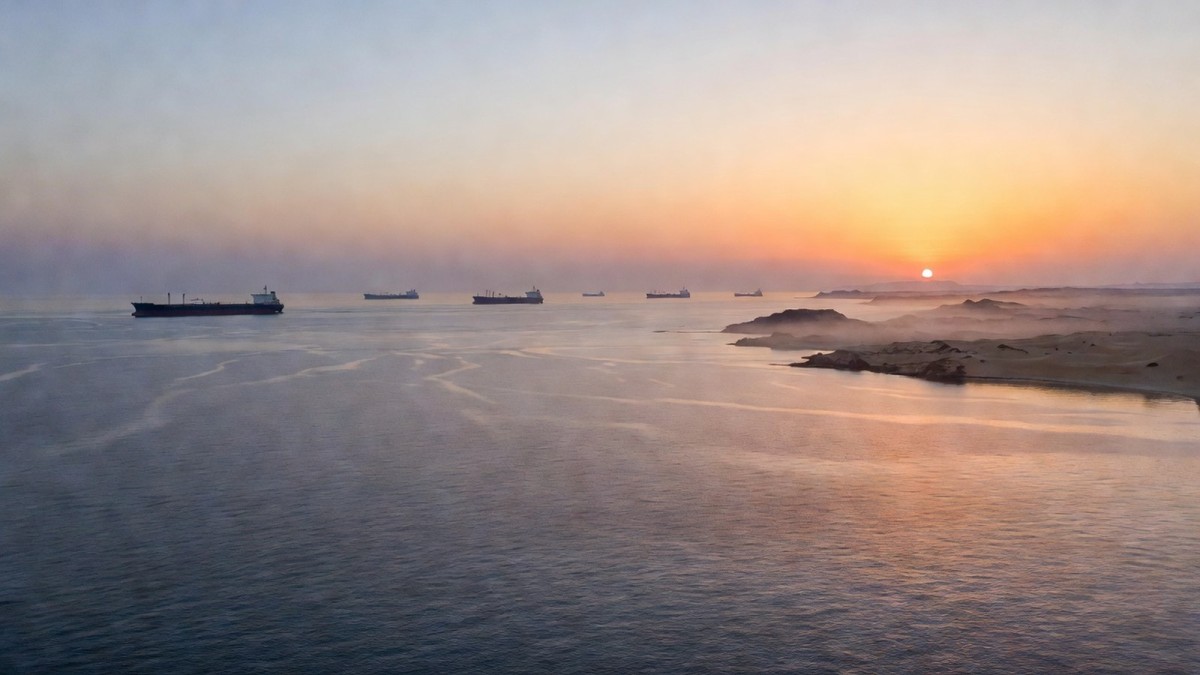
US President Donald Trump announced on Truth Social that the United States would become the "Guardian of the Hormuz Strait," imposing a 20 percent toll on all cargo. The move directly challenges Iran's longstanding claim to control the waterway that carries 15 million barrels of oil and gas daily, valued at $1.2 billion. Trump framed the policy as reimbursement for keeping the strait open "with or without Iran."
The announcement revives a long arc of US-Iran confrontation over the Strait of Hormuz that dates to the 1987-88 Tanker War, when American-flagged vessels escorted Kuwaiti tankers and Iranian mines damaged the USS Samuel B. Roberts. That episode established the precedent of Washington treating the waterway as an international commons rather than Iranian sovereign space. The 2019 attacks on Saudi Aramco facilities at Abqaiq and Khurais, widely attributed to Iran or its proxies, further illustrated Tehran's ability to threaten energy infrastructure without directly closing the strait, prompting the current toll proposal as a preemptive economic countermeasure.
Legally, the move collides with the United Nations Convention on the Law of the Sea, which guarantees the right of innocent passage through straits used for international navigation. Iran, never having ratified UNCLOS, maintains that the strait lies within its territorial waters and that it may regulate transit under Article 38's transit-passage regime. Foreign Minister Abbas Araghchi has cited this position repeatedly in Geneva and Vienna talks, arguing that any foreign toll constitutes an infringement on coastal-state sovereignty and a violation of the 1958 Geneva Convention on the Territorial Sea to which Iran is a party.
Timing appears calibrated to domestic US politics and global oil markets. With midterm elections approaching and Brent crude already above $85, the 20 percent levy could generate revenue while signaling resolve to voters concerned about energy prices. Analysts note that similar rhetoric preceded the 2019 maximum-pressure campaign, suggesting the declaration may also aim to deter Iranian oil exports ahead of anticipated OPEC+ quota discussions in Vienna.
Tehran's Counter-Claim and Military Response
Iran's Foreign Minister Abbas Araghchi dismissed the proposal, stating that Iran remains the "eternal guardian" and would set its own fair rate. A veteran of the 2015 JCPOA negotiations, Araghchi brings institutional memory and European diplomatic contacts that allow Tehran to frame its response as defense of sovereignty rather than outright aggression. Within hours, the Islamic Revolutionary Guard Corps (IRGC) Navy deployed fast-attack craft and activated shore-based anti-ship missile batteries armed with Khalij Fars and Noor systems, alongside the laying of additional sea mines in designated chokepoints.
US Central Command responded with a seventh consecutive night of strikes targeting IRGC naval facilities at Bandar Abbas, missile storage sites on Qeshm Island, and support infrastructure near Kish Island, while avoiding direct hits on Bushehr nuclear plant and the civilian port of Chabahar. Iranian Health Ministry figures report 50 fatalities and more than 500 injuries since July 6, many linked to secondary explosions at the Jask desalination plant whose destruction has curtailed fresh-water supplies for coastal villages.
The IRGC's layered defense, combining swarming tactics with sea mines and anti-ship cruise missiles, raises the risk of miscalculation. Any further escalation could draw in additional US carrier strike groups already positioned in the Arabian Sea, echoing the 1988 downing of Iran Air Flight 655 during heightened tensions.
Oil Markets and Shipping Collapse
Brent crude jumped 9 percent to $94.37 per barrel, the largest single-day gain since April. West Texas Intermediate reached $89.12, and average US gasoline prices climbed to $3.87 per gallon. Vessel traffic through the strait fell 52 percent between July 10 and 12. A sustained 20 percent fee could generate roughly $240 million per day for the United States, yet the immediate effect has been a sharp contraction in physical trade that threatens Gulf diversification plans and global energy security.
OPEC+ members Saudi Arabia and the UAE hold approximately 3.5 million barrels per day of spare capacity, yet Riyadh has signaled reluctance to release volumes without coordinated quota adjustments, fearing a prolonged price spike that could undermine Vision 2030 fiscal assumptions. War-risk insurance premiums for tankers transiting Hormuz have risen to roughly $450,000 per voyage, prompting several Greek and Japanese operators to reroute via the Cape of Good Hope, adding 12 to 15 days and $1.2 million in fuel costs.
Japan and South Korea, which together import 75 percent of their crude from the Gulf, have activated strategic petroleum reserves, while India explores expanded purchases from Russia's Arctic fields. Qatar's North Field expansion faces indirect pressure as spot LNG prices in Japan climbed above $18 per million BTU. Any sustained closure would force Doha to weigh continued exports against the risk of IRGC interdiction, complicating its mediation role between Tehran and Washington.
Gulf States in the Crossfire
Iran retaliated against US-linked targets in Kuwait's al-Ahmadi port, Bahrain's Sheikh Isa Air Base, and Jordan's Azraq base, killing two US personnel. Kuwait reported hits on two power and desalination plants — critical infrastructure in a country that relies on desalination for 90 percent of its drinking water. Bahrain activated air-raid sirens; Jordan intercepted ten ballistic missiles. Two Emirati oil tankers, the Mombasa and Al Bahiyah, were struck by Iranian cruise missiles while transiting the southern lane of the strait in Omani territorial waters, wounding one crew member and injuring eight others.
Kuwait's Al-Zour refinery and its desalination-dependent water supply create acute vulnerabilities that have been discussed in closed sessions of the Kuwaiti National Assembly. Bahrain, hosting the US Fifth Fleet at Juffair, confronts simultaneous economic strain from post-oil diversification shortfalls and the political cost of appearing as an American forward operating base. The UAE maintains trade corridors with Iran valued at $20 billion annually while advancing Abraham Accords normalization with Israel; Dubai's ports have emerged as a de facto safe haven for regional shipping, yet any escalation risks collateral damage to Jebel Ali.
Saudi Arabia accelerates Red Sea port development at Ras Al-Khair to bypass Hormuz, aligning with Neom's logistics ambitions, though Riyadh remains cautious about direct military entanglement that could derail domestic reforms. The GCC Secretary-General condemned attacks on Kuwaiti territory, while Qatar's gas-export leverage and established back-channel communications with both Tehran and Washington position it as a potential mediator — provided IRGC actions do not threaten the North Field platforms shared with Iran.
Strategic Calculus and Leverage Points
Washington calculates that financial pressure and direct strikes can force Tehran to reopen the strait on American terms. Iran, however, retains asymmetric tools: mining, fast-boat swarms, and proxy attacks that raise insurance costs and operational risks for every shipper. The IRGC has already demonstrated its ability to strike tankers and US bases across the Gulf, Jordan, and Kuwait from a single night of launches, underscoring the geographic breadth of its reach.
Gulf monarchies face the classic dilemma of hosting US bases while remaining vulnerable to Iranian retaliation. Their leverage lies in quiet diplomacy with Beijing, which has already sought deconfliction channels regardless of Iran's future regime. The UAE's $20 billion annual trade with Iran and Qatar's shared North Field gas reservoir create economic interdependencies that complicate any clean break with Tehran. For Saudi Arabia, the calculus is particularly fraught: Vision 2030 requires regional stability to attract foreign investment, yet the crown prince cannot afford to appear weak before a domestic audience that remembers the 2019 Abqaiq attacks.
External Powers and the Islamabad MoU
The Islamabad Memorandum of Understanding, signed in mid-June 2026, envisioned Iranian natural-gas exports to Pakistan via a 1,100-kilometer pipeline with an initial volume of 750 million cubic feet per day. Its suspension by Deputy Foreign Minister Kazem Gharibabadi reflects Tehran's recalibration amid fears that US secondary sanctions could ensnare Chinese and Russian contractors already committed to the project. Gharibabadi said Tehran has "suspended all its own commitments" under the agreement and is "busy defending the country."
China, Iran's largest oil customer at 1.2 million barrels per day, has urged deconfliction through its Belt and Road Initiative coordination office in Beijing. Russia supplies Iran with limited air-defense components, though its commitments in Ukraine constrain the volume. Turkey's President Recep Tayyip Erdogan balances NATO obligations with $12 billion in annual bilateral trade with Iran and sensitivities over Kurdish militant sanctuaries along the Iranian border. European Union shipping-agency statements and UNCTAD warnings against the proposed 20 percent toll underscore the risk of broader sanctions regimes that could further isolate Iranian energy exports.
Supreme Leader Mojtaba Khamenei warned of "unforgettable lessons" if US attacks continue, signaling that Tehran views the conflict as existential rather than tactical. In Tehran, Khamenei's reported health concerns have intensified succession debates within the Assembly of Experts, elevating IRGC influence over foreign-policy decisions. The Houthis in Yemen, meanwhile, face supply constraints that limit their ability to join a wider campaign against US interests in the Red Sea and Bab al-Mandeb.
Outlook for Regional Stability
Three plausible scenarios emerge from the current trajectory. The first — a negotiated toll-sharing arrangement under Omani auspices — carries roughly 40 percent probability, contingent on both sides finding a face-saving formula. The second, sustained low-level skirmishing that raises global oil prices by $15 to $20 per barrel, stands at 35 percent probability and most closely resembles the current pattern of tit-for-tat escalation. The third scenario — full strait closure triggering US naval mining operations and Iranian asymmetric retaliation — has a 25 percent probability but would represent the most significant disruption to global energy markets since the 1973 oil embargo.
Any prolonged closure or fee regime would accelerate Gulf states' shift toward Asian markets and nuclear hedging. Gulf sovereign-wealth funds are already accelerating renewable-energy investments in Oman and Morocco, while Israel's Prime Minister Benjamin Netanyahu weighs potential strikes on Iranian nuclear sites should the crisis provide cover for renewed enrichment activity at Fordow. For now, the 20 percent toll remains a unilateral US declaration whose enforcement depends on sustained military presence and the willingness of China, India, and other major importers to absorb higher costs or reroute their energy supply chains around Africa.
By Malik Hassan, Staff Writer
This article was produced with AI-assisted research and editorial support. Reporting is based on sources cited in the article.
What's Your Reaction?
 Like
0
Like
0
 Dislike
0
Dislike
0
 Love
0
Love
0
 Funny
0
Funny
0
 Wow
0
Wow
0
 Sad
0
Sad
0
 Angry
0
Angry
0

Middle East Correspondent at Global1.News. Based in Beirut, covering politics, conflict, energy, and society across the Middle East. Brings context and depth to a region often reduced to headlines.









Comments (0)