
Belgium approves import ban on goods from occupied Palestinian territories
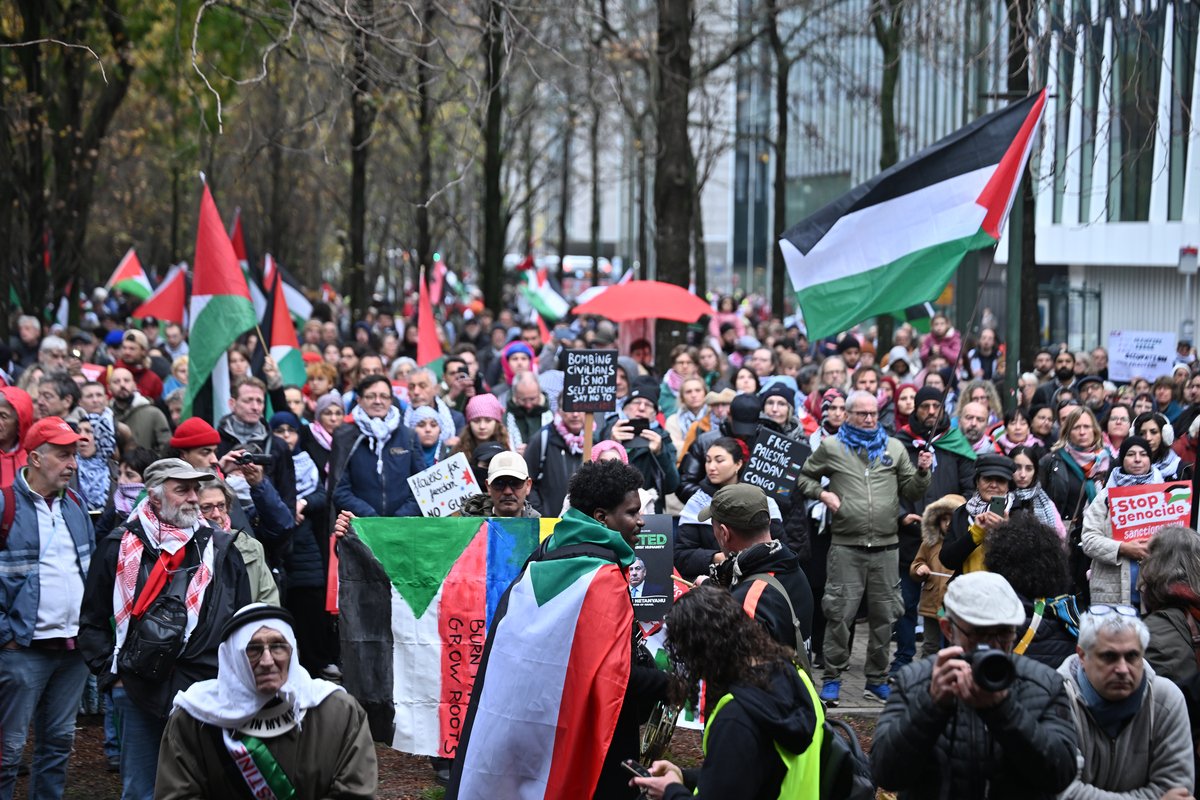
The Belgian Government's Approval of Import Measures The Belgian federal government approved a series of measures at its final meeting before the summer recess, including an import ban on goods originating from the occupied Palestinian territories.
The Belgian Government's Approval of Import Measures
The Belgian federal government approved a series of measures at its final meeting before the summer recess, including an import ban on goods originating from the occupied Palestinian territories. This decision forms part of an agreement reached by the government at the end of last summer. The measures respond to Israel's military offensive in Gaza and the mounting civilian death toll. According to Belga News Agency, details on how the ban will be implemented have yet to be finalized.
Background on the Summer Agreement
The import ban stems from discussions held at the end of last summer among Belgian officials. Those talks addressed the ongoing situation in Gaza following Israel's military offensive. The agreement sought to align Belgian policy with concerns over civilian impacts in the occupied territories. The recent approval at the pre-recess meeting marks the formal adoption of these steps, though practical rollout remains pending.
Scope of the Import Ban
The ban specifically targets goods produced in Israeli settlements in the occupied West Bank and other occupied territories. It applies to imports entering Belgium from these areas. The federal government included this provision within a broader package of measures approved before the summer recess. Officials have not yet outlined the exact mechanisms for enforcement or monitoring at ports and borders.
The European Union's legal separation of Israel proper from the occupied territories dates to the 1995 Association Agreement and was sharpened by the 2019 Court of Justice ruling that mandated explicit labeling of settlement-origin goods. This precedent established that products from the West Bank, East Jerusalem, and Golan Heights cannot benefit from preferential tariff treatment reserved for Israel, reflecting the EU's formal non-recognition of annexation. Agricultural exports such as dates, herbs, and avocados, alongside wines, cosmetics, and Dead Sea minerals, constitute the bulk of settlement production, generating roughly $500 million annually in European markets.
Forward-looking analysis suggests the import ban could accelerate divestment by major retailers wary of reputational risk, yet enforcement gaps remain. Historical patterns show that similar labeling rules produced only marginal trade shifts because certification loopholes persist. A stricter ban might therefore pressure settlement economies more directly, particularly in the Jordan Valley's export-oriented farms, while inviting Israeli countermeasures such as new free-trade overtures to Asian markets. Palestinian producers inside the Green Line could gain marginal space if European buyers pivot, though without parallel investment their competitive position stays constrained.
Continued Ceasefire Violations Since October 2025
Israel continued to violate the ceasefire agreement in effect since Oct. 10, 2025. Gaza's Health Ministry reported that these violations had killed more than 1,100 Palestinians and injured over 3,600 others. The ministry attributes these figures directly to actions following the ceasefire date. Such ongoing incidents underscore the fragile nature of the truce and the persistent risks faced by residents in Gaza.
Drone strikes and ground incursions have persisted in Gaza's buffer zones, targeting alleged militant infrastructure yet frequently striking civilian homes and farmland. Arrest sweeps in northern Gaza have detained hundreds of men and boys, disrupting family networks and local economies already strained by prior destruction. These actions echo earlier post-ceasefire patterns in which low-intensity operations gradually erode truces without triggering full-scale resumption of hostilities.
Daily life for Gazans has deteriorated through restricted access to fishing waters and agricultural fields, compounding psychological strain from repeated aerial surveillance. International responses have remained muted, with Western capitals issuing generic calls for restraint while Arab states focus on reconstruction pledges rather than accountability mechanisms. This silence risks normalizing incremental violations, potentially setting conditions for renewed escalation if economic desperation inside Gaza intensifies.
Overall Toll of the Military Campaign Since 2023
According to Gaza's Health Ministry, Israel's military campaign in Gaza since October 2023 has killed more than 73,000 Palestinians and wounded over 173,000. These cumulative numbers reflect the scale of loss across the enclave over nearly two years. The ministry also notes that the campaign has caused widespread destruction to about 90 percent of the enclave's civilian infrastructure, affecting homes, hospitals, schools, and essential services.
Conditions in the Occupied West Bank and Territories
The import ban focuses on products from settlements in the occupied West Bank and additional occupied areas. Residents in these regions have long navigated restrictions on movement and access to resources. The Belgian measures aim to address goods linked to settlement activity, though implementation details are still under development. Daily life for Palestinians in these territories continues amid the broader regional tensions.
Settlement expansion directly fuels the agricultural and industrial output targeted by the proposed ban, as new industrial zones in the West Bank produce goods marketed abroad under Israeli branding. Palestinian communities adjacent to these settlements endure movement restrictions, land confiscations, and periodic settler violence that disrupt planting cycles and market access. Economic data reveal that settlement enterprises often draw water and labor resources away from Palestinian villages, eroding traditional livelihoods in olive and stone industries.
Daily realities include checkpoint delays that inflate transport costs and limit employment options, while settlement growth fragments remaining Palestinian land into isolated enclaves. Looking ahead, the ban could indirectly constrain settlement financing if European demand contracts, yet Palestinian economic recovery hinges on simultaneous removal of access barriers and recognition of their own production rights. Without coordinated policy shifts, the structural asymmetry between settlement economies and surrounding communities will likely persist.
Humanitarian Realities and Infrastructure Damage
The destruction of approximately 90 percent of Gaza's civilian infrastructure has compounded challenges for the population. Health facilities, water systems, and housing have been heavily affected, according to the ministry's assessments. With more than 73,000 killed and over 173,000 wounded since October 2023, families across Gaza face prolonged recovery needs. The additional deaths and injuries from post-Oct. 10, 2025 violations add to these pressures.
Ninety percent infrastructure destruction has eliminated functional hospitals, schools, and water networks across much of Gaza, forcing residents to rely on contaminated wells and makeshift learning spaces. Agricultural land scarred by bombardment and bulldozing has slashed local food production, deepening dependence on costly imports. Historical precedents from previous Gaza conflicts demonstrate that rebuilding such systems typically requires a decade or more even under optimal funding conditions.
International aid has arrived in limited quantities, constrained by inspection regimes and political conditions that prioritize security vetting over speed. Forward-looking assessments indicate that without large-scale, unconditional reconstruction support, Gaza's population will face prolonged public-health crises and educational deficits that entrench intergenerational poverty. Palestinian civil-society actors warn that piecemeal projects cannot substitute for lifting the blockade that continues to throttle material inflows.
Next Steps and Monitoring Requirements
Belgian authorities must now develop procedures to enforce the import ban effectively. Belga News Agency indicates that concrete plans for customs checks and origin verification are not yet complete. Coordination with European partners may influence how the policy takes shape after the summer recess. Until these steps are clarified, the practical effects of the approval remain to be seen.
By Fatima Al-Rashid, Staff WriterThis article was produced with AI-assisted research and editorial support. Reporting is based on sources cited in the article.
What's Your Reaction?
 Like
0
Like
0
 Dislike
0
Dislike
0
 Love
0
Love
0
 Funny
0
Funny
0
 Wow
0
Wow
0
 Sad
0
Sad
0
 Angry
0
Angry
0

Gulf/MENA Correspondent at Global1.News. Based in Doha, covering Gulf politics, energy markets, diplomacy, and development across the Middle East and North Africa. Tracks the economic transformation of the Gulf states.













Comments (0)