
Ghana TikToker Jailed Over False Claims on President Mahama
In the bustling markets of Accra, whispers about power and ritual have long traveled faster than official news. Yet when those whispers land on TikTok, they can quickly turn into handcuffs and court dates. This case from Ghana reminds us how digital words carry weight across borders in our connected West Africa. Ghana TikToker Jailed Over False Claims About President Mahama Accra, Ghana — Article continues...
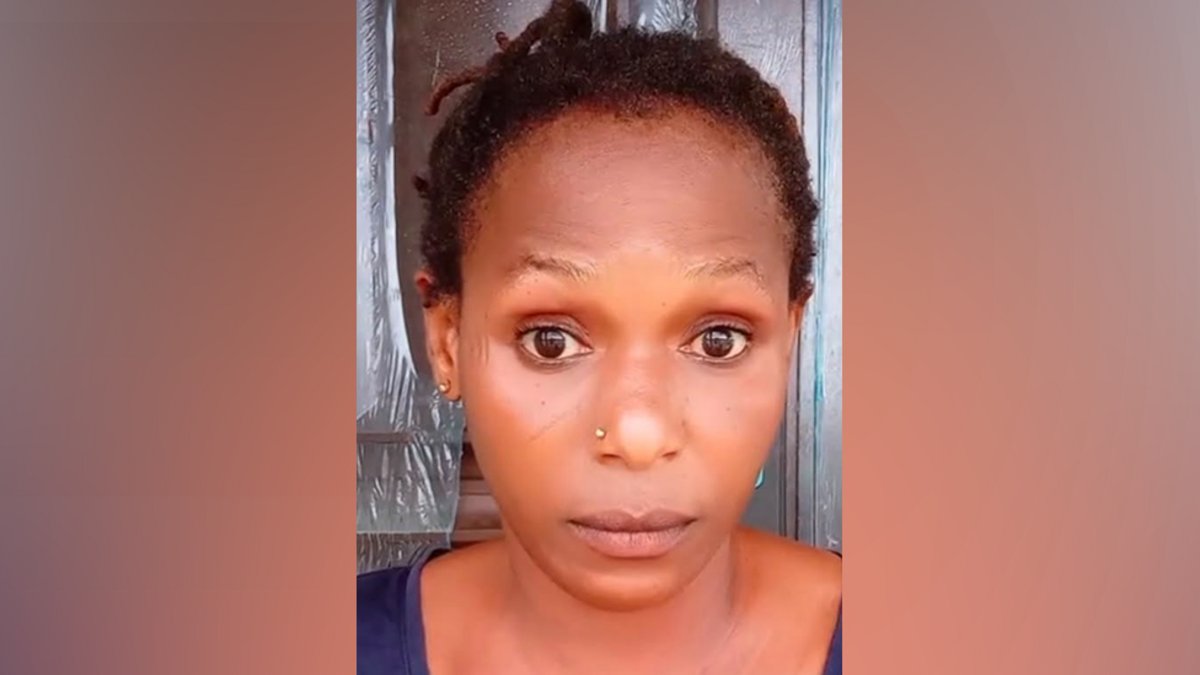
In the bustling markets of Accra, whispers about power and ritual have long traveled faster than official news. Yet when those whispers land on TikTok, they can quickly turn into handcuffs and court dates. This case from Ghana reminds us how digital words carry weight across borders in our connected West Africa.
Ghana TikToker Jailed Over False Claims About President Mahama
Accra, Ghana — Article continues...
The Charges
Camilla Alhassan admitted to two counts under Section 208 of Ghana’s Criminal Code: publication of false news and offensive conduct. Between June 30 and July 5, 2026, she posted videos claiming that President Mahama had buried 32 cows in a ritual intended to secure victory in the 2024 election. The court accepted her guilty plea and handed down the one-year term without further trial proceedings.
Alhassan was arrested on July 10, 2026, and held in custody until sentencing. Court records show she identified herself as a supporter of the opposition New Patriotic Party.
The Legal Framework
Section 208 makes it an offence to publish any statement likely to cause fear, alarm or disturbance to public peace. The provision dates back to the colonial period and remains on the statute books in Ghana. Prosecutors argued that the videos about ritual activity met the threshold for alarm, especially given the cultural weight such claims carry in many communities. Section 208 of Ghana’s Criminal Code states that any person who publishes or circulates a statement, rumour or report “likely to cause fear and alarm to the public or to disturb the public peace” commits a misdemeanour punishable by up to three years’ imprisonment. The clause originates in the Gold Coast Criminal Code Ordinance of 1892, modelled on English common-law provisions for seditious libel and later retained after independence. Prosecutors invoked the same wording against Camilla Alhassan that colonial administrators once used against nationalist newspapers in the 1940s and 1950s.
Similar statutes exist in Senegal, Nigeria and Kenya, where governments have used public-order provisions to address content shared on social media platforms. Human rights organisations have repeatedly noted that these laws were originally drafted for print and radio eras and now intersect with the speed of digital sharing. Senegal’s Penal Code Article 255 and Press Law 2017-27 contain parallel false-news offences carrying fines up to 10 million CFA francs, yet Senegal has recorded fewer convictions for political TikTok content since 2021. Across West Africa, similar statutes have been deployed against opposition figures in Nigeria’s 2015 “cybercrimes” cases and Kenya’s 2022 election-related arrests, prompting the African Court on Human and Peoples’ Rights to criticise their chilling effect on political speech in the 2014 case of Lohé Issa Konaté v. Burkina Faso.
The Political Context
President John Dramani Mahama leads the National Democratic Congress, which won the 2024 presidential election. The New Patriotic Party, now in opposition, has framed the sentencing as part of a broader pattern of pressure on its supporters. Alhassan’s videos directly targeted the sitting president, turning a personal social-media post into a political flashpoint. John Dramani Mahama’s National Democratic Congress secured 56.6 percent of the vote in the December 2024 presidential election on a platform promising expanded youth employment and digital-economy reforms. The New Patriotic Party, now in opposition, has adopted a strategy of highlighting perceived NDC intolerance for dissent while mobilising its base through TikTok influencers who reach 68 percent of Ghanaian voters aged 18–35. Party officials have publicly funded “fact-check” accounts that mirror the same platform dynamics they condemn in the Alhassan case.
In Ghanaian daily life, elections often involve intense discussion in markets, churches and family compounds. Claims of spiritual intervention surface regularly during campaigns, yet few reach the courts. This case stands out because it moved from TikTok to prison within weeks. TikTok has become Ghana’s primary arena for campaign messaging because its algorithm rewards short, emotive clips that travel faster than radio or WhatsApp chains. Young voters, who constituted 42 percent of the 2024 electorate, frequently blend political commentary with cultural references to juju and ritual, making the boundary between satire and alleged “false news” especially porous. The Alhassan sentence therefore lands at a moment when both major parties are courting the same demographic that consumes and creates such content daily.
The Free Speech Debate
The NPP immediately condemned the sentence, describing it as an attack on free speech and announcing support for Alhassan’s appeal. Human rights groups have echoed concerns that colonial-era laws are being applied to online expression without sufficient safeguards for political commentary. The Media Foundation for West Africa, Article 19 West Africa, and Amnesty International issued a joint statement on 18 July 2026 condemning the one-year sentence as disproportionate and calling for repeal of colonial-era public-order provisions. Article 19 noted that Ghana’s law lacks the “necessity and proportionality” test required under the African Charter on Human and Peoples’ Rights, while MFWA documented 14 similar arrests since 2020, most involving opposition supporters. Amnesty’s regional director highlighted that the guilty plea was entered after only three days in custody, raising due-process concerns.
Across West Africa, the line between curbing dangerous misinformation and protecting open debate remains contested. In Senegal, journalists and citizen commentators have faced similar charges under public-order statutes, prompting fresh calls for clearer digital-speech guidelines that reflect current technology. Globally, regulators struggle to distinguish harmful misinformation from protected political satire. The European Union’s Digital Services Act exempts parody and opinion, whereas Ghana’s Section 208 contains no such carve-out. In practice, courts have treated ritual-sacrifice claims as inherently alarming rather than as contested political commentary, a distinction that human-rights groups argue chills legitimate criticism of incumbents.
Social Media Regulation Across Africa
Ghana’s approach sits alongside measures in Nigeria and Kenya that also target content deemed likely to disturb public order. Senegal has seen recent debates over proposed amendments that would increase penalties for false statements shared on platforms such as WhatsApp and TikTok. In each country, enforcement often focuses on high-visibility cases involving political figures. Content creators in these nations note that the same platforms used for political discussion also serve small businesses and community information networks. A one-year sentence for a single set of videos therefore raises practical questions about how ordinary users should navigate political conversation online.
Senegal’s 2023 draft amendments to the Digital Code would raise penalties for “false information likely to disturb public order” to five years’ imprisonment and 20 million CFA francs, provisions that closely mirror Ghana’s Section 208. Senegalese authorities have already applied the existing 2008 cybercrime law against TikTok users who accused former president Macky Sall of electoral manipulation, resulting in three convictions in 2024. Citizen journalists in Dakar interviewed by local outlet Dakaractu expressed solidarity with Alhassan, warning that identical language could soon target Senegalese creators ahead of the 2029 elections. Article 29 of Senegal’s 2017 Press Code still criminalises “offences against the head of state,” a provision retained despite recommendations from the National Commission for Human Rights. Senegalese digital-rights activists argue that Ghana’s swift sentencing demonstrates the enforcement risk their own proposed amendments would create, prompting renewed calls for decriminalisation of online political speech modelled on the 2021 African Commission Declaration of Principles on Freedom of Expression.
What Happens Next
Alhassan’s legal team has indicated plans to appeal the conviction. Observers will watch whether higher courts examine the application of Section 208 to social-media posts or consider the speed of the guilty plea. The NPP has pledged continued public support, which may keep the case in national headlines.
For other Ghanaian TikTokers and citizen journalists, the ruling serves as a reminder that content touching on political leaders and cultural practices can trigger swift legal consequences. Many are now reviewing older posts and adjusting how they frame election-related claims.
Analysis
The sentencing of Camilla Alhassan reflects a wider tension in African democracies between regulating harmful content and preserving space for political expression. Laws written decades ago now shape conversations that unfold in real time across borders, affecting how citizens in Accra, Dakar and Lagos discuss their leaders.
As digital platforms become central to daily economic and social life, the balance struck in cases like this will influence not only individual freedoms but also the health of public discourse in the years ahead. The coming appeal may offer further clarity on where Ghana, and the region, draws that line.
By Amara Diop, Staff WriterThis article was produced with AI-assisted research and editorial support. Reporting is based on sources cited in the article.
What's Your Reaction?
 Like
0
Like
0
 Dislike
0
Dislike
0
 Love
0
Love
0
 Funny
0
Funny
0
 Wow
0
Wow
0
 Sad
0
Sad
0
 Angry
0
Angry
0
West Africa/Sahel Correspondent at Global1.News. Dakar-based journalist covering politics, security, climate, and development across Francophone and Anglophone West Africa. Tells the stories of a region undergoing profound transformation.










Comments (0)