
The crisis at Tnuva: The technicians refuse to come to Israel
Cottage Cheese Bottleneck Exposes Fragilities in Israel's Food Supply Chain Israeli consumers scanning supermarket dairy aisles in recent days have encountered empty shelves where containers of cottage cheese once sat in abundance. The shortfall traces directly to Tnuva's major dairy facility at Alon Tavor, where production lines continue to churn out the product at normal rates even as finished goods remain trapped inside a malfunctioning automated warehouse. What began as a computer glitch ...
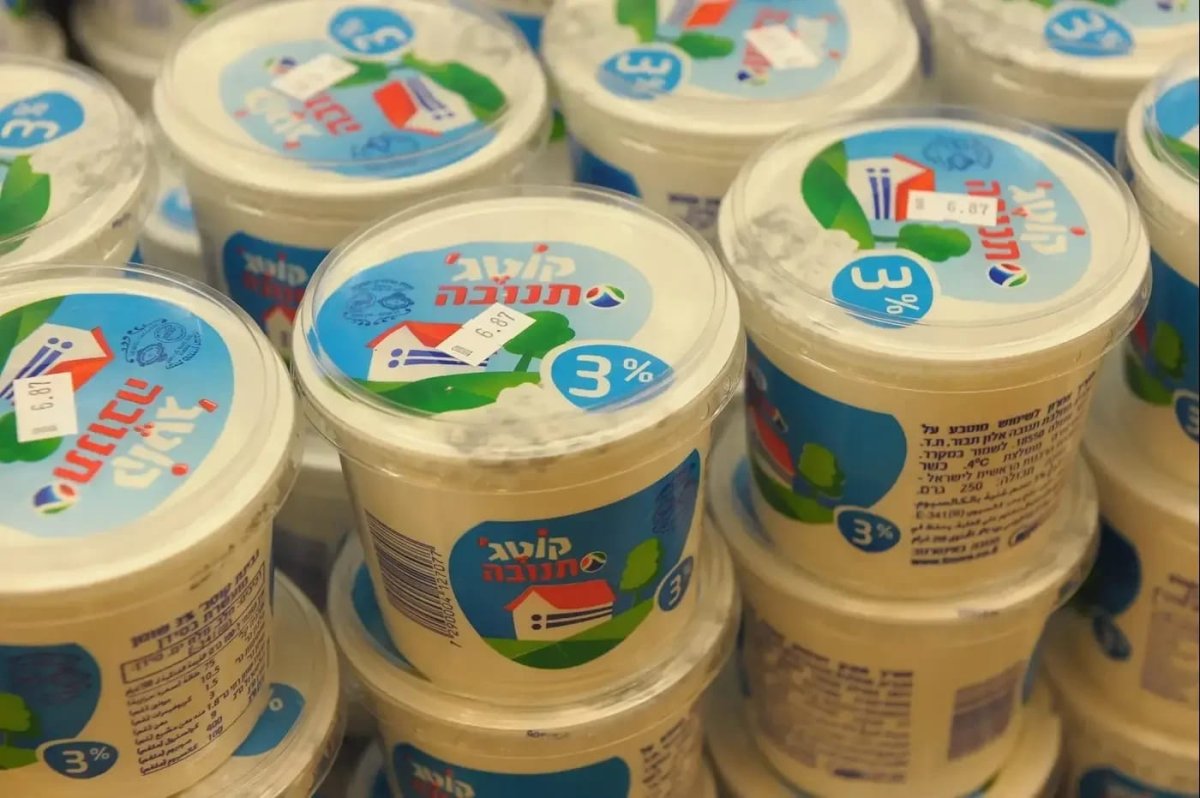
Cottage Cheese Bottleneck Exposes Fragilities in Israel's Food Supply Chain
Israeli consumers scanning supermarket dairy aisles in recent days have encountered empty shelves where containers of cottage cheese once sat in abundance. The shortfall traces directly to Tnuva's major dairy facility at Alon Tavor, where production lines continue to churn out the product at normal rates even as finished goods remain trapped inside a malfunctioning automated warehouse. What began as a computer glitch has stretched into a multi-week disruption, underscoring how tightly Israel's food system intertwines advanced logistics technology with the everyday realities of regional security.
Demand for dairy items has climbed roughly 4 percent since the beginning of the year, driven in part by fewer Israelis traveling abroad and therefore consuming more at home. Tnuva, long the dominant player in the local dairy market, finds itself losing money on every unsold container while the backlog grows. The episode reveals both the efficiency gains and the single points of failure that come with heavy automation in a country whose innovation economy prizes precisely such systems.
Production Lines Keep Running at Alon Tavor
At the Alon Tavor plant in the north, workers and machinery have maintained steady output of cottage cheese. Packaging proceeds without interruption, and the facility's core dairy operations show no signs of slowdown. Milk intake, processing, and filling lines operate on schedule, reflecting Tnuva's established capacity to meet national needs under ordinary conditions.
Yet the moment products leave the production floor and enter the automated storage system, movement halts. Large quantities of finished cottage cheese sit immobilized, unable to reach distribution trucks or retail partners. This disconnect between manufacturing and dispatch has created the visible shortage on store shelves while inventory piles up out of reach inside the warehouse.
Plant managers have kept the lines active precisely because shutting them down would compound losses and complicate restart procedures. The decision highlights a classic tension in highly optimized food manufacturing: continuous production is efficient until the downstream logistics layer fails.
Dematic System Glitch Freezes the Warehouse
The automated warehouse at Alon Tavor relies on technology supplied by the international automation firm Dematic. Its computer-controlled storage and retrieval system normally moves pallets with precision, tracking every container and releasing goods according to orders from retailers. A severe malfunction in that computer system has stopped the flow entirely.
Technicians on site have been unable to restore full functionality. The complexity of the software and hardware integration means that local teams possess only limited diagnostic reach. As a result, containers that should have left the facility weeks ago remain locked in place, turning what should be a seamless supply chain into a bottleneck.
Such systems represent the cutting edge of industrial automation adopted across Israel's manufacturing sector. Companies invest in them to reduce labor costs, increase throughput, and improve traceability. When they function, they deliver clear competitive advantages. When they fail, the absence of easy manual overrides becomes painfully apparent.
Overseas Technicians Decline Travel Amid Security Concerns
Repairs have now been delayed for more than a month. The specialized engineers required to diagnose and fix the Dematic installation are based overseas, and they have refused to travel to Israel because of the security situation. Company-to-company discussions have not overcome the reluctance of individual experts to board flights into the region.
This refusal is not unique to one firm. Across multiple industries, Israeli operators of sophisticated foreign equipment have reported similar hesitancy among overseas specialists since the escalation of regional tensions. The pattern illustrates how security perceptions directly constrain the maintenance of imported high-tech infrastructure that underpins local production.
Tnuva has explored remote support options, yet the nature of the warehouse fault appears to demand physical presence for calibration, parts replacement, or deep system access. Until those technicians arrive or an alternative solution emerges, the containers stay put.
Manual Workarounds Hit Hard Limits
In response, Tnuva teams have attempted manual extraction and handling of products. Workers have tried to bypass automated conveyors and retrieval cranes where possible, moving some pallets by conventional forklift or hand. These efforts have freed limited volumes but fall far short of normal dispatch rates.
The warehouse design itself restricts how much can be accomplished without the computer system. Aisles, racking heights, and inventory locations are optimized for robotic operation rather than human navigation. Safety protocols further constrain improvised methods. Consequently, the majority of the stuck cottage cheese remains inaccessible even as production continues to feed more units into the same jammed system.
This episode serves as a live case study for other Israeli manufacturers who have poured capital into similar Dematic or competing automation platforms. The efficiency premium is real, yet so is the dependency on external expertise that can evaporate when travel becomes unattractive.
Demand Surge Compounds the Pressure
While supply is constrained, consumption of dairy products has risen by approximately 4 percent since the start of the year. One clear driver is the reduction in overseas travel by Israelis. Families and individuals who might otherwise spend weeks abroad are remaining inside the country, purchasing more groceries locally and increasing household demand for staples such as cottage cheese.
Retail chains have reported stronger weekly orders, and the shortfall has become noticeable precisely because baseline consumption is elevated. Tnuva's inability to clear its warehouse therefore collides with a market that is hungrier than usual, amplifying empty-shelf complaints in cities from Tel Aviv to Haifa and beyond.
In the broader economy, this dynamic reflects how security-related changes in behavior ripple into domestic retail. Reduced outbound tourism keeps shekels circulating inside Israel, supporting local producers in theory, yet only if logistics can keep pace.
Shortage Remains Narrowly Focused on Cottage Cheese
Importantly, the disruption has so far spared other major dairy categories. Fresh milk, white cheese, and yogurt continue to reach stores in normal volumes. The automated warehouse problem appears concentrated on the cottage cheese lines and their dedicated storage zones, allowing the rest of Tnuva's portfolio to flow through alternative or less-affected channels.
Consumers have therefore experienced a selective inconvenience rather than a general dairy crisis. Shoppers can still find most refrigerated staples, yet the absence of cottage cheese—a product deeply embedded in Israeli breakfast tables and diet culture—generates outsized frustration. Its thick texture and mild flavor occupy a distinctive place in local cuisine that substitutes do not fully replicate.
This narrow impact also shapes the commercial stakes. Tnuva can continue generating revenue from unaffected products while absorbing losses only on the immobilized cottage cheese stock.
Why Importing Offers No Quick Fix
Some observers have asked whether foreign cottage cheese could fill the gap. Industry assessments indicate that route is not viable. Israeli cottage cheese possesses a unique formulation, texture, and regulatory profile that is not widely replicated by overseas dairies. Importing generic soft cheeses would neither match consumer expectations nor clear labeling and standards hurdles quickly enough to matter.
Even if suitable product existed, cold-chain logistics, customs clearance, and shelf-life considerations would add weeks of delay. For a fresh dairy item with limited durability, the economics collapse. Tnuva and retailers therefore face a binary choice: restore the Alon Tavor warehouse flow or wait out the shortage.
The situation quietly underscores a strategic point for Israel's food security planners. Certain culturally specific staples remain inherently domestic; their supply chains cannot be globalized on short notice when local automation falters.
Financial Drain and Retail Ripple Effects
Every container of cottage cheese that cannot leave Alon Tavor represents a direct financial loss for Tnuva. Production costs—raw milk, labor, energy, packaging—have already been incurred. Without sales, those costs sit on the balance sheet as unsellable inventory that risks eventual spoilage or discounted clearance once released.
Retail partners further down the chain, including major chains that stock Tnuva as a core brand, lose margin on a high-turnover item. Some have adjusted promotions or highlighted alternative cheeses, yet the core customer request remains unmet. The cumulative effect is a quiet erosion of efficiency across the dairy value chain at a moment when household budgets already face inflation pressures.
In macroeconomic terms, the episode is small, yet it illustrates how a single technological failure inside one plant can transmit friction into daily commerce and consumer sentiment.
Security Perceptions Shape Tech Maintenance Realities
The refusal of Dematic technicians to travel sits inside a larger pattern affecting Israel's advanced manufacturing base. From semiconductor equipment to pharmaceutical lines to food automation, many critical systems depend on periodic visits by foreign specialists. When those specialists decline to come, local operators must improvise, delay upgrades, or accept prolonged downtime.
Israeli tech and industrial firms have responded over the years by building deeper in-house expertise and remote-diagnostics capabilities. The Alon Tavor case shows the limits of that approach when the fault lies deep inside proprietary warehouse software. It also feeds ongoing conversations inside the Ministry of Economy and industry associations about resilience standards for automated facilities.
For a country whose innovation economy markets itself as a hub for smart logistics and Industry 4.0 solutions, the irony is sharp: the same automation that boosts productivity can become a vulnerability when geopolitical risk interrupts the human knowledge networks that keep it running.
Timeline for Recovery Remains Cautiously Optimistic
Company officials currently estimate that regular deliveries of cottage cheese could resume within about two weeks once technicians are able to complete repairs. Full restocking of the retail pipeline may require several additional weeks after that, as accumulated backlog clears and production-to-shelf cycles normalize.
These projections assume that overseas experts ultimately agree to travel or that a workable remote-plus-local hybrid solution materializes. Until then, the plant will keep producing, the warehouse will keep holding product, and supermarket coolers will keep showing gaps.
In the interim, the story serves as a reminder that Israel's food system, for all its sophistication, still operates inside the constraints of regional security. Automation delivers remarkable throughput on ordinary days. On extraordinary ones, the human willingness to board a plane can determine whether cottage cheese reaches the breakfast table.
By Hannah Berg, Staff Writer
This article was produced with AI-assisted research and editorial support. Reporting is based on sources cited in the article.
What's Your Reaction?
 Like
0
Like
0
 Dislike
0
Dislike
0
 Love
0
Love
0
 Funny
0
Funny
0
 Wow
0
Wow
0
 Sad
0
Sad
0
 Angry
0
Angry
0

Israel Correspondent at Global1.News. Based in Tel Aviv, covering Israeli politics, security, technology, and society. Provides balanced, deeply-sourced reporting on one of the most closely-watched regions in the world.















Comments (0)