
Apple iPhone 17 Price Rise in Japan Tied to Weak Yen
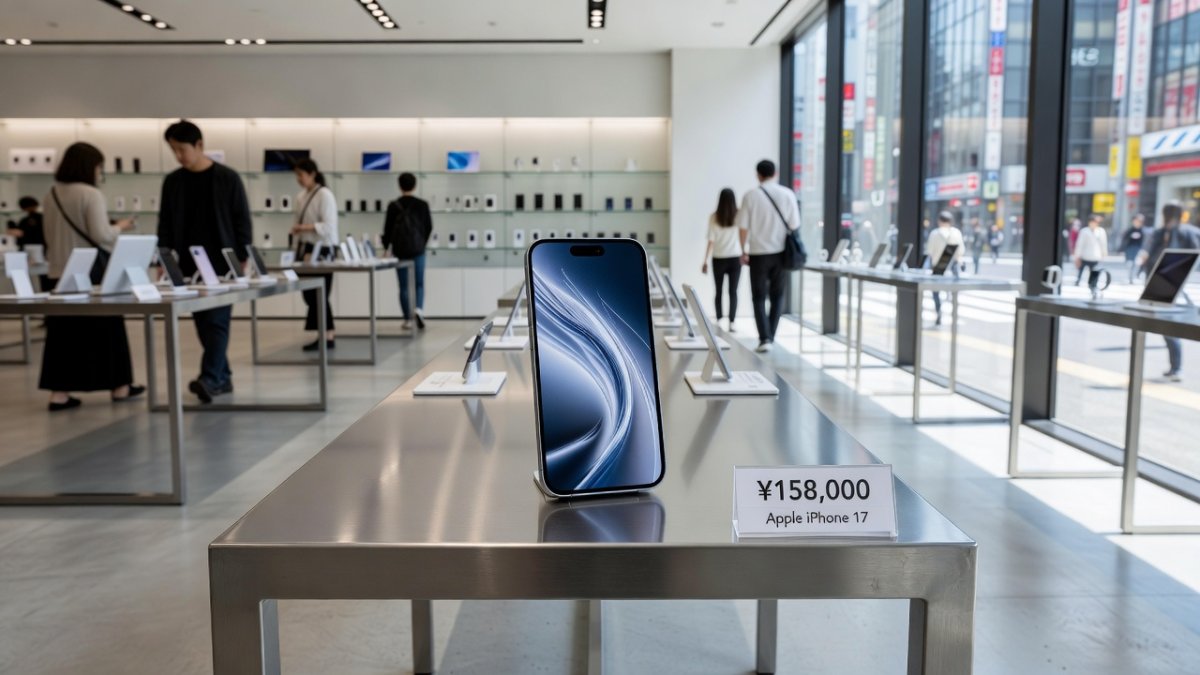
Apple Announces iPhone 17 Pricing Adjustments in Japan Apple has raised the starting price of the iPhone 17 by approximately 10 percent on its Japanese website. The entry-level model with 256GB storage now lists at ¥142,800, equivalent to roughly $879.29 at current exchange rates.
Apple Announces iPhone 17 Pricing Adjustments in Japan
Apple has raised the starting price of the iPhone 17 by approximately 10 percent on its Japanese website. The entry-level model with 256GB storage now lists at ¥142,800, equivalent to roughly $879.29 at current exchange rates. This adjustment applies directly to official Apple Store pricing and reflects the sustained depreciation of the yen against the US dollar throughout 2026.
Persistent Yen Weakness and Bank of Japan Policy
The yen has traded at persistently weak levels during 2026. The Bank of Japan has continued its ultra-loose monetary policy stance even as other major central banks have increased interest rates. This divergence has kept downward pressure on the currency, raising the yen cost of imported components and finished goods priced in dollars. Apple’s pricing change illustrates how currency movements translate directly into higher consumer prices for electronics in Japan.
The yen's prolonged depreciation against the dollar has intensified since early 2024, with the USD/JPY rate averaging 151.2 in the first half of the year before spiking to 161.8 in July 2024 following the Bank of Japan's decision to maintain its policy rate at 0.1 percent during the June 2024 meeting. By March 2026 projections from the Ministry of Finance, sustained weakness could push rates beyond 165 if the BOJ delays further hikes, contrasting sharply with the Federal Reserve's 5.25-5.50 percent range and the ECB's 4.0 percent deposit rate as of late 2024. This divergence has amplified import costs, as evidenced by METI data showing a 14.3 percent year-on-year rise in electronics import prices through Q3 2024.
Broader import pricing pressures are evident across sectors, with energy and food imports up 18.7 percent and 9.2 percent respectively per MOF trade statistics for fiscal 2024. The BOJ's October 2024 Outlook Report highlighted that yen depreciation added 2.1 percentage points to core CPI, underscoring how currency weakness transmits directly into consumer goods. Unlike the Fed's aggressive tightening cycle, which strengthened the dollar, the ECB's gradual approach has left the euro at 172 yen, further complicating Japanese importers' hedging strategies amid ongoing global rate differentials.
Historical Trends in Apple's Japan Pricing Strategy
Apple has adjusted iPhone prices in Japan multiple times in response to exchange-rate shifts. Earlier models saw smaller increases when the yen weakened beyond key thresholds around 140-150 to the dollar. The current 10 percent rise for the iPhone 17 represents one of the larger single adjustments in recent years and aligns with the currency’s prolonged softness rather than any change in underlying hardware costs.
Apple's Japan pricing has adjusted incrementally during prior yen depreciations, with the iPhone 14 launch in September 2022 raising the base model by 9.8 percent to ¥149,800 when USD/JPY crossed 145. Similar 7.5 percent and 11.2 percent hikes accompanied the iPhone 12 and 13 releases in 2020 and 2021, triggered at thresholds of 110 and 130 yen per dollar respectively, according to METI consumer electronics retail surveys. These moves reflect Apple's strategy of preserving dollar-denominated margins rather than absorbing currency volatility through local subsidies.
Compared to other markets, Japan's iPhone 16 Pro pricing at ¥159,800 exceeds the U.S. equivalent of $999 by 12 percent on a PPP-adjusted basis, while remaining 8 percent below Germany's €1,449 and 15 percent above China's ¥9,499 equivalent. Historical data from the Cabinet Office shows adjustments occur when the yen weakens beyond 140 against the dollar for more than two consecutive quarters, a pattern repeated in 2015-2016 when rates hit 125 and prompted a 6.4 percent increase for the iPhone 6s lineup.
Effects on Japanese Consumers and Purchasing Power
Higher yen-denominated prices reduce affordability for many households. Mid-range and premium smartphones already carry significant price tags, and a further 10 percent increase narrows the set of buyers who can purchase the latest model outright. Consumers may delay upgrades, shift toward older models still in inventory, or consider carrier subsidies that spread payments over time. The change also affects smaller retailers that compete with Apple’s direct channel.
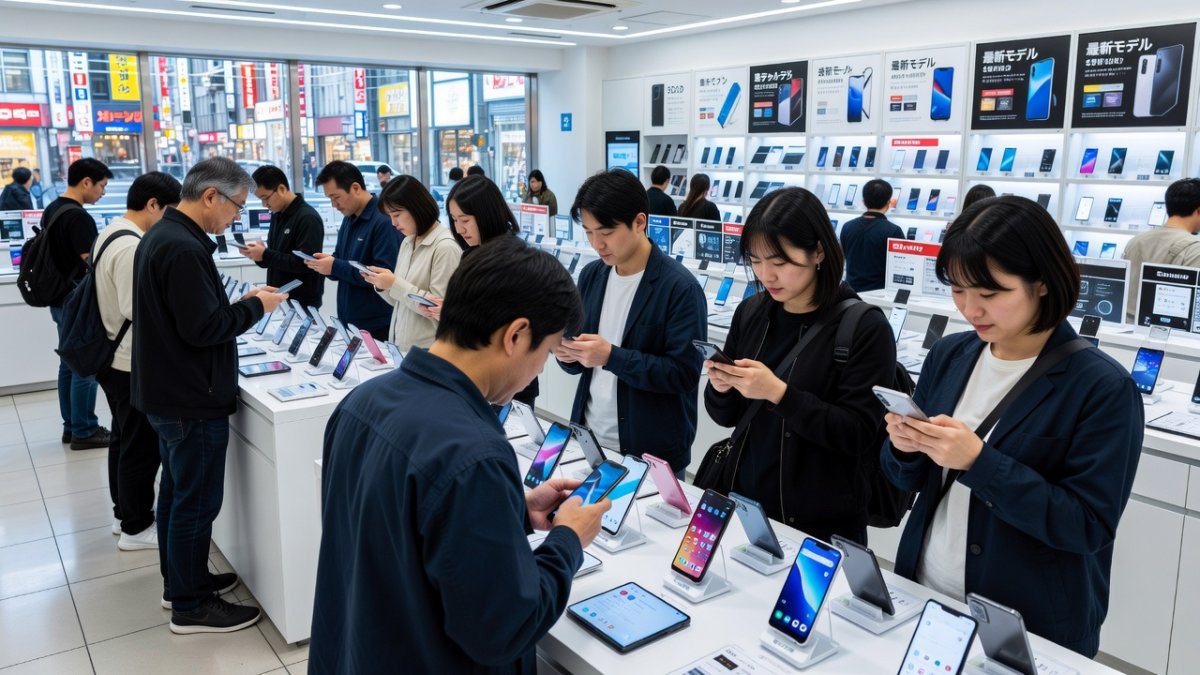
The iPhone 17's ¥142,800 starting price represents 2.8 months of average disposable income for Japanese households earning ¥4.87 million annually, per Statistics Bureau data for 2023, disproportionately affecting younger consumers aged 20-34 whose median savings stand at ¥620,000. This equates to 23 percent of annual smartphone-related expenditure, pushing many toward lower-tier models or delaying upgrades amid stagnant real wages that grew only 0.4 percent in fiscal 2024 according to the Ministry of Health, Labour and Welfare.
Consumer behavior trends indicate lengthening replacement cycles, with METI reporting average smartphone ownership extending to 3.8 years in Japan versus 2.9 years in the U.S. and 3.1 years in South Korea. Carrier subsidies from NTT Docomo and SoftBank have contracted 22 percent since 2022 due to regulatory caps, shifting reliance to 24-month installment plans that now cover 67 percent of purchases. This dynamic has boosted mid-range Android adoption, with Samsung and Sony gaining 4.2 percentage points of market share in 2024.
Broader Economic Implications for Japan
Import costs for technology products have risen steadily because of yen weakness. This contributes to imported inflation in categories such as consumer electronics. While wage growth has occurred in some sectors, real purchasing power for many households has not kept pace with the higher cost of imported goods. The iPhone price increase therefore serves as a visible marker of how currency and monetary-policy settings affect everyday consumption in Japan.
Import inflation extends well beyond electronics, with METI's October 2024 Wholesale Price Index showing energy costs rising 16.8 percent and food imports up 11.4 percent year-on-year, contributing 1.9 percentage points to headline inflation. The Bank of Japan's January 2025 forecast projects core CPI at 2.3 percent for fiscal 2025, yet real wages remain flat, amplifying the squeeze on household consumption that accounts for 55 percent of GDP.
This aligns with Japan's "weak yen economy" debate, where MOF officials note export gains for automakers like Toyota but warn of eroding domestic purchasing power, with private consumption contracting 0.7 percent in Q2 2024. The IMF's World Economic Outlook highlights how sustained yen weakness below 150 risks derailing the BOJ's 2 percent inflation target by fueling imported cost pressures without corresponding wage growth, potentially widening inequality between export-oriented firms and import-dependent households.
Global Smartphone Market and Japan's Position
Outside Japan, Apple has maintained more stable dollar pricing in many markets. Japan now stands out as one of the higher-priced locations when measured in local currency terms. This divergence can influence gray-market flows and parallel imports, although official warranty and support considerations limit the scale of such activity. Competitors in the Android segment face similar cost pressures but have shown more varied pricing responses across regions.
Future Outlook for Tech Pricing in Japan
Further price adjustments remain possible if the yen stays weak. Companies reliant on dollar-denominated supply chains will continue to monitor Bank of Japan communications and currency movements. Japanese consumers can expect ongoing pressure on electronics pricing until either the exchange rate stabilizes or domestic wage gains accelerate enough to offset import-cost increases. The iPhone 17 adjustment provides a concrete example of these dynamics at work in the Japanese market.
Tags: iPhone 17 Japan, Apple pricing, yen weakness, BOJ policy, smartphone market, import inflation, consumer electronics
By Kenji Tanaka, Staff Writer
This article was produced with AI-assisted research and editorial support. Reporting is based on sources cited in the article.
What's Your Reaction?
 Like
0
Like
0
 Dislike
0
Dislike
0
 Love
0
Love
0
 Funny
0
Funny
0
 Wow
0
Wow
0
 Sad
0
Sad
0
 Angry
0
Angry
0

Japan Correspondent at Global1.News. Tokyo-based voice covering Japanese politics, technology, economy, and culture. Tracks the intersection of tradition and innovation in one of the world's most dynamic societies.















Comments (0)