
Trump Threatens Iran's Pickaxe Mountain Nuclear Facility
The i24NEWS English report on Iran's Pickaxe Mountain used satellite imagery and Donald Trump's recent statements to frame the underground site as a potential next target in the ongoing US-Iran conflict. The coverage examined construction activity and placed the remarks in the context of strikes that began in February 2025, offering Israeli security planners in Jerusalem and Tel Aviv an early look at emerging threats.
The i24NEWS English report on Iran's Pickaxe Mountain used satellite imagery and Donald Trump's recent statements to frame the underground site as a potential next target in the ongoing US-Iran conflict. The coverage examined construction activity and placed the remarks in the context of strikes that began in February 2025, offering Israeli security planners in Jerusalem and Tel Aviv an early look at emerging threats. This analysis now serves as a springboard for deeper examination of the facility's implications.
Trump Threatens Iran's Pickaxe Mountain Nuclear Facility
Jerusalem, Israel — Israeli officials are closely monitoring fresh US signals that could reshape the trajectory of the confrontation with Iran.
Trump's Direct Threat Against the Facility
Donald Trump stated in the July 13 radio interview with Hugh Hewitt that Pickaxe Mountain "is a possible target for a nice, big, fat shot right in the front door." He added that the United States would take out the site and instructed that the Iranians be informed in advance of any strike. These remarks came during the 60-day preliminary agreement period for nuclear talks, which Trump described as a test that did not mean much.
CENTCOM announced a third consecutive night of strikes against Iran at the commander in chief's direction following the interview. The statements referenced the facility's location 1.6 km south of Natanz in the Zagros Mountains. No immediate response from the Iranian government was detailed in the available facts, but the comments aligned with prior US and Israeli strikes on Natanz, Fordow, and Isfahan in June 2025.
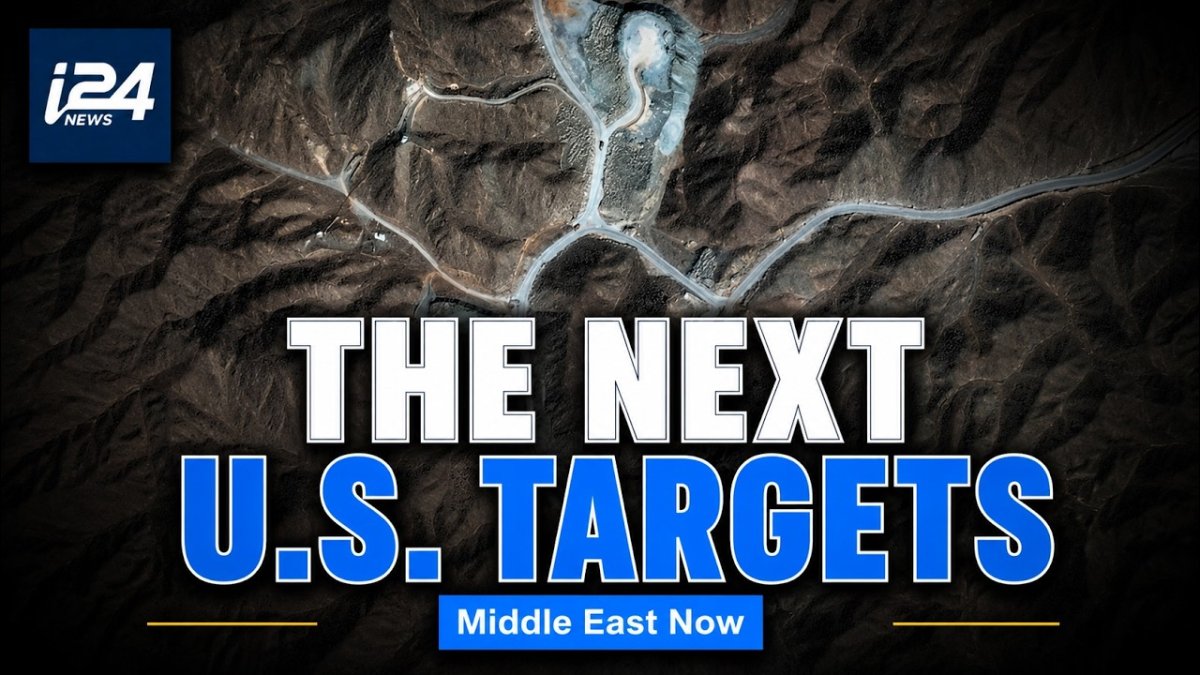
Physical Characteristics of Pickaxe Mountain
Pickaxe Mountain, known as Kūh-e Kolang Gaz Lā, is an underground nuclear facility where construction began around 2020. Iran officially describes the site as a centrifuge assembly plant. The Washington-based Institute for Science and International Security reported on July 2 that satellite imagery from late June shows ongoing construction and hardening of tunnel entrances.
The facility has at least four tunnel entrances and is reportedly deeper and more expansive than Fordow. The IAEA has not been permitted to inspect the site since Iran limited access to only low-risk locations such as the Tehran Research Reactor and Bushehr following the June 2025 strikes. The Mossad obtained Iran's nuclear archive in 2018, which provided detailed knowledge of Fordow's internal structure but far less public information on Pickaxe Mountain.
Military Challenges in Targeting the Site
Because the facility is buried deep within the mountain, experts question whether US bunker-buster bombs alone can destroy it. The site lies approximately 1.6 km south of Natanz, which was struck in June 2025 while Pickaxe Mountain itself was not hit. Satellite imagery reviewed by the Institute for Science and International Security confirms continued hardening work at the tunnel entrances through late June.
The GBU-57 Massive Ordnance Penetrator, weighing 30,000 pounds and capable of penetrating up to 200 feet of reinforced concrete, represents the primary U.S. tool for hardened targets, yet Pickaxe Mountain's estimated depth and multiple blast doors exceed even the challenges posed by Iran's Fordow facility near Qom. Israeli Air Force planners note that the F-35I Adir's custom Israeli avionics and standoff munitions offer limited penetration against such geology, requiring either repeated sorties or reliance on American B-2 Spirit bombers for initial strikes. Comparisons to Fordow reveal Pickaxe Mountain's added complexity through dispersed tunnel entrances and potential mobile air defenses, making single-mission success improbable without extensive suppression of enemy air defenses.
Israel maintains its own long-range strike capabilities, including F-35I Adir squadrons, yet the depth and expansion of Pickaxe Mountain present distinct operational questions compared with earlier targets. The US-Iran war that opened on February 28, 2025, has already demonstrated the limits of certain munitions against hardened underground locations. In recent days, Israeli analysts have modeled scenarios where F-35I Adir formations would need to integrate with U.S. electronic warfare assets to degrade Iranian radar coverage around the site. The mountain's unique topography, featuring steep approaches and limited loiter time for heavy bombers, amplifies risks of interception by Iran's S-300 and indigenous systems. This forces Israeli defense circles to weigh the trade-offs of independent action versus coordinated operations, highlighting persistent gaps in domestic bunker-buster inventories compared to American stockpiles.
Israeli Security Implications
Israel views Iran's nuclear program as an existential threat, and the Netanyahu government has closely coordinated with the Trump administration throughout the war. The Knesset is entering summer recess with elections approaching, placing additional pressure on security decisions made in Jerusalem. Any strike on Pickaxe Mountain would require assessment of how remaining Iranian capabilities could affect Israeli population centers.
Israeli defense planners have intensified assessments this week following Trump's explicit warning, with IDF officials prioritizing upgrades to the Arrow-3 and David's Sling systems to counter potential Iranian ballistic missile salvos. Mossad assessments shared in closed Knesset sessions highlight that Pickaxe Mountain's location deepens Tehran's redundancy against preemptive strikes, forcing Israel to recalibrate its multi-front doctrine that already stretches resources across Gaza, Lebanon, and the West Bank. Lawmakers from both coalition and opposition benches have pressed for accelerated procurement of additional F-35I squadrons and precision munitions stockpiles, reflecting concerns that any U.S. action could trigger Hezbollah rocket barrages exceeding 100,000 projectiles.
The Mossad's 2018 acquisition of the nuclear archive gave Israel detailed internal knowledge of Fordow but limited comparable data on Pickaxe Mountain. This information gap affects planning by the IDF and Shin Bet for potential follow-on operations. Coordination between the Prime Minister's Office and US Central Command remains central to Israeli assessments of strike feasibility. These developments directly shape Israel's defense planning by emphasizing layered deterrence and rapid mobilization drills conducted in recent days across northern bases. Senior IDF commanders now factor in the risk of Iranian proxy activation from Syria and Iraq, prompting expanded intelligence-sharing protocols with the United States that include real-time satellite feeds on mountain tunnel networks. Knesset defense committee members have also debated reserve call-up thresholds, underscoring how the threat elevates the urgency of maintaining qualitative military edges amid Iran's advancing enrichment timelines.
Regional Dynamics and Expanded Conflict
Iran has been launching drone and missile attacks against Jordan while claiming to have targeted vessels in the Strait of Hormuz. These actions have drawn in Gulf states and affected maritime security routes critical to regional energy flows. Morocco recently signed on to a regional Stabilization Force for Gaza, illustrating how the conflict has influenced diplomatic alignments beyond the immediate US-Iran exchanges.
Jordan's airspace has emerged as a critical corridor this week, with Amman quietly coordinating deconfliction measures to avoid spillover from any U.S. or Israeli overflights while managing domestic protests over potential Iranian retaliation. The Strait of Hormuz faces heightened Iranian naval activity, including Revolutionary Guard speedboat patrols that could disrupt 20 percent of global oil transit and spike energy prices across Gulf economies. Saudi Arabia and the UAE have issued measured statements urging de-escalation while quietly bolstering their own Patriot and THAAD defenses, wary of Iranian missile barrages similar to those launched in prior proxy exchanges.
The war that began February 28, 2025, with US and Israeli strikes against Iranian nuclear sites has produced ripple effects on crossings and supply lines involving the West Bank and Gaza. The Foreign Ministry in Jerusalem continues to track how Iranian actions in the Strait of Hormuz could alter Israeli shipping and energy security calculations. Morocco's commitment to a Stabilization Force adds another layer, with Rabat offering logistical support for potential multinational monitoring missions amid rising tensions. Iran's ongoing drone and missile campaign, demonstrated through recent proxy attacks via Houthis and Hezbollah, has already forced Israel to expand its multi-layered air defenses and accelerate integration of new early-warning radars. This broader environment compels Israeli strategists to anticipate sustained low-intensity conflict across multiple fronts, where Iranian asymmetric capabilities could strain resources even if the Pickaxe Mountain site remains intact.
Next Steps in the US-Iran Confrontation
Trump downplayed the 60-day preliminary nuclear talks, stating they constituted a test that did not mean much. CENTCOM's third consecutive night of strikes at the commander in chief's direction indicates sustained operational tempo. The IAEA's restricted access to all but low-risk sites such as Bushehr leaves verification gaps that Israeli officials in the Prime Minister's Office monitor closely.
Pickaxe Mountain was not targeted in the June 2025 strikes on Natanz, Fordow, and Isfahan, leaving its four tunnel entrances and deeper construction intact according to late June satellite imagery. Future decisions by the Trump administration will determine whether additional US or coordinated Israeli assets are directed at the Zagros Mountains location. The Netanyahu government continues to evaluate how any such action would intersect with approaching Knesset elections and ongoing threats from Iranian proxies.
The combination of hardened tunnel entrances, limited IAEA inspections, and Iran's recent drone activity against Jordan creates a narrow window for Israeli and US planners. Officials in Tel Aviv and Jerusalem assess that unresolved questions about the site's depth could require specialized munitions or repeated strikes. These factors directly influence daily security posture along Israel's northern and eastern borders.
By Hannah Berg, Staff WriterThis article was produced with AI-assisted research and editorial support. Reporting is based on sources cited in the article.
What's Your Reaction?
 Like
0
Like
0
 Dislike
0
Dislike
0
 Love
0
Love
0
 Funny
0
Funny
0
 Wow
0
Wow
0
 Sad
0
Sad
0
 Angry
0
Angry
0

Israel Correspondent at Global1.News. Based in Tel Aviv, covering Israeli politics, security, technology, and society. Provides balanced, deeply-sourced reporting on one of the most closely-watched regions in the world.














Comments (0)