
Nairobi Fashion Week 2026: Kenyan Designers Lead Africa's Sustainable Fashion Revolution
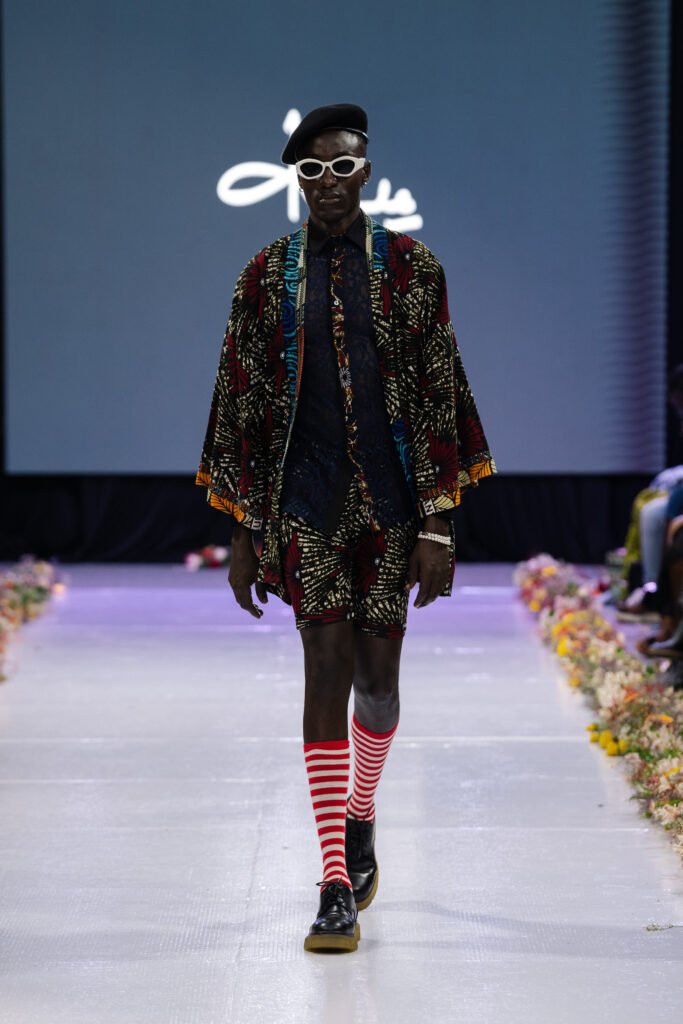
Nairobi Fashion Week returned for its eighth season in late January 2026, transforming Kenya's capital into a living laboratory for the future of African fashion. Under the uncompromising banner "Decarbonize," the four-day event at the Sarit Expo Centre in Westlands didn't just showcase beautiful garments — it made a declaration that African fashion is ready to lead the world on sustainability, craftsmanship, and cultural storytelling.
Nairobi Fashion Week returned for its eighth season in late January 2026, transforming Kenya's capital into a living laboratory for the future of African fashion. Under the uncompromising banner "Decarbonize," the four-day event at the Sarit Expo Centre in Westlands didn't just showcase beautiful garments — it made a declaration that African fashion is ready to lead the world on sustainability, craftsmanship, and cultural storytelling.
Nairobi Fashion Week 2026: Kenyan Designers Lead Africa's Sustainable Fashion Revolution
Nairobi, Kenya — From January 28 to 31, Nairobi Fashion Week Season VIII brought together over a dozen designers from across Africa and the world under a singular mission: to prove that fashion can be luxurious, culturally rooted, and climate-conscious all at once. The event was more than a runway spectacle — it was a strategic conversation about the future of an industry in flux.
The Decarbonize Mandate: Fashion as Climate Activism
Nairobi Fashion Week Season VIII ran January 28-31, 2026 at the Sarit Expo Centre in Westlands, Nairobi, under the theme DECARBONIZE, which focused on sustainability, circular fashion, and ethical production. The mandate positioned the Kenyan capital as a serious contender in the global conversation about reducing fashion's environmental footprint, moving beyond surface-level aesthetics to demand real accountability from makers and buyers alike.
Approximately 13 designers participated, with nine Kenyan and four international, proving that Nairobi could host a focused platform without relying on volume alone. This deliberate scale allowed the event to contrast sharply with fast fashion's extractive model, where garments are produced cheaply, worn briefly, and discarded without regard for the communities or ecosystems left behind.
The opening launch took place at Matteo's in Karen, setting a grounded tone before the main shows moved to the Sarit Expo Centre. Attendees gathered in an intimate setting that reflected Nairobi's blend of urban sophistication and community warmth, where conversations about materials and supply chains felt as central as the clothing itself.
Thread Talks at The Social House brought together representatives from UNEP, Gatsby Africa, and the Kenya Fashion Council to examine how policy and industry practice could align. These sessions highlighted the practical barriers Kenyan designers face when trying to scale ethical production, from access to certified organic fibers to reliable local dyeing infrastructure.
Masterclasses powered by Anansi gave emerging talents hands-on instruction in low-impact techniques, from natural indigo dyeing to zero-waste pattern cutting. Creative Director Brian Kihindas stated that Decarbonize challenges designers and audiences to think about how fashion impacts the planet, framing sustainability as systems thinking rather than a seasonal aesthetic choice.
Kenya's second-hand clothing trade, valued at $233 million in 2025, underscored the urgency of the theme. While the trade provides affordable clothing, it also floods local markets with garments that often cannot be repaired or recycled, prompting designers at the event to demonstrate viable alternatives through upcycled materials and reworked denim.
John Kaveke: Where Maasai Heritage Meets Japanese Precision
John Kaveke stood as the evening's gravitational centre, presenting a collection that treated Maasai heritage and Japanese precision as equal partners rather than exotic references. His garments featured structured silhouettes that honored the geometric patterns of Maasai shuka cloth while incorporating the clean lines and meticulous finishing associated with Japanese tailoring traditions.
The designs remained architectural yet deeply human, with layered wraps that allowed movement and breathability suited to Nairobi's climate. Kaveke translated tradition into an intercontinental language without diluting its origins, showing that African designers can reference their own heritage without apology or external validation.
Each piece balanced bold color blocking with restrained detailing, proving that cultural specificity strengthens rather than limits global appeal. Viewers saw how beadwork and leatherwork could sit alongside precise seam lines, creating garments that felt both rooted in Kenyan pastoral life and ready for international runways.
This approach carried broader significance for African fashion. When designers like Kaveke draw directly from their communities, they reject the notion that African aesthetics require Western translation to be taken seriously. The collection demonstrated quiet confidence in local knowledge systems.
His work also highlighted the technical skill required to merge two distinct craft traditions. The result was clothing that honored both the nomadic resilience of Maasai culture and the disciplined minimalism of Japanese design, without forcing either into caricature.
Wanni Fuga and the New African Sophisticate
Nigeria's Wanni Fuga delivered a masterclass in controlled power through sculptural silhouettes and impeccable tailoring. Her garments emphasized clean volumes and precise cuts that conveyed authority without excess ornamentation, offering a vision of modern African elegance that felt globally fluent and quietly authoritative.
The collection avoided loud prints in favor of textured fabrics and thoughtful construction, allowing the wearer's presence to take precedence. This restraint marked a maturing of Nigerian design on the international stage, where subtlety now competes with spectacle.
Wanni Fuga's presence at Nairobi Fashion Week signaled the growing cross-border exchange among African fashion capitals. Nigerian designers have secured attention in Paris and New York, yet events like this one allow them to connect directly with East African audiences and supply chains.
Her tailoring techniques drew on both local Nigerian craftsmanship and international standards, resulting in pieces that could move seamlessly from Lagos boardrooms to Nairobi cultural events. The work illustrated how African fashion gains global attention by refining rather than abandoning its distinctive voice.
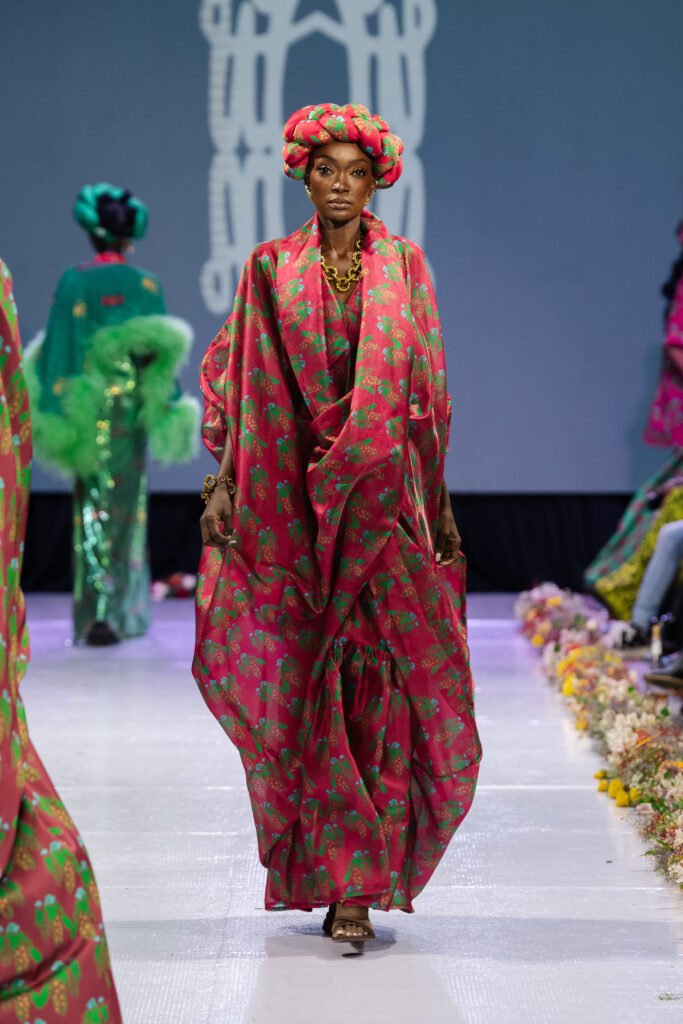
Viewers left with a clearer sense that the new African sophisticate dresses with intention, choosing garments that carry cultural weight while meeting the practical demands of contemporary professional life across the continent.
Upcycled Denim to Bogolan Textiles: The Diversity of Sustainable Design
Rialto by Lucy Rao elevated upcycled denim to disciplined couture level, transforming discarded jeans into structured jackets and tailored trousers that retained the fabric's inherent durability while achieving refined finishes. Kenyan designers increasingly use upcycled materials, reworked denim, patchwork, and raw finishes to create garments that tell stories of resourcefulness.
Naaniya, the French-born designer of Malian descent, layered Bogolan textiles into contemporary European silhouettes, demonstrating how traditional Malian mud cloth can anchor modern tailoring without losing its cultural resonance. The collection respected the textile's origins while adapting it for urban wearers in multiple climates.
Yevaana presented cotton, linen, and hemp garments that embodied tactile environmentalism, with natural textures and minimal processing that invited wearers to feel the material's connection to the land. These pieces prioritized longevity over trend cycles, aligning with slow fashion principles.
ACI NOD, the American streetwear label, injected urban cadence through functional pieces that incorporated recycled elements without sacrificing the energy of city life. Afro Street Kollektions captured the pulse of contemporary African city life with garments that blended local street aesthetics and sustainable construction methods.
The range of approaches proved that sustainable design is not a single look but a spectrum of choices. From high-end denim tailoring to streetwear and textile-driven silhouettes, each designer showed that environmental responsibility can support distinct creative identities.
Kenya's Fashion Economy: From Runway to Industry
Vivo Fashion Group projected KSh 1 billion or more in revenue for 2026 while operating 27 stores across Kenya, Uganda, and Rwanda. This commercial scale illustrated how runway creativity can translate into retail infrastructure when supported by consistent production and distribution networks.
The event underscored the need for policy recognition of fashion as a strategic economic sector rather than a cultural sideshow. Without targeted support for local manufacturing, designers risk remaining dependent on imported fabrics and overseas production even when their ideas originate in Kenya.
Kenya's second-hand clothing trade, valued at $233 million in 2025, continues to shape consumer habits and local industry capacity. Designers at the week called for investment in domestic production capabilities that could eventually reduce reliance on imported used garments while creating skilled jobs.
The persistent gap between runway creativity and scalable manufacturing remains a central challenge. Many collections demonstrated technical excellence, yet few had immediate pathways to the volume required for national retail chains or export markets.
Africa Sourcing & Fashion Week Nairobi 2026, scheduled for late April to early May at the same venue, will focus on supply chain connections that could help close this gap. The economic potential of fashion as infrastructure depends on linking creative platforms with sourcing, training, and financing systems.
What Nairobi Fashion Week Means for African Fashion's Future
Now in its eighth season, Nairobi Fashion Week has established itself as East Africa's leading fashion platform, providing consistent visibility for designers who might otherwise struggle to reach international buyers. The event's growth reflects Nairobi's emergence as a rising hub for sustainable fashion thinking on the continent.
Swahili coastal heritage motifs appeared throughout the shows, including coconut shell buttons and cowrie shell accents that connected inland designers with Kenya's maritime cultural history. These details reinforced the idea that sustainability includes preserving and adapting regional craft traditions.
Platforms like Nairobi Fashion Week play a vital role in supporting African designers by offering structured presentation opportunities and industry networking. Without such events, many talents would lack the exposure needed to attract investment or retail partnerships.
Cultural storytelling through fashion gained clarity at the event, as designers used garments to communicate values around land stewardship, community knowledge, and creative autonomy. This narrative strength distinguishes African fashion weeks from purely commercial formats elsewhere.
Compared with Lagos, Dakar, and Accra fashion weeks, Nairobi's edition distinguished itself through its explicit climate focus and integration of policy discussions. Each city contributes a different emphasis, yet together they form a continental network that strengthens the sector as a whole.
The road ahead for Kenya's fashion industry will require sustained coordination between designers, government agencies, and private investors. Nairobi Fashion Week has shown what is possible when creativity meets environmental responsibility; the next steps involve building the production systems that can carry those ideas into daily life across the region.
By Amara Diop, Staff Writer
This article was produced with AI-assisted research and editorial support. Reporting is based on sources cited in the article.
What's Your Reaction?
 Like
0
Like
0
 Dislike
0
Dislike
0
 Love
0
Love
0
 Funny
0
Funny
0
 Wow
0
Wow
0
 Sad
0
Sad
0
 Angry
0
Angry
0

West Africa/Sahel Correspondent at Global1.News. Dakar-based journalist covering politics, security, climate, and development across Francophone and Anglophone West Africa. Tells the stories of a region undergoing profound transformation.















Comments (0)