
Trump Presidency Reignites Founding Debate on Presidential Power as America Marks 250 Years
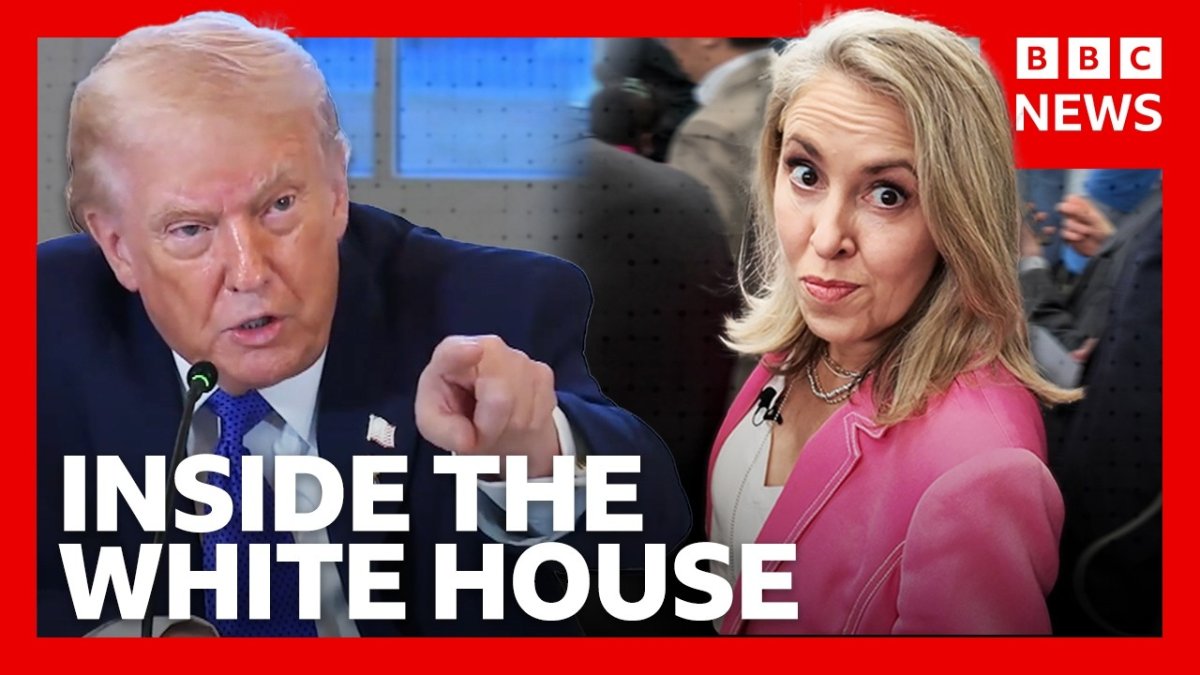
In a recent BBC News report, the BBC's North America Editor Sarah Smith takes viewers inside the Trump White House to examine the expanding scope of presidential power as America prepares to mark its 250th Independence Day — a milestone that has reignited the founding debate over how much power is too much for one person. Trump Presidency Reignites Founding Debate on Presidenti
In a recent BBC News report, the BBC's North America Editor Sarah Smith takes viewers inside the Trump White House to examine the expanding scope of presidential power as America prepares to mark its 250th Independence Day — a milestone that has reignited the founding debate over how much power is too much for one person.
Trump Presidency Reignites Founding Debate on Presidential Power as America Marks 250 Years
Washington, D.C. – 3 July 2026 — The United States is approaching the halfway point of Donald Trump's second term with a fundamental question hanging over the nation's 250th Independence Day celebrations: how much power is too much for one person to hold?
The 'No Limits' Presidency
Donald Trump recently told an interviewer that there are no limits to his power. He has assembled a cabinet whose members publicly praise him at every opportunity. The president has attacked world leaders who fall from favour and applied direct pressure on US corporations to align with his priorities. Approaching the halfway point of his second term, these actions have prompted widespread concern. Millions have joined No Kings protests across the United States and in other countries, carrying banners that read Democracy Not Monarchy and We Have a Constitution, Not a King.
Critics argue that President Trump is pushing the boundaries of executive authority further than any of his predecessors. He launched military operations against Iran without first obtaining congressional authorisation. Lawmakers were kept in the dark about the operation to seize Venezuelan President Nicolás Maduro. The administration invoked emergency powers to impose tariffs that bypassed normal legislative processes. The Supreme Court later ruled those tariffs unconstitutional, underscoring the tension between executive initiative and constitutional limits.
These developments occur against the backdrop of America's separation of powers, a system the founding fathers designed to prevent any single branch from dominating the others. The Constitution assigns Congress the power to declare war and regulate commerce, yet recent events have tested those boundaries in ways that echo long-standing debates over executive reach.
The clash between expansive executive power and constitutional separation of powers stems directly from the founding fathers' deliberate design of checks and balances. Having endured British monarchical rule, they structured the Constitution to fragment authority across three branches, ensuring Congress controls funding and war declarations, courts interpret statutes, and the executive implements laws. This framework aimed to block any single leader from consolidating unchecked dominance, preserving republican liberty through institutional restraint rather than personal prerogative.
Justice Department and the Separation of Powers
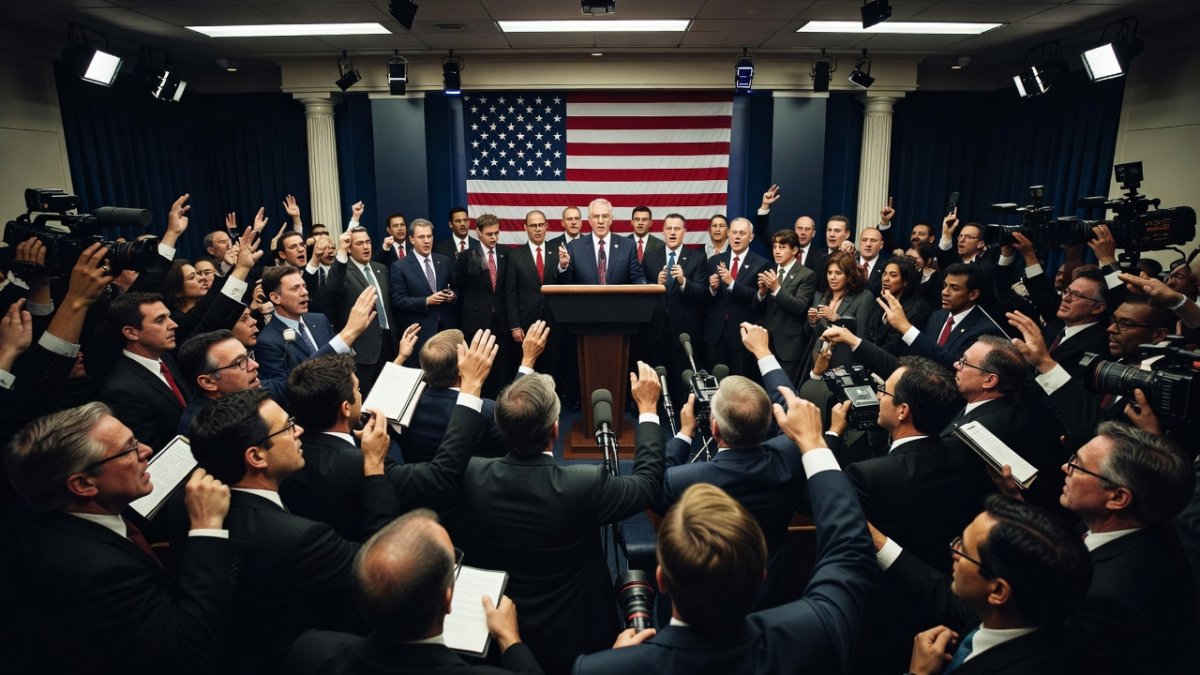
President Trump stands accused of directing the Department of Justice to investigate and prosecute individuals he views as adversaries, including former FBI Director James Comey. Observers note that such moves challenge the post-Watergate norm that sought to insulate federal prosecutors from direct White House influence. Current FBI Director Kash Patel has been central to these discussions as the bureau navigates its role in high-profile matters. President Trump has stated, I don't feel like a king. I have to go through hell to get things approved.
The president campaigned on promises of sweeping change in immigration, trade, and foreign alliances. Many voters who supported him over his predecessor anticipated significant departures from prior policies. The central question remains whether these transformations remain within the constitutional framework or whether they strain the institutional guardrails established in 1787.
Defenders of the administration maintain that vigorous use of executive authority is necessary to deliver on electoral mandates. They point to the president's electoral victory as evidence that the public endorsed a more assertive approach to governance.
Post-Watergate norms established prosecutorial independence to shield the Justice Department from political interference following Nixon-era abuses. This tradition underscored the importance of impartial enforcement of law, shielding investigations from White House direction to sustain public confidence in the rule of law and prevent the criminal justice system from serving partisan ends.
America's 250th Birthday — A Nation Divided
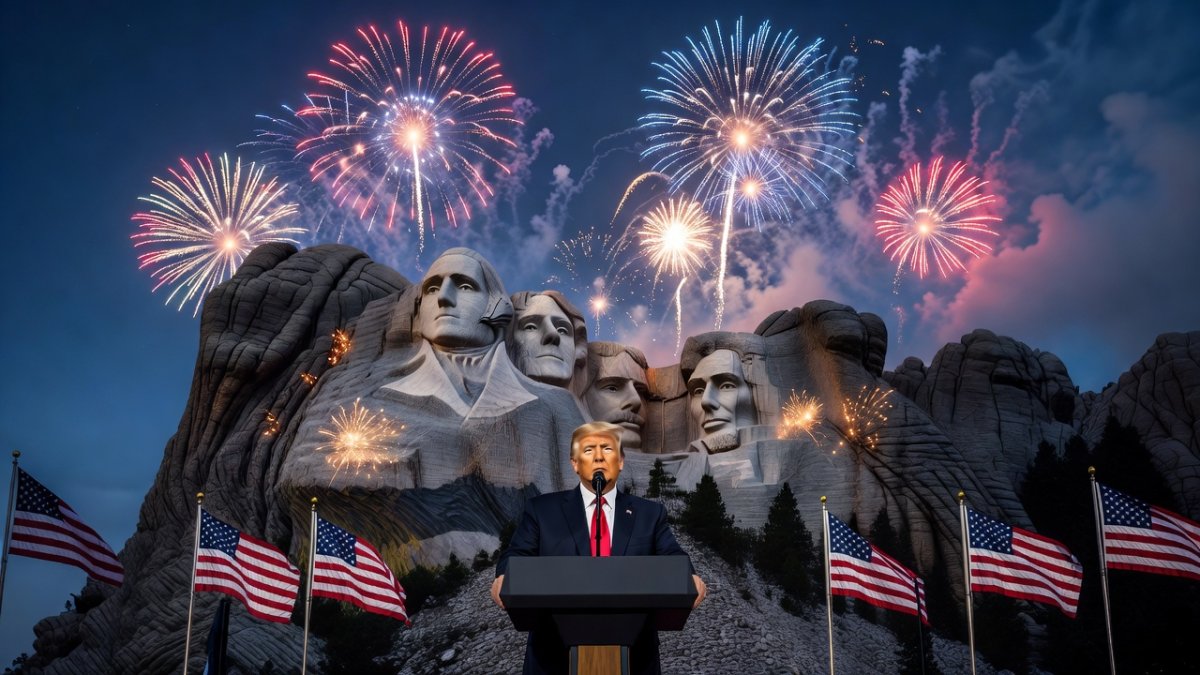
The United States marks its 250th Independence Day this week with events planned across the country. Congress allocated $150 million for official celebrations. President Trump established his own organising body, Freedom 250, to run parallel to the bipartisan America250 commission. On Friday, the president spoke at Mount Rushmore in South Dakota during the first fireworks display there in six years. Fox News host Sean Hannity participated in related programming. On July 4, President Trump will deliver remarks on the National Mall amid a severe heatwave, describing the event as the Greatest Rally, EVER!
A 16-day state fair showcasing all 56 states and territories has been underway on the National Mall since June 25. Several musicians withdrew from scheduled performances, and the president cancelled additional planned acts. A UFC event took place on the White House lawn, the first professional sporting event held at the presidential residence. Dana White, the UFC president, oversaw the card in which Justin Gaethje defeated Ilia Topuria. The FBI thwarted an alleged plot targeting the event and arrested eight individuals.
These festivities unfold while fundamental questions about the balance of power remain unresolved. The founding fathers worried that concentrated authority could undermine republican government, with some delegates at the Constitutional Convention favouring an executive committee rather than a single president.
International reactions to the anniversary have highlighted concerns over its politicisation. European allies see the parallel events as evidence of deepening domestic divisions that may weaken transatlantic coordination. Asian partners worry that visible fractures during the milestone could erode perceptions of American stability, complicating efforts to maintain unified alliances against shared global challenges.
Polling and Public Opinion
Four in five Republicans continue to approve of President Trump's job performance, according to YouGov polling. Among all American voters, however, his approval rating has fallen below 40 percent, a notable decline from the beginning of his second term. Aggregators such as RealClearPolitics and Ballotpedia place the president's standing between 35 and 40 percent as of this week.
The No Kings movement, which originated on Reddit under the hashtag #50501, has coordinated multiple rounds of nationwide demonstrations. Organisers have scheduled another protest for July 4 to coincide with official Independence Day events, presenting the day as an occasion to defend democratic norms against perceived overreach.
Public division over presidential power reflects deeper disagreements about the proper scope of executive action in a constitutional republic. These divisions are likely to shape both the remainder of the current term and future contests for control of Congress and the White House.
Demographic splits show pronounced differences. Urban residents and college-educated voters register approval ratings often below 30 percent, while rural constituencies remain strongly supportive. Younger cohorts, including millennials and Generation Z, display notably lower support than older age groups, underscoring generational variances in attitudes toward executive authority.
Historical Perspectives — The Power Debate
Julian Zelizer, professor of history and public affairs at Princeton University, stated that he could not think of another president who has gone quite so far, who is as enamoured with power. Professor Zelizer referenced Franklin D. Roosevelt and Richard Nixon as earlier chief executives who sought to enlarge executive authority, yet he concluded that none matched the current scale.
Joshua Treviño, senior director at the America First Policy Institute, cautioned against equating President Trump's public style with an actual expansion of the office. It is easy to confuse the aesthetic with the substance with President Trump, Treviño said. He argued that the president is not engaged in actions that are qualitatively unique compared with those of his predecessors.
These contrasting assessments illustrate the ongoing contest over how to interpret executive conduct within America's constitutional tradition. Both perspectives draw on historical precedent while reaching different conclusions about present-day implications.
Trump's assertive style recalls Andrew Jackson's 19th-century broadening of presidential authority, including defiance of judicial rulings and expansive use of the veto. Jackson's approach centralized influence over appointments and policy, foreshadowing contemporary tensions even as the constitutional architecture has adapted across two centuries.
Analysis — What This Means for American Democracy
The 250th anniversary of the Declaration of Independence has become a Rorschach test for Americans. Supporters of President Trump see the celebrations as an affirmation of national pride and a rebuke to elite institutions. Critics view the moment as a warning that constitutional safeguards against monarchical rule face unprecedented strain. The founding fathers' concerns about concentrated power have resurfaced with renewed intensity this week.
The consequences extend beyond domestic politics. America's standing with allies, its treaty commitments, and the stability of the international system are all connected to questions of presidential authority. European and Asian partners observe Washington's internal debates closely as they assess the reliability of future US policy.
Ultimately, the resolution of these tensions will depend on the interplay among the three branches of government, the courts, and an electorate that remains sharply divided. The institutions created in 1787 continue to be tested by contemporary assertions of executive power.
Russia and China may interpret ongoing institutional strains as indicators of American vulnerability, leveraging them to question U.S. global credibility. Such perceptions risk diminishing America's soft power by portraying democratic governance as fragile, thereby weakening its influence in multilateral settings where institutional resilience has long served as a diplomatic asset.
By Irina Volkov, Staff Writer
This article was produced with AI-assisted research and editorial support. Reporting is based on sources cited in the article.
What's Your Reaction?
 Like
0
Like
0
 Dislike
0
Dislike
0
 Love
0
Love
0
 Funny
0
Funny
0
 Wow
0
Wow
0
 Sad
0
Sad
0
 Angry
0
Angry
0
Russia/Eastern Europe Correspondent at Global1.News. Covering Russian politics, energy, security, and the shifting dynamics of the post-Soviet space. Provides clear-eyed analysis on one of the world's most opaque regions.











Comments (0)