
Iran's Strategic Ambiguity: The Two-Month Nuclear Window and Regional Risks
Iran's Strategic Ambiguity Shapes Nuclear Talks and Regional Tensions Iran's interim nuclear deal with the US pushes talks into a two-month window, reflecting IRGC influence and raising risks of renewed confrontation involving Israel, Bahrain, Kuwait and Jordan. **Keywords:** Iran nuclear deal, IRGC gray zone doctrine, US Iran agreement 2026, Israel Iran strikes, Iran Iraq War
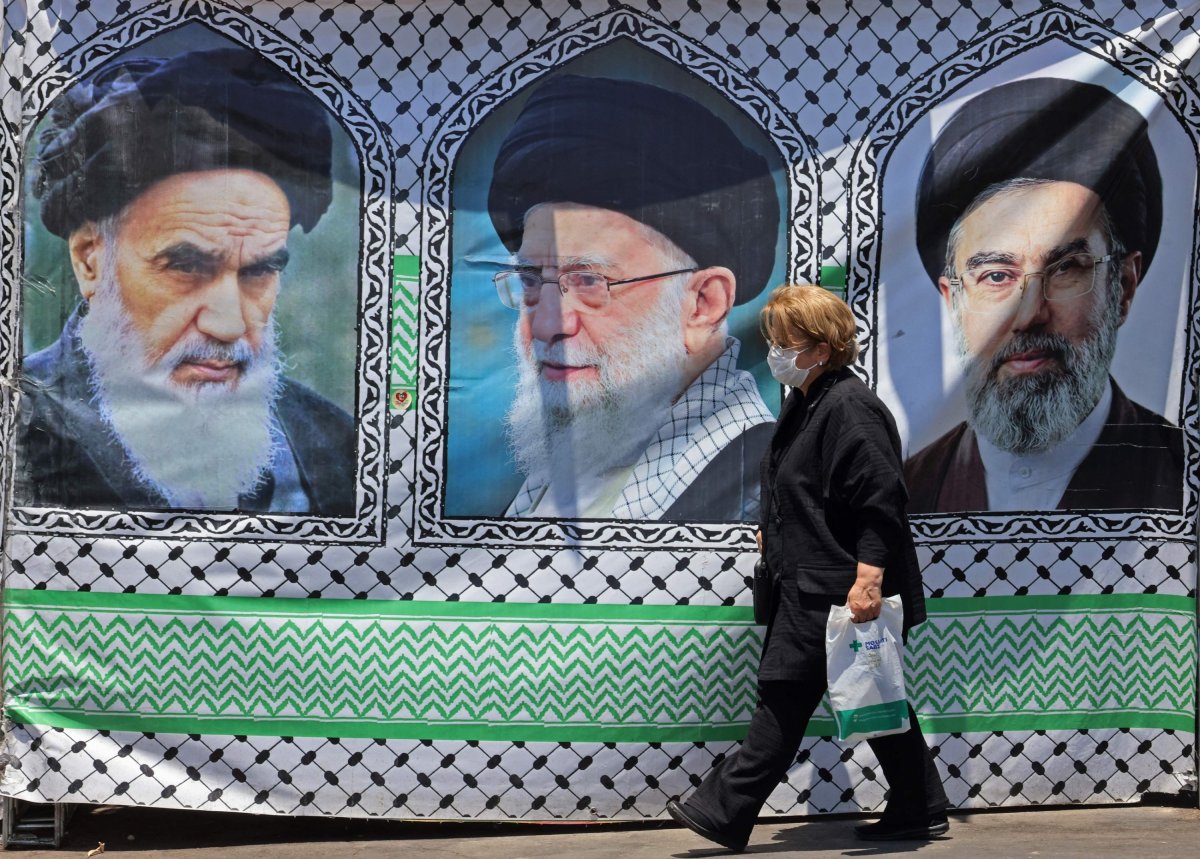
The June 2026 Interim Agreement and Its Two-Month Timeline
The agreement reached between Iran and the United States on June 14, 2026, calls for a ceasefire while deferring core nuclear questions to a two-month negotiation process. This structure was not incidental. It aligns with demands from the Islamic Revolutionary Guard Corps, which sought a temporary arrangement that leaves Iran's nuclear capabilities largely intact while preserving the existing balance of power. The timeline creates space for continued diplomatic engagement without immediate concessions on enrichment levels or inspection regimes.
Regional actors immediately recognized the implications. Israel viewed the delay as an opportunity for further pressure, while Gulf states such as Bahrain, Kuwait and Jordan assessed their exposure to potential Iranian retaliation. The arrangement reflects Tehran's preference for managed ambiguity over outright resolution.
Historical Foundations from the 1979 Revolution and Iran-Iraq War
Iran's security thinking traces directly to the 1979 Islamic Revolution and the subsequent Iran-Iraq War of 1980-1988. During that conflict, Iranian leaders faced international isolation and a technologically superior adversary. The experience produced a lasting doctrine of forward defense, in which territorial security depends on influence beyond Iran's borders rather than defensive lines alone.
This approach evolved into a network of political partnerships and allied non-state actors stretching from the Levant to the Gulf of Aden. The Islamic Revolutionary Guard Corps, particularly its Quds Force, became the central architect of these relationships. What began as a response to existential threat now functions as an externalized defense perimeter designed to keep conventional forces at a distance.
The February 2026 War and Cycle of Retaliation
The 2026 Iran war began on February 28 with US and Israeli strikes on Iranian nuclear, military and civilian sites. Iran responded by targeting US assets in Kuwait, Jordan and Bahrain. These exchanges brought the region close to wider confrontation and marked a shift from Iran's earlier pattern of strategic patience.
The timing of Iran's public retaliation was deliberate. Rather than reacting solely to battlefield events, Tehran used the moment to reshape the environment surrounding both its nuclear program and its regional influence. The involvement of Bahrain, Kuwait and Jordan underscored how proxy dynamics can quickly draw in multiple states.
The IRGC Gray-Zone Doctrine in Practice
The Islamic Revolutionary Guard Corps operates according to a consistent principle: neither total war nor total peace. Actions remain calibrated within a gray zone, staying just below the threshold that would trigger full-scale conventional conflict. This approach allows Iran to maintain deterrence without inviting overwhelming retaliation from the United States or Israel that could threaten regime stability or further damage its economy.
At the same time, Iranian leadership resists comprehensive settlements that would require dismantling missile programs or abandoning proxy networks. The gray-zone method preserves leverage for negotiations while sustaining credibility with regional allies. The two-month timeline embedded in the June 2026 agreement fits this pattern precisely, buying time without surrendering core capabilities.
Strategic Calculus and Leverage Calculations
Each party in the current standoff pursues distinct objectives. Iran seeks to retain nuclear ambiguity and proxy influence while avoiding economic collapse. The United States aims to prevent further escalation and secure verifiable limits on enrichment. Israel prioritizes preventing Iranian nuclear breakout and reducing threats from proxy forces.
Tehran's leverage rests on its ability to threaten energy routes and activate allied networks across multiple fronts. Washington and Jerusalem hold superior conventional military power but face domestic and alliance constraints on sustained operations. The two-month window allows Iran to test whether diplomatic engagement can yield sanctions relief without fundamental changes to its security architecture.
Regional Implications for Gulf States and Broader Dynamics
The interim agreement and its associated risks affect multiple regional relationships. Bahrain, Kuwait and Jordan must balance security cooperation with the United States against vulnerability to Iranian strikes. Gulf economic diversification efforts, including Saudi Arabia's Vision 2030, face added uncertainty from potential disruptions to energy markets.
Arab-Israeli normalization under the Abraham Accords continues amid these tensions, yet the proxy dimension complicates further progress. Sunni-Shia geopolitical competition remains a background factor, though Iran's strategy emphasizes state survival and forward defense more than sectarian mobilization alone. The coming two months will test whether the gray-zone approach can sustain Iran's position or whether renewed direct exchanges become unavoidable.
By Malik Hassan, Staff WriterThis article was produced with AI-assisted research and editorial support. Reporting is based on sources cited in the article.
What's Your Reaction?
 Like
0
Like
0
 Dislike
0
Dislike
0
 Love
0
Love
0
 Funny
0
Funny
0
 Wow
0
Wow
0
 Sad
0
Sad
0
 Angry
0
Angry
0

Middle East Correspondent at Global1.News. Based in Beirut, covering politics, conflict, energy, and society across the Middle East. Brings context and depth to a region often reduced to headlines.













Comments (0)