
Oil Prices Plunge and Markets Surge as US and Iran Reach Framework Peace Deal
In a recent BBC News report, oil prices tumbled more than five percent and global stock markets surged after the United States and Iran announced a framework peace deal to end the 106-day war and reopen the critical Strait of Hormuz shipping route. Oil Prices Plunge and Markets Surge as US and Iran Reach Framework Peace Deal London – 16 June 2026 — The Islamabad Memorandum of U
In a recent BBC News report, oil prices tumbled more than five percent and global stock markets surged after the United States and Iran announced a framework peace deal to end the 106-day war and reopen the critical Strait of Hormuz shipping route.
Oil Prices Plunge and Markets Surge as US and Iran Reach Framework Peace Deal
London – 16 June 2026 — The Islamabad Memorandum of Understanding has sent shockwaves through global energy markets, with Brent crude dropping more than five percent and Asian stock indices surging on expectations that the Strait of Hormuz will reopen to commercial shipping for the first time since late February.
The Collapse of Oil Prices and Market Surge
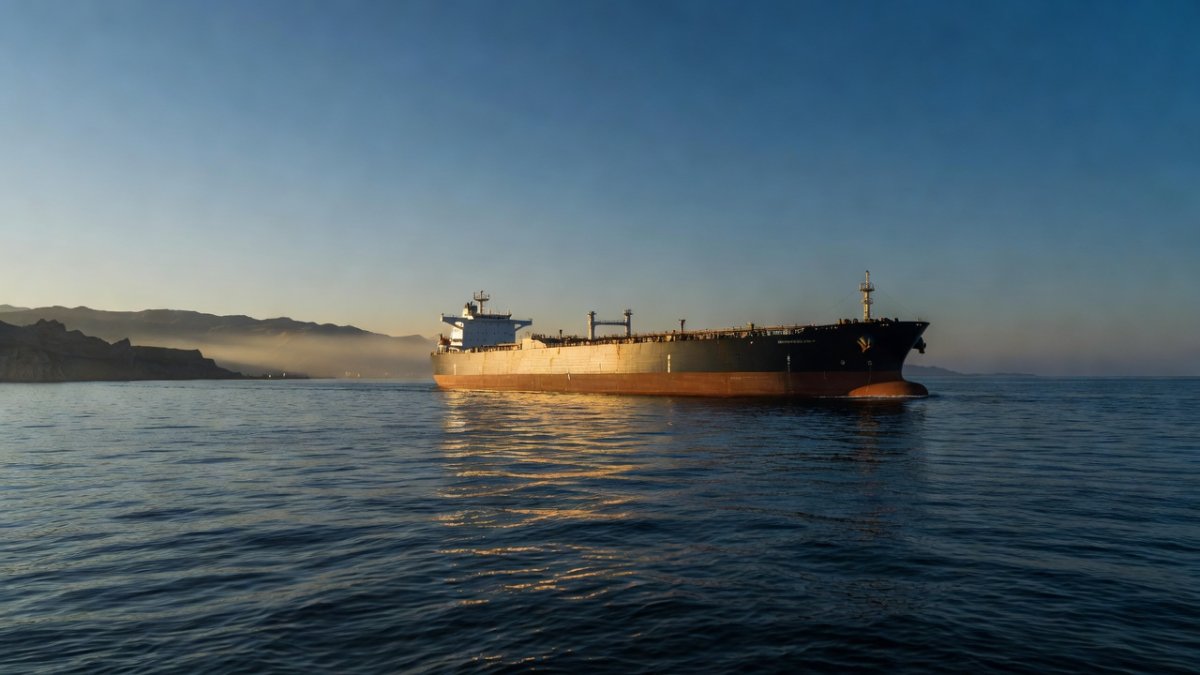
Global oil markets experienced their most dramatic single-day movement in months on Monday, as Brent crude tumbled more than five percent to $82.84 per barrel, reaching its lowest point since the early days of the Iran war in March. The decline followed President Donald Trump's announcement that a framework peace deal with Iran had been reached and digitally signed, with the critically important Strait of Hormuz — through which roughly twenty percent of the world's oil and liquefied natural gas normally transits — set to reopen following a formal signing ceremony scheduled for Friday in Geneva. Just last Thursday, Brent crude had been trading at $93 per barrel, meaning the market shed more than ten dollars in a matter of days. The speed and scale of the decline reflected how heavily the war had distorted global energy markets, with prices having peaked at approximately $120 per barrel in April — a near-doubling from pre-war levels of around $70.
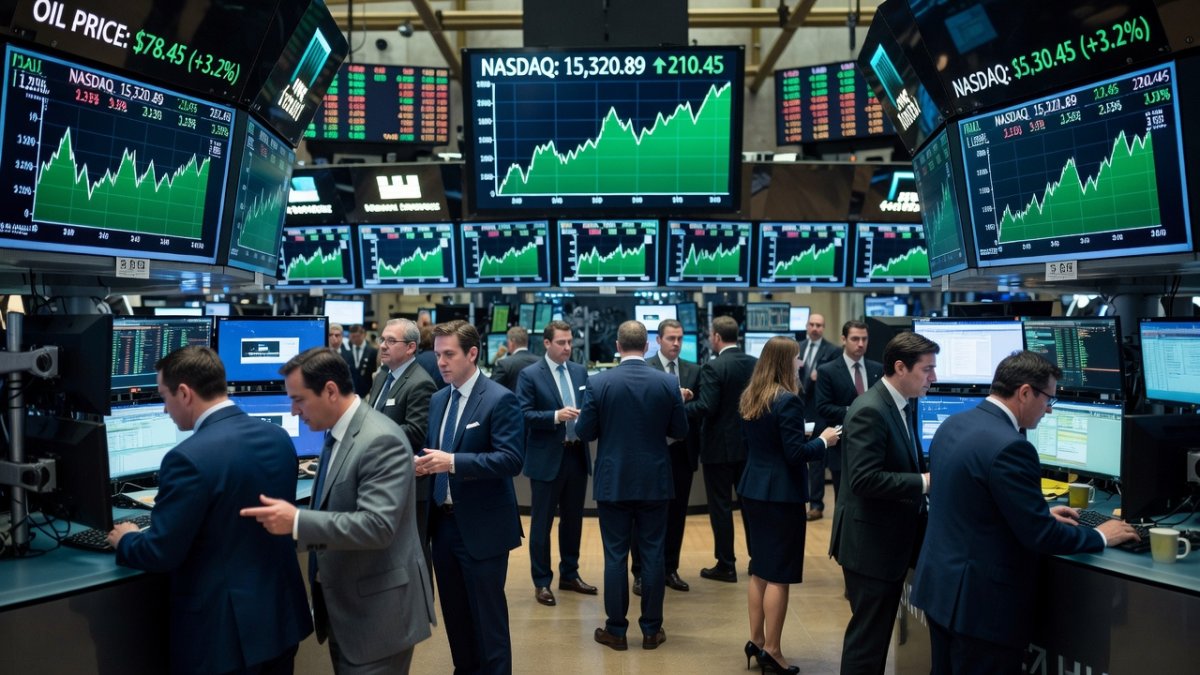
Stock markets across the world responded with equal intensity, though in the opposite direction. Japan's Nikkei 225 closed five percent higher, while South Korea's Kospi surged five point two percent. European indices also rallied, with Germany's Dax climbing one point two percent and France's Cac 40 adding zero point seven percent. Even Wall Street joined the upswing: the Dow Jones rose one percent, the S&P 500 gained one point six percent, and the tech-heavy Nasdaq added two point five percent. The only notable exception was London's FTSE 100, which slipped zero point four percent as shares in energy giants BP and Shell fell sharply on expectations of lower oil revenues. Matt Britzman, senior equity analyst at Hargreaves Lansdown, told the BBC the framework deal had "given investors a clear reason to dial back some of the geopolitical risk premium that has hung over markets."
The Islamabad Memorandum — What the Framework Deal Actually Contains
The agreement, formally known as the Islamabad Memorandum of Understanding, was drafted on 14 June after intensive negotiations brokered primarily by Pakistan, with Saudi Arabia, Turkey, and Qatar also facilitating the talks. Pakistani Prime Minister Shehbaz Sharif announced that the United States and Iran had reached agreement on final text to end the war on 12 June, and by Sunday the document had been digitally signed by both sides. US Vice President JD Vance and Iranian parliamentary speaker Mohammad Bagher Ghalibaf are listed as the signatories. The American negotiating team included special envoys Jared Kushner and Steve Witkoff, while Iran's team was led by Ghalibaf and Foreign Minister Abbas Araghchi.
According to VP Vance, the memorandum is roughly one and a half pages long — what he described as "a very general document." The framework provides for an end to military strikes, the reopening of the Strait of Hormuz to commercial shipping, the lifting of the US naval blockade on Iranian ports, and a sixty-day extension of the ceasefire. However, Vance acknowledged that the major unresolved issues — Iran's nuclear program, uranium stockpiles, sanctions relief, ballistic missile capabilities, and Tehran's network of armed proxies across the Middle East — were not included in this agreement and have been deferred to future talks expected to take place during the sixty-day ceasefire period.
Disputed Terms and Divergent Interpretations
Significant differences in interpretation have already surfaced between the parties. Iranian officials, including deputy foreign minister Kazem Gharibabadi speaking on state television, confirmed the framework while asserting that the United States had pledged immediate sanctions relief as part of the understanding. US representatives have denied any such commitment, stating that sanctions relief remains contingent on further negotiations. This divergence has created immediate friction, with Iranian state media emphasizing rapid economic relief while Washington insists the memorandum contains no binding language on sanctions.
President Donald Trump posted on Truth Social that "The Deal with the Islamic Republic of Iran is now complete. Let the oil flow!" signaling US authorization for the Strait of Hormuz to reopen after the 19 June signing in Geneva. Iranian statements have referred to the removal of any transit fees, while US comments have described the route as toll-free under the new arrangement. Israel, which was not a party to the agreement, has disputed provisions related to the Lebanon ceasefire, arguing that the framework does not adequately address Hezbollah's role. US military officials clarified that the naval blockade of Iranian ports will remain in place until the formal signing ceremony.
Vice President JD Vance noted that Iran could access a $300 billion reconstruction fund from Gulf states provided it complies with the framework terms. The absence of detailed language on these points has left analysts questioning how quickly any reopening can occur. The memorandum's brevity, described by Vance as roughly a page and a half, leaves substantial room for conflicting readings that will need clarification in the coming weeks.
Asian Markets and the Global Supply Chain Shock
Asian economies, which depend heavily on energy imports transiting the Strait of Hormuz, reacted sharply to the framework announcement. Japan's Nikkei 225 rose five percent and South Korea's Kospi gained five point two percent, reflecting relief that a major supply disruption could soon ease. The region imports the bulk of its oil and liquefied natural gas from Middle Eastern producers, making any change in Hormuz access a direct factor in industrial costs and inflation expectations.
European wholesale gas prices fell six percent on the same day, underscoring the interconnected nature of global energy flows. The 20 percent of world oil and LNG that normally passes through the strait directly affects refiners and utilities from Tokyo to Seoul. Reopening the route would reduce the risk premium that had pushed Brent crude from roughly $70 per barrel in February to peaks near $120 in April.
Supply chain managers across Asia now face revised calculations for shipping schedules and inventory levels. The framework's provision for a 60-day ceasefire extension offers a window during which commercial traffic could resume, though the lack of operational detail leaves uncertainty about exact timelines. Matt Britzman of Hargreaves Lansdown observed that investors have begun to reduce the geopolitical risk premium built into energy and equity prices.
What Remains Unresolved — Nuclear Program, Sanctions, and Proxies
The Islamabad Memorandum deliberately excludes several core issues that will be addressed in the 60-day follow-on talks. Iran's nuclear program, uranium stockpiles, enrichment levels, sanctions relief, ballistic missile development, and support for proxy forces across the region remain outside the current framework. These topics were central to the 2015 JCPOA, under which Iran committed to Nuclear Non-Proliferation Treaty obligations in exchange for sanctions easing.
President Trump has warned that military strikes could resume if the next phase of negotiations fails to produce concrete limits. Iranian negotiators led by Speaker Mohammad Bagher Ghalibaf and Foreign Minister Abbas Araghchi have indicated willingness to discuss these matters, yet the current text provides no interim constraints. The US Federal Reserve meeting scheduled for Wednesday is now expected to hold interest rates steady, as the partial de-escalation reduces immediate inflationary pressure from energy prices.
Pakistani mediators, including Prime Minister Shehbaz Sharif and Field Marshal Asim Munir, have stressed that the framework represents only a first step. Without progress on the deferred issues, the 60-day ceasefire extension risks becoming another period of heightened tension rather than lasting stability.
Analysis and Implications for Global Energy Security
The framework agreement could mark a structural shift in how global energy markets price Middle East risk, though the brevity of the text suggests caution. Analysts suggest this signals a temporary reduction in the risk premium that had driven Brent crude above $90 per barrel earlier in the week. Whether the Strait of Hormuz can safely reopen within days remains an open question, given the presence of naval assets and potential unexploded ordnance.
Vandana Hari of Vanda Insights has warned that the lack of detail is likely to inject unease and uncertainty into the market, potentially producing a week of volatility. The proposed $300 billion reconstruction fund from Gulf states offers one incentive for compliance, yet its disbursement would depend on sustained adherence during the follow-on talks.
For Russia, any sustained reopening of Hormuz could intensify competition in Asian markets where Moscow has redirected crude exports since 2022. OPEC+ dynamics may also shift if Iranian volumes return without corresponding cuts elsewhere. European buyers, still seeking to diversify away from Russian pipeline gas, could view the framework as an opportunity to secure additional LNG cargoes, though dependence on a single chokepoint continues to pose structural vulnerabilities. The coming 60 days will test whether this initial memorandum can evolve into durable arrangements or merely pause the conflict.
By Irina Volkov, Staff WriterThis article was produced with AI-assisted research and editorial support. Reporting is based on sources cited in the article.
What's Your Reaction?
 Like
0
Like
0
 Dislike
0
Dislike
0
 Love
0
Love
0
 Funny
0
Funny
0
 Wow
0
Wow
0
 Sad
0
Sad
0
 Angry
0
Angry
0
Russia/Eastern Europe Correspondent at Global1.News. Covering Russian politics, energy, security, and the shifting dynamics of the post-Soviet space. Provides clear-eyed analysis on one of the world's most opaque regions.











Comments (0)