
Netanyahu Addresses Israel on US-Iran Nuclear Deal
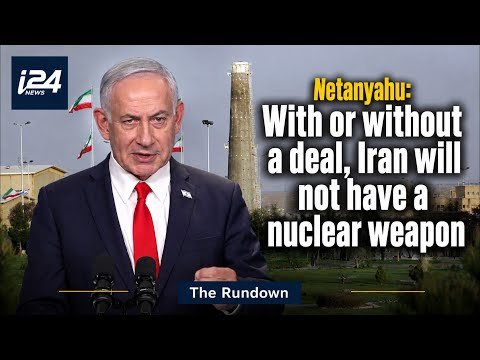
In a recent i24NEWS report, Israeli Prime Minister Benjamin Netanyahu delivered his first public address since the announcement of the US-Iran peace deal, defending the military campaign against Iran while acknowledging that the struggle is far from over. Speaking from Jerusalem on Monday, Netanyahu sought to reassure Israelis that their security remains paramount even as Washi
In a recent i24NEWS report, Israeli Prime Minister Benjamin Netanyahu delivered his first public address since the announcement of the US-Iran peace deal, defending the military campaign against Iran while acknowledging that the struggle is far from over. Speaking from Jerusalem on Monday, Netanyahu sought to reassure Israelis that their security remains paramount even as Washington and Tehran move toward a formal agreement set to be signed in Geneva this Friday.
Netanyahu's Address to the Nation
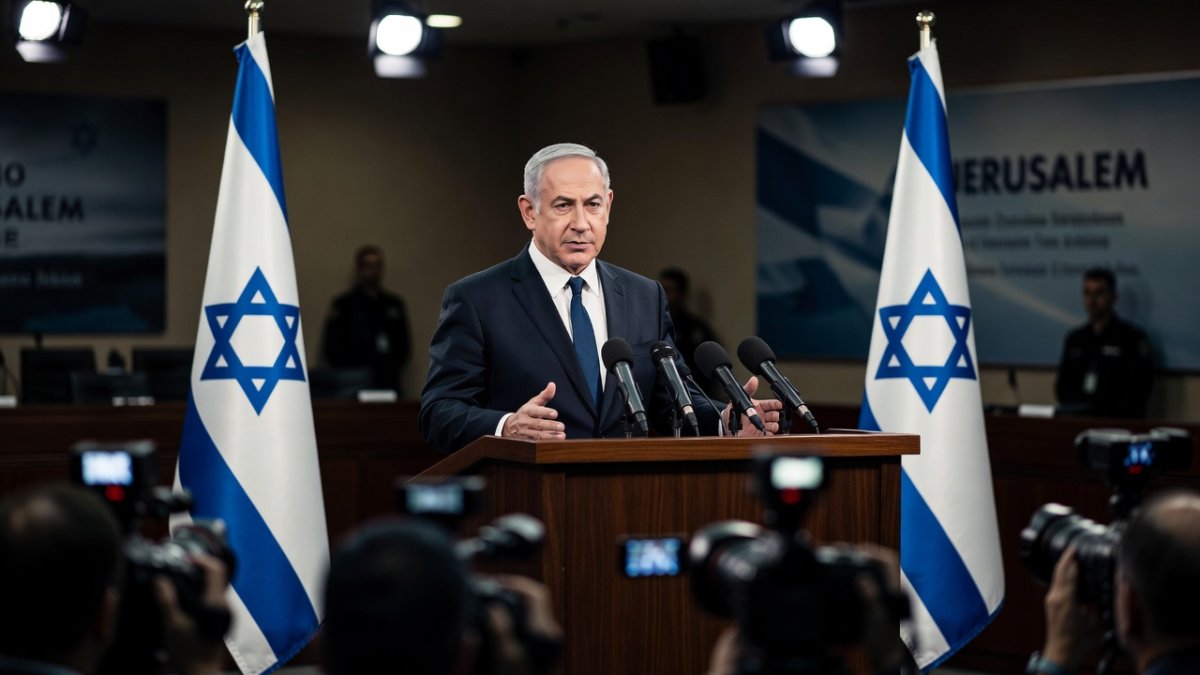
Prime Minister Benjamin Netanyahu stood before cameras in Jerusalem, his voice steady yet resolute as he addressed a nation still reeling from months of conflict. He declared that Israel had saved itself from destruction through decisive action, emphasizing the success of Operation Rising Lion in thwarting existential threats. The speech highlighted how the operation disrupted Iran's nuclear ambitions at a critical juncture, preventing what could have been catastrophic outcomes for regional stability and Israeli citizens living under constant fear of attack.
Netanyahu stressed that with or without an agreement, Iran will not have nuclear weapons, underscoring Israel's unwavering commitment to this red line. He invoked the historic cooperation with President Trump and the American military, noting how joint efforts had altered the trajectory of events. This partnership, he argued, demonstrated the strength of alliances when facing common adversaries, though he carefully balanced praise with realism about ongoing challenges that persist beyond any single deal.
In his remarks, Netanyahu acknowledged differences with Washington, stating, "We often see eye to eye, and there are also cases where we see less eye to eye." This candid admission reflected the complexities of diplomacy where national interests sometimes diverge, yet he maintained that core security objectives remained aligned. Such transparency aimed to build public trust amid swirling uncertainties about the upcoming Geneva accord and its potential ramifications for Israel's defense posture.
Looking ahead to domestic politics, Netanyahu confirmed his re-election bid with the firm assertion, "I will be a candidate in the elections, and I will win them." He framed this decision as essential for continuity in leadership during turbulent times. The prime minister reiterated that the struggle is not over, warning against complacency even as diplomatic processes unfold, and called on citizens to remain vigilant in supporting measures that safeguard the country's future.
Throughout the address, Netanyahu wove in references to the broader context of the US-Iran peace deal, positioning Israel's actions as proactive rather than reactive. He urged unity among Israelis, highlighting how past divisions had been set aside during the military campaign. The speech served as both a defense of policy and a rallying cry, designed to bolster morale while preparing the public for the uncertainties that lie ahead in international negotiations.
Military Achievements and Strategic Claims
Netanyahu detailed the elimination of key nuclear scientists, a move that significantly hampered Iran's progress toward weaponization. These targeted operations, part of a larger strategy, removed critical expertise from the equation and sent a clear message about Israel's determination to neutralize threats at their source. The prime minister described how such actions were executed with precision, minimizing collateral damage while maximizing strategic impact on the adversary's capabilities.
Facilities across Iran suffered extensive damage during the campaign, with missile production sites rendered inoperable. Netanyahu quoted, "We eliminated the nuclear scientists, we beheaded the terrorist regime. We crushed the nuclear factories. We destroyed the vast majority of the factories that produce missiles." This comprehensive assault disrupted supply chains and forced the regime to divert resources, buying valuable time for regional security arrangements to take hold in the aftermath.
Economic damage inflicted on Iran reached hundreds of billions of dollars, crippling infrastructure that had been built over decades. Netanyahu noted, "The damage is enormous. Everything that the regime had built over decades has been severely damaged." Such setbacks not only weakened military potential but also strained the regime's ability to fund proxy groups, thereby reducing the immediate risks posed to neighboring states and international shipping lanes.
Operations extended beyond Iran to include the elimination of Hamas leaders such as Deif, Haniyeh, and Sinwar, alongside actions in Gaza, Lebanon, Syria, Yemen, and the West Bank. These coordinated efforts dismantled command structures and prevented coordinated attacks. Netanyahu emphasized how the multi-front approach created synergies that amplified overall effectiveness, ensuring that threats from various directions were addressed simultaneously rather than in isolation.
High-ranking Hezbollah commanders were also eliminated, further degrading the group's operational readiness along Israel's northern border. The prime minister highlighted intelligence successes that enabled these strikes, crediting them with preventing larger-scale incursions. Overall, these achievements formed the backbone of Israel's defensive posture, demonstrating a shift from reactive measures to preemptive strategies that prioritize long-term deterrence over short-term accommodations.
The US-Iran Deal and Its Implications for Israel
The agreement scheduled for signing in Geneva this Friday follows sixty days of intense negotiations between the United States and Iran. Netanyahu expressed cautious optimism tempered by concerns that key Israeli demands had been omitted from the final text. The reopening of the Strait of Hormuz and the lifting of the naval blockade represent significant concessions that could alter energy markets and regional power dynamics in ways that disadvantage Israel's strategic position.
Despite these developments, Netanyahu made clear that Israel is not bound by terms that compromise its security. He stressed the need for independent verification mechanisms, warning that without them, the deal risks becoming a temporary pause rather than a lasting solution. This stance reflects deep-seated skepticism about Iran's compliance history and the potential for covert activities to resume once international attention shifts elsewhere.
Tensions with Washington have surfaced over the deal's scope, particularly regarding limitations on Iran's ballistic missile program and support for proxies. Netanyahu reiterated, "Any agreement must be accompanied by a credible military threat. That is what we have done." Such statements serve to remind allies that Israel's security doctrine remains unchanged, even as diplomatic channels open new avenues for dialogue between former adversaries.
The prime minister outlined how the agreement could inadvertently strengthen Iran's economic recovery, allowing resources to flow back into military endeavors. Israeli officials have privately conveyed reservations about enforcement provisions, fearing they lack the teeth necessary to deter violations. Public statements have focused on maintaining flexibility for future actions should the deal fail to deliver on its promises of stability.
Regional actors are watching closely as the Geneva signing approaches, with implications extending to energy security and alliance structures. Netanyahu's government has initiated consultations with European partners to explore supplementary safeguards. These efforts underscore Israel's proactive approach to mitigating risks that the bilateral US-Iran framework may not fully address, ensuring that national interests are protected regardless of external agreements.
Israeli Political Fallout
Reactions within Israel's political landscape have been swift and divided following the announcement of the US-Iran deal. National Security Minister Itamar Ben-Gvir declared that Israel is not bound by the terms, echoing sentiments of frustration among hardline coalition members. Finance Minister Bezalel Smotrich similarly rejected aspects of the agreement, arguing that it undermines years of efforts to isolate Iran and weaken its influence across the Middle East.
Opposition leader Yair Lapid criticized the government's handling of the negotiations, suggesting that Netanyahu's focus on personal political survival had distracted from securing better outcomes. Former Prime Minister Naftali Bennett issued a measured statement calling for unity while questioning the long-term viability of the deal without stronger enforcement clauses. These responses highlight the polarized environment where security policy intersects with electoral calculations.
According to an Associated Press report, many Israelis are furious, viewing the deal as a disaster that rewards aggression rather than deterring it. Public sentiment appears to have shifted, with recent polls indicating that sixty-one percent of respondents want Netanyahu out of office. This dissatisfaction stems from perceptions that the agreement leaves critical threats unaddressed, fueling demands for accountability and alternative leadership.
Coalition tensions have intensified as smaller parties weigh their options ahead of potential early elections. Ben-Gvir and Smotrich have threatened to withdraw support unless the government adopts a more confrontational stance toward the deal. Such internal divisions complicate Netanyahu's ability to present a united front, potentially weakening Israel's negotiating leverage in future international forums.
Analysts note that the political fallout could reshape alliances within the Knesset, with centrist factions gaining ground if public discontent grows. Netanyahu's re-election announcement aims to stabilize his base, yet the combination of security concerns and economic pressures may erode support further. The coming weeks will test whether the government can navigate these challenges without fracturing along ideological lines.
Regional Security and the Lebanon Question
Defense Minister Israel Katz affirmed that the Israel Defense Forces will remain in security zones in Lebanon, Syria, and Gaza to prevent the resurgence of hostile activities. This prolonged presence is intended to dismantle Hezbollah infrastructure and secure northern communities that have endured repeated rocket attacks. Katz emphasized that withdrawal would only occur once threats are fully neutralized, a condition that current assessments suggest may take considerable time.
Iranian proxies continue to pose challenges, with weapons transfers through Syria remaining a primary concern for Israeli intelligence. The defense minister outlined ongoing operations to interdict these shipments, noting that the US-Iran deal does not adequately address this full spectrum of threats. Such gaps leave room for escalation if proxy forces exploit perceived weaknesses in the agreement's monitoring provisions.
Northern communities have begun returning to routine activities under enhanced security protocols, though residents express lingering anxiety about future attacks. Katz highlighted investments in defensive technologies and border fortifications as part of a comprehensive strategy. These measures aim to restore confidence while signaling to adversaries that Israel will not tolerate violations of its sovereignty.
The assessment from military officials indicates that the deal overlooks critical elements such as Hezbollah's missile arsenal and command networks embedded in civilian areas. Katz warned that without addressing these issues, regional stability remains fragile. Coordination with international partners continues, but Israel reserves the right to act unilaterally when necessary to protect its citizens and interests.
Broader implications for Lebanon include the potential for renewed conflict if Hezbollah perceives the deal as an opportunity to rearm. Katz reiterated commitments to maintaining buffer zones, underscoring that security considerations take precedence over diplomatic timelines. This approach reflects a pragmatic recognition that lasting peace requires sustained military vigilance alongside political efforts.
What Comes Next
As the Geneva signing approaches this Friday, attention turns to the sixty-day implementation phase that will follow. Netanyahu has signaled that Israel will retain the option for independent action should the agreement falter or reveal loopholes. This flexibility is seen as essential for adapting to evolving threats, particularly as Iran seeks to rebuild capabilities diminished by recent military operations.
Elections loom on the horizon, with Netanyahu positioning himself as the candidate best equipped to navigate the post-deal landscape. His strategy emphasizes demonstrations of strength through continued security operations and diplomatic outreach. Public opinion will play a decisive role, as voters weigh the balance between achieved military gains and unresolved diplomatic shortcomings.
Regional implications extend to potential normalization efforts involving Saudi Arabia and the United Arab Emirates, which may accelerate or stall depending on how the deal unfolds. Netanyahu has engaged in quiet diplomacy to align interests, arguing that a strong Israel serves as a counterweight to Iranian influence. These discussions could reshape alliances in ways that either reinforce or undermine the current framework.
Analysts predict that the coming months will test the resilience of both the US-Iran agreement and Israel's security doctrine. Netanyahu's government plans to monitor compliance closely, preparing contingency measures in case violations occur. This dual-track approach combines vigilance with proactive engagement, aiming to safeguard national interests amid shifting geopolitical currents.
Ultimately, the path forward requires balancing domestic political pressures with international obligations. Netanyahu's leadership will be judged on its ability to deliver security while fostering conditions for broader stability. As events progress, the interplay between military achievements, diplomatic outcomes, and public sentiment will determine Israel's trajectory in a volatile region.
The coming period will reveal whether the US-Iran deal can deliver on its promises or if additional measures will be required to ensure lasting security for Israel and its neighbors. Netanyahu's administration remains focused on adapting strategies to protect core interests while engaging with allies on enforcement and verification. Public discourse continues to evolve as more details emerge from Geneva, shaping the national conversation around resilience and future preparedness.
By Hannah Berg, Staff WriterThis article was produced with AI-assisted research and editorial support. Reporting is based on sources cited in the article.
What's Your Reaction?
 Like
0
Like
0
 Dislike
0
Dislike
0
 Love
0
Love
0
 Funny
0
Funny
0
 Wow
0
Wow
0
 Sad
0
Sad
0
 Angry
0
Angry
0
Israel Correspondent at Global1.News. Based in Tel Aviv, covering Israeli politics, security, technology, and society. Provides balanced, deeply-sourced reporting on one of the most closely-watched regions in the world.












Comments (0)