
Trump's 50% Tariffs on Canada Spark New Trade Crisis
In a recent BBC News report on The Global Story podcast, Asma Khalid spoke with CBC Frontburner host Jayme Poisson about the escalating trade confrontation between the United States and Canada — a relationship that has frayed dramatically under President Donald Trump's aggressive tariff policies. Trump's 50% Tariffs on Canada Spark New North American Trade Crisis Toronto, Ontario – 23 July 2026 — Prime Minister Mark Carney has vowed to consider "all options" in response to Pr
In a recent BBC News report on The Global Story podcast, Asma Khalid spoke with CBC Frontburner host Jayme Poisson about the escalating trade confrontation between the United States and Canada — a relationship that has frayed dramatically under President Donald Trump's aggressive tariff policies.
Trump's 50% Tariffs on Canada Spark New North American Trade Crisis
Toronto, Ontario – 23 July 2026 — Prime Minister Mark Carney has vowed to consider "all options" in response to President Donald Trump's sweeping 50% tariffs on Canadian goods, as the decades-old US-Canada alliance faces its most severe economic crisis in modern history. The tariffs, signed into executive action on Monday, target wine, hockey sticks, cement, automobiles, and dairy products under the untested Section 338 of the Tariff Act of 1930.
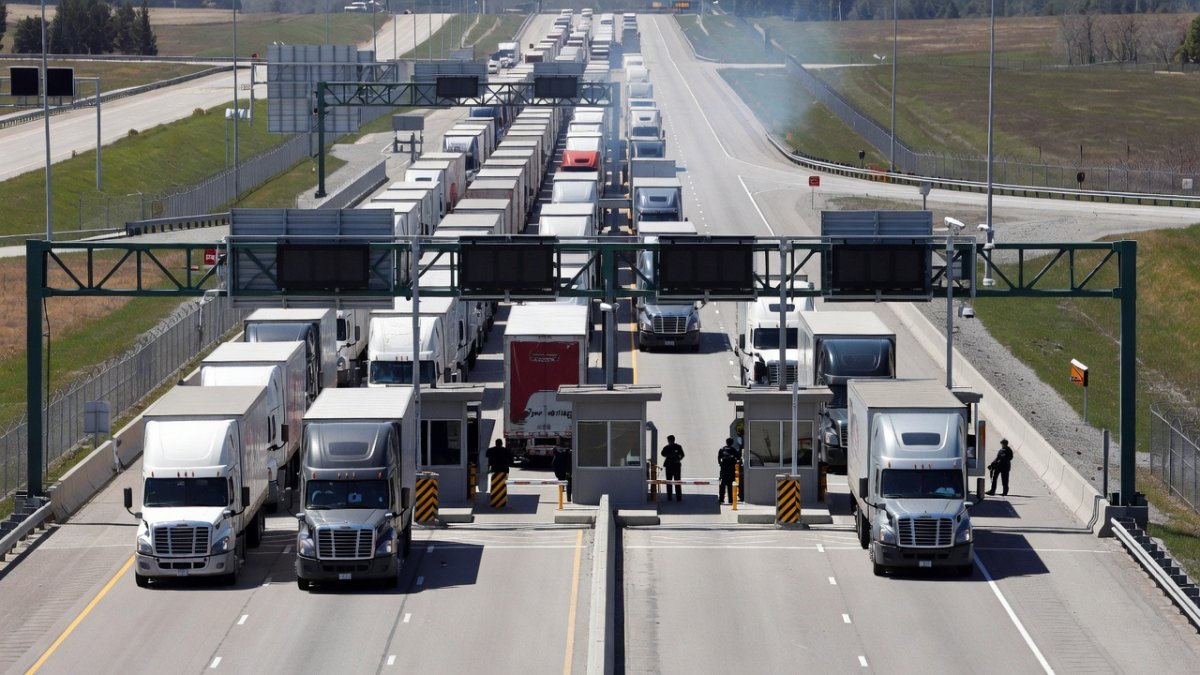
The 50% Tariff: A New Escalation in North American Trade War
On Monday, President Donald Trump signed executive action imposing 50% tariffs on a broad range of Canadian imports — a dramatic escalation in the trade confrontation between the two North American neighbors. The tariffs target everyday consumer items such as wine and hockey sticks, alongside industrial goods including cement, cars, and dairy products, and are set to take effect within 30 days. The White House invoked Section 338 of the Tariff Act of 1930 — an untested legal provision — after the US Supreme Court earlier this year struck down Trump's sweeping international tariffs imposed under the International Emergency Economic Powers Act. Key Canadian exports including energy, potash, critical minerals, and fish were exempted from the new measures. The announcement came just a day after Trump and Prime Minister Mark Carney spoke by phone during the World Cup final, with Carney reportedly unaware of the impending tariff action. The US action specifically targets goods that had previously been protected under the United States-Mexico-Canada Agreement (USMCA) — the free trade pact Trump himself negotiated and signed during his first term. US Trade Representative Jamieson Greer justified the move by accusing Canada of "discriminatory treatment" against American automobiles, dairy products, and alcoholic beverages. "Canada has taken US alcohol products off Canadian shelves, given better market access to dairy products from the European Union, and has put a cap on US vehicle exports," Greer charged in a statement. Existing US tariffs already include 15-50% duties on Canadian steel, aluminum, and copper, a 35% tariff on softwood lumber, and 25% on non-US-made automotive parts. This layered approach builds on prior barriers and signals a deliberate strategy to pressure Ottawa across multiple sectors.
Interpreted against the longer arc of bilateral commerce, these measures mark a departure from the postwar pattern of managed integration that once positioned North American supply chains as a model of cross-border efficiency. Where earlier frameworks encouraged seamless movement of components, the current approach introduces deliberate friction at multiple points along the same routes.
Canada's Response: Carney Plays Hardball While Keeping the Door Open
Prime Minister Mark Carney responded with a carefully calibrated message combining defiance with diplomatic outreach. Speaking to reporters, Carney called the tariffs a "direct violation" of the USMCA and said he had spoken directly with Trump, with both leaders agreeing to "intensify" trade talks in an effort to de-escalate the growing trade tensions. However, Carney warned that "all options" were on the table regarding Canada's potential retaliation. Since the tariff war erupted more than 18 months ago, Carney noted that Canadians had "stood together" by supporting domestic products and establishing new trade routes with partners beyond the United States. "[The] country is stronger, stronger because we are united, and we will remain united," he told reporters. Ontario Premier Doug Ford struck a more aggressive tone, declaring that if Washington proceeds with the new levies, "Canada should respond tariff for tariff, dollar for dollar." Carney also referenced broader "threats to Canadian sovereignty," alluding to Trump's repeated suggestions that Canada should become America's "51st state" — a remark that has deeply unsettled Canadian politics and public opinion. The Canadian government had already imposed 25% counter-tariffs on approximately C$30 billion worth of US goods last year, though Carney later removed some of those measures in an effort to create space for negotiation. The existing US tariff regime already includes 15-50% duties on Canadian steel, aluminum, and copper, a 35% tariff on softwood lumber, and 25% on non-US-made automotive parts, while Canada maintains its own 25% counter-tariff on selected American steel, aluminum, and vehicle imports. This back-and-forth has strained the integrated supply chains that define North American energy markets and manufacturing.
Canadian public opinion has shifted noticeably in response, with polls and commentary reflecting greater skepticism toward the reliability of the southern neighbor as an economic partner. This change in sentiment is not merely reactive but appears to be consolidating around a preference for diversified external relationships that reduce exposure to unilateral policy swings.
The Three Grievances: Cars, Dairy, and Alcohol
US Trade Representative Jamieson Greer outlined three core complaints driving the new tariffs. First, Canada imposes a tax on US motor vehicle parts not covered under USMCA, which the administration views as unreasonable discrimination because similar levies are not applied to imports from other nations. Second, Canada maintains tariffs as high as 300% on dairy products exceeding quota limits, a measure Washington labels protectionist and designed to shield domestic producers at the expense of American exporters. Third, most Canadian provinces have maintained boycotts on US liquor since last year's tariff escalation, removing American products from shelves and redirecting market access toward European suppliers. Canadian premiers have indicated these boycotts would end if the United States lifts its duties on metals and automobiles. The White House fact sheet specifically notes Canada was one of only two countries — along with China — to retaliate against Trump's tariffs last year. These grievances reflect long-standing US frustrations with Canada's managed trade approach in sensitive sectors, even as both economies remain deeply intertwined through cross-border automotive production and agricultural flows.
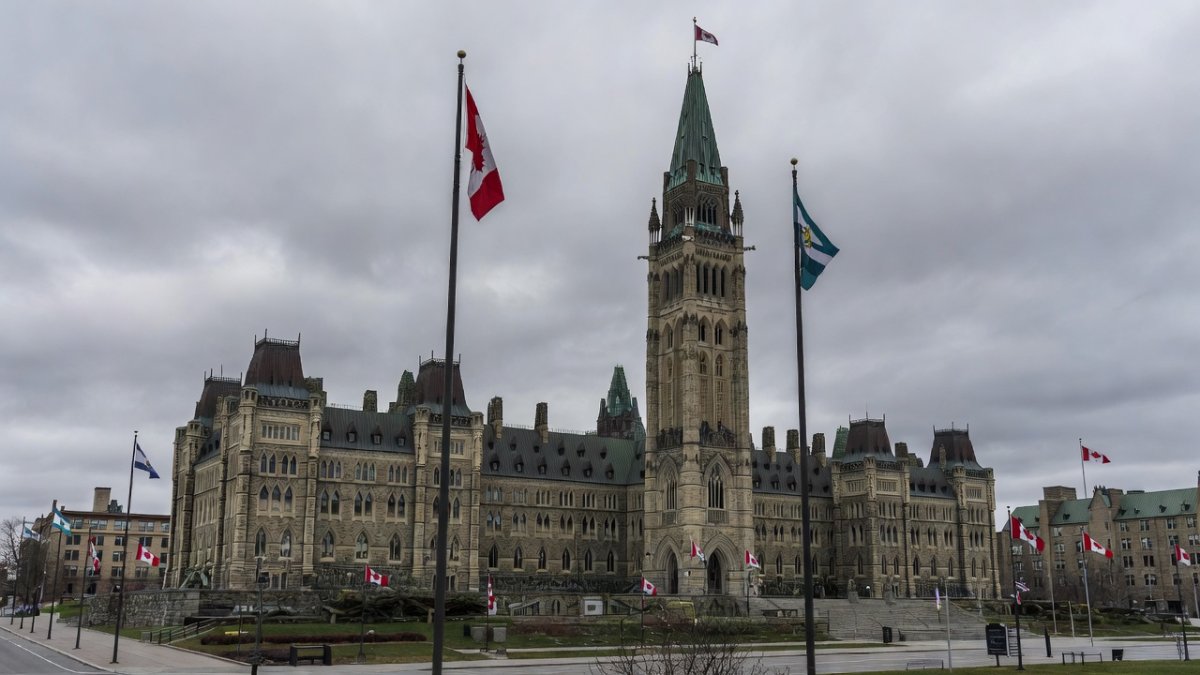
The Legal Battleground: Section 338 and the Future of USMCA
The Supreme Court struck down IEEPA tariffs earlier this year, ruling that Trump exceeded his authority under that statute. The administration has since pursued alternative legal mechanisms, turning to Section 338 of the 1930 Tariff Act for Canada — a provision never fully tested in modern courts — while invoking Section 301 for other countries such as Brazil. The United States declined to renew USMCA in its current form earlier this year, although the treaty continues on a rolling basis with annual reviews. Michael Devereux, an economics professor at UBC, called the tariff escalation "significant because it directly targets goods previously exempt under the USMCA." The tariffs apply regardless of USMCA coverage, marking a fundamental challenge to the North American trade framework. This shift raises questions about whether the agreement can survive as a reliable anchor for bilateral commerce or whether future disputes will default to unilateral US actions. Energy markets remain partially shielded by exemptions, yet the broader uncertainty affects investment decisions across the continent.
Economic Fallout and the Global Trade Order
These tariffs compound existing trade barriers and place particular strain on the integrated North American automotive supply chain, where parts cross borders multiple times before final assembly. Canadian consumers have already shifted buying habits toward domestic products in response to earlier rounds of duties, while US businesses face higher input costs that may ultimately pass to American households. Trump argues that tariffs will boost domestic manufacturing, yet economists caution that sustained price increases could dampen growth on both sides of the border. USTR Greer hinted at "some action soon" on broader global tariffs, suggesting the Canada measures form part of a wider strategy. The result is a fundamental reshaping of the US-Canada economic relationship, long the closest bilateral trade partnership in the world, with ripple effects on energy markets and the stability of the global trade order. Retaliatory measures from Ottawa could further disrupt flows of vehicles, lumber, and agricultural goods.
Viewed as part of Trump's broader tariff strategy, the Canada-specific actions illustrate a consistent preference for sequential pressure across multiple fronts rather than a single comprehensive negotiation. This method tests the resilience of longstanding alliances while simultaneously signaling to other trading partners that exemptions are temporary and subject to revision.
Analysis — What This Means for the US-Canada Alliance
The broader question raised by The Global Story episode centers on whether Canadians are bracing for a world in which the United States is no longer their closest ally. This development extends beyond trade to encompass Trump's 51st state comments, Canadian sovereignty concerns, and a noticeable psychological shift in public opinion north of the border. Security cooperation through NATO, NORAD, and Arctic defence adds another layer of complexity, as economic friction risks spilling into areas previously insulated from commercial disputes. Trade wars frequently produce unforeseen consequences, and the deeply integrated nature of North American supply chains means tariffs ultimately impose costs on both economies. The 30-day implementation window leaves room for last-minute negotiation, yet the trajectory points toward a permanent restructuring of the relationship. Analysts suggest this signals a more transactional era in which longstanding alliances face repeated tests from unilateral economic pressure.
Interpretation of these events points to a gradual erosion of the special status once accorded the US-Canada economic relationship within the wider global trade order. Where previous disputes were typically contained within established dispute-settlement mechanisms, the current pattern suggests disputes may increasingly be resolved through raw leverage. North American economic integration, once celebrated for its depth and durability, now faces the prospect of managed fragmentation in which each side seeks to reduce critical dependencies. The implications extend beyond the bilateral relationship to the credibility of rules-based trade frameworks more generally, as other nations observe how the continent's largest trading partners navigate this period of heightened tension.
By Irina Volkov, Staff WriterThis article was produced with AI-assisted research and editorial support. Reporting is based on sources cited in the article.
What's Your Reaction?
 Like
0
Like
0
 Dislike
0
Dislike
0
 Love
0
Love
0
 Funny
0
Funny
0
 Wow
0
Wow
0
 Sad
0
Sad
0
 Angry
0
Angry
0

Russia/Eastern Europe Correspondent at Global1.News. Covering Russian politics, energy, security, and the shifting dynamics of the post-Soviet space. Provides clear-eyed analysis on one of the world's most opaque regions.















Comments (0)