
Iran Re-Closes Strait of Hormuz, Accuses US of Breach
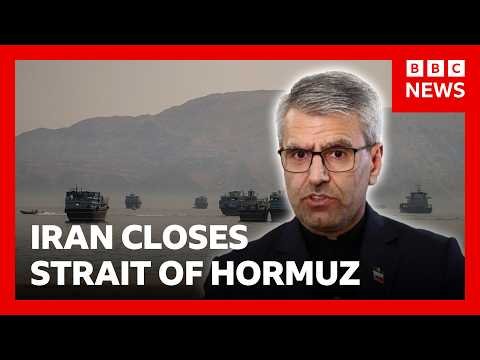
In a recent BBC News report, Iran announced it was closing the strategic Strait of Hormuz once again, accusing the United States and Israel of violating the newly signed ceasefire deal as Israeli airstrikes continued to pound southern Lebanon less than 24 hours after a separate Israel-Hezbollah ceasefire was supposed to take effect. Iran Closes Strait of Hormuz, Accusing US and
In a recent BBC News report, Iran announced it was closing the strategic Strait of Hormuz once again, accusing the United States and Israel of violating the newly signed ceasefire deal as Israeli airstrikes continued to pound southern Lebanon less than 24 hours after a separate Israel-Hezbollah ceasefire was supposed to take effect.
Iran Closes Strait of Hormuz, Accusing US and Israel of Violating Ceasefire Agreement
London – 20 June 2026 — Iran has re-closed the strategic Strait of Hormuz, accusing the United States and Israel of violating the terms of the newly signed ceasefire agreement, as Israeli airstrikes continue to pound southern Lebanon less than 24 hours after a separate Israel-Hezbollah ceasefire was declared. The move threatens to unravel the fragile US-Iran diplomatic framework within days of its signing.
(Global 1 News)
The Strait of Hormuz — A Strategic Chokepoint
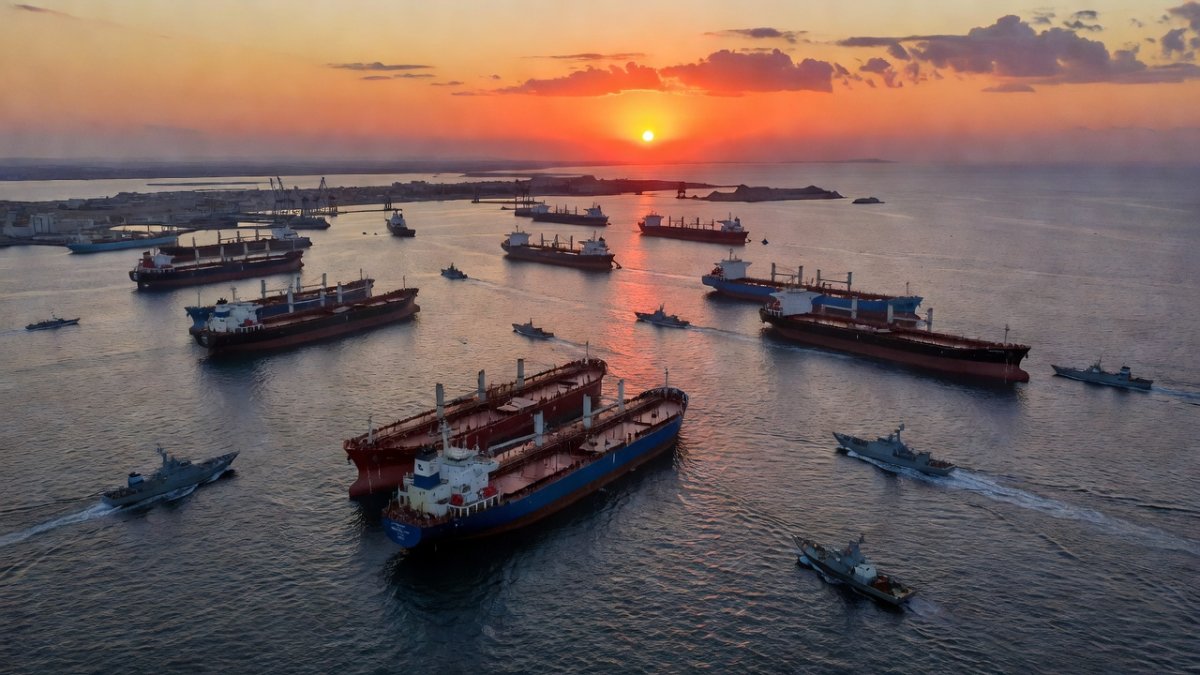
The Strait of Hormuz, a narrow 21-mile-wide waterway connecting the Persian Gulf to the Gulf of Oman, is one of the most strategically significant maritime chokepoints in the world. Approximately 20 percent of the world's oil and liquefied natural gas passes through these waters daily — roughly 17 million barrels of crude. For Russia, a major energy exporter, developments in the strait directly affect global oil prices and the balance of power between OPEC+ members. Any sustained closure sends shockwaves through energy markets, benefiting Moscow's own hydrocarbon exports while straining economies across Asia and Europe that depend on Gulf crude. Iran first shut the waterway on February 28, after the United States and Israel launched an air war against Iran and assassinated its supreme leader, Ali Khamenei. The closure stranded dozens of vessels and sent oil prices soaring. Saturday's announcement marks the latest chapter in what has become an enduring crisis, with the strait serving as Iran's primary leverage point in a conflict it cannot win militarily against the combined US-Israeli arsenal.
Iran's Accusation — US and Israel Violated the Deal
In a statement broadcast on Iranian state television on Saturday, Iran's top joint military command announced the re-closure of the strait, explicitly blaming the United States for failing to prevent what Tehran described as "continuous and relentless violation of the ceasefire in southern Lebanon" by Israel. The Iranian military cited clause one of the 14-point memorandum of understanding signed between Washington and Tehran days earlier, which agrees to "the immediate and permanent termination of military operations on all fronts, including in Lebanon." Iran's argument is structural: if the US cannot or will not enforce the Lebanon provisions of the deal, then the entire framework is compromised. "It is noted that this first step is a response to the enemy's breach of promise, and if the aggression continues, further steps will be planned and taken," the military command's statement read. The IRGC Navy issued its own stark warning to international shipping: "Do not approach the Strait of Hormuz; otherwise, your security will be jeopardised."
The Iranian Foreign Ministry reinforced this position through spokesman Esmail Baghaei, who stated that Iran's participation in upcoming Switzerland talks would focus on holding the United States accountable for its obligations under the memorandum. Baghaei emphasized that Tehran views the Lebanon violations as a direct test of American commitment rather than an isolated regional issue. This stance aligns with broader Iranian strategy that links multiple conflict zones to prevent the United States from compartmentalizing negotiations. Analysts note that by tying the Strait closure to enforcement failures in Lebanon, Iran seeks to extract concessions across the entire 14-point framework before the 60-day negotiation period advances further.
(Global 1 News)
Israel's Campaign in Southern Lebanon
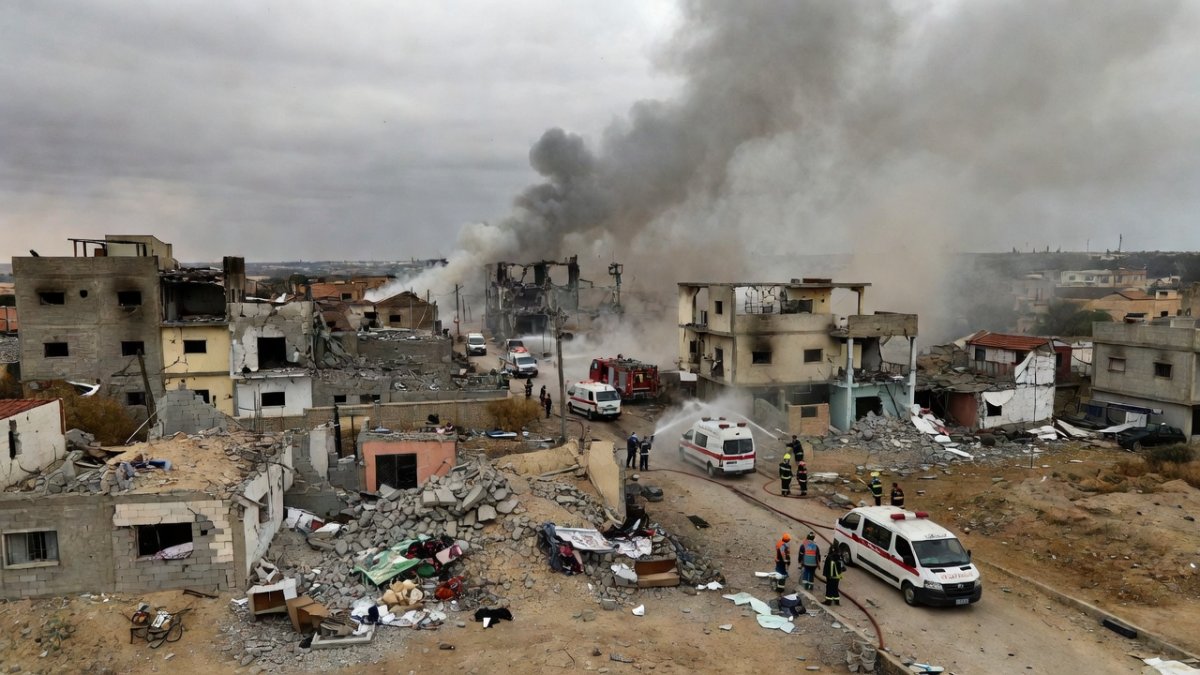
The backdrop to Iran's announcement is a surge in violence along the Israel-Lebanon border. A ceasefire between Israel and Hezbollah, brokered by the United States, was supposed to take effect at 16:00 local time on Friday. But less than 24 hours later, roughly two dozen people had been killed by Israeli airstrikes across southern Lebanon, according to local reports. Among the dead was a family of four — a father, a mother and their two children — killed in the town of Barich, Lebanese state media reported. The Israeli military said it had struck "dozens" of Hezbollah targets after the group fired more than 50 projectiles at Israeli forces positioned near the border. Israel's official position was clear: its forces would "continue to remove immediate threats" even after the ceasefire took effect. The IDF insisted its operations were defensive in nature and that Hezbollah's continued rocket fire justified the retaliatory strikes.
Hezbollah, for its part, accused Israel of repeatedly violating the ceasefire agreement and said the group retained the right to "defend their land and sovereignty" in the face of what it described as ongoing Israeli aggression. The cycle of fire and counter-fire has left the ceasefire framework looking fragile less than a day after it was announced, raising questions about whether either side genuinely intends to abide by the terms. Israeli officials have repeatedly stated they have no intention of withdrawing forces from southern Lebanon positions, arguing that the Hezbollah conflict remains separate from the broader war involving Iran. This separation allows Israel to maintain operational flexibility while the United States attempts to stabilize the Iran memorandum. Washington has expressed concern that these ongoing operations risk undermining the entire diplomatic track, yet Israeli statements indicate limited willingness to halt activities that target perceived immediate threats.
American Response — Centcom and Vance
The United States responded to Iran's announcement on two fronts. US Central Command issued a statement insisting that safe passage through the Strait of Hormuz "remained intact" and that commercial ship traffic had actually increased on Saturday, with 55 merchant vessels transiting. However, the Centcom statement was ambiguous — it was not clear whether it was referring to maritime traffic before or after Tehran's closure announcement, leaving room for interpretation about the strait's actual status.
Simultaneously, Vice President JD Vance told Fox News that 16 million barrels of oil had moved through the strait in the previous 24 hours, and said he expected to travel to Switzerland in the coming days for talks with Iran. "We have all the cards," Vance said, projecting confidence that Washington holds the upper hand in the negotiations. Iran's foreign ministry spokesman Esmail Baghaei confirmed that Tehran would attend the Switzerland talks but framed the purpose differently — "demanding that the other side fulfil its commitments" rather than negotiating new terms. The cancellation of an earlier trip by Vance, reported by Euronews on Friday, had raised questions about whether the diplomatic track was stalling. Saturday's signals from both sides suggest talks remain on the table but under severe strain. Centcom's assertion of continued traffic contrasts with Iranian warnings, highlighting differing interpretations of enforcement on the ground.
(BBC News)
Energy Markets and Global Implications
The Strait of Hormuz closure has immediate and far-reaching consequences for global energy markets. Before the February war, approximately 20 percent of the world's oil and liquefied natural gas transited the waterway daily. Any sustained disruption forces Asian economies — particularly China, Japan, South Korea, and India — to seek alternative supply routes, driving up crude prices and squeezing import-dependent nations. For Russia, this creates a paradoxical position. While Moscow officially supports Iran as a fellow adversary of the United States, higher oil prices from the Hormuz closure benefit Russia's own state budget, which remains heavily dependent on hydrocarbon revenues. The Kremlin has not issued an official statement on this latest closure, but Russian energy analysts note that sustained prices above $100 per barrel provide Moscow with significant fiscal breathing room as it continues its own war in Ukraine.
The timing is particularly delicate: the US-Iran agreement was meant to reopen the strait, de-escalate tensions, and allow global energy markets to stabilise. Instead, Iran's re-closure within days of signing suggests the deal's enforcement mechanisms are weaker than advertised. If the 60-day negotiation window collapses, the world could face a prolonged blockade with no diplomatic off-ramp in sight. European Union energy officials have begun contingency planning for potential shortages, while OPEC+ members including Saudi Arabia monitor how any prolonged closure might shift market shares toward non-Gulf producers.
What Comes Next — Fragile Diplomacy and Escalation Risks
The immediate outlook is uncertain. The United States has publicly criticised Israel's ongoing operations in Lebanon, with Washington voicing fears that the continuing tensions could unravel the broader Iran peace deal. But whether Washington is willing or able to pressure Israel into a full ceasefire in Lebanon remains an open question — one that Iran is now using as a test of American credibility.
Iran's phrasing — that the closure is a "first step" and "further steps will be planned and taken" if aggression continues — signals that Tehran views this as a calibrated escalation rather than a full breakdown. The diplomatic track through Switzerland remains alive, at least in rhetoric, with both Vance and Baghaei confirming their respective sides' attendance. But the trust deficit is deepening. The 14-point MoU was supposed to halt all military operations. Instead, Israeli warplanes struck southern Lebanon within hours of a ceasefire being declared. If Iran's core demand is that the US enforce the deal's terms, and Washington cannot demonstrate that it can control Israel's operations, the entire diplomatic framework may prove unsustainable. For now, the Strait of Hormuz sits at the centre of a geopolitical storm — a narrow channel through which not just oil, but the credibility of two superpowers, must navigate.
By Irina Volkov, Staff Writer
This article was produced with AI-assisted research and editorial support. Reporting is based on sources cited in the article.
What's Your Reaction?
 Like
0
Like
0
 Dislike
0
Dislike
0
 Love
0
Love
0
 Funny
0
Funny
0
 Wow
0
Wow
0
 Sad
0
Sad
0
 Angry
0
Angry
0
Russia/Eastern Europe Correspondent at Global1.News. Covering Russian politics, energy, security, and the shifting dynamics of the post-Soviet space. Provides clear-eyed analysis on one of the world's most opaque regions.










Comments (0)