
Iran Nuclear Standoff Deepens as Ceasefire Crumbles and Hormuz Tensions Rise
The convergence of Iran's advancing nuclear program and the strategic chokepoint of the Strait of Hormuz has created the most perilous crisis since the outbreak of open conflict in the region. Recent developments, including the February 28 strikes on key nuclear sites, the subsequent collapse of a fragile ceasefire, and Foreign Minister Abbas Araghchi's urgent visit to Oman on
The convergence of Iran's advancing nuclear program and the strategic chokepoint of the Strait of Hormuz has created the most perilous crisis since the outbreak of open conflict in the region. Recent developments, including the February 28 strikes on key nuclear sites, the subsequent collapse of a fragile ceasefire, and Foreign Minister Abbas Araghchi's urgent visit to Oman on July 11, underscore how quickly diplomatic efforts can unravel into broader confrontation. These elements have drawn in multiple global powers and raised the specter of disrupted energy flows that could destabilize economies worldwide. The situation demands immediate attention as miscalculations risk escalating into a wider war.
Iran Nuclear Standoff Deepens as Ceasefire Crumbles and Hormuz Tensions Rise Beirut, Lebanon – July 11, 2026
The 2026 Iran war erupted on February 28 when joint US and Israeli forces launched precision strikes against the Natanz and Isfahan nuclear facilities. Iran responded swiftly with retaliatory missile barrages targeting Israeli positions and several Gulf state installations. In the ensuing weeks of intense exchanges, coalition forces struck more than 1,200 targets across Iranian territory, severely damaging infrastructure and prompting a cycle of escalation that has yet to subside. These initial actions shattered years of uneasy deterrence and set the stage for the current standoff.
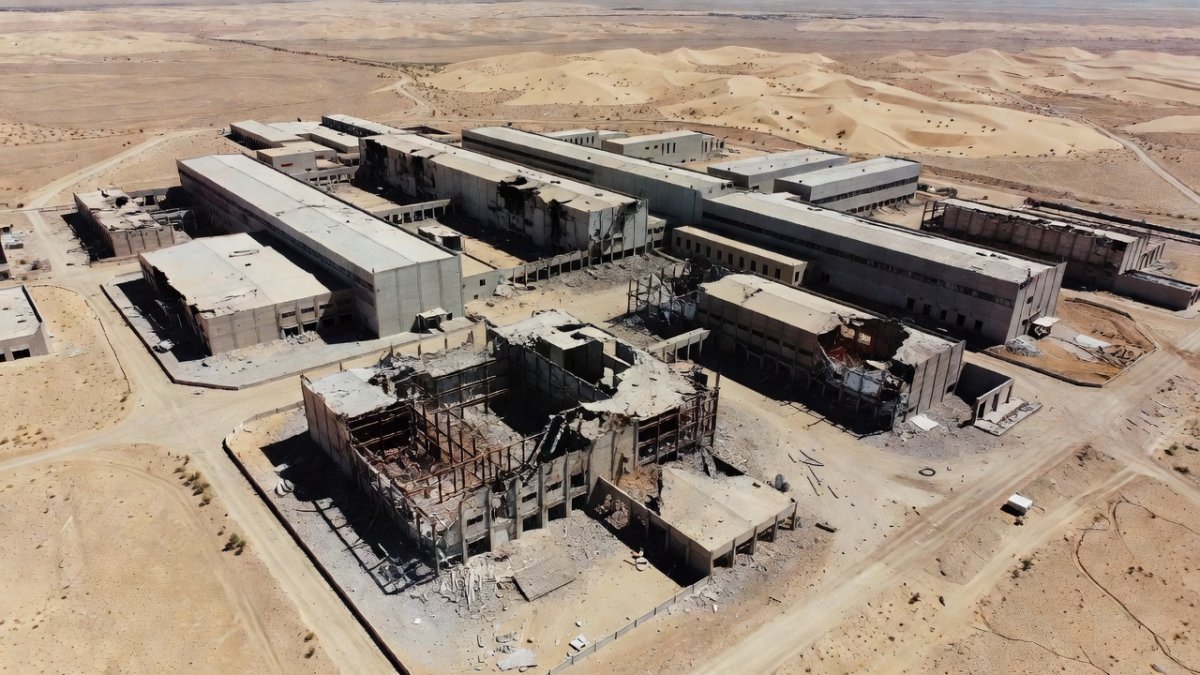
Damaged Natanz nuclear facility in Iran following US-Israeli strikes, February 2026. (Global 1 News)
Geopolitical Context: The Collapsing Ceasefire
Pakistan and Qatar played pivotal roles in brokering a tenuous ceasefire in late June after weeks of backchannel negotiations. The agreement aimed to halt direct hostilities and allow for humanitarian corridors, yet it quickly proved unsustainable. On July 8, President Trump publicly declared the ceasefire over, citing repeated Iranian violations and renewed threats to maritime traffic. China's subsequent call at the United Nations for renewed talks highlighted the international community's alarm, while Hezbollah maintained notable restraint along the Lebanese border to avoid opening a second front.
Foreign Minister Araghchi arrived in Muscat today for high-level discussions aimed at reviving diplomatic channels. Omani officials have long served as discreet intermediaries between Tehran and Western capitals, leveraging their neutral stance to facilitate discreet exchanges. European diplomats are simultaneously weighing proposals to impose transit fees on vessels passing through the Strait of Hormuz as a means of pressuring Iran without immediate military escalation. These parallel efforts reflect the urgent search for de-escalation mechanisms amid mounting economic stakes.
A clear timeline illustrates the rapid deterioration: initial strikes occurred on February 28, followed by a June 17 memorandum of understanding that briefly paused major operations. Iran closed the Strait of Hormuz once more on June 20, prompting a July 1 round of talks in Qatar. Trump's July 8 announcement ended the pause, new US strikes followed on July 9, and Araghchi's July 11 visit to Oman now represents the latest attempt to prevent total collapse. Each date marks a turning point that has narrowed the window for compromise.
The Nuclear Dimension: 441 Kilograms of Uncertainty
Iran currently holds approximately 441 kilograms of uranium enriched to 60 percent, a level that sits just short of the 90 percent threshold required for weapons-grade material. The International Atomic Energy Agency has lost nearly all on-site monitoring access since the conflict intensified, leaving inspectors reliant on satellite imagery and remote data that cannot fully verify stockpile movements. A June 2026 IAEA report concluded that monitoring capabilities have suffered near-total loss, raising alarms about potential diversion of fissile material. This opacity has intensified fears that Iran could cross the nuclear threshold with minimal warning.
Professor Derek Grossman of USC and the Center for a New American Security has warned that retrieving enriched uranium from hardened sites presents formidable obstacles for any inspection regime. Underground facilities at Natanz and Fordow were specifically designed to withstand conventional attacks, complicating efforts to confirm the location and quantity of stockpiles. Iran's estimated breakout timeline has compressed to mere weeks under current conditions, according to multiple nonproliferation assessments. These technical realities have forced policymakers to confront the limits of military and diplomatic tools alike.
The history of Iran's enrichment program traces back to the collapse of the JCPOA, when Tehran began steadily increasing purity levels from the original 3.67 percent cap. Successive IAEA Board of Governors resolutions condemned the expansions yet produced little tangible restraint. Gulf states have recalibrated their security calculations accordingly, accelerating defense procurements and deepening security ties with the United States. The resulting regional arms dynamic now intertwines nuclear concerns with conventional military balances in ways that heighten overall instability.
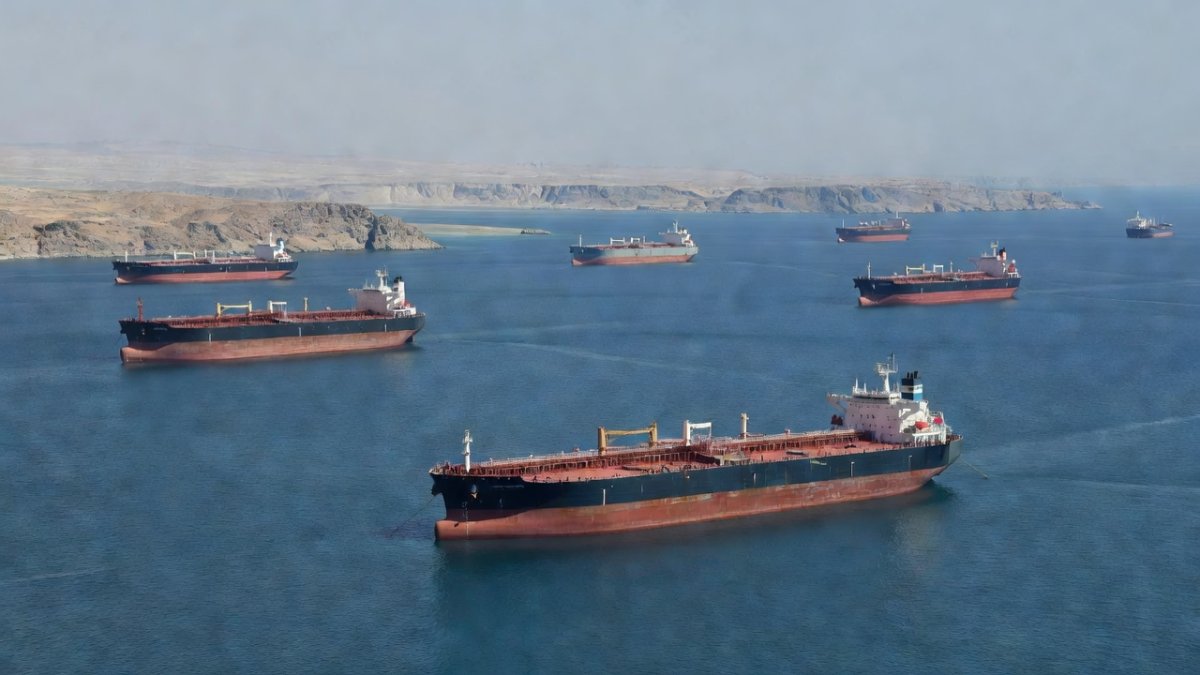
Oil tankers in the Strait of Hormuz, the strategic chokepoint carrying 20% of global oil supplies. (Global 1 News)
The Strait of Hormuz Standoff
The Strait of Hormuz remains the conduit for roughly 20 percent of global oil supplies, making any disruption an immediate threat to energy markets worldwide. Brent crude prices have already surged above 120 dollars per barrel amid ongoing uncertainty. Iran has floated proposals for transit fees on commercial shipping, a measure that European capitals are now actively considering as both a revenue tool and a pressure point. Past Iranian threats to close the waterway in 2019, 2023, and again in 2026 demonstrate a consistent pattern of leveraging geography for strategic advantage.
Washington has threatened seizure of Iran's Kharg Island oil terminal should Hormuz closures persist. The Islamic Revolutionary Guard Corps maintains asymmetric capabilities including naval mines, fast-attack boats, and anti-ship missiles that could exact heavy costs on any interdiction force. Major shipping companies have begun rerouting tankers around the Cape of Good Hope, adding weeks to voyages and inflating insurance premiums. These commercial adjustments underscore how quickly localized tensions can ripple through global supply chains.
Oman continues to occupy a unique position as a trusted mediator due to its longstanding diplomatic relations with both Iran and Western powers. Qatar has pursued a parallel track focused on energy and hostage issues. Within the GCC, divisions have sharpened: Saudi Arabia and the UAE have accelerated defense buildups, while Qatar and Oman emphasize continued diplomatic engagement. This split complicates unified regional responses and leaves room for external actors to exploit differing priorities.
Strategic Calculus: What Each Side Wants
Washington's core objectives include verifiable dismantlement of Iran's 60 percent uranium stockpile, guaranteed free access through the Strait of Hormuz, and rejection of any permanent transit fees. Military options remain on the table should diplomatic avenues fail, though planners recognize the high costs of sustained operations. US officials have signaled willingness to explore limited sanctions relief in exchange for concrete transparency measures. The challenge lies in crafting an agreement that satisfies domestic political constraints while addressing Iranian red lines.
Israel seeks the complete elimination of underground enrichment infrastructure at Natanz and Fordow to remove the near-term breakout threat. At the same time, Israeli leaders aim to avoid a wider regional war that could overstretch resources and invite Hezbollah or other proxies into sustained combat. Close coordination with Washington continues, yet Israel retains independent strike capabilities that could be activated if talks stall. This dual-track approach reflects the delicate balance between deterrence and escalation control.
Tehran wants sanctions relief, formal recognition of its nuclear threshold status, and revenue from any Hormuz transit regime. Domestic political pressures, including economic hardship and IRGC influence, constrain the leadership's room for compromise. Iranian negotiators have repeatedly framed their program as a defensive necessity rather than an offensive threat. Balancing these internal dynamics with external demands remains a central difficulty for Araghchi's team.
China prioritizes energy supply stability to sustain its manufacturing base and avoid domestic inflation spikes. Russia watches the crisis for opportunities to distract US attention from other theaters. Pakistan and Qatar have expanded their diplomatic weight by positioning themselves as indispensable brokers. Each external actor brings distinct interests that could either reinforce or undermine the fragile Muscat process.
Regional Implications
Saudi Arabia's Public Investment Fund, valued near 925 billion dollars, and the UAE's Abu Dhabi Investment Authority, approaching one trillion dollars, face mounting pressure from sustained market volatility. Saudi Vision 2030 diversification plans risk derailment if oil revenues fluctuate unpredictably. Gulf economic diversification efforts, already challenged by the energy transition, now confront additional headwinds from geopolitical risk premiums. Investors are reassessing long-term commitments across the region.
Oil-dependent economies in Jordan and Egypt confront rising inflation and subsidy burdens that threaten social stability. Arab-Israeli normalization processes have stalled amid the uncertainty, reversing earlier diplomatic momentum. Hezbollah's continued restraint along the northern border remains a critical variable that could shift if Iranian setbacks mount. These secondary effects illustrate how the crisis extends far beyond the primary belligerents.
Lebanon and Iraq face renewed proxy risks as external powers seek leverage through local actors. Reconstruction projects in Syria and Yemen hang in the balance, with funding streams vulnerable to any further escalation. OPEC+ dynamics are shifting as members weigh production decisions against the possibility of prolonged Hormuz disruptions. The interplay of these factors creates a complex web of vulnerabilities across the Middle East.
Looking ahead, the Muscat talks represent perhaps the last best hope for containing the crisis before further military action becomes inevitable. The danger of miscalculation remains acute given the compressed decision timelines and opaque nuclear developments. Sustained diplomacy, backed by credible security guarantees, offers the only viable path toward de-escalation. Without renewed commitment from all parties, the region risks sliding into a prolonged period of confrontation with global consequences.
By Malik Hassan, Staff WriterThis article was produced with AI-assisted research and editorial support. Reporting is based on sources cited in the article.
What's Your Reaction?
 Like
0
Like
0
 Dislike
0
Dislike
0
 Love
0
Love
0
 Funny
0
Funny
0
 Wow
0
Wow
0
 Sad
0
Sad
0
 Angry
0
Angry
0
Middle East Correspondent at Global1.News. Based in Beirut, covering politics, conflict, energy, and society across the Middle East. Brings context and depth to a region often reduced to headlines.











Comments (0)