
Strait of Hormuz Closed Again as Peace Deal Unravels
Strait of Hormuz aerial view. (Global 1 News) Folks, here we go again. On June 20, 2026, Iran slammed the Strait of Hormuz shut to all maritime traffic, just 48 hours after inking a 14-point memorandum of understanding with the United States. The official line from Iran's joint military command points straight at Israeli airstrikes in southern Lebanon as the trigger. That water
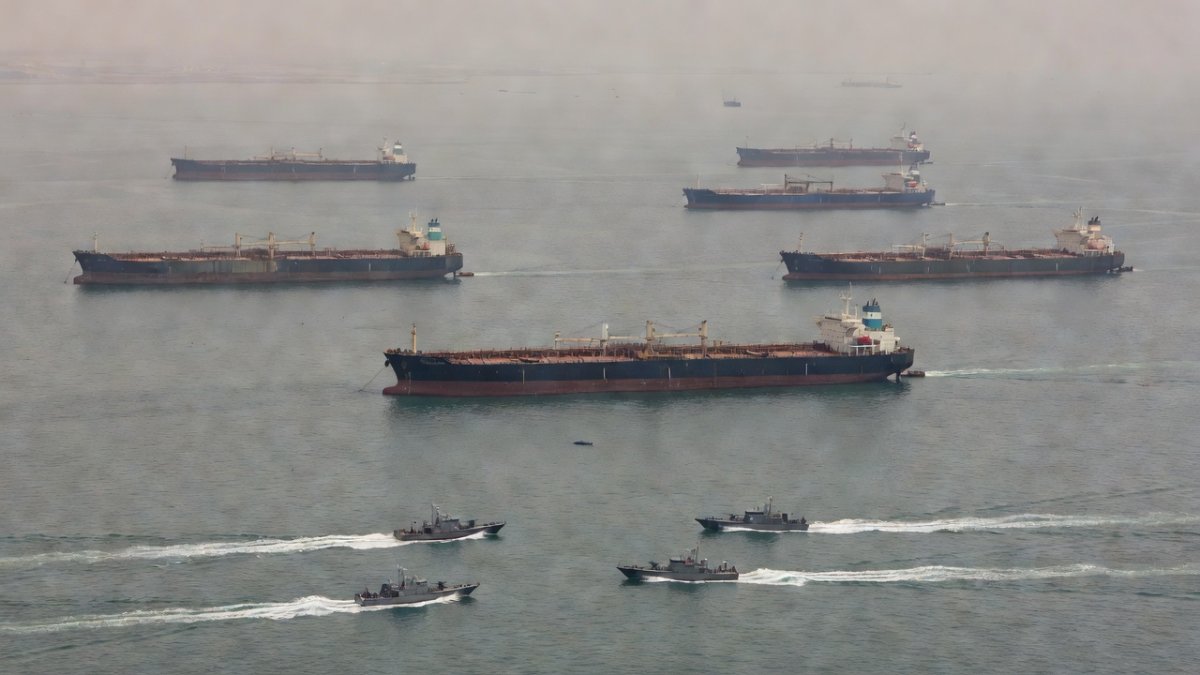
Strait of Hormuz aerial view. (Global 1 News)
Folks, here we go again. On June 20, 2026, Iran slammed the Strait of Hormuz shut to all maritime traffic, just 48 hours after inking a 14-point memorandum of understanding with the United States. The official line from Iran's joint military command points straight at Israeli airstrikes in southern Lebanon as the trigger. That waterway moves roughly 20 million barrels of oil per day — about 20 percent of global maritime supply. The question isn't whether this will hurt. It's how fast and how hard.
Iran's Military Command Declares the Closure
According to AP News and NBC News, Iran's central military command issued the order on Saturday, June 20, citing U.S. and Israeli violations of the June 18 MoU. Iran's Tasnim news agency, via PressTV, reported the strait would remain closed until those alleged breaches stop. Tankers already in the area have been stranded, and insurance premiums for any vessel attempting passage have jumped sharply.
Per AP reporting, this marks the second full closure since the U.S.-Iran war began on February 28, 2026. The move directly contradicts the core promise of the recent deal: Iran would reopen the strait in exchange for Washington lifting its port blockade. That promise lasted less than two days. What this means for readers is simple — energy markets just got handed a fresh supply shock with almost no warning.
Actionable context: Shipping companies are already rerouting around the Cape of Good Hope, adding 10 to 14 days to voyages. That delay alone pushes up costs for everything from gasoline to plastics. Watch Brent crude — it was already near $114 a barrel in May. Any sustained closure could push it well past that level within weeks.
Israeli Airstrikes in Lebanon Break the Fragile Truce
Lebanon's health ministry told AP that Israeli airstrikes on Saturday killed at least 16 people, including two children. The Lebanese National News Agency reported strikes in Arabsalim (three killed), Deir al-Zahrani (one killed), and multiple other southern towns. Hezbollah immediately accused Israel of repeated truce violations. Israel responded that it was targeting Hezbollah attacks.
According to NBC News and the Indian Express, these strikes occurred despite the June 18 ceasefire framework. Iran's military command explicitly named the Lebanon fighting as the reason for closing Hormuz. The timing could not have been worse — or more predictable. Hardliners in Tehran now have fresh ammunition to argue that Washington cannot control its allies.
What this means is that the Lebanon front has once again become the fuse for a much larger energy crisis. Everyday people in Europe and Asia will feel it first at the pump and in higher electricity bills. Global markets hate uncertainty, and this situation is delivering it by the barrel.
The June 18 U.S.-Iran MoU Already in Tatters
The 14-point memorandum, mediated by Pakistan and signed on June 18, gave Iran 60 days to prove commitment to peace while both sides negotiated Iran's nuclear program. In return, the U.S. would end its blockade of Iranian ports. According to the New York Post and Euronews, the deal was supposed to create breathing room for in-person talks scheduled to begin June 21 in Switzerland.
Yet Iran's military command declared the strait closed before those talks even started. Al Jazeera reports that Iranian officials now say progress is unlikely while fighting in Lebanon continues. The BS here is obvious: a deal built on mutual de-escalation collapsed the moment the first bombs fell in southern Lebanon. Readers deserve to know the timeline was never realistic given the active fronts.
Actionable context: Any delay in Swiss talks means continued uncertainty for oil traders. Companies that hedged at lower prices are now exposed. Consumers should expect gasoline prices to rise 20 to 40 cents per gallon in the U.S. within the next month if the closure holds.
Supreme Leader Mojtaba Khamenei Keeps His Distance
Iran's Supreme Leader Mojtaba Khamenei has expressed clear reservations about the peace deal, according to the New York Times and Al Jazeera. He has deflected responsibility onto Iran's elected government, emboldening hardline factions opposed to any concessions. Tasnim news agency, linked to the IRGC, called for the strait to stay closed until Israel fully withdraws from Lebanon.
This stance matters because Mojtaba Khamenei took power after his father, Ali Khamenei, was killed in U.S.-Israeli airstrikes on February 28, 2026. The son's public coolness toward the MoU gives cover to military commanders who never wanted the strait reopened in the first place. Folks, this is classic power politics — the elected government signs, the Supreme Leader shrugs, and the military acts.
The result is that any future agreement will face the same internal resistance. Markets price in that risk immediately, which is why shipping rates and insurance costs spiked within hours of the June 20 announcement.
Oil Markets and Global Supply Shock Risks
Al Jazeera and Business Today report that the closure has already stranded multiple tankers and driven up war-risk insurance premiums. Analysts are warning of a global supply shock if the strait remains shut for more than a few weeks. Brent crude's earlier climb to roughly $114 per barrel in May shows how sensitive prices remain to any Hormuz disruption.
What this means for readers is higher costs across the board — fuel, food transport, manufacturing inputs. Countries in Asia that rely heavily on Gulf crude will feel it fastest. European nations still rebuilding strategic reserves after the earlier war phase face added pressure. The ripple effects reach every gas station and grocery shelf.
Actionable context: Track weekly inventory reports from the International Energy Agency. If draws accelerate beyond 2 million barrels per day, expect further price spikes. Airlines have already begun adding fuel surcharges on long-haul routes.
U.S. Reaction and What Comes Next
President Trump told The Guardian he had "told Israel to calm down." The White House, per CNBC, denied Iran's claims that the strait is closed and stated the waterway remains open. Secretary of State Marco Rubio's envoy was reportedly heading to the region, according to The Independent. Pakistan had announced the June 21 Swiss talks, but Iran now questions whether they can proceed.
The gap between Washington's public statements and Iran's military actions is widening by the hour. This is not spin — it is a direct contradiction on a chokepoint that moves one-fifth of the world's oil. Readers should watch whether the Swiss talks happen at all and whether any new agreement includes enforceable monitoring of the strait itself.
The next 72 hours will tell us if this closure is temporary posturing or the start of a longer crisis. Keep your eyes on tanker tracking data and any statement from the IRGC. That is where the real decisions are being made.
By Jessica Ali, Global 1 News
This article was produced with AI-assisted research and editorial support. Reporting is based on sources cited in the article.
What's Your Reaction?
 Like
0
Like
0
 Dislike
0
Dislike
0
 Love
0
Love
0
 Funny
0
Funny
0
 Wow
0
Wow
0
 Sad
0
Sad
0
 Angry
0
Angry
0

Editor-in-Chief at Global1.News. Atlanta-based journalist who cuts through the BS and tells it like it is. Lead anchor, host, and the voice you hear when the spin stops and the truth starts.












Comments (0)