
The Stone Born of Supercontinents: The Science Behind Labradorite
How a Gorgeous Gemstone Holds Secrets of Ancient Supercontinents If you've ever held a piece of labradorite up to the light, you know the feeling. That flash of electric blue, green, or gold — like a tiny aurora trapped in stone — is one of nature's most stunning optical illusions. But here's what most people don't know: that beautiful rock you can buy at any gemstone shop is a
How a Gorgeous Gemstone Holds Secrets of Ancient Supercontinents
If you've ever held a piece of labradorite up to the light, you know the feeling. That flash of electric blue, green, or gold — like a tiny aurora trapped in stone — is one of nature's most stunning optical illusions. But here's what most people don't know: that beautiful rock you can buy at any gemstone shop is a geological time capsule, forged by forces that reshaped the entire planet hundreds of millions of years ago.
I'm Allan Ali, and this is Global 1 News — The Global Story.
In a recent episode of SciShow, host Hank Green explored one of the most fascinating stories in geology: the origin of labradorite, a feldspar mineral that formed during one of Earth's most dramatic chapters. Named after the Labrador Peninsula in Canada where it was first identified in the late 1700s, labradorite isn't just a pretty rock. It's a direct relic of the supercontinent cycle — the slow, grinding dance of tectonic plates that builds and destroys continents over billions of years.
What Makes Labradorite Flash Those Colors?
The phenomenon is called labradorescence — a specific kind of iridescence caused by light interacting with microscopic layers inside the crystal. As labradorite cools from magma, it separates into alternating thin sheets of different feldspar compositions. These layers are just a few hundred nanometers thick — about the same order of magnitude as the wavelength of visible light. When light hits those layers, it bends, splits, and reflects at different angles, producing that signature blue-green flash.
It's the same basic physics that makes soap bubbles shimmer or a butterfly's wing appear iridescent. But in labradorite, the effect is frozen in stone — literally. The cooling process that created those nanoscale layers only happens under very specific conditions, and those conditions trace back directly to the formation of the supercontinent Rodinia, more than a billion years ago.
The Supercontinent Connection
Labradorite is found in anorthosite — a type of igneous rock that's relatively uncommon on Earth's surface today. But during the formation of supercontinents like Rodinia, anorthosite formed in enormous quantities. Geologists believe that as continents collided and mountain ranges rose, huge magma chambers deep beneath the crust began cooling extremely slowly, allowing the feldspar crystals to separate into those signature layered structures.
The oldest labradorite deposits trace back roughly 1.3 billion years, to the assembly of Rodinia. Younger deposits — including those in Labrador and Madagascar — formed during the breakup of Rodinia and the later assembly of Pangea, the most recent supercontinent, around 300 million years ago. In short, every piece of labradorite you've ever seen carries the chemical fingerprint of a supercontinent's birth or death.
Why This Matters for Modern Science
Beyond its beauty, labradorite is a surprisingly useful tool for geologists. Because it forms at specific temperatures and pressures inside anorthosite plutons, the presence of labradorite can tell geologists where ancient continental collisions happened — information that helps map the deep structure of Earth's crust. In Canada, Greenland, and Madagascar, labradorite deposits have helped geologists reconstruct the positions of ancient landmasses with remarkable precision.
There's also a growing body of research connecting anorthosite formation to the thermal evolution of the Earth's mantle. The same supercontinent events that produced labradorite also regulated heat flow from Earth's interior, influencing long-term climate patterns and even the distribution of life across geological time. When you look at a labradorite gem, you're looking at evidence of how our planet's internal engine works.
From Science to Spirituality
Of course, labradorite has also found a second life in the world of crystal healing and New Age spirituality, where it's marketed as a "stone of transformation" and "protection." While there's no scientific evidence for those claims, the commercial demand for labradorite has actually helped keep smaller mining operations viable in remote parts of Canada and Madagascar — operations that sometimes turn up new geological discoveries in the process.
As one mineralogist told the Canadian Journal of Earth Sciences: "You can laugh at the crystal healing crowd all you want, but some of our best geological samples from northern Quebec have come from small-scale labradorite miners who were really just looking for pretty rocks to sell." It's a reminder that science and commerce sometimes make strange bedfellows — and that a beautiful stone can drive discovery in unexpected ways.
The Bottom Line
Labradorite is more than a gem. It's a geological archive — a window into the forces that built and tore apart supercontinents long before life on Earth even crawled out of the oceans. The next time you see that flash of blue-green light inside a polished stone, you're seeing the signature of Earth's deep interior, frozen for nearly a billion years.
If you want to see the full SciShow episode breaking down the geology behind labradorite, you can check it out at the link above. And if you're as fascinated by the natural world as I am, share this story with someone who loves rocks — they'll never look at a piece of labradorite the same way again.
This is Allan Ali for Global 1 News. Stay curious, folks.
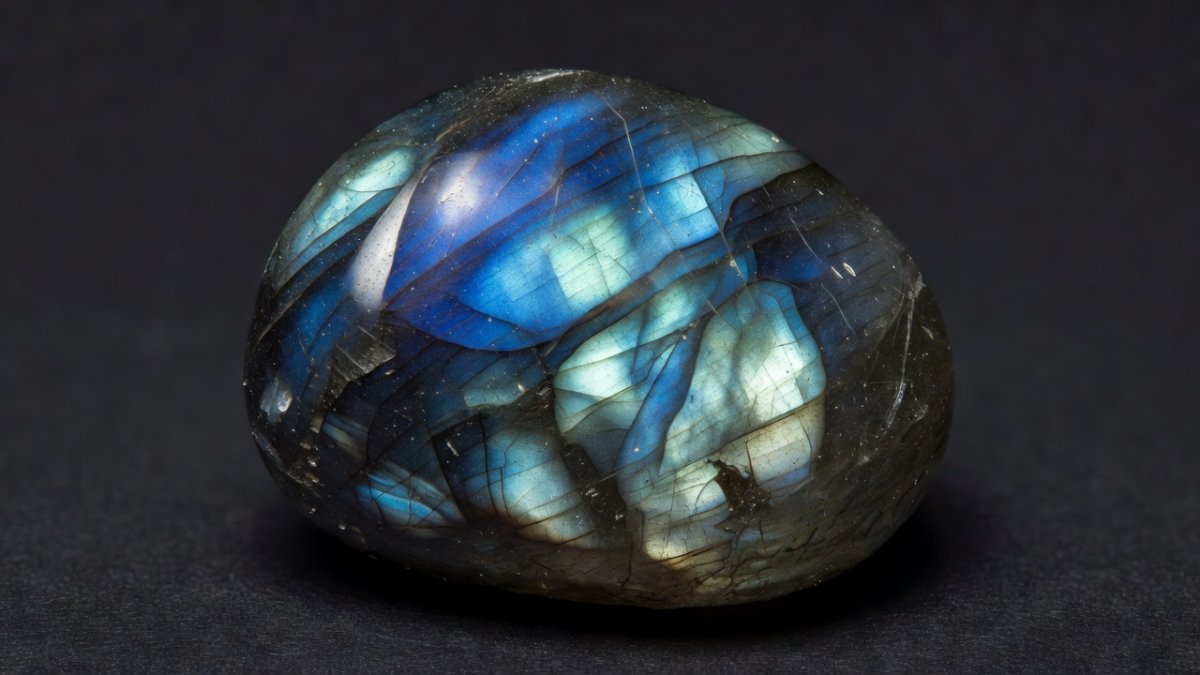
Image: Specimen of labradorite showing iridescent labradorescence. (Global 1 News)
This article was produced with AI-assisted research and editorial support. Reporting is based on sources cited in the article.
What's Your Reaction?
 Like
0
Like
0
 Dislike
0
Dislike
0
 Love
0
Love
0
 Funny
0
Funny
0
 Wow
0
Wow
0
 Sad
0
Sad
0
 Angry
0
Angry
0

Publisher of Global1.News. Automation architect, systems builder, and the guy making sure the truth gets published.














Comments (0)