
Boulos Meets with Libyan Factions Opposed to US Plan as Washington Pushes Oil-for-Unity Deal
<p>In a recent i24NEWS English report, Massad Boulos, US President Donald Trump's Senior Advisor for Arab, Middle Eastern, and African Affairs, traveled to the western Libyan city of Misrata to meet with political and military figures opposed to Washington's initiative for reunifying Libya's rival administrations. The visit underscores the growing resistance to the US-backed plan that links international oil investment commitments to a 36-month power-sharing arrangement between Libya's competing

In a recent i24NEWS English report, Massad Boulos, US President Donald Trump's Senior Advisor for Arab, Middle Eastern, and African Affairs, traveled to the western Libyan city of Misrata to meet with political and military figures opposed to Washington's initiative for reunifying Libya's rival administrations. The visit underscores the growing resistance to the US-backed plan that links international oil investment commitments to a 36-month power-sharing arrangement between Libya's competing eastern and western factions.
Boulos Meets with Libyan Factions Opposed to US Plan as Washington Pushes Oil-for-Unity Deal
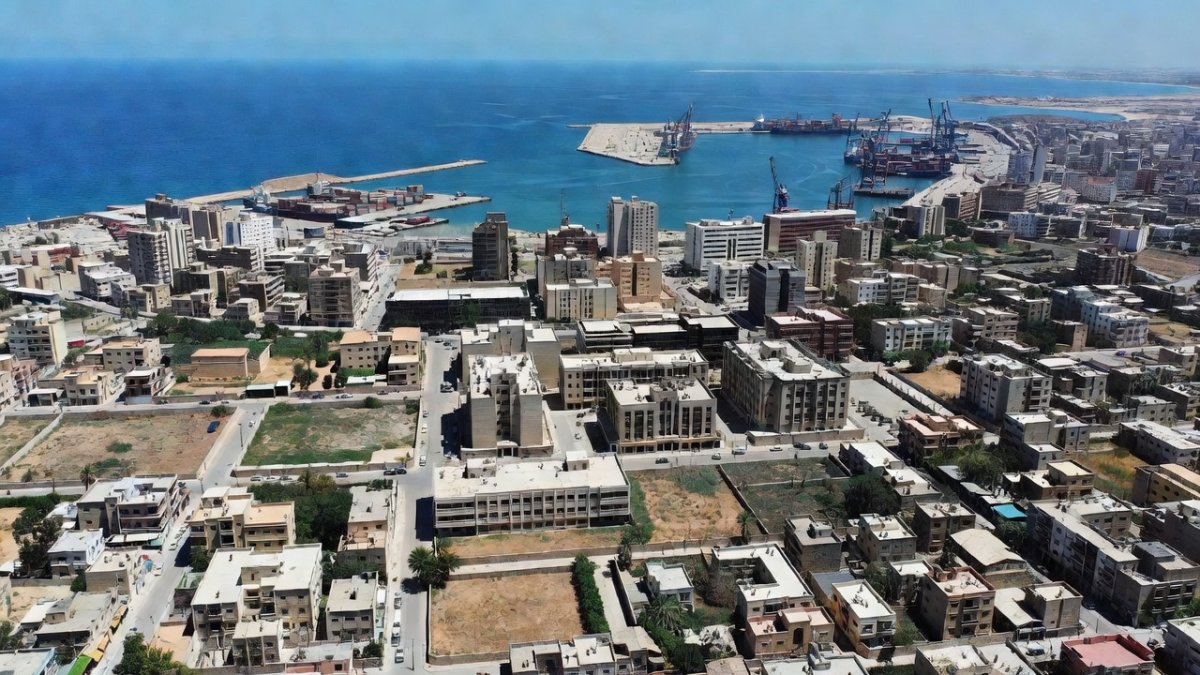
Tel Aviv, Israel – July 11, 2026 — Massad Boulos, the Trump administration's point man on Arab, Middle Eastern, and African affairs, spent July 7 in Misrata meeting leaders who reject the proposed transitional framework that would place Saddam Haftar, son of eastern commander Khalifa Haftar, in a senior presidential role within a unified Government of National Consensus.
The Proposed Power-Sharing Framework
The US initiative, which Boulos outlined publicly in a June interview with the Financial Times, calls for Abdul Hamid Dbeibeh to remain Prime Minister of the Government of National Unity in Tripoli while Saddam Haftar would effectively serve as president under a newly created Presidential Council. The arrangement is designed to last 36 months and will be overseen by a body called the Government of National Consensus.
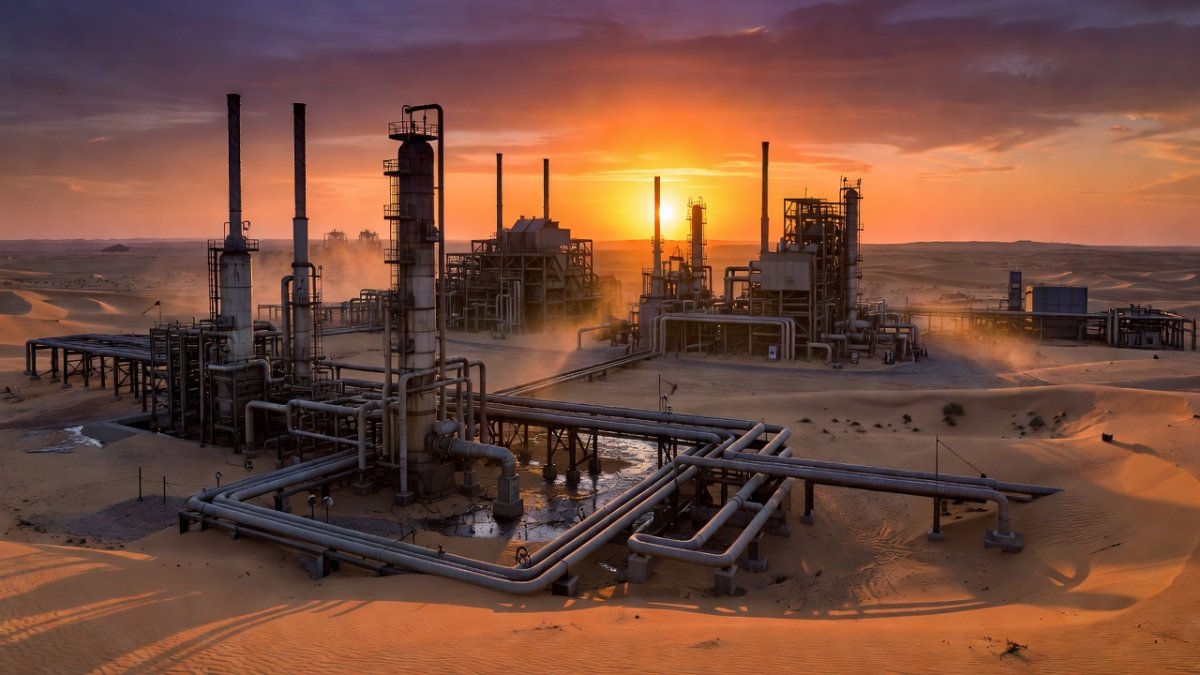
International oil companies would commit significant capital to develop Libya's oilfields only after both factions formally accept the framework. The offer arrives as Libya's National Oil Corporation reports crude production at 1.44 million barrels per day, the highest level since 2013 and close to the strategic target of 1.5 million barrels per day.
The Central Bank of Libya has made clear it cannot sustainably finance two parallel governments, creating what analysts describe as the financial pressure point Washington hopes will push Dbeibeh and the Haftars toward agreement.
Opposition in Western Libya
Boulos's visit to Misrata, a city with deep historical ties to the Libyan revolution and a power base for western armed groups, highlighted the depth of opposition to the American proposal. Local leaders view the elevation of Saddam Haftar as unacceptable given the history of fighting between western militias and the Libyan National Army during the 2014-2020 civil war.
Libya's Grand Mufti Sadiq al-Ghariani issued a forceful religious opinion rejecting any arrangement that would place a member of the Haftar family in a senior state position. Mohamed Takala, President of the High Council of State, and Mohamed al-Menfi, President of the Presidential Council, have both publicly rejected the initiative, arguing that Libya's political future should be determined through domestic consensus rather than externally sponsored arrangements.
Protests against the US plan have grown in Tripoli and surrounding areas in recent days, adding pressure on Dbeibeh, whose Government of National Unity has not yet formally endorsed or rejected the proposal. Analysts note that signing on carries significant political risk for Dbeibeh, who comes from Misrata and relies on support from western constituencies hostile to the Haftars.
Eastern Support and Regional Reactions
On the eastern side of the divide, Field Marshal Khalifa Haftar's Libyan National Army has signaled readiness to enter direct negotiations on the American proposal. More than 104 members of the House of Representatives in Benghazi issued statements welcoming the initiative as a potential pathway out of Libya's prolonged political crisis.
Saddam Haftar met with US Secretary of State Marco Rubio in Washington last month and expressed support for the transitional framework. The meeting followed a visit by Pakistan's military chief to Saddam Haftar in Rawalpindi, underscoring the expanding web of international engagement with the eastern camp.
The regional dimension extends further. On June 20, a quadrilateral meeting in Cairo brought together Egyptian Foreign Minister Badr Abdelatty, Saudi Foreign Minister Prince Faisal bin Farhan, Turkish Foreign Minister Hakan Fidan, and Boulos, with the four countries reaffirming support for Libya's sovereignty and territorial unity. Egypt's intelligence chief separately held talks with Dbeibeh inside Libya as Cairo seeks to maintain influence over the political process.
Oil, Energy Security, and Strategic Calculations
Libya holds Africa's largest proven oil reserves, and its light sweet crude is particularly suited for European refineries that are seeking alternative supply routes during the ongoing US-Israel conflict with Iran, which has disrupted shipping through the Strait of Hormuz. A unified Libya capable of increasing production toward three million barrels per day by 2030 would provide the West with a strategically located energy source less than two days sailing from southern European ports.
The National Oil Corporation has signed production-sharing agreements with several major international energy companies following Libya's first licensing round in nearly two decades. NOC Chairman Masoud Suleiman has reported that Libya possesses approximately 80 trillion cubic feet of natural gas reserves, including both conventional and unconventional resources.
US officials see the power-sharing deal as a tool for curbing irregular migration departures from Libyan coastal areas, limiting Russian influence in North Africa, and stabilizing a country that has been in turmoil since the 2011 NATO-backed operation that toppled Muammar Gaddafi.
Analysis: Patchwork Solution or Genuine Path Forward
Tim Eaton, a senior research fellow at Chatham House's Middle East and North Africa Programme, describes the US proposal as an effort focused primarily on getting the Haftar and Dbeibeh families to formally agree to share power rather than building inclusive governance institutions. Tarek Megerisi of the European Council on Foreign Relations goes further, calling the arrangement a deal that "would spell the end of Libyan hopes for elections and finish the revolutionary transition that began in 2011 by formalizing a new authoritarian, despotic system."
Meanwhile, a competing domestic roadmap has emerged. House of Representatives Speaker Aguila Saleh, together with Takala and al-Menfi, announced a plan for simultaneous presidential and parliamentary elections before February 2027, with a high-level committee to supervise the electoral process. The United Nations Support Mission in Libya continues facilitating discussions on a comprehensive political settlement.
The US initiative's viability ultimately depends on whether Dbeibeh signs on despite intense opposition in western Libya, and whether the Haftars can be trusted not to use any transitional arrangement as a springboard for military consolidation. Failure to reach agreement would prolong the Central Bank's financing strains, leave Libya's oil production growth at risk, and keep the country's 7 million people in a holding pattern that has now lasted fifteen years.
By Hannah Berg, Staff Writer
What's Your Reaction?
 Like
0
Like
0
 Dislike
0
Dislike
0
 Love
0
Love
0
 Funny
0
Funny
0
 Wow
0
Wow
0
 Sad
0
Sad
0
 Angry
0
Angry
0






Comments (0)