
Gordie Howe International Bridge to Open July 27, Deal Confirmed
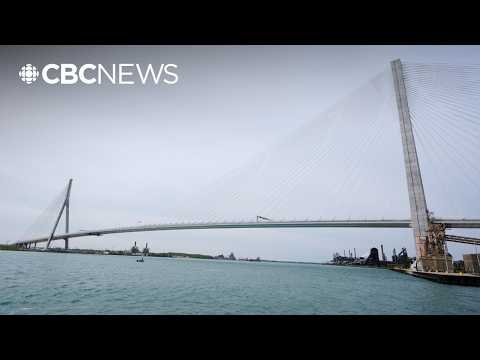
In a CBC News video report released today, federal officials and U.S. President Donald Trump confirmed that the Gordie Howe International Bridge will open on July 27, 2026, after a delay from the original June 12 ribbon-cutting date requested by the United States. Confirmation of the July 27, 2026 Opening Date Prime Minister Mark Carney stated this week that the delay occurred
Confirmation of the July 27, 2026 Opening Date
Prime Minister Mark Carney stated this week that the delay occurred at the explicit request of the United States government, with Canada and Michigan reaching agreement on the new July 27, 2026 date under U.S. federal support.
The Windsor-Detroit Bridge Authority received formal notifications from both Ottawa and Washington in recent days, locking in the timeline for the 2.5 km structure across the Detroit River.
Canadian federal sources emphasised that the July 27, 2026 opening aligns with completed construction milestones on the Canadian side in Windsor, Ontario, where port-of-entry facilities now incorporate advanced screening technologies.
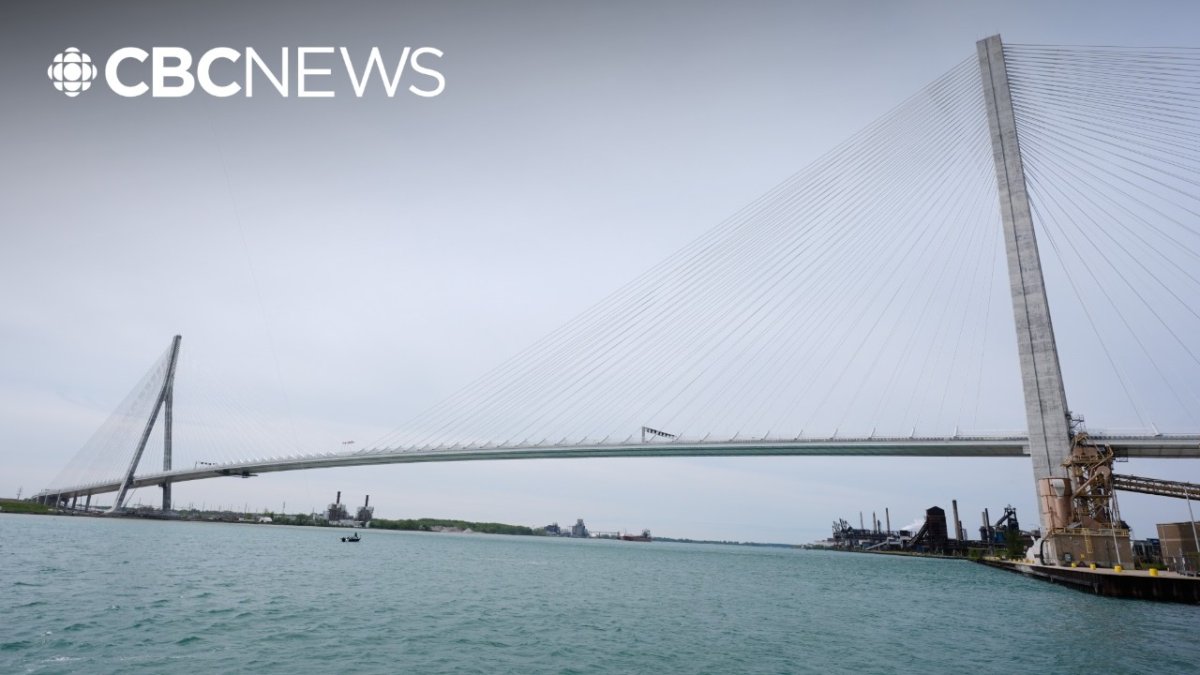
Engineering Specifications of the Six-Lane Structure
The $6.4 billion cable-stayed bridge features a main span of 853 metres, making it the longest cable-stayed bridge in North America upon completion.
Construction crews finished the six-lane roadway and modern ports of entry on both the Windsor and Detroit sides, with the Canadian government financing the entire project and planning to recover costs exclusively through toll revenues.
Ownership of the completed bridge rests jointly with the Government of Canada and the state of Michigan, a structure first formalised in the 2012 bridge deal signed with former Michigan governor Rick Snyder.
Financial Terms and Toll Revenue Sharing
Under the final agreement, Canada receives 50 percent of toll profits after operational expenses, while the remaining 50 percent funds a U.S.-run regional development project for 15 years.
The Windsor-Detroit Bridge Authority must consult U.S. officials on any toll increase exceeding 10 percent, a clause added during negotiations led by U.S. Commerce Secretary Howard Lutnick and Ambassador Pete Hoekstra.
Equal toll rates apply to Canadian and American users, reversing an earlier Canadian proposal for higher charges on U.S. vehicles.
Canada will recoup its full construction investment solely through these tolls, with no direct U.S. contribution to the $6.4 billion capital cost.
Political Negotiations and the Role of U.S. Officials
Minister Gregor Robertson noted that the project represents years of planning and partnership between Canadian and Michigan authorities, describing it as a nation-building initiative that strengthens continental trade corridors.
Governor Gretchen Whitmer highlighted that thousands of Michigan workers participated in construction, projecting faster auto production, reduced logistics costs, and improved agricultural shipments across the border.
U.S. Ambassador Pete Hoekstra publicly described claims that Canada solely paid for the bridge as a myth during recent statements, even as federal records confirm full Canadian financing.
House Democrats launched an investigation into whether the Moroun family, owners of the competing Ambassador Bridge and Republican donors, attempted to obstruct the project timeline.
Economic Impact on Canadian Trade and Federal-Provincial Relations
The Windsor-Detroit corridor already handles hundreds of millions of dollars in daily trade, making it the busiest international land border crossing in North America.
Canadian exporters in the automotive and agricultural sectors stand to benefit from reduced congestion once the new bridge diverts traffic from existing routes, directly supporting federal economic objectives in Ontario.
Federal-provincial coordination between Ottawa and Queen's Park ensured seamless integration of Canadian customs facilities, illustrating how infrastructure projects can advance both national trade policy and provincial labour market goals.
Analysts note that the 15-year U.S. regional development fund tied to bridge profits creates a long-term mechanism for cross-border economic cooperation that could influence future federal infrastructure negotiations.
Background on Opposition and Project History
The Moroun family has opposed the Gordie Howe International Bridge since the 2012 agreement, citing competition with their Ambassador Bridge operations.
President Donald Trump endorsed the project during his first term, providing political momentum that helped overcome earlier delays.
Canadian officials have consistently framed the bridge as essential to maintaining reliable access for Ontario manufacturers to U.S. markets, a priority that remains central to federal trade strategy.
 By Alex Thompson, Staff Writer
This article was produced with AI-assisted research and editorial support. Reporting is based on sources cited in the article.
What's Your Reaction?
 Like
0
Like
0
 Dislike
0
Dislike
0
 Love
0
Love
0
 Funny
0
Funny
0
 Wow
0
Wow
0
 Sad
0
Sad
0
 Angry
0
Angry
0

Canada Correspondent at Global1.News. Based in Toronto, covering Canadian politics, energy, trade, and US-Canada relations. Provides the Canadian perspective on North American and global affairs.














Comments (0)