
Displaced Yemeni Women Face Sexual Harassment in Rural Camps
Displacement from Taiz and Arrival in al-Safia Afnan al-Soroori, 22, used to live a comfortable middle-class existence with her family in Taiz, Yemen's third-largest city. Like others of her kind, she wore clothes common to more liberal and fashionable Yemeni women, would go outside more or less when she wanted, and hung out with other female students also doing their undergrad
Displacement from Taiz and Arrival in al-Safia
Afnan al-Soroori, 22, used to live a comfortable middle-class existence with her family in Taiz, Yemen's third-largest city. Like others of her kind, she wore clothes common to more liberal and fashionable Yemeni women, would go outside more or less when she wanted, and hung out with other female students also doing their undergraduate degrees at Taiz University, one of the country's best. As the eldest of five siblings, Soroori helped out around the house, but with an electric oven, washing machine and household appliances aplenty, this was never a burden.
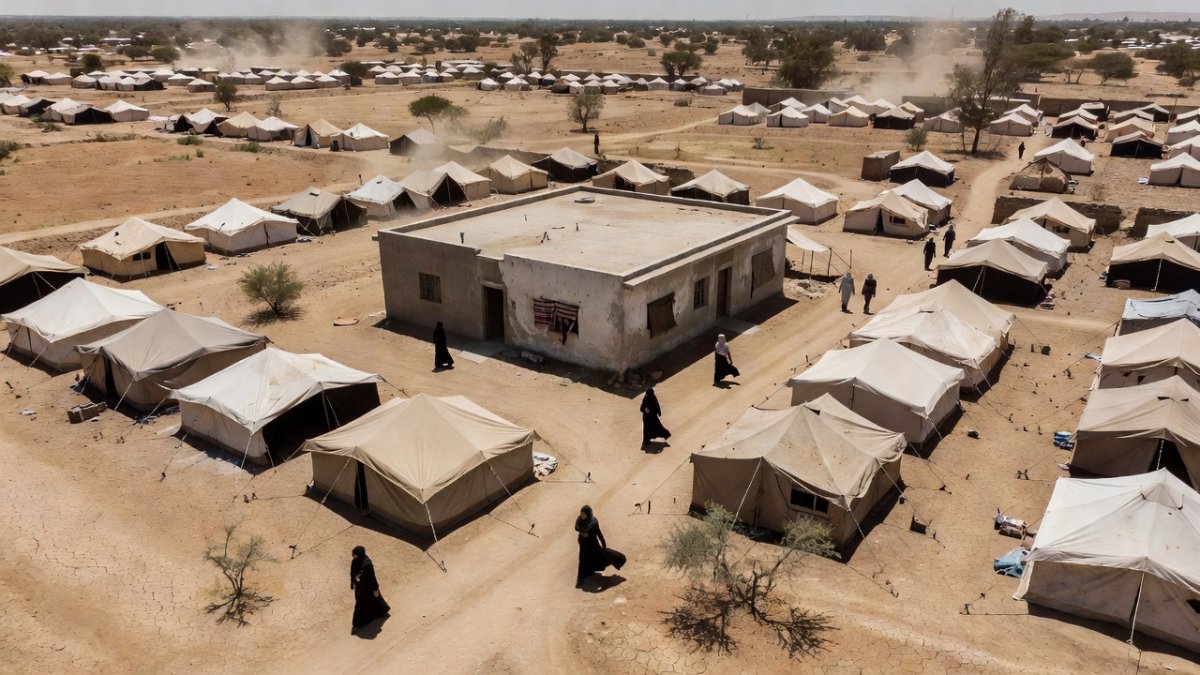
But a year ago, as Houthi rebels inched closer and closer to her home, that all changed. Her family fled the city and took shelter in a makeshift camp in a school in the al-Safia area, 65 kilometres away. The life they found there could not be more different. The family was forced to leave all their possessions behind and Soroori's father has not been able to work. These days, just doing simple chores is a grinding ritual that lasts from dawn until after dusk.
Daily Realities Without Basic Appliances
Instead of a stove, Soroori tries to cook meals in a makeshift oven she fashioned from two stones placed next to firewood. She washes the family's clothes by hand in a large bowl in the school's courtyard and says her hands have grown hard from the work. What she hates most is her total lack of independence. The shift from urban routines to rural survival has stripped away the modest freedoms these women once took for granted.
Women in the camp now navigate a world where every task demands physical endurance and constant vigilance. The absence of electricity and running water turns ordinary chores into exhausting ordeals that stretch across daylight hours. This transformation highlights how conflict uproots not only homes but also the rhythms of daily life that once allowed dignity and routine.
Harassment That Confines Women to the Camp
"I'm finding it hard to adapt to domestic work without electric appliances, but the worst thing is that I cannot leave the camp," Soroori said. "If I try to leave, I will find several youths waiting to harass me." As soon as she tries to step outside the gates, young men crowd around and either shout abuse or make inappropriate sexual advances, she said. "If you leave the camp, especially in the afternoon, you will hear bad words and see obscene gestures," Soroori said. "Once this happens, it forces you to stay in the camp and not leave again."
She said the clothes she wore so naturally in the city make her a target here. Many middle-class women in the city wear an abaya, a long Muslim dress that covers the whole body, but leaves the face exposed. Traditionally, the abaya has been jet-black and very loose, but in the cities it has become more fitted and has increasingly been worn with different colours and designs. In the countryside, however, women still wear the more conservative abaya or other forms of dress that cover the entire face.
Additional Accounts from Mariam Abdul-Qader
Even some of the women who either brought more traditional abayas with them or have been able to get some in the countryside have been unable to avoid the harassment. Mariam Abdul-Qader, a 23-year-old who lives in the same camp, has resorted to wearing the same clothes as the rural women, but said local youths still recognise her by her sandals and shout abuse regardless. "I tried to wear the same dress as the women in the al-Safia area, but the awful young men seem to recognise us just from the way we walk and even from the sandals we wear as I do not have the plastic shoes worn by the women here," Abdul-Qader said.
She added that oftentimes women from the camp, who have grown close over the last year, go out in large groups to try and avoid problems, but not even this has stopped the name-calling and aggressive harassment. "I hate this atrocious war that drove us away from our houses and forced us to accept life among these savage people who don't appreciate our suffering," Abdul-Qader said. The shared experience of confinement has forged bonds among the displaced women while deepening their isolation from the surrounding landscape.
Appeals to Local Elders and Resulting Tensions
Soroori's father, like other men with female relatives in the camp, has appealed to local tribal elders to tell the young men in the community to treat women from the city with respect, but their calls have gone unheeded. Instead of chastising their sons, most men have opted to lash out at the women, saying that they dress and behave inappropriately. "We went to the mosques in the village and told the religious people about this problem, but all of them were against the women and criticised their fashionable clothes and loud voices," he told MEE. Since that day, he has had no choice but to tell his wife and three daughters to stay in the camp until they are able to return to Taiz City.
Soroori said that the city families largely reject this approach and think that local villagers have a skewed interpretation of Islam and Yemeni culture, but that there is little they can do to remedy the situation. "This is not our area, so we have no choice but to be confined by the cultural norms of the rural areas," Soroori said. "No one can help us here, so I have decided to stay in the camp at all times." "I know there is a beautiful bit of green land outside, but I cannot go out to enjoy it," she added.
Local Perspectives and the Broader Yemen Crisis
Local people have also grown frustrated and even angry at the new arrivals for upsetting age-old customs that have governed their rural life for centuries. A local sheikh, Mohammed Gobah, told MEE that sexual harassment had regrettably become a major problem in area, but he blamed the "immodesty" of the city women. These cultural frictions unfold against the backdrop of Yemen's protracted conflict, where displacement has scattered families across front lines and into unfamiliar territories.
The experiences of women like Soroori and Abdul-Qader reflect wider patterns of vulnerability that accompany forced movement in Yemen. As fighting continues to drive civilians from urban centres such as Taiz into rural zones, the loss of personal safety and autonomy compounds the humanitarian pressures already straining communities. Reports from rights monitors document how conflict-related displacement frequently exposes women to heightened risks of harassment and restricted movement, eroding the social fabric that once supported daily life.
Similar dynamics of confinement and cultural dislocation appear in other conflict settings, including the occupied Palestinian territories where movement restrictions and displacement have long limited women's access to public spaces and economic opportunities. In both contexts, women bear the compounded weight of war through curtailed freedoms and the daily negotiation of safety. The accounts from al-Safia underscore the urgent need for protection mechanisms that address gender-specific harms amid Yemen's ongoing crisis.
By Fatima Al-Rashid, Staff Writer
This article was produced with AI-assisted research and editorial support. Reporting is based on sources cited in the article.
What's Your Reaction?
 Like
0
Like
0
 Dislike
0
Dislike
0
 Love
0
Love
0
 Funny
0
Funny
0
 Wow
0
Wow
0
 Sad
0
Sad
0
 Angry
0
Angry
0

Gulf/MENA Correspondent at Global1.News. Based in Doha, covering Gulf politics, energy markets, diplomacy, and development across the Middle East and North Africa. Tracks the economic transformation of the Gulf states.














Comments (0)