
JAXA RV-X Reusable Rocket Test Advances Japan Space Goals
**Meta Description:** JAXA completed a successful July 2026 flight test of the RV-X reusable rocket prototype in Noshiro, Akita, reaching 11 meters and landing safely to support the Callisto program with France and Germany. **Keywords:** JAXA RV-X, reusable rocket Japan, Callisto launch vehicle, Takashi Ito JAXA, Noshiro Akita test, H3 rocket replacement, Japan space policy, re
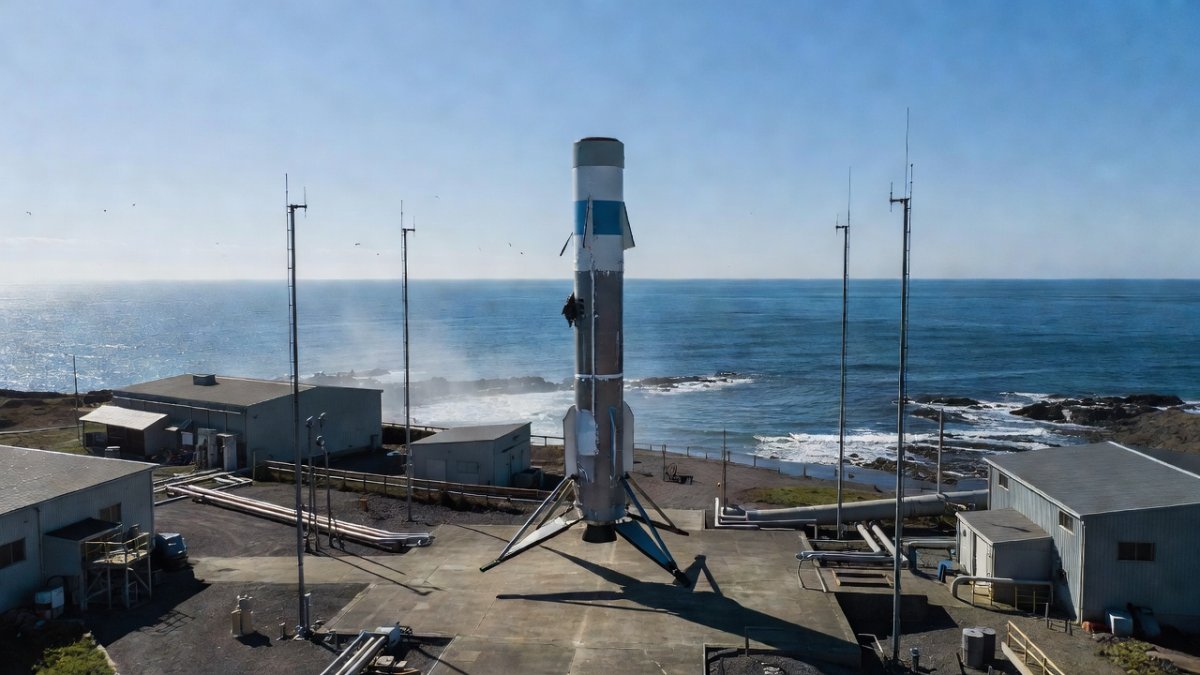
JAXA Conducts Controlled RV-X Flight Test
The Japan Aerospace Exploration Agency carried out a short-duration flight test of its RV-X reusable rocket prototype on July 11, 2026, at the agency’s Noshiro facility in Akita Prefecture. The vehicle lifted off, reached a peak altitude of approximately 11 meters, traveled roughly 16 meters horizontally, and executed a controlled landing after about 40 seconds aloft.
Project manager Takashi Ito described the outcome during an online press conference, stating that the flight test went well and that he felt relieved. The test formed part of a long-running series of experiments that JAXA has conducted since 2016 to gather data on vertical takeoff and landing performance.
Vehicle Dimensions and Landing System
The RV-X prototype measures 7.3 meters in length and 1.8 meters in diameter. It is equipped with four landing legs designed to absorb touchdown loads and maintain stability on the prepared pad at Noshiro. These physical characteristics were chosen to replicate key aspects of a larger operational vehicle while remaining within the constraints of the existing test site.
Engine performance data collected during the 40-second flight will be analyzed to refine guidance algorithms and propulsion throttling profiles. No anomalies were reported in the initial post-flight assessment released by JAXA.
Link to the Callisto Joint Development Program
The RV-X test directly supports the Callisto reusable launch vehicle project, a trilateral effort involving JAXA, France’s CNES, and Germany’s DLR. The Callisto demonstrator employs the same engine architecture validated on RV-X. A higher-altitude flight test of Callisto is scheduled before April 2027, with the objective of demonstrating recovery from a greater height than the 11-meter profile achieved in July 2026.
Progress on Callisto is intended to reduce per-launch costs for medium-class payloads and to position Japanese industry for participation in future European launch campaigns. The shared engine technology reduces duplication of development effort across the three agencies.
Japan’s National Space Strategy and H3 Context
Japan’s current flagship H3 rocket remains an expendable system. Government and industry planners have identified reusable technology as a route to increase launch cadence and lower the cost per kilogram to orbit. JAXA’s stated objective is to introduce operational reusable rockets in the early 2030s, at which point they could assume the role currently filled by H3.
The July 2026 test contributes incremental data toward that timeline. Policy documents issued by the Cabinet Office emphasize the importance of lowering launch costs to support expanded satellite constellations and national security missions. Reusability is listed among the priority technology areas alongside solid-propellant motors and electric propulsion.
Domestic Private-Sector Activity and International Comparison
In 2025, Honda R&D Co. completed Japan’s first private-sector reusable rocket flight test, demonstrating that non-governmental entities are also investing in vertical-landing hardware. JAXA’s public test therefore occurs alongside growing corporate interest in the same capability set.
Internationally, SpaceX has already placed reusable Falcon 9 boosters into routine service. China has achieved repeated recovery of orbital-class boosters, becoming the second nation after the United States to demonstrate operational reusability. Japan’s current efforts remain at the suborbital demonstrator stage, consistent with the measured pace described in JAXA’s public roadmap.
Policy Implications for Japanese Industry and Readers
Successful maturation of reusable launch technology would affect satellite operators, defense planners, and component manufacturers across Japan. Lower launch costs could accelerate deployment of Earth-observation constellations and communications satellites, areas in which Japanese firms already hold technical strengths. The Akita test site itself benefits from continued activity, sustaining local engineering employment and supply-chain demand.
Stakeholders in the aerospace sector will monitor the upcoming Callisto flight for further evidence that the technology path chosen by JAXA aligns with the early-2030s target. Until higher-altitude recoveries are demonstrated, the transition from expendable to reusable operations remains a multi-year development program rather than an immediate operational shift.
Tags: JAXA, RV-X, reusable rocket, Callisto, Akita, space policy, H3 rocket, Japan aerospace
By Kenji Tanaka, Staff Writer
This article was produced with AI-assisted research and editorial support. Reporting is based on sources cited in the article.
What's Your Reaction?
 Like
0
Like
0
 Dislike
0
Dislike
0
 Love
0
Love
0
 Funny
0
Funny
0
 Wow
0
Wow
0
 Sad
0
Sad
0
 Angry
0
Angry
0

Japan Correspondent at Global1.News. Tokyo-based voice covering Japanese politics, technology, economy, and culture. Tracks the intersection of tradition and innovation in one of the world's most dynamic societies.















Comments (0)