
Trump Threatens Iran With Locked and Loaded Missiles After Khamenei Funeral Chants
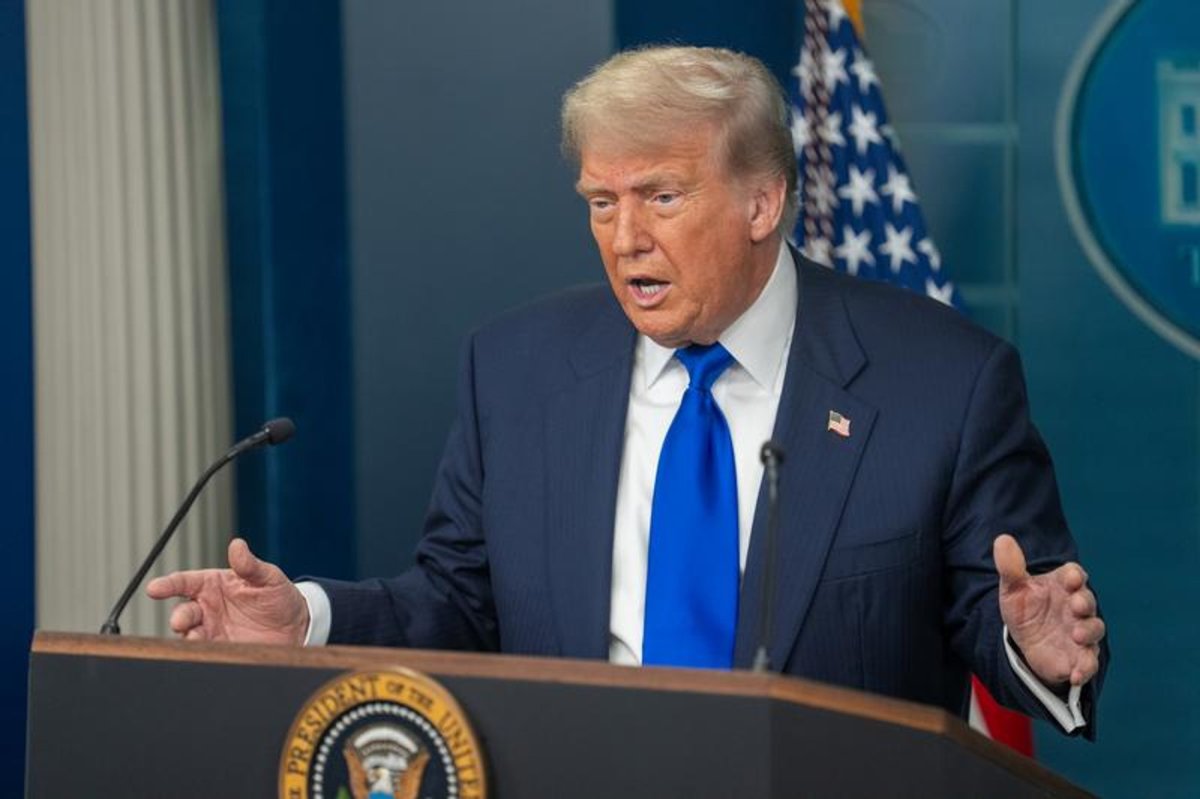
Trump Threatens Iran With 'Locked and Loaded' Missiles After Khamenei Funeral Chants Escalating Rhetoric from Washington U.S. President Donald Trump issued a direct warning to Iran on Truth Social, stating that a thousand missiles are locked and loaded and aimed at the Islamic Republic, with thousands more to follow if Tehran acts on threats against him. This response followed
Escalating Rhetoric from Washington
U.S. President Donald Trump issued a direct warning to Iran on Truth Social, stating that a thousand missiles are locked and loaded and aimed at the Islamic Republic, with thousands more to follow if Tehran acts on threats against him. This response followed chants calling for his assassination during the funeral of Supreme Leader Ayatollah Ali Khamenei. The language reflects Washington's determination to deter further escalation while an interim cease-fire frays through repeated exchanges of fire.
Trump's invocation of divine praise alongside threats to destroy areas of Iran underscores a personal dimension to the standoff. Senior U.S. officials have demanded public guarantees from Tehran that the Strait of Hormuz will remain open to commercial traffic. Iran has refused, insisting on sole control and the right to levy fees, a stance that directly challenges long-standing international norms treating the waterway as open to all nations.
The Strait of Hormuz Standoff
The crisis centers on Iran's position that activity in the Strait of Hormuz, including any opening or demining, rests exclusively with Tehran. This claim emerged after Iran attacked three ships earlier in the week, prompting U.S. airstrikes and subsequent Iranian retaliatory fire across multiple countries. Roughly one-fifth of global traded oil and natural gas transited the strait before the conflict, and Iran's wartime grip triggered sharp spikes in energy prices that later eased from wartime peaks near $120 a barrel.
Tehran's insistence on fees and exclusive oversight represents a strategic bid to leverage geography for revenue and influence. U.S. officials view this as unacceptable, warning that any disruption would invite decisive military response. The position also tests the limits of Iran's post-war unity under the new supreme leader, Ayatollah Mojtaba Khamenei, as hard-line factions appear to test the boundaries of the fragile truce.
Funeral Chants and Personal Threats
During the multi-day funeral for Ayatollah Ali Khamenei, mourners displayed posters and banners explicitly calling for the deaths of Trump and Israeli Prime Minister Benjamin Netanyahu. The ceremony followed an airstrike on February 28 that killed the 86-year-old leader, with his body later transported through cities in Iran and Iraq. These public displays amplified the personal stakes for Trump, who tied his missile threat directly to assassination attempts.
The chants highlight deep-seated animosity within segments of Iranian society toward U.S. and Israeli leadership. Yet Iranian officials maintain that the theocracy remains unified under Mojtaba Khamenei. This narrative of internal cohesion contrasts with U.S. assessments that rogue hard-liner factions may be sabotaging the cease-fire through renewed attacks.
Regional Retaliations and Ceasefire Fragility
Iran responded to recent U.S. strikes by targeting Bahrain, Jordan, Kuwait, and Qatar. Additional strikes hit Iran over two days, killing at least 17 people and wounding 115 others according to Iran's Health Ministry. Israel did not claim responsibility for some of the attacks inside Iran, raising the possibility that Gulf Arab states participated to deter future Iranian actions against them.
The pattern of tit-for-tat strikes illustrates how quickly the interim cease-fire can unravel. U.S. officials noted that Trump has given negotiators limited time to reach a deal, while keeping a wide range of military options available. Iran's Foreign Minister Abbas Araghchi accused Washington of violating the interim arrangement by ending waivers that allowed Iran to sell crude oil in U.S. dollars.
Mediation Efforts and Diplomatic Channels
Qatari mediators traveled to Iran for talks, while Iranian Foreign Minister Abbas Araghchi met his Omani counterpart in Muscat. Turkish Foreign Minister Hakan Fidan expressed optimism that a solution could be reached over the weekend between Iran and Oman, the two countries flanking the narrow waterway. These efforts reflect the broader regional interest in preventing a return to open conflict that would again threaten energy flows.
Araghchi emphasized that mutual compliance is required for any lasting agreement. The involvement of Oman and Qatar demonstrates how smaller Gulf states continue to play brokerage roles even as larger powers maneuver. Success here would hinge on whether Tehran accepts limits on its control over the strait in exchange for sanctions relief and security assurances.
Broader Geopolitical Implications
The current crisis intersects with multiple regional fault lines, including Sunni-Shia competition, Iran's nuclear program, and the lingering effects of Arab-Israeli normalization under the Abraham Accords. Gulf states' potential involvement in strikes against Iran signals a willingness to act independently to protect their interests, a shift that could reshape security alignments.
Energy markets remain sensitive to any renewed disruption in the strait, while great-power competition between the United States, China, and Russia adds another layer of complexity. For Iran, maintaining leverage over the waterway offers short-term bargaining power but risks isolating it further if international shipping faces sustained threats. The coming days will test whether diplomacy can contain the fallout or whether military options will again dominate.
By Malik Hassan, Staff WriterThis article was produced with AI-assisted research and editorial support. Reporting is based on sources cited in the article.
What's Your Reaction?
 Like
0
Like
0
 Dislike
0
Dislike
0
 Love
0
Love
0
 Funny
0
Funny
0
 Wow
0
Wow
0
 Sad
0
Sad
0
 Angry
0
Angry
0
Middle East Correspondent at Global1.News. Based in Beirut, covering politics, conflict, energy, and society across the Middle East. Brings context and depth to a region often reduced to headlines.










Comments (0)