
Morocco Fans Wave Palestinian Flag High at World Cup 2026: Football, Identity and Solidarity on London's Streets
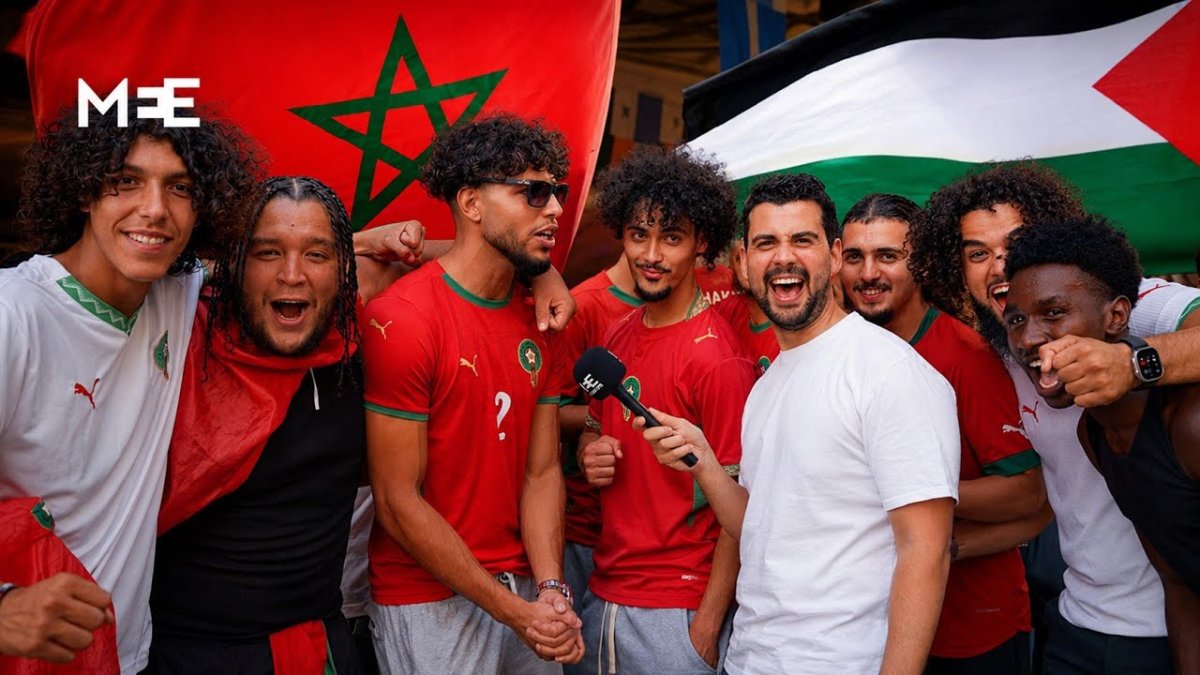
In a Middle East Eye video report from July 10, 2026, Morocco supporters gathered on Edgware Road in London ahead of the France versus Morocco quarterfinal at Boston Stadium. The footage captures fans waving Palestinian flags alongside Moroccan ones, with conversations quickly moving beyond match tactics to questions of identity, FIFA policies, and the shared experiences of occ
In a Middle East Eye video report from July 10, 2026, Morocco supporters gathered on Edgware Road in London ahead of the France versus Morocco quarterfinal at Boston Stadium. The footage captures fans waving Palestinian flags alongside Moroccan ones, with conversations quickly moving beyond match tactics to questions of identity, FIFA policies, and the shared experiences of occupation and displacement. This gathering highlighted how diaspora communities use international football to maintain focus on Palestinian conditions even amid tournament excitement.
Morocco Fans Wave Palestinian Flag High at World Cup 2026: Football, Identity and Solidarity on London's Streets
London, United Kingdom – July 11, 2026 — On a warm July evening in central London, the streets of Edgware Road pulsed with the red and green of Moroccan flags, yet it was the black, white, green, and red of Palestine that drew the most attention from passersby and cameras alike. Middle East Eye reporter Aisha Rahman captured dozens of supporters, many wearing the Atlas Lions jersey, holding Palestinian banners high as they discussed the quarterfinal clash against France. Their voices carried stories of family histories in both Morocco and the occupied territories, revealing how a single football match had become a platform for expressing layered identities and unwavering solidarity.
Football as a Platform for Palestinian Solidarity
The display of Palestinian flags at major sporting events has a documented history stretching back decades, yet the 2026 World Cup has seen an intensification of such expressions among Arab and Muslim diaspora communities. In the Middle East Eye footage, fans explicitly referenced FIFA's Article 4 on non-discrimination and the organization's past warnings against political symbols, noting that enforcement remains inconsistent when large crowds participate. One supporter named Youssef El-Masri, originally from Casablanca but now living in north London for fifteen years, explained that waving the flag during the tournament directly counters the isolation felt by families in Gaza, where match screenings occur in partially destroyed community centers despite electricity shortages. This pattern mirrors the 2022 Qatar tournament, where Palestinian flags appeared at multiple venues involving teams from the region, yet the 2026 edition carries added weight amid ongoing settlement expansion in the West Bank and restricted movement in Gaza. Fans described how stadium-adjacent viewing areas transform into temporary spaces of political visibility, allowing messages to reach audiences who might otherwise encounter Palestine only through news of conflict. The London gathering illustrated this dynamic vividly, as conversations shifted from defensive tactics against France to the human cost of occupation, with several participants linking their own experiences of migration to the Palestinian right of return.
Moroccan Identity and the Palestine Connection
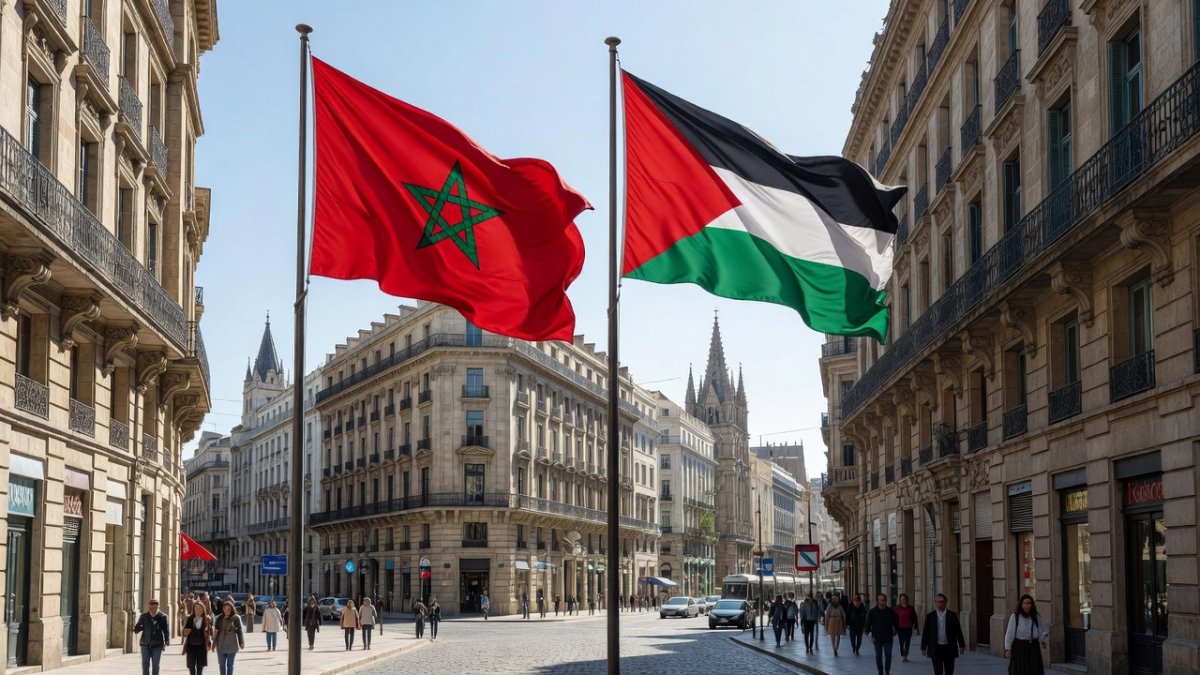
Moroccan public discourse has long intertwined support for Palestine with national narratives of resistance against colonial rule, a connection that diaspora fans in London articulated with particular clarity during the World Cup gathering. Historical ties date to Morocco's early recognition of the Palestinian cause in the 1960s and continued through King Mohammed VI's statements on Al-Quds, yet ordinary citizens often express these links through cultural events and community discussions rather than official channels. In the video, participants spoke of shared experiences of displacement, drawing parallels between Moroccan migration waves to Europe and the Palestinian experience under occupation. Fatima Benali, a teacher from Rabat now based in London, described how her family maintains regular contact with relatives in the West Bank, sending remittances that support both Moroccan development projects and Palestinian medical aid. This dual allegiance does not dilute support for the Moroccan national team; instead, it enriches it, as fans view the Atlas Lions' quarterfinal appearance as an opportunity to highlight interconnected struggles across North Africa and the Levant. The interviews revealed a generational transmission of memory, with younger supporters learning about Palestine through community events and older fans recalling protests from previous decades that similarly blended football fandom with political awareness.
World Cup 2026: A Tournament of Solidarity Displays
Scenes from Edgware Road formed part of a broader pattern across host cities during the 2026 tournament, where supporters from multiple nations displayed Palestinian flags and chanted for freedom at matches involving regional teams. Middle East Eye documented similar expressions in Paris, Doha, and Madrid, noting consistent appearances since the group stages despite varying local regulations. In London, post-match tensions after France's 2-0 victory led to police interventions when some fans continued waving Palestinian symbols, reflecting the intersection of sporting disappointment and political expression. Organizers in several venues adopted a measured approach, allowing flags while monitoring for escalation, which fans interpreted as tacit recognition of the cause's legitimacy. These displays underscore a global solidarity movement that transcends individual matches, connecting communities in Europe, the Gulf, and North America through shared symbols and narratives of resilience.
Diaspora, Football and Transnational Belonging
Football serves as a vital medium for transmitting cultural memory across generations in exile, linking Moroccan communities in London to both Rabat and the Palestinian struggle. The video conversations highlighted economic dimensions, including how diaspora remittances support infrastructure in Morocco while also funding humanitarian efforts in Gaza and the West Bank. Participants described maintaining ties through regular travel, social media groups, and community centers that host joint cultural evenings featuring both Moroccan music and Palestinian poetry. This transnational belonging creates networks of mutual support, where sporting events become moments to reaffirm commitments that extend beyond the pitch. The Edgware Road gathering demonstrated how such connections persist even when teams exit the competition, turning potential disappointment into renewed calls for justice.
Between Celebration and Struggle: Football in the Shadow of Conflict
While crowds celebrated Moroccan players and discussed future matches, the Middle East Eye report referenced the stark contrast with conditions inside Gaza and the West Bank, where screenings continue under severe restrictions. Fans acknowledged that war-damaged buildings host viewings despite infrastructure damage and movement limitations, underscoring how international tournaments unfold against prolonged conflict. Solidarity expressions aim to bridge these distances, drawing attention to settlement expansion and resource access issues that affect daily Palestinian life. Interviewees stressed that such awareness persists beyond any single match result, transforming sporting joy into sustained advocacy.
Analysis and Implications
The intersection of sports and politics at the 2026 World Cup reveals how diaspora communities leverage global platforms to advance human rights narratives, particularly for Palestine. This phenomenon strengthens transnational solidarity networks while challenging official attempts to separate athletics from political realities. For Palestinian communities worldwide, these displays affirm that their cause remains visible even during moments of celebration elsewhere. Looking ahead, such expressions may influence future tournament policies and encourage broader international engagement with the realities of occupation.
By Fatima Al-Rashid, Staff Writer
This article was produced with AI-assisted research and editorial support. Reporting is based on sources cited in the article.
What's Your Reaction?
 Like
0
Like
0
 Dislike
0
Dislike
0
 Love
0
Love
0
 Funny
0
Funny
0
 Wow
0
Wow
0
 Sad
0
Sad
0
 Angry
0
Angry
0
Gulf/MENA Correspondent at Global1.News. Based in Doha, covering Gulf politics, energy markets, diplomacy, and development across the Middle East and North Africa. Tracks the economic transformation of the Gulf states.









Comments (0)