
US Demands Iran Hormuz Pledge as Ceasefire Collapses
In a recent BBC News report, tensions between the United States and Iran escalated sharply this week as Washington demanded Tehran issue a public pledge to stop targeting commercial shipping in the strategic waterway, while high-stakes negotiations between American and Iranian officials opened in Oman to prevent further escalation. US Demands Iran Pledge to Halt Strait of Hormu
In a recent BBC News report, tensions between the United States and Iran escalated sharply this week as Washington demanded Tehran issue a public pledge to stop targeting commercial shipping in the strategic waterway, while high-stakes negotiations between American and Iranian officials opened in Oman to prevent further escalation.
US Demands Iran Pledge to Halt Strait of Hormuz Attacks as Ceasefire Collapses
Moscow – 11 July 2026 — Washington has demanded that Tehran issue a public statement declaring the Strait of Hormuz open for commercial shipping and pledging to cease all attacks on vessels, as high-stakes negotiations between American and Iranian officials opened in Oman on Saturday. The talks come after President Donald Trump declared the US-Iran ceasefire "OVER" following a series of attacks on commercial ships this week, though both sides have agreed to continue diplomatic engagement.
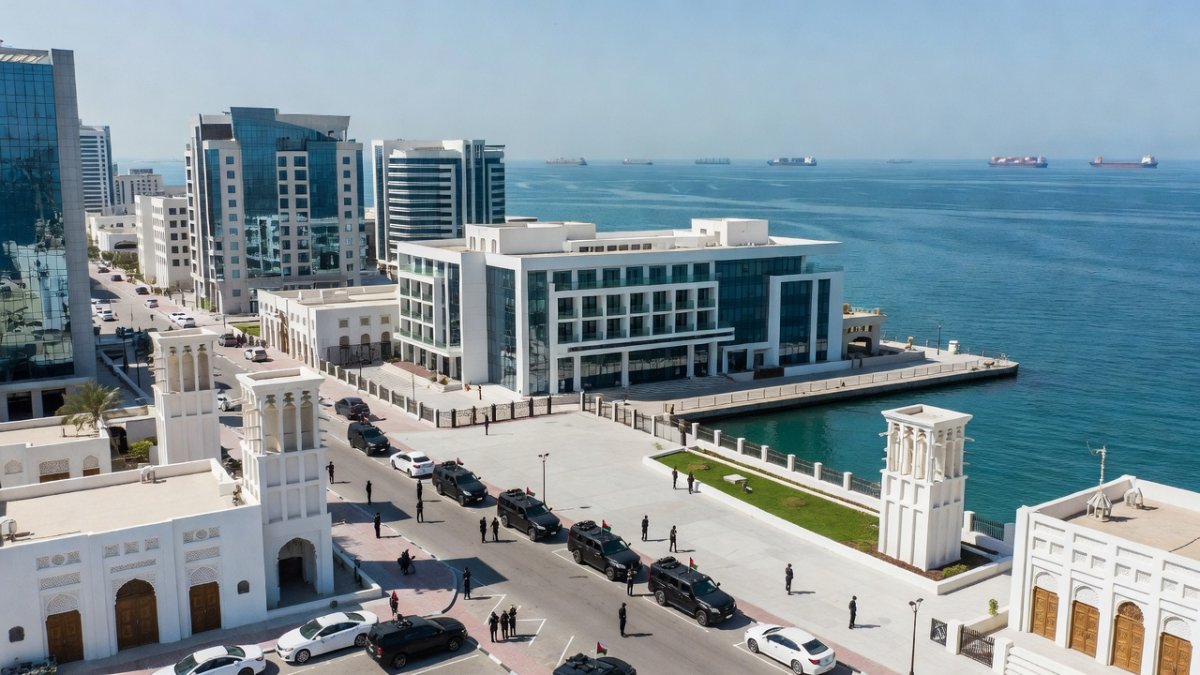
Oman Talks: The Last Diplomatic Window
Vice-President JD Vance, Secretary of State Marco Rubio, special envoy Steve Witkoff, and Trump's son-in-law Jared Kushner are expected to lead the US delegation at the talks in Oman, while Iranian Foreign Minister Abbas Araghchi arrived in Muscat on Saturday to represent Tehran. The negotiations are unfolding against the backdrop of Trump's declaration on Truth Social that "the Cease Fire is OVER" — a dramatic escalation in rhetoric even as both sides maintain diplomatic channels. US officials told reporters on Friday that a clear message had been conveyed to Tehran's leadership through regional mediators: Iran must release a statement declaring the strait open and commit to stopping attacks on commercial vessels. "They're either going to give us that statement or we're not having a good outcome for them," one official said, as quoted by Reuters. The White House also wants Iran to publicly acknowledge that the firing on shipping was a mistake — a face-saving demand that signals Washington's determination to extract a clear diplomatic victory from a week of military escalation.
From Moscow's perspective, these Oman discussions carry direct implications for global energy flows. Russian officials have long monitored how disruptions in the Strait of Hormuz affect Brent crude benchmarks, which in turn influence Kremlin budget revenues tied to oil exports. Any prolonged closure risks pushing prices higher, potentially easing pressure on Russia's sanctioned energy sector while simultaneously heightening the chance of broader Western sanctions on Moscow for perceived alignment with Tehran. Analysts in the Russian capital note that the presence of Kushner and Witkoff alongside Vance and Rubio suggests Trump is deploying a mix of family loyalty and seasoned negotiators to press for concrete concessions.
Interpretation of the stakes indicates that failure in Oman would trigger sharp volatility across energy markets, with the Strait of Hormuz's role in carrying 20 percent of global oil and LNG amplifying risks for Europe’s import-dependent industries and Asia’s manufacturing hubs. European economies could face renewed price spikes and supply strains reminiscent of prior crises, while Asian importers might accelerate diversification away from Gulf routes, reshaping long-term trade patterns and heightening competition for alternative energy sources.
Tehran's Calculations — Errant Hardliners or Strategic Ambiguity?
Senior US officials told CBS News that Iran had privately acknowledged to Trump's advisers that the attacks on commercial ships were a mistake, with Tehran reportedly blaming an "errant sect of hardliners" trying to undermine the negotiating process. "They came back to the table and said, 'We screwed up. We made a mistake. Let's keep talking,'" one official told the network. But publicly, Iran's narrative is markedly different. Foreign Minister Araghchi insisted his country had "kept its word" on the ceasefire, accusing Washington of violating the deal. This dual-track approach reflects the deep internal divisions within Iran's power structure following the death of Supreme Leader Ayatollah Ali Khamenei and the succession of his son Mojtaba Khamenei. The new supreme leader's first public statement since his father's funeral declared vengeance "inevitable" — a message that complicates any diplomatic off-ramp his foreign minister might try to construct in Oman.
Tehran's internal balancing act echoes patterns familiar to Russian observers of authoritarian succession. Just as the Kremlin manages competing factions within its security apparatus, Iran's new leadership under Mojtaba Khamenei must navigate revolutionary hardliners against pragmatic economic needs. Russian energy analysts point out that sustained high oil prices from Hormuz tensions could temporarily bolster Iran's finances, yet the risk of secondary sanctions remains a shared concern for both Moscow and Tehran.
Analysis of the IRGC's reported involvement in the attacks highlights friction with Iran's diplomatic efforts, as the Guard's independent actions risk undermining Araghchi's negotiating position and exposing rifts in the post-Khamenei power structure. Under the new Supreme Leader, this dynamic intensifies factional struggles, where hardline elements may leverage military autonomy to challenge pragmatic overtures, potentially constraining Tehran's ability to sustain coherent engagement with external powers.
The Strait of Hormuz: Energy Security at Gunpoint
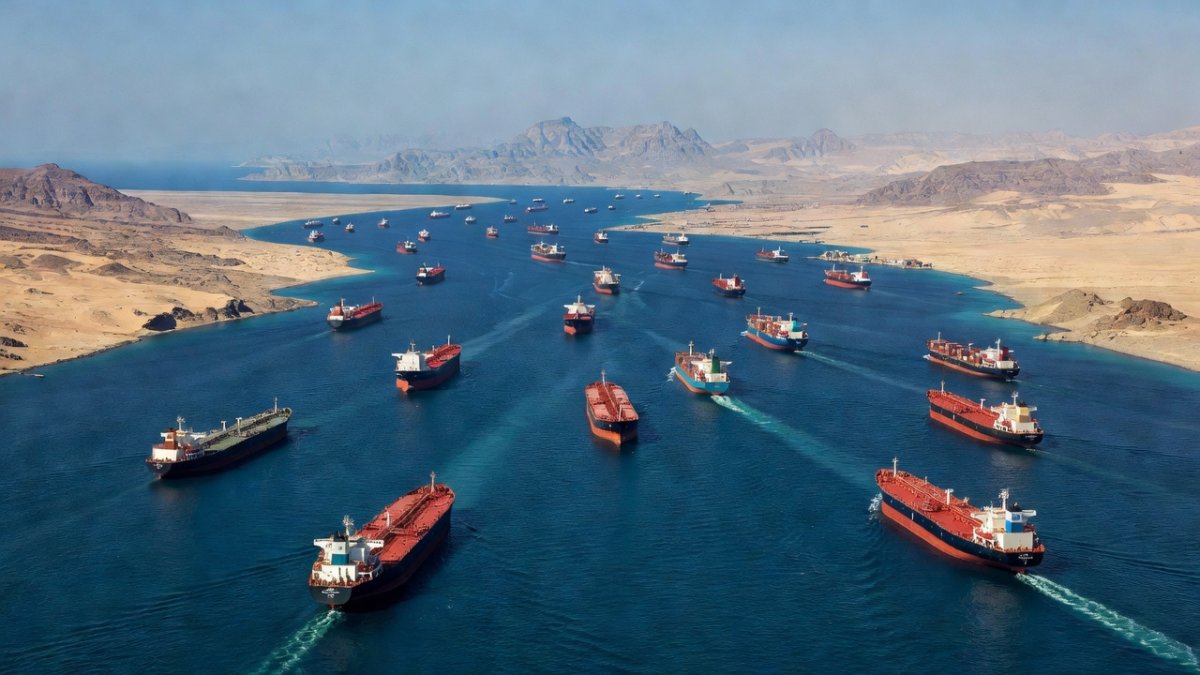
The Strait of Hormuz, through which approximately 20 percent of the world's oil and liquefied natural gas passes, has become the central battleground in the US-Iran conflict. Three commercial ships were struck this week while using a US-recommended route through Omani waters, prompting the UN's International Maritime Organization to pause its evacuation of more than 11,000 stranded sailors from the critical waterway. Iran has repeatedly asserted that the only "safe" passage is a separate route through its territorial waters, and Iranian state media is reporting fresh claims from the Islamic Revolutionary Guard Corps (IRGC) that the strait is Iran's sovereign territory. Iran's Fars news agency has reported that under any new arrangement, the strait would ultimately be managed by Iran in coordination with Oman, including possible "service fees" for ships transiting the waterway — a plan fiercely opposed by Washington.
Russian energy strategists view any Iranian attempt to impose fees or control as a potential precedent that could ripple into other chokepoints. Higher global prices would benefit Russia's state-controlled exporters, yet Moscow remains wary of escalation that might draw NATO further into the region and tighten sanctions enforcement. Gulf state reactions, particularly from Oman and Qatar, are being closely watched in the Kremlin for signs of shifting alliances.
Escalation and the Assassination Plot Dimension
The diplomatic push comes as reports emerged of an alleged Iranian plot to assassinate President Trump. The Wall Street Journal and other US media reported this week that Israel had shared intelligence with Washington indicating Iran had recently devised a plan to kill the US president. Trump responded on Truth Social in the early hours of Saturday, warning that the US military would "completely decimate and destroy all areas" of Iran in retaliation for any such attack. Open calls for Trump's death were reported at the funeral of Ayatollah Ali Khamenei, who was killed in an Israeli strike on his residence in Tehran on 28 February — the first day of the Iran-US war. Meanwhile, Mojtaba Khamenei's written statement on Saturday asserting that vengeance for his father's killing was "inevitable" adds another layer of volatility to an already combustible situation.
These threats introduce a personal dimension that Russian commentators compare to historical precedents of targeted leadership actions. The Kremlin has avoided direct comment, preferring to monitor how such rhetoric affects oil market volatility and potential opportunities for Russian mediation in energy disputes.
Regional Dynamics — Qatar's Mediation and Gulf State Alignments
A delegation from Qatar travelled to Iran on Friday for separate talks aimed at defusing tensions and easing navigation through the Strait of Hormuz, highlighting the complex web of regional mediation efforts surrounding the crisis. Gulf Arab states, which have watched the US-Iran confrontation with growing alarm, have a direct stake in the outcome: any sustained disruption to shipping through the strait sends oil prices soaring and threatens their economic diversification plans. The 14-point memorandum of understanding signed between the US and Iran in June included provisions for Iran and Oman to hold talks on defining the "future administration and maritime services" in the strait with other Gulf states — a framework that Saturday's Oman talks are meant to advance. But with the ceasefire declared over, that framework is now under severe strain.
Qatar's shuttle diplomacy aligns with patterns Russia has observed in Gulf politics, where energy-producing states seek to insulate their economies from superpower rivalries. Moscow sees potential openings for its own energy diplomacy if Western-led talks falter.
Analysis — A Precarious Diplomatic Tightrope
The situation presents a profound dilemma for both Washington and Tehran. For Trump, who has built his Middle East policy around a combination of maximum pressure and deal-making, the collapse of the June ceasefire threatens to unravel his broader Iran strategy — a strategy that culminated in the 14-point MoU but has now been exposed as fragile. With oil markets already jittery and Gulf allies nervously watching, the Oman talks represent perhaps the last, best hope for restoring some semblance of order to the Strait of Hormuz. For Iran's new leadership under Mojtaba Khamenei, the path is even more treacherous. The supreme leader must balance the hardline revolutionary factions demanding revenge for his father's killing with the pragmatic necessity of keeping Iran's economy afloat. Every day the strait remains contested, Iran bleeds revenue. But every concession at the negotiating table risks being portrayed as weakness by domestic rivals.
The coming hours in Oman will determine whether this week's escalation becomes a temporary spike in a managed conflict — or the prelude to a wider war that neither side can afford. Russian observers emphasize that prolonged instability would reshape global energy markets, offering short-term gains for sanctioned producers while raising the specter of wider confrontation that could draw in multiple powers.
Should the talks collapse, NATO allies would confront heightened pressure to secure alternative energy routes and bolster Gulf defenses, while Gulf states risk economic setbacks that could destabilize regional alignments. Broader implications for the global order include accelerated multipolar shifts, as energy chokepoints become flashpoints testing the resilience of international institutions and great-power deterrence mechanisms.
By Irina Volkov, Staff Writer
This article was produced with AI-assisted research and editorial support. Reporting is based on sources cited in the article.
What's Your Reaction?
 Like
0
Like
0
 Dislike
0
Dislike
0
 Love
0
Love
0
 Funny
0
Funny
0
 Wow
0
Wow
0
 Sad
0
Sad
0
 Angry
0
Angry
0

Russia/Eastern Europe Correspondent at Global1.News. Covering Russian politics, energy, security, and the shifting dynamics of the post-Soviet space. Provides clear-eyed analysis on one of the world's most opaque regions.













Comments (0)