
US Tankers at Ben Gurion Signal Iran Conflict Escalation
New footage from Ben Gurion Airport near Tel Aviv reveals multiple US Air Force KC-135 Stratotanker and KC-46A Pegasus aerial refueling aircraft parked on the runway, signaling Washington's continued military buildup in Israel as the US-Iran conflict enters its 134th day. The deployment underscores the logistical backbone of American strike operations against Iranian military t
New footage from Ben Gurion Airport near Tel Aviv reveals multiple US Air Force KC-135 Stratotanker and KC-46A Pegasus aerial refueling aircraft parked on the runway, signaling Washington's continued military buildup in Israel as the US-Iran conflict enters its 134th day. The deployment underscores the logistical backbone of American strike operations against Iranian military targets and raises critical questions about the trajectory of the broader Middle East confrontation.
US Tankers at Ben Gurion Signal Iran Conflict Escalation as Ceasefire Collapses
Tel Aviv, Israel – July 11, 2026 — Footage released on Saturday shows approximately 20 US military aerial refueling aircraft arrayed on the tarmac at Ben Gurion Airport, the latest visible evidence of America's sustained force posture in the Eastern Mediterranean as hostilities with Iran continue. The deployment comes on the heels of major American airstrikes on July 7 that struck more than 80 Iranian military installations across Iran's southern coast, targeting anti-ship missile sites, coastal radar networks, and air defense systems.
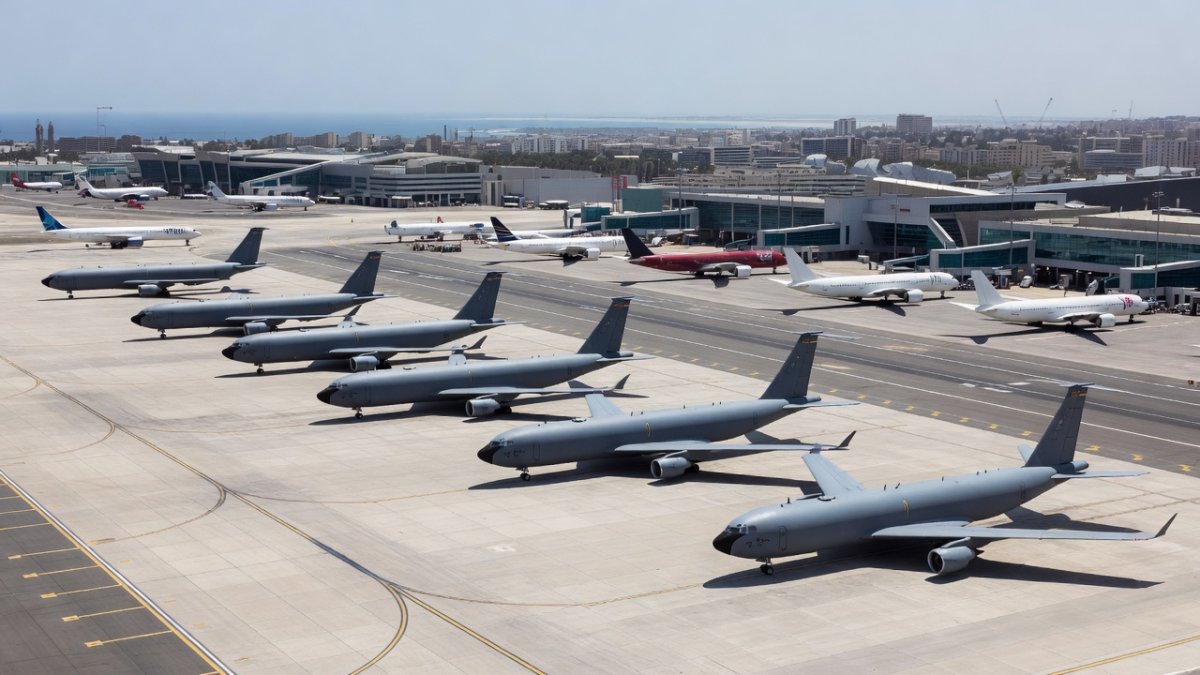
Logistical Buildup at Israel's Main Civilian Airport
The presence of American tankers at Ben Gurion is not new — satellite imagery analysis previously recorded a peak of 52 US refueling aircraft at the facility, according to reports citing the Financial Times. However, the visible concentration of approximately 20 aircraft at the height of the summer travel season reflects the delicate balance between civilian aviation demands and national security requirements. Israeli Ministry of Transportation officials spent months relocating dozens of military aircraft that had occupied parking space needed for commercial carriers, and the ministry has committed to making the airport available to the US military if operational needs require it.
Israeli Air Force bases face operational constraints that limit their capacity to host large numbers of tanker aircraft, making Ben Gurion the primary alternative. Israeli officials are currently assessing whether the airport can accommodate additional aerial refueling aircraft without severely disrupting passenger traffic during what is expected to be Israel's busiest summer travel season since the war began.
Operation Giant Anger and the Collapse of the Islamabad Ceasefire
The tanker fleet at Ben Gurion played a direct role in supporting the US offensive known as Operation Giant Anger. CENTCOM announced on July 9 that its round of strikes on approximately 90 Iranian targets had concluded, though unclaimed airstrikes struck Iran on July 10 after Washington said its operations were complete. The June 2026 Islamabad Memorandum of Understanding, which had imposed a 60-day pause in hostilities, has effectively collapsed.
Washington has now set public terms for ending renewed hostilities, demanding that Tehran declare the Strait of Hormuz open without tolls and surrender its stockpile of enriched uranium. Iran has rejected these conditions, with the Islamic Revolutionary Guard Corps stating that it will continue retaliatory operations against US positions across the region.
IRGC Retaliation Targets US Positions Across the Gulf
Iran's IRGC has responded to the US strikes by launching ballistic missiles at American installations in Kuwait, Bahrain, Jordan, and Qatar. Jordanian forces intercepted eight of ten missiles aimed at Al-Azraq Air Base on July 9, demonstrating the effectiveness of allied air defense coordination. US military fatalities stand at 13 confirmed by the Pentagon through the July 11 reporting cutoff, while more than 30 IDF personnel have been killed since March 2, 2026.
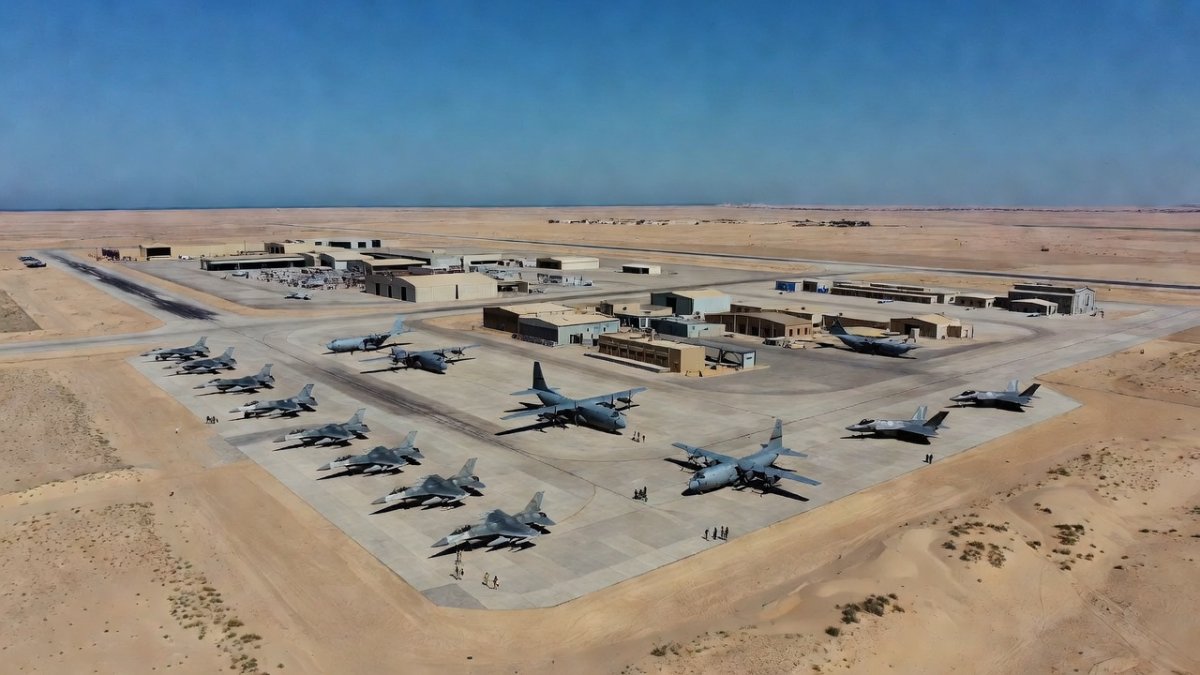
Gulf states hosting major US facilities — Qatar's Al Udeid Air Base, Bahrain's Naval Support Activity, and Kuwait's Camp Arifjan — now face heightened exposure to Iranian retaliation while attempting to maintain limited diplomatic channels with Tehran. The Strait of Hormuz, through which approximately 20 percent of the world's oil passes, remains the central strategic vulnerability driving US military planning.
Strategic Calculus: What Each Side Wants
For Washington, the priority is degrading Iran's anti-ship missile capabilities and coastal air defense networks to secure freedom of navigation in the Strait of Hormuz and the broader Persian Gulf. US Central Command has assessed approximately 90 percent degradation of Iranian air defenses as of March, a figure that has remained the standing baseline. The tanker fleet at Ben Gurion provides the aerial refueling capacity needed to sustain long-range strike missions originating from bases in the Gulf and Europe.
Tehran's leverage lies in its ability to threaten Gulf energy infrastructure and close the Strait of Hormuz. Iran's ballistic missile and drone arsenals remain active despite sustained coalition strikes, and the IRGC has demonstrated the capacity to reach targets across the region. The nuclear question — Iran's enriched uranium stockpile — remains the underlying strategic concern that neither side has been able to resolve through either diplomacy or military action.
Israel's role in the conflict has evolved from supporting overflight access to providing direct logistical support at Ben Gurion. More than 30 IDF casualties since March underscore the costs of Israeli involvement, but the strategic alignment with Washington's military objectives remains firm. The bilateral military integration demonstrated by the tanker deployment strengthens the US-Israel security relationship even as it complicates Israel's relationships with neutral and non-aligned states in the region.
Energy Market Risk and Regional Diplomatic Dynamics
The collapse of the Islamabad ceasefire has removed the primary diplomatic framework for de-escalation, and no alternative negotiation track has emerged to replace it. Turkey's parallel diplomacy at the Ankara NATO summit offered a secondary channel, but Ankara's position as a NATO member with complex relationships with both Washington and Tehran limits its mediating capacity. Gulf Arab states continue balancing US security guarantees against economic interests tied to potential future engagement with Iran, a calculus that becomes more difficult as hostilities intensify.
Energy markets remain acutely sensitive to any disruption in the Strait of Hormuz. The tankers at Ben Gurion represent not just a military asset but a strategic signal to global markets that the US is prepared to sustain operations that keep the strait open — or that the conflict could escalate further if Iran attempts to close it. The summer travel disruption at Ben Gurion itself, with military aircraft competing for space with civilian carriers, is a microcosm of the broader regional tension between normal economic activity and the demands of ongoing conflict.
Regional Implications
The visible deployment of American refueling aircraft at Ben Gurion sends a clear message to Tehran that Washington has the logistical capacity to sustain extended air operations. For Israel, the arrangement reinforces its role as a forward operating base for US power projection while exposing it to potential Iranian retaliation. For Gulf states, the calculus grows increasingly difficult as they absorb retaliatory missile attacks while hosting US forces. For global energy markets, the Strait of Hormuz remains the single greatest vulnerability, and the tankers on the tarmac at Ben Gurion are a reminder that the path to stable oil flows runs through the military balance in the Eastern Mediterranean and the Persian Gulf.
By Malik Hassan, Staff Writer
This article was produced with AI-assisted research and editorial support. Reporting is based on sources cited in the article.
What's Your Reaction?
 Like
0
Like
0
 Dislike
0
Dislike
0
 Love
0
Love
0
 Funny
0
Funny
0
 Wow
0
Wow
0
 Sad
0
Sad
0
 Angry
0
Angry
0

Middle East Correspondent at Global1.News. Based in Beirut, covering politics, conflict, energy, and society across the Middle East. Brings context and depth to a region often reduced to headlines.












Comments (0)