
Iran Hormuz Directive Tightens Shipping Routes Amid...
** Iran Hormuz Directive Tightens Shipping Routes Amid Qatar-Mediated Talks **Meta Description:** Analysis of Khatam al-Anbiya warning on approved Strait of Hormuz routes, interim 60-day arrangement, rebounding traffic data from Lloyd's List, and regional mediation involving Qatar, Oman, and Pakistan. **Keywords:** Strait of Hormuz, Khatam al-Anbiya, Iran tanker routes, Qatar t
The Khatam al-Anbiya Directive
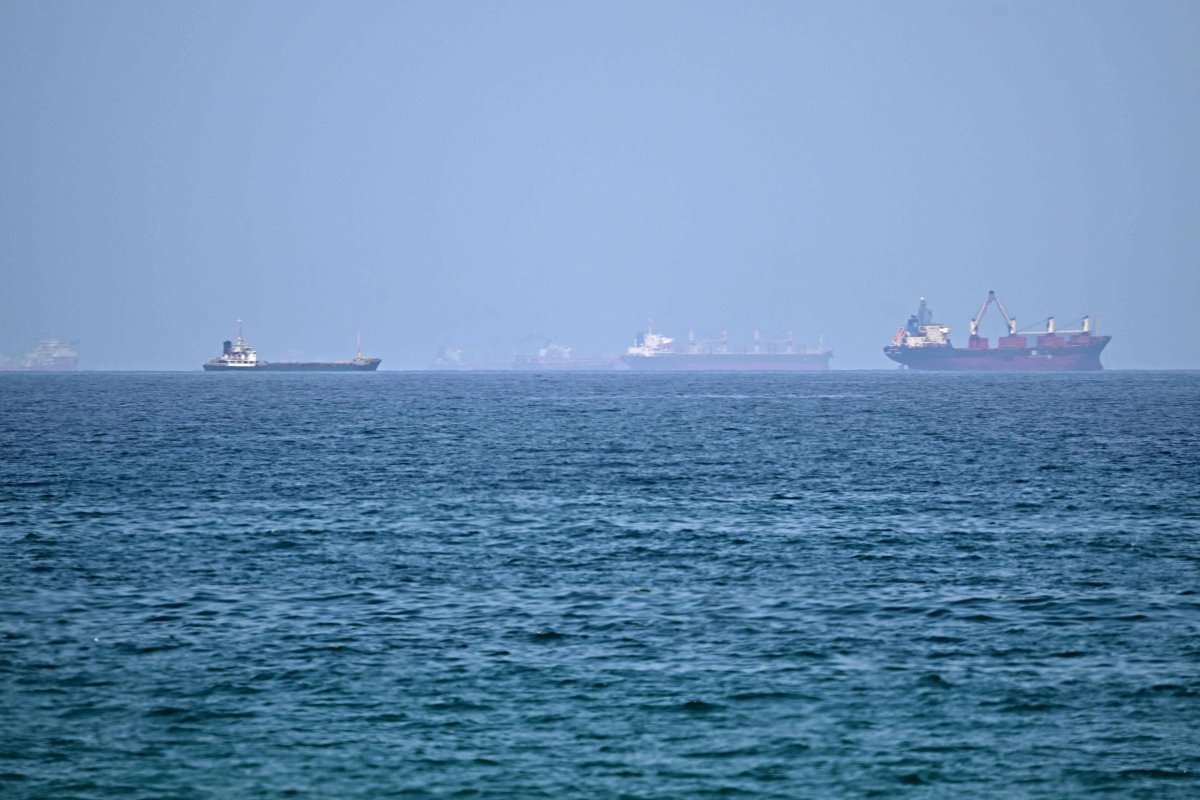
The statement issued by Iran's joint military command through the Khatam al-Anbiya headquarters sets out clear navigation requirements for vessels in the Strait of Hormuz. Tankers are instructed to follow designated routes established by Iranian authorities or risk an immediate response from the armed forces. This directive has begun to apply in practice as operators weigh compliance against alternative paths near Omani waters.
Officials emphasized that any deviation or disregard for the protocols would trigger a forceful reaction endangering the security of the violating vessels. The language reflects Iran's insistence on maintaining oversight of passage through the narrow waterway that connects the Persian Gulf to the Gulf of Oman. Such measures are coming into force at a moment when ship operators already face hour-by-hour decisions on routing.
The Khatam al-Anbiya command also addressed potential interference by U.S. forces, stating that such actions would meet a rapid and decisive reaction. This element underscores the command's role in coordinating responses across Iranian military branches operating in the region. Observers note that the directive builds on existing practices without introducing entirely new operational details beyond the approved-route requirement.
Marine analysts tracking the situation highlight that the warning arrives during preparations for the funeral of the late Supreme Leader Ayatollah Ali Khamenei, which begins this weekend. The timing adds a layer of domestic context to the military announcement reported by Iranian state television. Compliance is framed as essential for safe transit, with the 60-day interim period serving as a test window for the new protocols.
Regional shipping companies are now evaluating how strictly the designated routes will be enforced in coming weeks. The directive does not alter the underlying geography of the strait but seeks to formalize Iranian navigational authority over commercial traffic. This approach aligns with long-standing positions on sovereignty in the waterway while testing international reactions during the current diplomatic window.
Diplomatic Context: Qatar Talks and the Interim Arrangement
Recent meetings in Qatar between U.S. and Iranian diplomats, facilitated by mediators, produced an interim arrangement allowing ships to transit the Strait of Hormuz without charges for an initial 60-day period. This temporary measure has begun to apply as both sides explore terms for longer-term understandings. The arrangement leaves open the question of future fees while establishing a baseline for continued movement of vessels.
Pakistani Foreign Ministry spokesperson Tahir Andrabi described the Wednesday discussions as showing positive progress. He indicated that Pakistan anticipates the next round of talks will be scheduled soon after the funeral observances for Ayatollah Ali Khamenei conclude. Such sequencing reflects an effort to maintain momentum without immediate disruption from domestic Iranian events.
The interim deal emerged against the backdrop of earlier U.S. Central Command statements from Bahrain emphasizing shared commitments to the free flow of commerce. Iranian authorities appear to have viewed certain phrasing in that CENTCOM release as inconsistent with the new routing expectations. Clarifications on this point are expected in subsequent negotiating sessions.
Mediators have focused on separating the immediate navigation protocols from broader issues of passage fees that Tehran seeks to introduce after the 60-day window. Gulf Arab states have signaled continued opposition to any charging mechanism, creating a clear point of divergence that future talks must address. The current pause on fees provides breathing room for technical discussions on route compliance.
Both parties recognize that the interim period serves as a practical test of whether agreed routes can function without incident. Progress in Qatar has been measured in cautious increments rather than sweeping declarations, consistent with the sensitive timing surrounding leadership transitions in Iran. Continued engagement remains contingent on avoiding escalatory incidents during this phase.
Ship Traffic Data: Rebounding Traffic Amid Persistent Risk
Data compiled by Lloyd's List Intelligence shows that at least 258 ships transited the Strait of Hormuz in the most recent reported week. This figure represents an increase from 138 vessels the previous week, even as Iranian strikes on two commercial vessels occurred on June 25 and June 27. The rebound indicates that operators continue to prioritize the waterway despite elevated tensions.
Richard Meade, editor-in-chief at Lloyd's List, observed during a webinar that the recent attacks appear to have been largely set aside by market participants in terms of routing decisions. Traffic levels remain below pre-conflict norms, when roughly 130 vessels passed daily, yet the upward trend suggests adaptive behavior among shipping lines. Real-time assessments continue to guide individual transits.
Operators face a binary choice between Iranian-approved routes and paths closer to Oman that fall under greater U.S. monitoring. This dynamic has produced hour-by-hour adjustments rather than fixed patterns. Meade noted that nothing about the current situation qualifies as stable, with approvals and security evaluations shifting rapidly.
One reported incident involved a foreign vessel becoming stuck after reportedly ignoring instructions from Iran's Revolutionary Guard. Such episodes reinforce the practical consequences of non-compliance during the interim period. Lloyd's List tracking continues to capture these fluctuations without projecting long-term normalization.
The data underscores that commercial traffic has not halted but operates under constrained conditions. Volume recovery since the June strikes demonstrates resilience, yet the gap from earlier daily averages highlights lingering caution. Future weeks will reveal whether the 258-ship benchmark holds or erodes under sustained pressure from routing requirements.
Strategic Calculus: Iran's Leverage Play and U.S. Red Lines
Iran's emphasis on approved routes represents a calculated effort to assert navigational authority while the interim no-fee period remains in effect. By linking compliance to security guarantees, Tehran seeks to establish precedents that could extend beyond the current 60 days. This approach tests the willingness of international operators to accept Iranian oversight in exchange for predictable passage.
U.S. statements from CENTCOM in Bahrain have reiterated commitments to open commerce, creating a counterpoint that Iranian officials have flagged as problematic. The red line for Washington appears to center on preventing any formalization of fees or exclusive routing control that would alter decades of established practice. Both sides are therefore calibrating moves to avoid crossing these thresholds during talks.
The involvement of IRGC elements in monitoring and responding to deviations adds a military dimension to what is otherwise framed as a regulatory matter. Command statements from Khatam al-Anbiya integrate this enforcement role into the broader diplomatic context. Leverage derives from Iran's geographic position astride the strait rather than from new capabilities introduced in recent weeks.
Second-order effects include potential adjustments by OPEC+ members concerned about supply reliability and by global insurers reassessing risk premiums. Iranian strategy appears aimed at converting temporary control over routes into longer-term bargaining power once the funeral period concludes. U.S. responses have so far remained measured, focused on sustaining the Qatar channel.
Regional actors watch for signs that either party intends to harden positions before the next negotiating round. The current balance hinges on whether the 60-day window produces sufficient confidence to address fee structures without triggering renewed incidents. Both Tehran and Washington retain options to adjust pressure through public statements or quiet signals to mediators.
Energy Market Implications: Gulf Economies and Global Supply Chains
The Strait of Hormuz remains central to energy security calculations for Gulf producers and major importers alike. Any sustained disruption or rerouting requirement carries implications for crude and product flows that reach Asian and European markets. Current traffic volumes, while recovering, still fall short of pre-war daily averages, affecting scheduling for refineries and storage facilities downstream.
Gulf economies dependent on hydrocarbon exports monitor the interim arrangement closely, as even temporary changes in passage conditions influence revenue projections. The absence of fees during the 60-day period provides short-term relief, yet uncertainty over post-interim arrangements introduces planning challenges. OPEC+ diplomacy continues to factor Hormuz stability into production quota discussions.
Global supply chains have adapted by incorporating buffer stocks and alternative sourcing where feasible, though the strait's unique geography limits full substitution. Shipping companies report elevated operational costs stemming from real-time routing decisions and insurance considerations. These adjustments ripple through charter rates and delivery timelines for energy cargoes.
Analysts note that prolonged adherence to designated routes could eventually influence long-term investment decisions in pipeline infrastructure bypassing the strait. For now, the focus remains on maintaining throughput during the sensitive period surrounding Iranian leadership transitions. Energy security considerations therefore intersect directly with the diplomatic timeline set in Qatar.
Market participants await clearer signals from the next round of talks regarding whether the current routing framework will persist or evolve. The interplay between commercial traffic data and geopolitical messaging will shape price volatility in coming months. Gulf states and international buyers share an interest in avoiding escalation that could further constrain available capacity.
Regional Mediation: Oman, Qatar, and Pakistan's Role
Qatar has hosted the most recent diplomatic exchanges, providing a venue for direct U.S.-Iranian contact under mediated conditions. The positive progress noted by Pakistani officials suggests that incremental understandings on navigation can be reached even amid broader disagreements. Pakistan's expressed hope for prompt follow-up meetings after the Khamenei funeral reflects a desire to lock in momentum.
Oman's involvement stems from earlier proposals, developed with a United Nations agency, to establish an alternative route nearer its coastline. That initiative preceded the recent attacks and continues to factor into routing debates. Omani authorities maintain a low-profile facilitation role consistent with their established approach to regional de-escalation.
Pakistan's public commentary through spokesperson Tahir Andrabi positions the country as a supportive observer encouraging continued dialogue. This stance aligns with Islamabad's interest in stable energy transit that affects its own import requirements. The sequence of talks around the funeral period demonstrates sensitivity to Iranian domestic scheduling.
Collectively, the mediators have focused on practical measures such as the 60-day fee pause rather than comprehensive settlements. This narrow framing allows for confidence-building steps that could support later discussions on fees and permanent route designations. Each capital brings distinct leverage and constraints to the process.
The effectiveness of this mediation triangle will be tested once the next round convenes. Sustained engagement depends on avoiding incidents that could derail the interim arrangement before broader issues are addressed. Regional actors recognize that Hormuz stability serves shared economic interests beyond the immediate parties to the talks.
Historical Precedent: Hormuz Disputes Across Four Decades
Disputes over navigation in the Strait of Hormuz have recurred across multiple decades, often tied to periods of heightened U.S.-Iran tension. Past episodes involved threats to close the waterway or impose restrictions, yet commercial traffic generally resumed once immediate crises subsided. The current directive on approved routes echoes earlier assertions of regulatory authority without replicating previous closure rhetoric.
Previous incidents frequently centered on military posturing or mine threats rather than formalized routing protocols. The present emphasis on designated paths and compliance monitoring represents an evolution in approach during the interim diplomatic phase. Historical patterns suggest that such measures tend to remain in place until superseded by negotiated understandings or shifts in the security environment.
Throughout these cycles, the involvement of external navies has alternated between deterrent deployments and efforts to ensure open passage. Current CENTCOM statements from Bahrain fit within this established pattern of signaling commitment to commerce. Iranian responses have similarly followed precedents of linking waterway access to broader political objectives.
The 60-day interim arrangement introduces a novel element by explicitly decoupling fees from immediate transit requirements. Earlier disputes rarely featured such time-bound pauses. This structure may provide a template for managing future flare-ups if both sides view it as functional.
Long-term observers note that the fundamental geography of the strait has ensured its continued centrality regardless of periodic tensions. Past resolutions have generally preserved the principle of unimpeded transit while allowing for limited regulatory accommodations. The present negotiations test whether that balance can be maintained under the new routing framework.
Forward Outlook: Between Diplomacy and Confrontation
The period following the Khamenei funeral will determine whether the Qatar-mediated channel can address outstanding issues such as post-60-day fees and permanent route designations. Iranian authorities have signaled that control over navigation remains non-negotiable, while U.S. and Gulf positions continue to reject charging mechanisms. This divergence sets the parameters for the next phase of discussions.
Ship operators will continue making routing choices based on real-time security assessments and political approvals. The rebound to 258 transits in the latest week provides a baseline against which future compliance can be measured. Any significant drop could indicate either heightened risk perceptions or successful enforcement of designated paths.
Mediators including Qatar, Oman, and Pakistan will likely press for scheduling clarity once domestic Iranian events conclude. The emphasis on positive progress suggests an institutional interest in sustaining the process rather than allowing momentum to dissipate. Technical working groups may emerge to handle route-mapping details separate from political negotiations.
Energy markets will track both traffic volumes reported by Lloyd's List and official statements from CENTCOM and Iranian commands. Volatility could increase if incidents occur during the transition period. Conversely, steady adherence to the interim arrangement might support gradual normalization of daily transit numbers closer to historical averages.
Ultimately, the situation remains fluid, with outcomes dependent on whether diplomatic channels can absorb the pressures created by the new directive. Both sides retain incentives to avoid full confrontation while the 60-day window remains open. The coming weeks will reveal whether the current balance tilts toward sustained dialogue or renewed friction in the strait.
By Malik Hassan, Staff WriterThis article was produced with AI-assisted research and editorial support. Reporting is based on sources cited in the article.
What's Your Reaction?
 Like
0
Like
0
 Dislike
0
Dislike
0
 Love
0
Love
0
 Funny
0
Funny
0
 Wow
0
Wow
0
 Sad
0
Sad
0
 Angry
0
Angry
0
Middle East Correspondent at Global1.News. Based in Beirut, covering politics, conflict, energy, and society across the Middle East. Brings context and depth to a region often reduced to headlines.











Comments (0)