
Damascus Cafe Bombing Exposes Fragile Security in Post-Assad Syria
Damascus Cafe Bombing Exposes Fragile Security in Post-Assad Syria Damascus, Syria – July 2, 2026 — On July 2, 2026, at approximately 3:24 PM local time, an explosive device detonated at a cafe on Al-Nasr Street in Damascus’s Al-Marjah district. The blast killed at least six people and wounded 22, according to Syria’s Ministry of Health. Syrian state television confirmed the de
Damascus Cafe Bombing Exposes Fragile Security in Post-Assad Syria
Damascus, Syria – July 2, 2026 —
On July 2, 2026, at approximately 3:24 PM local time, an explosive device detonated at a cafe on Al-Nasr Street in Damascus’s Al-Marjah district. The blast killed at least six people and wounded 22, according to Syria’s Ministry of Health. Syrian state television confirmed the device had been planted at the location, roughly 40 meters from the Palace of Justice, where trials of former Assad regime officials were underway.
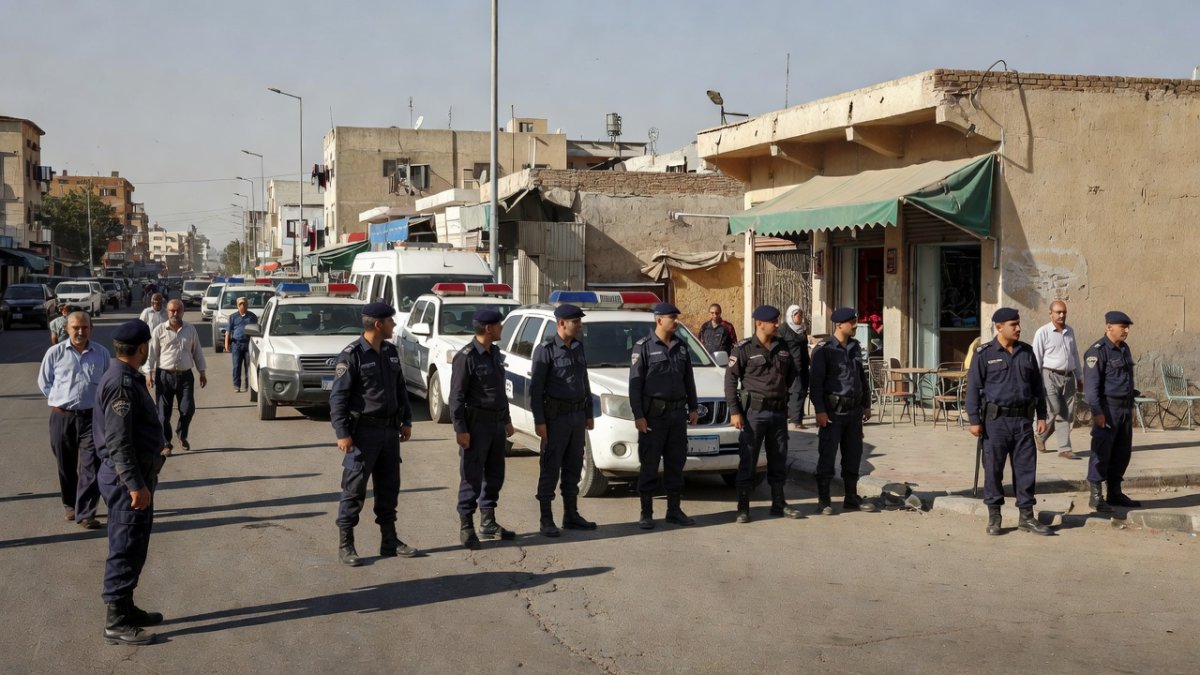
Details of the July 2 Attack
The targeted cafe sits in a busy commercial area near the Hamidiyeh Market and Hejaz railway station. The explosion occurred during peak hours when the district was crowded with court visitors and shoppers. Security forces quickly cordoned off the site amid fears of a secondary device. An investigation is now using footage from government and private surveillance cameras to identify those responsible.
Damascus Governor Maher Marwan stated that “the more Syria attains stability, the more there are those who want to damage it.” No group has claimed responsibility for the attack.
Post-Assad Security Landscape
Syria’s transitional government, led by Ahmed al-Sharaa since the fall of Bashar al-Assad in late 2024, has faced repeated security challenges. While large-scale fighting has decreased, targeted violence has continued. In June 2025, an ISIS-claimed suicide attack on a Damascus church killed 25 people. In May 2026, authorities arrested members of an Iran-backed Hezbollah cell accused of plotting assassinations. The following month, a cell linked to the former Assad government was dismantled in Idlib for espionage and bombing plans.
The Palace of Justice trials this week, including proceedings against Syria’s former grand mufti, have heightened tensions. The cafe bombing occurred in close proximity to these high-profile cases.
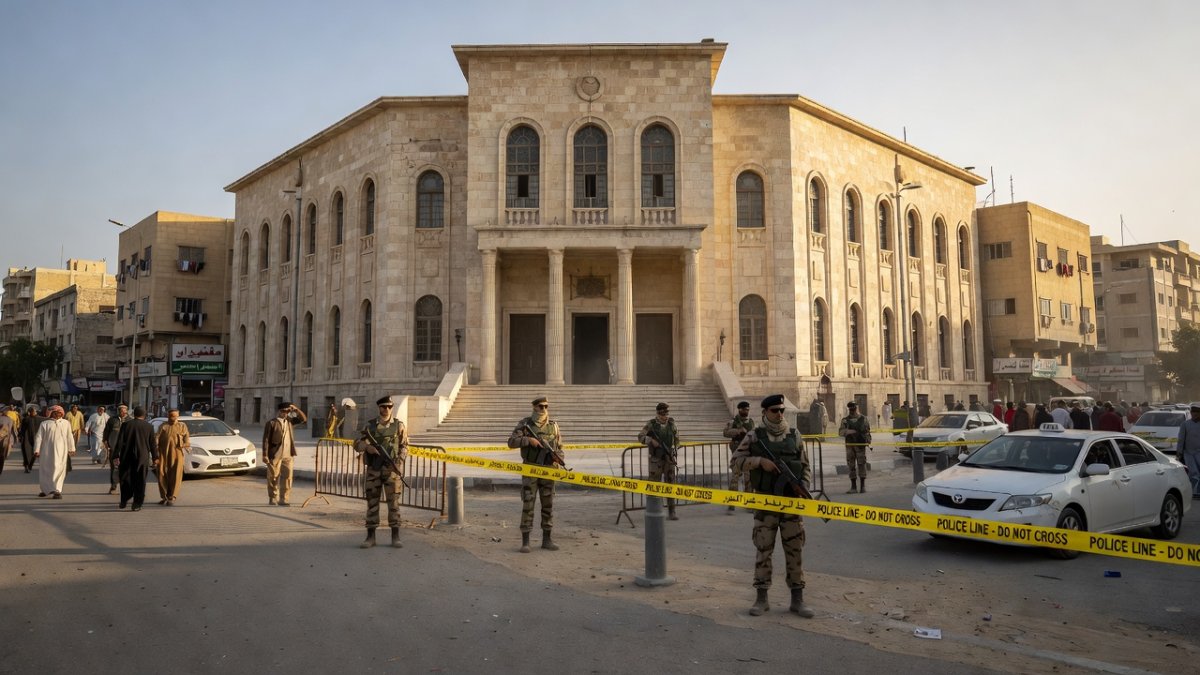
Potential Actors and Strategic Motives
Three main categories of actors could benefit from destabilizing the new government. ISIS remnants seek to exploit gaps in security to reestablish a presence after losing territorial control. Iran-backed networks, including Hezbollah cells, have lost their primary Syrian patron and may aim to disrupt a government moving closer to Gulf states. Elements of the former regime retain motivation to undermine the transitional authorities through low-level sabotage.
Each group possesses different leverage. ISIS draws on sleeper cells and ideological appeal in rural areas. Hezbollah retains smuggling routes and local contacts despite reduced Iranian funding. Former regime loyalists still hold knowledge of old intelligence networks. The bombing’s timing near active trials suggests an attempt to intimidate judicial processes.
Regional Dynamics and External Interests
The attack occurs against a backdrop of shifting regional alignments. Gulf states, particularly the UAE, Saudi Arabia, and Qatar, have engaged the transitional government to encourage stability and reconstruction. Turkey maintains influence through its longstanding ties with Ahmed al-Sharaa and HTS structures. Russia’s role has diminished significantly since Assad’s departure, while Iran’s footprint has contracted but not disappeared.
These external actors have clear interests. Gulf capitals want a stable Syria that does not export refugees or militancy and that can absorb investment. Turkey seeks to prevent Kurdish autonomy along its border while supporting a friendly central government. Iran views any consolidation of the new order as a permanent loss of its land bridge to Hezbollah. The bombing tests whether these competing interests can be managed without renewed proxy conflict.
Building State Security Institutions
One core challenge remains the construction of professional security services to replace the dismantled mukhabarat structures. The transitional authorities must integrate former opposition fighters, local militias, and vetted personnel into coherent institutions. This process is slow and creates temporary vulnerabilities that hostile actors can exploit.
Surveillance integration and rapid investigation capabilities are still developing. The use of both state and private camera footage in the current probe illustrates the patchwork nature of current intelligence gathering. Until unified command structures and reliable vetting procedures are established, such gaps will persist.
Implications for Reconstruction and Stability
Reconstruction efforts depend on sustained security. International donors and regional investors remain cautious while attacks continue near government institutions. The July 2 bombing, though limited in scale, signals that spoilers retain the capacity to generate headlines and deter confidence.
If the transitional government can attribute the attack and demonstrate effective follow-up measures, it may strengthen its position with both domestic populations and external partners. Failure to do so risks reinforcing narratives of persistent instability that have long characterized Syria’s post-2011 trajectory.
The broader regional picture suggests that Syria’s stability is now intertwined with Gulf economic interests, Turkish security concerns, and the gradual erosion of Iranian influence. How the authorities navigate the investigation and subsequent security reforms will shape whether these dynamics produce consolidation or renewed fragmentation.
By Malik Hassan, Staff WriterThis article was produced with AI-assisted research and editorial support. Reporting is based on sources cited in the article.
What's Your Reaction?
 Like
0
Like
0
 Dislike
0
Dislike
0
 Love
0
Love
0
 Funny
0
Funny
0
 Wow
0
Wow
0
 Sad
0
Sad
0
 Angry
0
Angry
0
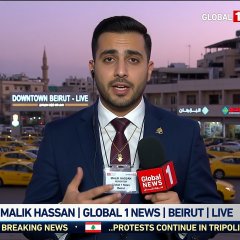
Middle East Correspondent at Global1.News. Based in Beirut, covering politics, conflict, energy, and society across the Middle East. Brings context and depth to a region often reduced to headlines.












Comments (0)