
Iran Buries Khamenei: Millions Mourn at Tehran Funeral
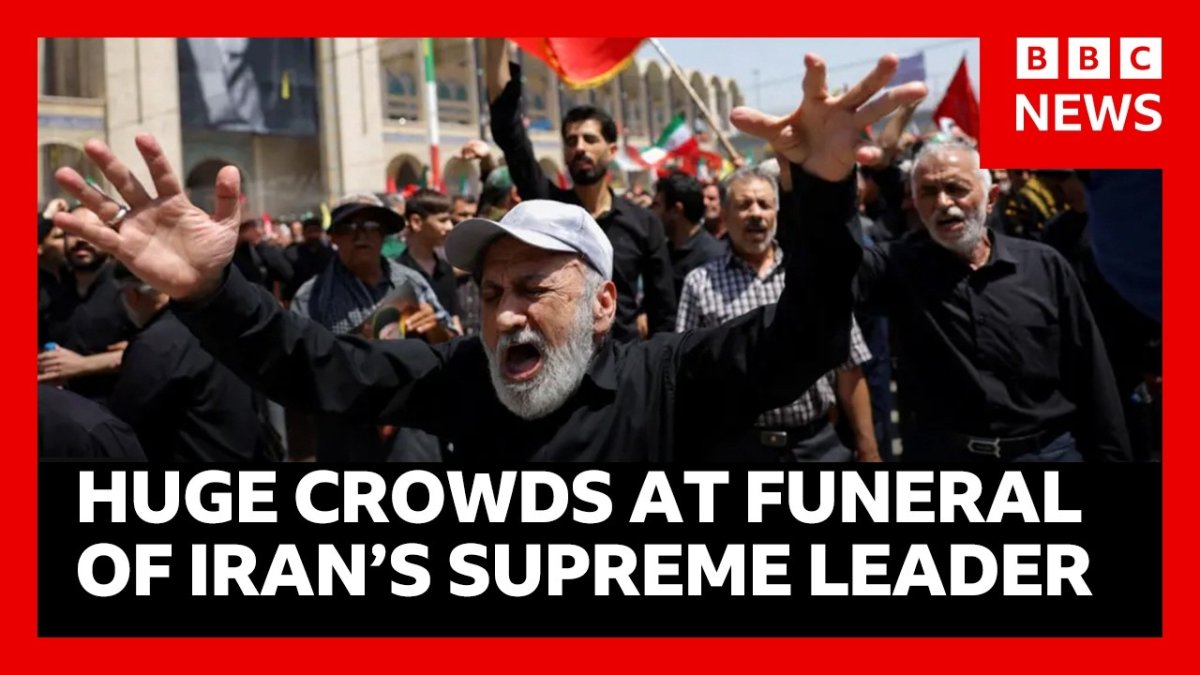
In a recent BBC News report, Iranian state television broadcast the first images of the funeral procession for the country's slain Supreme Leader, Ayatollah Ali Khamenei, as black-clad mourners massed by the millions in Tehran to begin a six-day state funeral more than four months after he was killed in a joint US-Israeli airstrike. Iran Buries Its Supreme Leader: Millions Gath
In a recent BBC News report, Iranian state television broadcast the first images of the funeral procession for the country's slain Supreme Leader, Ayatollah Ali Khamenei, as black-clad mourners massed by the millions in Tehran to begin a six-day state funeral more than four months after he was killed in a joint US-Israeli airstrike.
Iran Buries Its Supreme Leader: Millions Gather for Khamenei's Long-Delayed State Funeral as Tehran Locks Down
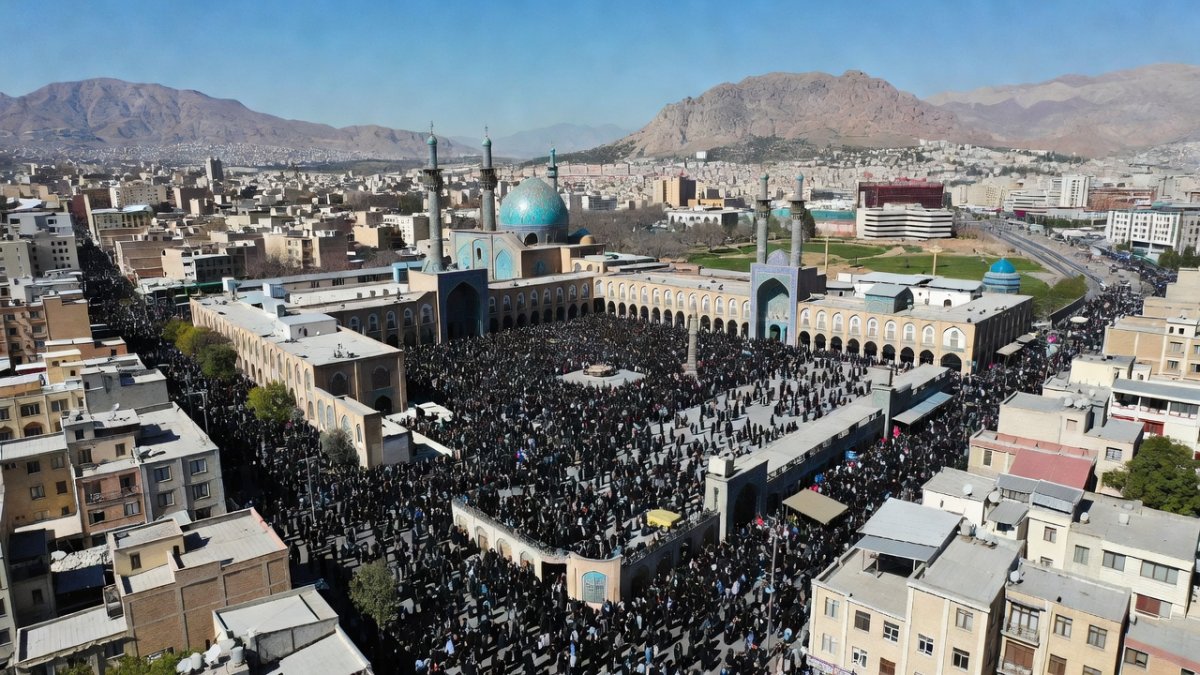
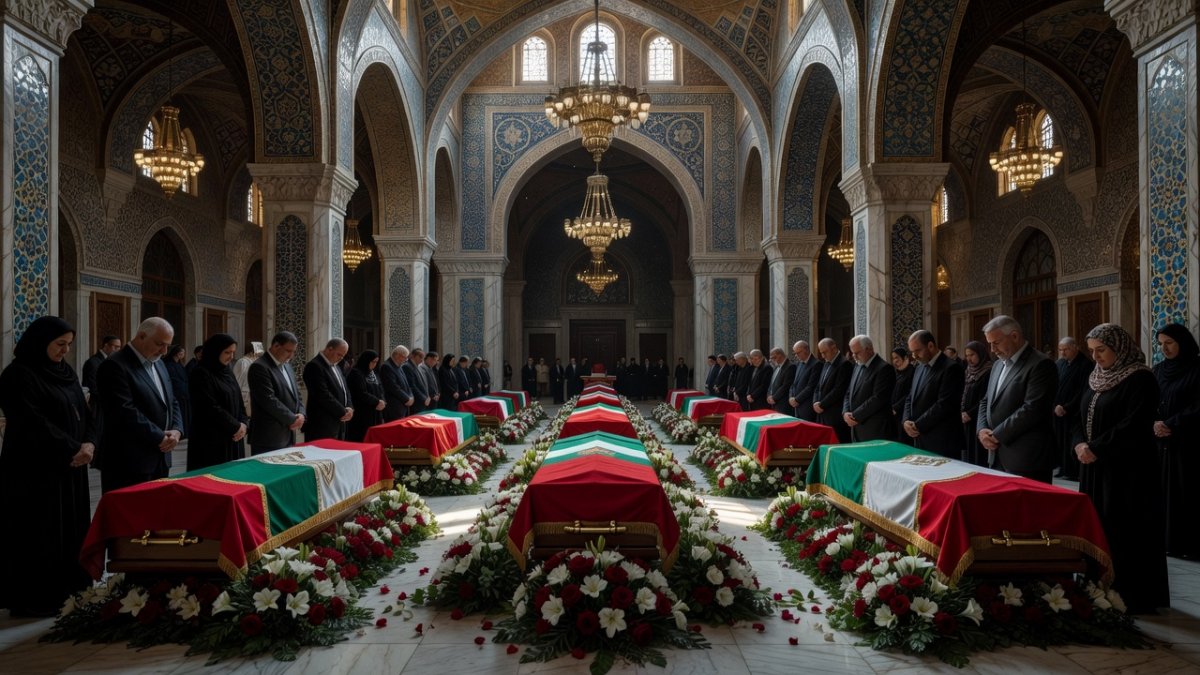
Tehran — 5 July 2026 — Millions of mourners poured into central Tehran on Saturday as Iran finally began its long-awaited state funeral for Ayatollah Ali Khamenei, the country's supreme leader for thirty-seven years, whose assassination in a US-Israeli precision strike on 28 February triggered the most devastating regional war the Middle East has seen in decades. Khamenei's flag-draped coffin, alongside that of his fourteen-month-old granddaughter and other family members killed in the same attack, was placed on public display at the Grand Mosalla mosque, where authorities expect fifteen to twenty million people to pass over the coming week.
A Day of National Mourning
The scale of the ceremony is unprecedented in Iran's modern history. State television showed vast crowds stretching for kilometres through the streets surrounding the Grand Mosalla, with mourners — many dressed in black, some carrying portraits of the late ayatollah — pressing against security barriers as the coffins were brought into the prayer hall. Witnesses described scenes of raw emotion: men weeping openly, women beating their chests in traditional displays of Shia grief, and the air filled with chants of "Death to America" and demands for revenge against those who killed their leader.
"Everyone here has come to avenge the blood of their supreme leader," Arash Rahimi, a forty-year-old attendee, told Reuters from the Grand Mosalla's courtyard. "As our leader has said, we have a blood feud with the United States. Our relations with the United States will never be good."
Another mourner, thirty-seven-year-old professor Reza, told AFP: "We came because we promised the supreme leader we would stand by him to the very end. For a long time, we shouted that we would sacrifice our lives for the leader, but it was he who sacrificed himself for us."
Much of central Tehran has been locked down for the duration of the funeral. The Basij militia and regular police forces have deployed in force, with checkpoints established on every major approach road. Authorities have warned that the funeral is expected to be the largest in terms of attendees as a proportion of the country's population — a logistical and security challenge for a regime already stretched by four months of war.
Security measures extended beyond the capital. Iranian officials coordinated with Iraqi authorities to manage the later stages of the procession in Najaf and Karbala, where additional crowds are anticipated. The Basij forces maintained a visible presence at all entry points, screening participants for any signs of dissent amid the ongoing regional tensions. International observers noted the heavy deployment as both a protective measure and a demonstration of state control during this period of transition.
Local hospitals in Tehran prepared additional medical stations along the procession routes to handle potential heat-related incidents and crowd surges. State media emphasized the orderly nature of the gatherings, broadcasting live footage of volunteers distributing water and assisting elderly participants. These preparations reflect the regime's determination to project stability despite the extraordinary circumstances surrounding the event.
In Shia tradition, such funerals draw on rituals of lamentation for Imam Hussein, with chest-beating and processions symbolizing collective grief and resistance. The Grand Mosalla serves as a vast symbolic venue for national unity, its expansive prayer halls accommodating the scale of public mourning. State television has broadcast continuous coverage, framing the event as a display of unwavering loyalty and religious devotion to reinforce regime legitimacy across the country.
A Four-Month Wait for a Final Goodbye
The delay between Khamenei's death and his funeral underscores the extraordinary circumstances of the conflict that consumed Iran. Immediately after the 28 February airstrikes, which destroyed parts of the leadership compound in northern Tehran, the country descended into a full-scale war with the United States and Israel. Airstrikes continued for weeks, targeting military infrastructure, nuclear facilities, and command-and-control centres across Iran.
Initial funeral plans were postponed as the bombardment made large public gatherings too dangerous. According to officials cited by the BBC, what should have been a standard Shiite burial within days of death stretched into weeks, then months — Khamenei's body was reportedly kept in cold storage as the regime waited for a window of relative calm.
That window finally arrived in late June, after a preliminary US-Iran peace deal was struck in talks mediated by Oman and Switzerland. While the agreement's terms remain unratified — and major points of contention, including the status of Iran's nuclear programme and the withdrawal of US forces from the region, remain unresolved — the reduction in hostilities created the conditions for a state funeral that the regime hopes will reinforce its legitimacy.
The six-day itinerary includes three days at the Grand Mosalla mosque in Tehran, followed by processions through Qom, then onward to Najaf and Karbala in Iraq before final burial in Mashhad. Iranian state television has framed the multi-country route as a tribute to Khamenei's regional influence, with officials from Iraq confirming cooperation on security arrangements for the Iraqi segments. This extended timeline allows mourners from across the Shia world to participate, though analysts note it also serves to consolidate domestic support during a fragile ceasefire period.
Khamenei's remains were preserved in specialized refrigerated facilities to maintain condition over the extended period. This logistical challenge required careful temperature control and security to uphold religious dignity, preventing deterioration while hostilities delayed public rites and allowing the regime to align the ceremony with the emerging ceasefire.
The Assassination That Changed the Middle East
Khamenei was killed on the morning of 28 February when a coordinated US-Israeli strike — reportedly using a combination of aerial bombardment and special operations — targeted the supreme leader's residence and command complex in northern Tehran. The attack also killed several high-ranking Revolutionary Guard commanders and, according to Iranian officials, at least four members of Khamenei's immediate family, including his fourteen-month-old granddaughter Zahra Mohammadi Golpayegani.
The assassination, which President Donald Trump confirmed hours afterward by declaring "Khamenei, one of the most evil people in History, is dead," represented a dramatic escalation of the long-running shadow war between Iran, Israel, and the United States. It was the first time a foreign power had directly assassinated a sitting head of state since the 2011 killing of Muammar Gaddafi, and it immediately plunged the region into what analysts have described as the most serious Middle Eastern conflict since the 2003 invasion of Iraq.
Iranian officials have described the strike as an act of state terrorism, while US and Israeli statements have justified it as a necessary response to Khamenei's support for proxy forces across the region. The death of the 86-year-old leader, who had held the position since 1989, removed a central figure in Iran's decision-making structure and accelerated the succession process that placed his son Mojtaba in the role on 8 March.
Mojtaba Khamenei: Iran's Invisible Supreme Leader
One of the most conspicuous absences at the funeral ceremonies has been that of Iran's new supreme leader — Khamenei's son, Mojtaba Khamenei, who was appointed to the lifetime post on 8 March but has not been seen in public since. His failure to appear at his father's funeral, a ritual of immense symbolic importance in Shia Islam, has fuelled speculation about his health, his security situation, and the stability of the succession itself.
Authorities have cited severe security risks and intelligence threats as the reason for his absence, suggesting that US or Israeli intelligence could target him in a similar strike. But analysts have raised deeper questions, including whether Mojtaba — who spent his career behind the scenes managing the regime's financial and political networks rather than projecting public authority — is physically or politically capable of filling the role his father held for thirty-seven years.
Regional actors including Saudi Arabia and the United Arab Emirates have monitored the succession closely, with official statements from Riyadh emphasizing the need for stability to prevent further escalation. Iraqi Shia leaders have expressed cautious support for the transition while urging restraint during the funeral proceedings in Najaf and Karbala.
Trump's "Week Off" and the Precarious Peace
President Donald Trump addressed the funeral arrangements during remarks at Mount Rushmore on 3 July, stating that the United States had granted Iran "a week off for a funeral because we're nice." He added that "We knocked the hell out of Iran and they're dying to settle," framing the pause in hostilities as a gesture of goodwill amid ongoing negotiations.
The comments drew mixed reactions internationally. Israeli officials welcomed the firm stance, while European diplomats urged both sides to finalize the preliminary agreement reached through Omani and Swiss mediation. Iranian state media portrayed the remarks as further evidence of American arrogance, using them to rally mourners around themes of resistance.
Despite the reduction in active combat, the unratified status of the peace deal leaves significant uncertainties. Key issues such as sanctions relief and regional force deployments remain unresolved, creating a precarious environment in which any incident could reignite conflict during the extended funeral period.
Analysis — Geopolitical Implications of a Regime in Mourning
This could indicate that the funeral serves multiple strategic purposes beyond mourning, including an opportunity for the new leadership to demonstrate continuity and popular support. Analysts suggest this signals an effort to consolidate authority at a moment when internal cohesion is under strain from four months of warfare and economic pressure.
From the perspective of the United States and Israel, the event highlights the challenges of managing a post-assassination landscape where Iranian retaliation remains a concern. Iraqi and Omani mediators continue to emphasize dialogue as essential to preventing renewed escalation, while European governments have called for verification mechanisms to support the preliminary agreement.
The involvement of sites in Iraq underscores the transnational nature of Shia religious networks and the potential for the funeral to influence regional alliances. Observers note that successful management of the six-day proceedings could strengthen the regime's domestic position, though questions about Mojtaba Khamenei's visibility persist as a factor in long-term stability assessments.
The ceremonies reinforce Iran's bonds with Shia allies in Iraq, Lebanon, and Yemen, projecting solidarity that bolsters proxy networks amid succession uncertainties. This dynamic complicates the US-Iran peace process by heightening Saudi and UAE vigilance over power shifts, while potential disruptions near key energy routes could influence global oil markets and add volatility to ongoing ceasefire talks.
By Irina Volkov, Staff Writer
This article was produced with AI-assisted research and editorial support. Reporting is based on sources cited in the article.
What's Your Reaction?
 Like
0
Like
0
 Dislike
0
Dislike
0
 Love
0
Love
0
 Funny
0
Funny
0
 Wow
0
Wow
0
 Sad
0
Sad
0
 Angry
0
Angry
0

Russia/Eastern Europe Correspondent at Global1.News. Covering Russian politics, energy, security, and the shifting dynamics of the post-Soviet space. Provides clear-eyed analysis on one of the world's most opaque regions.










Comments (0)